USDe Circumvents GENIUS Act Yield Ban: How Synthetic Dollars Became Crypto's Most Successful Gray Area?

marsbitОпубліковано о 2026-06-17Востаннє оновлено о 2026-06-17

Анотація

In drafting the GENIUS Act, Congress prohibited licensed payment stablecoin issuers from paying interest or yield to holders—a rule that forced changes for USDC. However, Ethena's USDe, a rapidly growing "yield dollar," operates outside this regulation. USDe is a delta-neutral synthetic dollar backed by crypto collateral and hedged perpetual futures positions, generating yield from funding rates rather than traditional reserves. Because it doesn't fit the legal definition of a payment stablecoin, the GENIUS Act's restrictions do not apply. USDe's supply peaked above $14 billion in 2025, making it a top-three dollar-denominated crypto asset. Its model carries distinct risks, notably dependence on sustained positive funding rates and vulnerability during market deleveraging events, as seen in a brief depeg in October 2025. Regulatory approaches differ: Germany's BaFin banned USDe sales, viewing it as an unregistered security, while U.S. institutional capital, like Janus Henderson, has embraced it for treasury management. The GENIUS Act defined and regulated payment stablecoins but left synthetic dollars like USDe in a gray area. The unresolved question is whether future regulations will address this category or if yield will continue migrating to undefined spaces.

Author: Zennon Kapron, Forbes Contributor

Compiled by: AididiaoJP, Foresight News

When Congress drafted the GENIUS Act, it drew a clear red line for stablecoins: licensed payment stablecoin issuers must not pay holders any form of interest or yield. This provision (Section 4(a)(11)) forced Circle and Coinbase to completely overhaul the way USDC holders earn yield.

Yet the fastest-growing yield-bearing dollar in the crypto space – Ethena's USDe – completely sidesteps this clause.

The Core Mechanism of USDe and the Regulatory Gap

USDe does not hold cash or treasuries. It is a delta-neutral synthetic dollar: the protocol accepts crypto collateral and simultaneously opens hedged short positions in perpetual futures, thereby keeping the dollar value relatively stable while earning yield from the positions. By staking USDe as sUSDe, you receive this yield.

Because its underlying structure is a hedged derivatives trade rather than fiat reserves, USDe does not meet the statutory definition of a payment stablecoin. Therefore, the ban in the GENIUS Act that reshaped USDC does not apply to USDe at all.

The result: a regulatory gap holding tens of billions of dollars, still growing, while policy discussions remain fixated on stablecoins that follow the new rules.

From Niche Product to Top Three

This is not a niche product. At its peak in 2025, USDe's supply exceeded $14 billion, accounting for about 5% of the entire stablecoin market, and CoinDesk already called it the third-largest USD-denominated crypto asset at the time. After deleveraging in October 2025, its supply contracted to about $5.9 billion, where it remains today.

Even at this reduced size, it remains the only top-tier stablecoin without fiat reserves. All other USD stablecoins of comparable size are reserve-backed coins holding cash and government bonds. USDe is essentially a trading strategy that coincidentally mints a token.

In January 2026, it partnered with Kraken to introduce custody and provide weekly reserve proofs, further solidifying the credibility that basis trading alone could not fully provide.

Where Does the Yield Actually Come From?

This yield comes from one of the oldest derivative structures—the cash-and-carry basis trade. When perpetual funding rates are positive, longs pay shorts, and USDe's hedged short positions profit from this, combined with the staking yield from the collateral.

Ethena describes it as the funding rate and basis spread generated by delta-hedged derivatives; CoinDesk puts it more bluntly: USDe generates yield by harvesting funding rates. In early 2026, the post-staking sUSDe APY was around 4%.

This is the legal heart of the entire design: the issuer is not paying interest on reserves (which the GENIUS Act prohibits). Instead, a strategy is generating returns, and the token merely passes them on—something the GENIUS Act never addressed.

This technical distinction, subtle as it sounds, constitutes the entire boundary between regulated and unregulated products.

The Definition the GENIUS Act Didn't Cover

The GENIUS Act only regulates payment stablecoins, requiring 1:1 fiat or treasury reserves and mandating monthly disclosures. USDe meets none of these requirements and never attempted to.

Ethena's response to the US market was to launch a second, separate product: USDtb – a fiat-backed stablecoin issued in partnership with Anchorage Digital, fully compliant with the GENIUS Act and primarily backed by BlackRock's tokenized money market funds.

Thus, Ethena simultaneously operates two dollars: one is a compliant, non-yield-paying payment stablecoin; the other is a yield-paying synthetic dollar.

The U.S. Office of the Comptroller of the Currency (OCC) has noticed this gap. Its March 2026 proposal attempted to extend the yield ban to affiliates and third parties, but even then, it mainly targeted situations where issuers pay yield through side doors. It clearly cannot cover instruments where "the issuer pays no yield at all, and returns come entirely from the market."

To truly plug this gap, regulators would have to define synthetic dollars as a separate category and regulate them, but no one in Washington has written that rule yet.

Risks of the Basis Trade

The model has real failure modes, worth highlighting before USDe expands again: the strategy heavily depends on funding rates remaining positive over the long term.

Ethena's own data shows that over three years, Ethereum positions had cumulative negative funding rates 17.5% of the time, with the longest negative streak lasting 13 days, while the longest positive streak lasted 176 days. A reserve fund absorbs negative-yield periods, so stakers are not charged.

The real danger lies in a prolonged negative funding rate window coinciding with a system-wide DeFi leverage unwinding. The market flash crash on October 10, 2025, was a test, when USDe briefly fell to $0.97, recovering within hours.

Reserve-backed stablecoins crash when custodian banks or custodians fail; synthetic dollars crash when a crowded trade unwinds—a different, more hidden risk that occurs even if no one makes a mistake.

Europe Says No, US Institutions Say Yes

Regulators are not in consensus. Germany's BaFin forced Ethena to shut down its local entity and prohibited public sales of USDe, citing suspected sales of unregistered securities and inability to meet MiCA reserve requirements. Ethena became the third stablecoin issuer squeezed out of the EU.

Meanwhile, US institutional capital has gone in the opposite direction. In June 2026, Janus Henderson, with about $480 billion in assets under management, partnered with Ethena to use USDe for treasury cash management, include its tokenized AAA credit products in USDe reserves, and plan to launch a regulated exchange-traded product in the second half of the year.

One major market treats this synthetic dollar as an unregistered security, another is plugging it into the infrastructure of a half-trillion-dollar asset manager. Both cannot be correct forever.

The Bull Case for Basis-Trade Dollars

The strongest bullish argument is this: USDe has earned its current size on merit. It has maintained its peg through multiple cycles, its collateral is over-collateralized and externally attested, and the yield it pays comes from real markets, not subsidies an issuer must eventually stop.

Demand for yield-bearing dollars will not disappear simply because Congress wishes it away, and pushing that demand offshore or off-label does not make it safer.

The problem is not that USDe is fraudulent, but that it is sold alongside instruments nothing like it, sharing the name "stablecoin," while the law has defined it as something else.

Treating USDe and USDC as interchangeable is, in effect, pricing a derivatives position as a checking account.

The GENIUS Act regulated one but left the other undefined, quietly fueling this confusion rather than clarifying it.

The GENIUS Act defined what a payment stablecoin is and cannot do, but it didn't touch instruments that reject that label. USDe is the largest of them. The open question for US regulators next is: will the next rule draw boundaries around synthetic dollars, or will yield simply migrate wherever they haven't drawn a line?


Трендові криптовалюти

Пов'язані питання

QHow does USDe, a synthetic dollar, bypass the yield prohibition outlined in the GENIUS Act?

AUSDe bypasses the GENIUS Act's prohibition on paying interest because it is not legally defined as a payment stablecoin under the Act. The GENIUS Act regulates payment stablecoins, which are required to have 1:1 reserves in fiat or government bonds. USDe is a delta-neutral synthetic dollar backed by collateralized crypto assets and hedged with perpetual futures positions. Its yield is generated from market activities (funding rates and basis spreads from its derivative strategy), not paid directly by the issuer from reserves. This technical distinction places it outside the scope of the GENIUS Act's regulations.

QWhat is the core mechanism behind USDe's yield generation and price stability?

AUSDe's core mechanism involves holding crypto collateral and simultaneously opening hedged short positions in perpetual futures contracts. This delta-neutral strategy aims to maintain a stable dollar value. The yield is generated primarily from positive funding rates in these perpetual futures markets, where longs pay shorts. Additionally, yield comes from staking rewards on the underlying crypto collateral. This combined return from market activities is then passed on to users who stake their USDe as sUSDe.

QWhat are the key risks associated with USDe's model, particularly regarding its reliance on funding rates?

AThe key risk for USDe's model is its dependence on funding rates remaining predominantly positive. If funding rates turn negative for an extended period, the strategy incurs costs instead of generating yield. While a reserve fund can absorb short-term negative periods, a prolonged negative funding rate window coinciding with a broader market deleveraging event poses a significant systemic risk. This was evidenced during the market flash crash on October 10, 2025, when USDe briefly depegged to $0.97. Unlike reserve-backed stablecoins that fail due to custodian issues, synthetic dollars like USDe face liquidation risks from crowded trade unwinds.

QHow do regulatory approaches to USDe differ between the United States and Europe?

ARegulatory approaches to USDe differ sharply. In Europe, Germany's BaFin forced Ethena to shut down local operations and banned the public sale of USDe, viewing it as an unregistered security that cannot meet MiCA's reserve requirements for stablecoins. In contrast, major US institutional players like Janus Henderson have embraced USDe, partnering with Ethena to use it for treasury cash management and planning to launch regulated exchange-traded products. This highlights a fundamental disagreement: one major market treats it as a non-compliant security, while another integrates it into mainstream financial infrastructure.

QWhat regulatory gap does the article identify regarding synthetic dollars like USDe, and what is the potential solution?

AThe article identifies a regulatory gap where synthetic dollars like USDe operate outside existing frameworks because they do not fit the legal definition of a 'payment stablecoin' as outlined in laws like the GENIUS Act. The GENIUS Act clearly regulates payment stablecoins but does not define or regulate instruments that reject that label. The potential solution, as suggested in the article, is for regulators to explicitly define 'synthetic dollars' as a separate category and create specific rules for them. Without this, yield-generating products will continue to migrate to this undefined, unregulated grey area.

Пов'язані матеріали

Latin America's Payments Landscape Is Not What You Think It Is

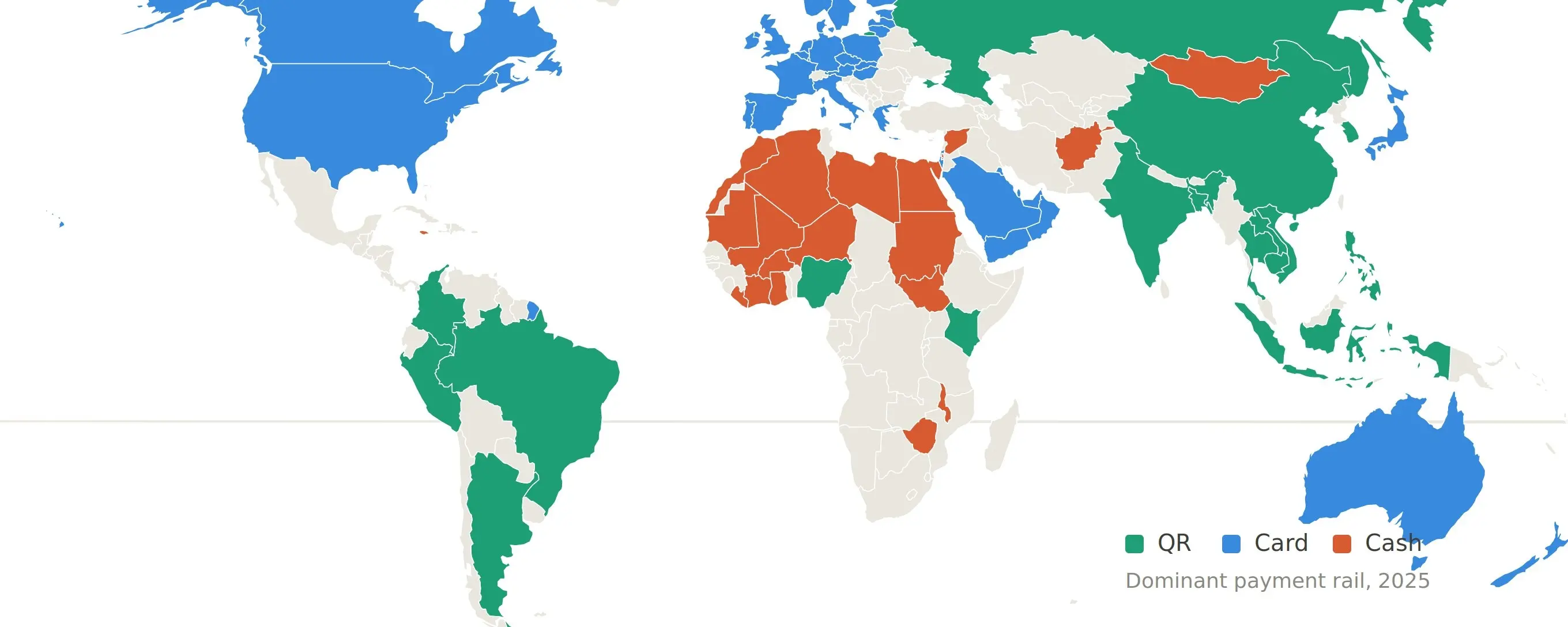
This report challenges common misconceptions about Latin America's payment landscape, based on over 500 hours of firsthand research. Key findings include: 1) Crypto card transaction volume primarily comes from high-net-worth individuals receiving USDT salaries, not retail spending. 2) QR code payments (e.g., Brazil's Pix, Argentina's Mercado Pago) are the dominant payment method across most emerging markets, not cards. 3) A major untapped opportunity lies in enabling cross-border interoperability between domestic instant payment systems. 4) Payment competition is shifting from customer acquisition to owning the settlement layer (e.g., acquiring banks). 5) Latin America is not a single market; Brazil, Mexico, Argentina, and smaller "forgotten five" countries (e.g., Guatemala, Honduras) have vastly different dynamics. 6) Stablecoin-to-fiat conversion margins are collapsing toward zero, pushing companies to build value-added services on top. 7) Future payment winners will be multi-country brands, not single-corridor specialists. 8) Marketing must target specific user segments (e.g., digital nomads, unbanked immigrants) with tailored messaging, not a generic "Brazilian" audience. 9) Contrary to perception, Latin American regulators are often ahead of the US in creating frameworks for digital assets and instant payments, with clear licensing deadlines. The core takeaway is that the region's payment rules are being rewritten, moving beyond cards and stablecoin arbitrage towards integrated, cross-border QR-based solutions.

链捕手2 хв тому

Latin America's Payments Landscape Is Not What You Think It Is

链捕手2 хв тому

Vitalik's Algorithmic Stablecoin Vision: Interpreting the Mechanism and Challenges from an Options Perspective

Vitalik Buterin's recent algorithmic stablecoin proposal envisions using an option-like mechanism to create a stablecoin without the liquidation risks inherent in traditional collateralized debt position (CDP) models. The design splits one unit of ETH into two components: a 'stable' leg (P) that maintains value up to a certain strike price, and an 'upside' leg (N) that captures any appreciation above that price. Together, they always sum to one ETH, eliminating the need for debt or liquidation mechanisms. From an options perspective, the stable leg essentially functions as a synthetic, covered call position. However, significant challenges exist. For the stable asset to maintain its peg, it must continuously roll deep in-the-money call options, leading to potential rollover slippage, predictable trading paths vulnerable to front-running, and liquidity issues. Crucially, the system's scalability depends on a constant demand for the upside leg—a form of leveraged ETH long position without funding rates or liquidation risk. It's unclear if such persistent, specific demand will materialize from speculators or market makers who have simpler alternatives like perpetual swaps. The author, drawing from experience with Rysk, argues that DeFi options have struggled as standalone trading products due to complexity and fragmented liquidity. Their potential lies instead as foundational infrastructure underpinning more complex financial primitives like stablecoins, structured yields, or index products—transforming from a direct product into a core pricing and risk distribution engine for the next generation of on-chain finance.

marsbit1 год тому

Vitalik's Algorithmic Stablecoin Vision: Interpreting the Mechanism and Challenges from an Options Perspective

marsbit1 год тому

GPT-5.6 Countdown: Abandon the Illusion of a Single API, Computational Iteration Can't Outpace a Single Page of Compliance

In mid-June, three seemingly independent industry events—the compliance-driven throttling of Fable 5, the open-sourcing of GLM-5.2, and the leaked release timeline for GPT-5.6—are pushing the global AI industry toward a watershed moment. These shifts signal a fundamental restructuring of the industry's underlying logic. First, **"usability" has substantially overtaken "advanced capabilities"** as the primary weight, pushing the global large language model (LLM) supply chain into a "dual-track" phase of controlled closed-source and local open-source coexistence. Second, **the competitive moats of closed-source giants are shifting**. Their technical focus is moving from "language intelligence" toward "spatial intelligence (world models)"—a domain heavily reliant on computing power. Third, faced with常态化 transnational compliance risks, **a "model-agnostic" decoupled design has become a survival necessity for application-layer developers to maintain business continuity.** The article details how Anthropic's Fable 5, despite its advanced engineering feats, was restricted for non-U.S. citizens within 72 hours of launch, highlighting how geopolitical compliance can instantly limit even the most advanced models. In response, the open-source camp, exemplified by Zhipu AI's MIT-licensed GLM-5.2, is gaining market share by offering stable performance improvements and significant cost advantages (up to 70% savings for enterprises), while achieving full adaptation with domestic semiconductor platforms. Meanwhile, closed-source leaders like OpenAI are pivoting. The anticipated GPT-5.6 reportedly shifts focus from language to spatial intelligence and world models, aiming to rebuild a generational gap in areas like 3D understanding, simulation, and industrial design that demand immense compute. The core conclusion is that the LLM supply chain's logic has changed. Enterprises must now evaluate infrastructure based on a composite of technical performance and policy compliance. For developers, complete reliance on a single closed-source API poses unacceptable risk. Implementing a truly model-agnostic architecture—enabling swift switches to compliant, locally deployable open-source alternatives—is no longer just good practice but a fundamental baseline for business continuity.

marsbit4 год тому

GPT-5.6 Countdown: Abandon the Illusion of a Single API, Computational Iteration Can't Outpace a Single Page of Compliance

marsbit4 год тому

Торгівля

Спот
Ф'ючерси

Популярні статті

Як купити GENIUS

Ласкаво просимо до HTX.com! Ми зробили покупку Genius (GENIUS) простою та зручною. Дотримуйтесь нашої покрокової інструкції, щоб розпочати свою криптовалютну подорож.Крок 1: Створіть обліковий запис на HTXВикористовуйте свою електронну пошту або номер телефону, щоб зареєструвати обліковий запис на HTX безплатно. Пройдіть безпроблемну реєстрацію й отримайте доступ до всіх функцій.ЗареєструватисьКрок 2: Перейдіть до розділу Купити крипту і виберіть спосіб оплатиКредитна/дебетова картка: використовуйте вашу картку Visa або Mastercard, щоб миттєво купити Genius (GENIUS).Баланс: використовуйте кошти з балансу вашого рахунку HTX для безперешкодної торгівлі.Треті особи: ми додали популярні способи оплати, такі як Google Pay та Apple Pay, щоб підвищити зручність.P2P: Торгуйте безпосередньо з іншими користувачами на HTX.Позабіржова торгівля (OTC): ми пропонуємо індивідуальні послуги та конкурентні обмінні курси для трейдерів.Крок 3: Зберігайте свої Genius (GENIUS)Після придбання Genius (GENIUS) збережіть його у своєму обліковому записі на HTX. Крім того, ви можете відправити його в інше місце за допомогою блокчейн-переказу або використовувати його для торгівлі іншими криптовалютами.Крок 4: Торгівля Genius (GENIUS)Легко торгуйте Genius (GENIUS) на спотовому ринку HTX. Просто увійдіть до свого облікового запису, виберіть торгову пару, укладайте угоди та спостерігайте за ними в режимі реального часу. Ми пропонуємо зручний досвід як для початківців, так і для досвідчених трейдерів.

354 переглядів усьогоОпубліковано 2026.04.29Оновлено 2026.06.02

Як купити GENIUS

Обговорення

Ласкаво просимо до спільноти HTX. Тут ви можете бути в курсі останніх подій розвитку платформи та отримати доступ до професійної ринкової інформації. Нижче представлені думки користувачів щодо ціни GENIUS (GENIUS).

活动图片