HYPE现货ETF连续14天吸筹1%,75美元新高只是起点?

Odaily星球日报Опубліковано о 2026-06-03Востаннє оновлено о 2026-06-03

Анотація

文章标题《HYPE现货ETF连续14天吸筹1%,75美元新高只是起点?》讨论了Hyperliquid(HYPE)代币近期在现货ETF资金流入和机构支持下价格创新高的现象。 核心内容如下: - **现货ETF持续吸筹**:HYPE现货ETF(21Shares的THYP和Bitwise的BHYP)自推出后已连续14天净流入,累计超1.36亿美元,吸收了约0.9%的HYPE市值。其表现远超同期BTC、ETH等主流ETF,成为第五大加密现货ETF。 - **买盘双重支撑**:除了ETF流入,Hyperliquid协议的Assistance Fund(AF)机制将大部分交易费用用于回购HYPE,已累计回购超11亿美元。ETF与AF共同形成买盘支撑,有助于抵消每月团队代币解锁带来的抛压。 - **机构积极布局**:a16z、Galaxy Digital等机构持续买入HYPE,其中a16z可能已成为链上外部第一大持仓实体。机构认为HYPE具备实际价值捕获,是“第二代”加密货币。此外,专注于HYPE的上市公司Hyperliquid Strategies(PURR)因持仓浮盈,已被初步纳入罗素3000指数,未来可能吸引更多被动资金。 - **市场观点与预期**:BitMEX联创Arthur Hayes等看好HYPE,认为其有望在本轮牛市超越SOL。尽管HYPE价格已创75美元新高,但ETF的持续流入、机构增持以及可能的新ETF推出(如灰度申请的产品)为其提供了进一步上涨的动力。 总体而言,HYPE在传统资金和协议机制的双重支持下,基本面强劲,市场关注度持续攀升。

原创 |Odaily 星球日报(@OdailyChina)

作者|Golem(@web3_golem)
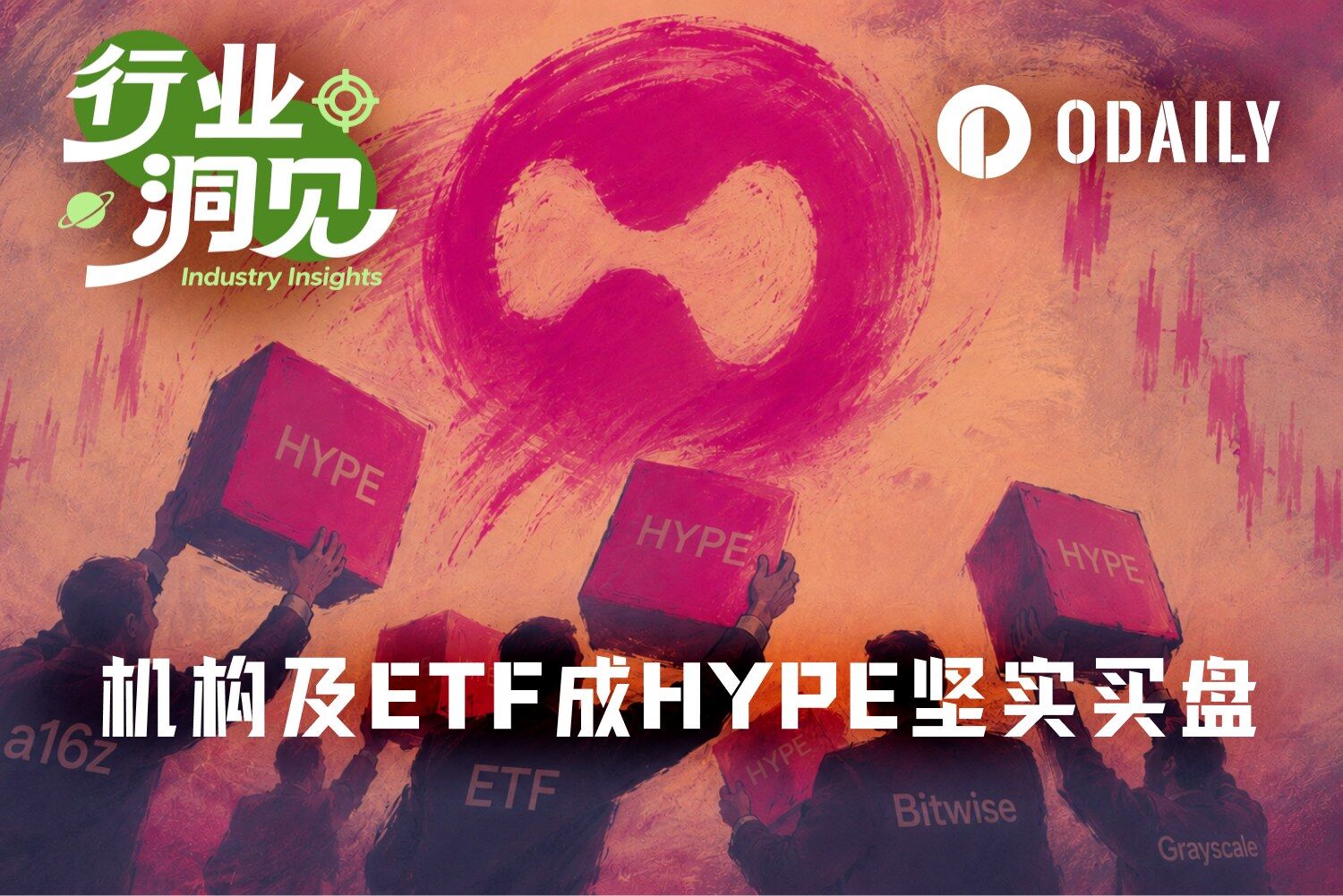
HYPE 至少应在本轮牛市结束前超越 SOL”,BitMEX 联创、最忠实的“H 卫兵” Arthur Hayes 在 5 月底率先公开喊出了这个预期,此前他还多次表达过 HYPE 将涨至 150 美元。

Arthur Hayes 之所以“踩一捧一”,起因是 Multicoin Capital 前联创、“S 卫兵” Kyle Samani 先在社区向 Hyperliquid 开火,随后二人的“对骂”便一发不可收拾,最后以一个 10 万美元的对赌了结,赌约为 HYPE 在今年剩余时间跑赢市值前十的所有代币(了解二人恩怨详情可阅读:Solana 和 Hyperliquid 最忠实的卫兵,互相骂了起来)。

最近几天,HYPE 持续拉升,创下 75 美元历史新高,想要上车的投资者“恐高”,一部分人甚至开始尝试做空。本文,Odaily星球日报 将从市场买卖盘角度分析 HYPE 基本面的变化,供读者参考。

史上最强山寨币 ETF 登场

目前市场上共有两只 HYPE 现货 ETF,5 月 12 日,21Shares 在纳斯达克推出了首支 Hyperliquid ETF(THYP);5 月 15 日,Bitwise 也在纽交所推出了 Hyperliquid ETF(BHYP)。

HYPE 现货 ETF 连续 14 天净流入

截止 6 月 2 日,HYPE 现货 ETF 上线至今已实现连续 14 天净流入,累积净流入量超 1.36 亿美元,已经吸收了 HYPE 总市值的约 0.9%,其中 Bitwise 的 BHYP 净流入量达 8296 万美元,成为全球最大 HYPE ETF。

HYPE 现货 ETF 上线后的表现,足以看出传统资金对 Hyperliquid 的追捧程度。在 12 支美国加密现货 ETF 中,按累积总净流入量计算,HYPE 现货 ETF 已成为除 BTC 现货 ETF、ETH 现货 ETF、XRP 现货 ETF 和 SOL 现货 ETF 外的第 5 大加密现货 ETF,远远将其他上线更早的加密现货 ETF 甩在身后。

对比 BTC 和 ETH 现货 ETF 自 5 月以来的表现,也更能看出市场的分化趋势,加密资产 ETF 资金正在重新配置。

BTC 现货 ETF 自 5 月 15 日起已连续 12 天净流出,5 月共流出超 24.3 亿美元,打破了 2025 年初创下的连续 8 日净流出记录;ETH 现货 ETF 自 5 月 11 日起已连续 16 天净流出,5 月共流出超 5.4 亿美元。而 5 月 28 日 VanEck 在纳斯达克推出的 BNB ETF(VBNB)甚至已连续 4 天无净流入。

在这轮周期中,机构和传统资金对 BTC 和 ETH 等 ETF 的敞口需求明显降温,HYPE 对他们的吸引力反而逐渐增强,FOMO 程度甚至高于 BTC 和 ETH 现货 ETF 首发时的数据。

HYPE 现货 ETF 在上线两周内已经吸收了接近 1%的 HYPE 市值,按市值比例计算超过了 BTC 和 ETH 现货 ETF 的同期首发表现。据 SoSoValue 数据,BTC 现货 ETF 首两周净流入 14.6 亿美元,仅吸收了当时约 0.2%的 BTC 市值;ETH 现货 ETF 首两周甚至净流出约 4 亿美元;而 SOL 现货 ETF 首两周净流入约 3.8 亿美元,也仅吸收了当时约 0.47%的 SOL 市值。

HYPE 现货 ETF 的持续流入,对 HYPE 的价格形成了稳固的支撑。

双重支撑 HYPE 买盘,抵消解锁抛压

除了 ETF,Hyperliquid 的协议收入也是 HYPE 的买盘的重要支撑。

早在 2025 年初,Hyperliquid 推出 Assistance Fund (AF) 机制,设定将 97% 的协议交易费用(perps + spot 等) 自动进入 AF 系统地址并持续回购 HYPE,后续又将费用比例改为 99%,这个机制使得 HYPE 能有效捕获到 Hyperliquid 协议价值,同时也成为 HYPE 价格的重要支撑。

Hyperliquid 每日协议收入在 100-300 万美元区间,自 AF 机制执行以来,已累计回购超 11 亿美元的 HYPE。虽然 HYPE 现货 ETF 累计净流入不如 AF,但其增速快,仅半个月净流入量就追上了 AF 回购量的 1/10,5 月 29 日单日最高净流入量达 3162 万美元。

如今,HYPE 现货 ETF 的加入,将会给 HYPE 形成双重支撑,从而抵消团队代币解锁带来的抛压。

自 2026 年 1 月起,官方规定团队代币解锁采用每月一次性解锁的方式,固定在每月 6 日进行。而 6 月 6 日也将会有价值 3870 万美元的代币一次性解锁,但也许并不会在市场造成较大的抛压。

ETF 买入还有一个重要特点是,其背后的投资者可能并不了解代币经济学,甚至都未直接操作过 DeFi 协议,他们只是想获得 HYPE 的风险敞口。因此 ETF 投资者对代币解锁的敏感度也较低,只要项目基本面没有剧烈变化,代币解锁并不会压制买盘力量。

同时,未来还会有更多 HYPE 现货 ETF 推出。6 月 2 日,Grayscale 已经提交 Hyperliquid Staking ETF 的 S-1 修订文件,提供约 200 万枚 HYPE 作为种子资本投资,Hyperliquid ETF 代码为 Grayscale Hyperliquid Staking ETF(HYPG),并且将于 6 月 4 日正式开启交易。

HYPE 将迎来更深的流动性、更强的机构参与度,以及持续产生的增量买盘。

机构比散户还 FOMO?

机构对 HYPE 的 FOMO 程度一点不比散户投资者弱,他们一边公开发表看好 HYPE 言论,一边用真金白银助推 HYPE 上涨。

a16z 或已成 HYPE 外部第一大持仓机构

自 2025 年 8 月开始,a16z 便开启了 HYPE 的大额囤积模式。据加密分析师 Ai 姨@ai_9684xtpa 监测,a16z 可能已成为 HYPE 链上第六大持仓实体,外部第一大持仓实体。HYPE 链上前 5 大地址均属于 Hyperliquid 自家生态项目(第五为 Kinetiq 质押协议),而第六个地址正是 a16z 旗下的,该地址持有 309.5 万枚 HYPE,价值超 2.23 亿美元。
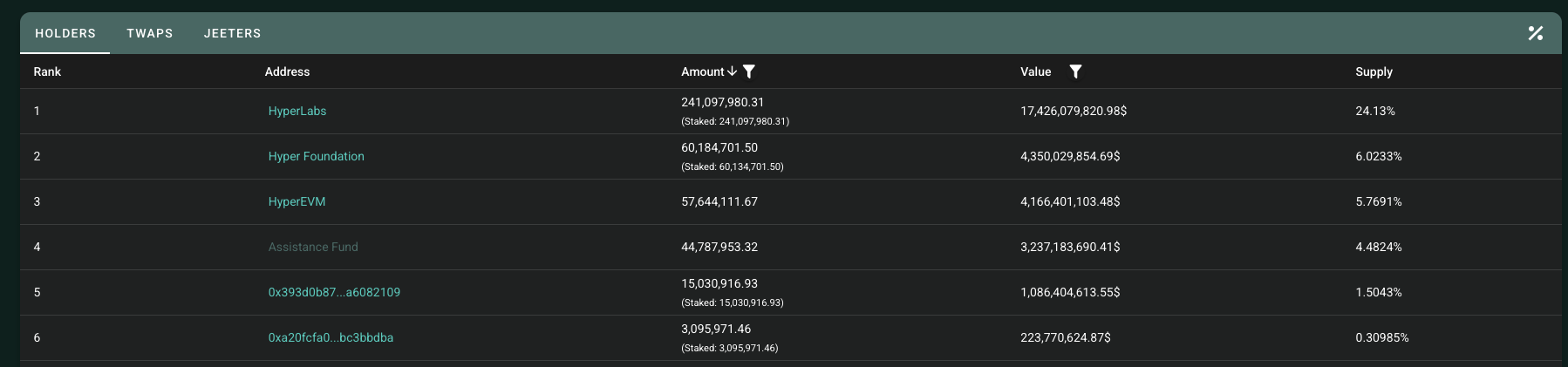
但这并不是 a16z 唯一的 HYPE 持仓地址,链上显示 a16z 还通过多个关联地址持续买入囤积 HYPE。

5 月 28 日,加密分析师 Ai 姨@ai_9684xtpa 监测,与 a16z 关联的 0x4c6 开头地址从多家交易所及做市商地址累计提取 253947.43 枚 HYPE,平均提取价格约 59.2 美元;5 月 30 日,Lookonchain 监测到与 a16z 关联的 0xb5E 开头地址再次买入 226121 枚 HYPE,并且自 4 月 14 日以来,该地址已累计买入 390 万枚 HYPE,平均买入价格约 49.4 美元。

除了 a16z 外,Galaxy Digital 也在囤积 HYPE。6 月 3 日据 Lookonchain 监测,Galaxy Digital 从 Coinbase 提取 17.9 万枚 HYPE,价值约 1262 万美元,而在 5 月 21 日,其另一关联钱包也买入了 158100 枚 HYPE,价值约 880 万美元。

机构早已不将 HYPE 视为普通的空气山寨币,Bitwise 首席投资官 Matt Hougan 发文称,HYPE 不仅仅是一个山寨币,而是“第二代”加密货币,因为它具备实际价值捕获、回购以及机构需求。

同时,机构们已经将 Hyperliquid 的定位从 Perp DEX 提升到了区块链金融基础设施平台。灰度中报告中称,Hyperliquid 未来甚至可能挑战传统衍生品交易与交易所体系,并成长为“金融服务巨头”。

HYPE DAT 公司入选罗素 3000 指数

在美股 DAT 概念降温,赛道龙头 Strategy 也开始卖币的时候,随着 HYPE 价格的水涨船高,押注 HYPE 的 DAT 公司持续浮盈。(相关阅读:DAT 失败?押注 HYPE 的上市公司浮盈 12.5 亿美元)

其中最值得关注的是 Hyperliquid Strategies(NASDAQ:PURR)。据官网数据,目前其共持有 2230 万枚 HYPE,持仓价值为 16.17 亿美元。Hyperliquid Strategies 在 5 月初发布的财报中还披露,截至 2026 年 Q1,他们投入 1050 万美元回购约 300 万股股票,平均成本为每股 3.42 美元。

5 月 22 日,FTSE Russell 公布了 2026 年 6 月罗素 3000 指数重组的初步名单,PURR 出现在罗素 3000 指数的增补名单中,并且预计 6 月 26 日生效。
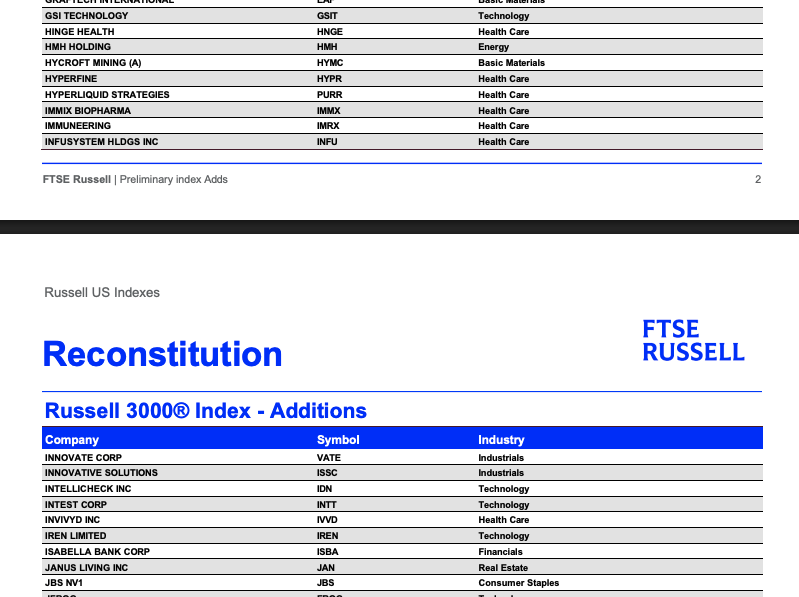
PURR 出现在罗素 3000 指数的增补名单中

罗素 3000 指数也是美国股市最广泛的股票指数之一,其涵盖的是美国最大的约 3000 家上市公司,可以说是几乎把整个美国股市都装进去了,每年 6 月会进行一次大规模调整。目前有大量指数基金、养老基金和 ETF 会跟踪该指数,FTSE Russell 披露约有 10.6 万亿美元资产以罗素美国指数作为基准。

若 PURR 真的被纳入了罗素 3000 指数,它不仅会获得基金被动配置,知名度也会进一步提高。为了帮投资者获得更多 HYPE 风险敞口,他们未来或许也会效仿 Strategy 的“融资买币”模式,进而成为 HYPE 的又一坚实买盘支撑。


Пов'язані питання

QHYPE现货ETF自上线以来连续多少天净流入,累积净流入量是多少?

A自上线以来已实现连续14天净流入,累积净流入量超1.36亿美元。

Q文章中提到,HYPE现货ETF已成为美国加密现货ETF中按累积净流入量计算的第几大?

A已成为除BTC、ETH、XRP和SOL现货ETF外的第5大加密现货ETF。

Q除了ETF资金,HYPE价格的另一个重要买盘支撑来源于什么机制?

A来源于Hyperliquid协议的Assistance Fund (AF) 机制,该机制将99%的协议交易费用自动用于回购HYPE。

Q根据文章,哪家知名投资机构可能已成为HYPE链上外部第一大持仓实体?

Aa16z (Andreessen Horowitz) 可能已成为HYPE链上外部第一大持仓实体。

Q押注HYPE的哪家DAT公司入选了罗素3000指数的增补名单?

AHyperliquid Strategies (NASDAQ: PURR) 入选了2026年6月罗素3000指数的增补名单。

Пов'язані матеріали

Wintermute Market Weekly: Iran War Ends, Inflation Meets Expectations, BTC Rebounds to Lower 60ks But Don’t Rush to Buy the Dip

**Wintermute Market Weekly: BTC Rebounds to $60K Lows, But Caution Advised** This week saw a broad market rebound, primarily driven by two converging factors: a US CPI inflation reading that met expectations (4.2% YoY) and former President Trump's announcement of a deal to end the Iran conflict. The latter triggered a sharp drop in oil prices, reducing geopolitical risk premiums and easing inflation fears. Consequently, risk assets like equities and cryptocurrencies rallied, with Bitcoin recovering from lows around $60,000 to close the week up 1.9%, while altcoins gained 3.1%. Despite the price bounce, the underlying liquidity picture for crypto remains weak. Key funding channels—stablecoin flows, ETF inflows, and Digital Asset Treasury (DAT) activity—show no signs of structural improvement. ETF outflows recently hit a record streak, and DAT assets have declined significantly. The rally from $60K to $83K earlier is now viewed as a bear-market rally that has failed. The current environment is characterized by low directional conviction and choppy, range-bound trading, likely persisting into summer. The report advises caution against aggressively buying the dip. While the $60K area offers attractive long-term risk/reward, a sustained bull run requires a visible turnaround in capital inflows, which hasn't materialized. The upcoming FOMC meeting and Powell's commentary, alongside the formal Iran deal signing, are noted as near-term catalysts. The core takeaway is to watch fund flows rather than price action and avoid being whipsawed by volatility before clear signs of institutional or retail capital returning emerge.

marsbit4 хв тому

Wintermute Market Weekly: Iran War Ends, Inflation Meets Expectations, BTC Rebounds to Lower 60ks But Don’t Rush to Buy the Dip

marsbit4 хв тому

Cursor, Why Boarded Musk's Starship?

SpaceX announced its acquisition of AI programming startup Cursor's parent company, Anysphere, for $60 billion in an all-stock deal, just days after its record-breaking IPO. The move sent SpaceX's stock soaring, briefly making it the most valuable U.S. company. Cursor, founded in 2022 by MIT graduate Michael Truell and his classmates, is a popular AI coding assistant that allows developers to switch between models from OpenAI, Anthropic, and others. It saw explosive revenue growth, reaching a $4 billion annualized run rate in early 2026. However, its market share was eroded by the launch of competitor Claude Code from its key AI supplier, Anthropic. This dependence prompted Cursor to develop its own AI model, Composer, in early 2026. To scale Composer, Cursor needed immense computing power. In April 2026, it struck a deal with SpaceX, granting the latter an option to acquire it post-IPO. SpaceX exercised this option, offering Cursor access to its Colossus supercomputer, powered by hundreds of thousands of top-tier Nvidia AI chips. For SpaceX, the acquisition is a strategic move to bolster its AI capabilities, particularly for its xAI division, and advance its broader ambition of building orbital, solar-powered data centers. While the deal surprised some employees and investors given Truell's earlier stance on independence, it represents a high-stakes partnership. SpaceX CEO Elon Musk has projected the company could reach $1 trillion in revenue by 2030. For Truell, joining forces with SpaceX is a monumental gamble on an unprecedented scale in the race for AI dominance.

链捕手6 хв тому

Cursor, Why Boarded Musk's Starship?

链捕手6 хв тому

The More It Rises, the More Dangerous? The Systemic Risks Behind SpaceX's Soaring Valuation

Summary: The article raises concerns about the systemic risks posed by SpaceX's skyrocketing valuation, arguing that modern market mechanics, rather than fundamentals, are driving its price discovery. Following SpaceX's market capitalization surpassing $3 trillion in after-hours trading, the author contends that the market is no longer functioning properly. The core issue is not SpaceX's business prospects but the unhealthy market structure surrounding it. With limited float and the imminent launch of options trading, the stage is set for a potential "gamma squeeze"—a feedback loop where market makers hedging call options are forced to buy shares, pushing the price higher and attracting more speculative momentum traders. This mechanism, seen previously with Tesla and meme stocks, can decouple valuation from financial reality. The danger escalates as extreme valuations force passive funds, ETFs, pensions, and major indices to hold the stock. If SpaceX grows large enough—hypothetically reaching $5 or even $10 trillion—its performance would increasingly dictate broader market indices, embedding systemic risk. The author warns that when price appreciation itself becomes the primary bullish thesis, the market transforms from a capital allocation mechanism into a self-reinforcing speculative machine, endangering the retirement savings of ordinary investors tied to passive strategies. The piece questions whether such a system can still perform its fundamental role of price discovery.

marsbit11 хв тому

The More It Rises, the More Dangerous? The Systemic Risks Behind SpaceX's Soaring Valuation

marsbit11 хв тому

How Much of the Subscription Fee You Pay to Claude Can Optical Module Companies Get?

How much of your $20 Claude Pro subscription actually goes to AI model companies like Anthropic? A viral breakdown image highlights the fundamental valuation challenge for AI applications versus traditional SaaS. Unlike SaaS with high software margins, AI subscriptions face variable "inference costs": every user query consumes GPU time, power, and cloud resources. This creates a tension between fixed subscription fees and usage-driven expenses. While the specific dollar splits are illustrative, the core question is whether AI revenue can achieve SaaS-like margins as usage scales. Currently, infrastructure providers (cloud platforms, GPU makers like Nvidia, HBM suppliers, power/data centers) capture more certain revenue from growing AI usage. Their financials reflect pricing power and faster earnings validation. The bullish case hinges on efficiency improvements: model optimization, caching, smaller models, and custom chips could lower per-token costs over time. The key debate is whether cost declines can outpace increases in user workload complexity and volume. Ultimately, for AI companies to command high SaaS-like valuations, they must demonstrate not just user growth but also improving gross margins after accounting for inference costs. Investors will scrutinize not just subscriber numbers, but usage patterns, enterprise pricing tiers, and real efficiency gains.

marsbit21 хв тому

How Much of the Subscription Fee You Pay to Claude Can Optical Module Companies Get?

marsbit21 хв тому

OpenAI's Hyperliquid Pre-IPO Pricing Venture: Why Did It Last Only Half a Year?

The article discusses the rise and fall of Pre-IPO pricing markets on the Hyperliquid blockchain. Trade.xyz, an anonymous team, successfully built the largest pre-market for SpaceX (SPCX) by launching a contract with a clear anchor: the eventual Nasdaq listing price. This provided inherent price stability and validation. In contrast, Ventuals, a team backed by Paradigm, failed despite holding exclusive contracts for highly sought-after companies like OpenAI and Anthropic. Its key mistake was its pricing mechanism. For companies with no near-term IPO date, Ventuals' oracle relied partly on opaque private market transactions and, critically, partly on its own contract's moving average price. This created a self-referential feedback loop where prices were artificially propped up and detached from genuine supply and demand, leading to illiquid markets. Ventuals shut down after nine months, settling positions at final prices of $1,341.80 for OpenAI and $1,618.90 for Anthropic. Ironically, some employees and late-stage investors of these very companies reportedly used these flawed Ventuals prices for valuation reference, highlighting the acute demand for any price signal in illiquid private markets. The article concludes that while demand for pre-IPO trading is real and growing, with players like Coinbase now entering the space, the fundamental challenge remains: without a public listing to provide a definitive price anchor, these markets struggle to establish truly accurate and liquid pricing. The need for a transparent, self-correcting market is the critical lesson from Ventuals' failure.

marsbit37 хв тому

OpenAI's Hyperliquid Pre-IPO Pricing Venture: Why Did It Last Only Half a Year?

marsbit37 хв тому

Торгівля

Спот
Ф'ючерси

Популярні статті

Як купити HYPE

Ласкаво просимо до HTX.com! Ми зробили покупку Hyperliquid (HYPE) простою та зручною. Дотримуйтесь нашої покрокової інструкції, щоб розпочати свою криптовалютну подорож.Крок 1: Створіть обліковий запис на HTXВикористовуйте свою електронну пошту або номер телефону, щоб зареєструвати обліковий запис на HTX безплатно. Пройдіть безпроблемну реєстрацію й отримайте доступ до всіх функцій.ЗареєструватисьКрок 2: Перейдіть до розділу Купити крипту і виберіть спосіб оплатиКредитна/дебетова картка: використовуйте вашу картку Visa або Mastercard, щоб миттєво купити Hyperliquid (HYPE).Баланс: використовуйте кошти з балансу вашого рахунку HTX для безперешкодної торгівлі.Треті особи: ми додали популярні способи оплати, такі як Google Pay та Apple Pay, щоб підвищити зручність.P2P: Торгуйте безпосередньо з іншими користувачами на HTX.Позабіржова торгівля (OTC): ми пропонуємо індивідуальні послуги та конкурентні обмінні курси для трейдерів.Крок 3: Зберігайте свої Hyperliquid (HYPE)Після придбання Hyperliquid (HYPE) збережіть його у своєму обліковому записі на HTX. Крім того, ви можете відправити його в інше місце за допомогою блокчейн-переказу або використовувати його для торгівлі іншими криптовалютами.Крок 4: Торгівля Hyperliquid (HYPE)Легко торгуйте Hyperliquid (HYPE) на спотовому ринку HTX. Просто увійдіть до свого облікового запису, виберіть торгову пару, укладайте угоди та спостерігайте за ними в режимі реального часу. Ми пропонуємо зручний досвід як для початківців, так і для досвідчених трейдерів.

304 переглядів усьогоОпубліковано 2024.12.11Оновлено 2026.06.02

Як купити HYPE

Обговорення

Ласкаво просимо до спільноти HTX. Тут ви можете бути в курсі останніх подій розвитку платформи та отримати доступ до професійної ринкової інформації. Нижче представлені думки користувачів щодо ціни HYPE (HYPE).

活动图片