E-Estate Announces 1 Year Live: Washington DC Summit as Real Estate Tokenization Enters Its Next Phase

TheNewsCryptoОпубліковано о 2026-05-15Востаннє оновлено о 2026-05-15

Анотація

E-Estate Group Inc. will host the "E-Estate 1 Year Live: Washington DC Summit" on June 13, 2026, at The Watergate Hotel. The event marks one year since the platform's launch and aims to discuss the transition of real estate tokenization from early adoption to structured infrastructure. E-Estate reports having structured over $100 million in tokenized real estate and surpassing $32 million in EST sales. CEO Brandon Stephenson emphasized the focus is now on building legal, educational, and operational infrastructure. The company recently filed a Form D with the SEC, aligning with efforts to strengthen its U.S. market foundation. The summit will review the past year's progress, highlight the role of agent and buyer education, and outline future growth plans for the tokenized real estate sector.

New York, USA, May 15th, 2026, Chainwire

E Estate Group Inc. announced that it will host E-Estate 1 Year Live: Washington DC Summit on June 13, 2026, bringing together company leadership, agents, buyers, strategic partners, and guests interested in the future of blockchain-based real estate ownership.

The summit will take place at The Watergate Hotel in Washington, D.C. and will mark one year since the launch of the E-Estate platform.

The event is designed as a milestone gathering for the E-Estate ecosystem and a broader discussion on how real estate tokenization is moving from early adoption into structured infrastructure. The summit will focus on real assets, blockchain-based ownership models, Real World Assets, platform growth, and the next stage of digital property participation.

Over the past year, E-Estate has moved from launch phase to active market development. According to company data, E-Estate structured a tokenized real estate portfolio exceeding $100 million in 2025, while total EST sales across tokenized property offerings have now surpassed $32 million.

The company said the summit will provide a clear review of what has been built so far, what has been learned during the first year, and how E-Estate plans to continue expanding its infrastructure, property portfolio, and user access.

“Real estate tokenization is no longer only a concept,” said Brandon Stephenson, CEO and Co-Founder of E Estate Group Inc. “The next stage is about building infrastructure around real assets, legal structure, ownership records, user education, and operational discipline. That is what we are focused on at E-Estate.”

In 2026, E Estate Group Inc. filed a Form D notice with the U.S. Securities and Exchange Commission, which the company views as part of its broader effort to strengthen the legal foundation for activity connected to the U.S. market. E-Estate said this step reflects its long-term approach to building within a sector where regulation, compliance, and market standards are still developing.

The company’s model is based on using blockchain infrastructure to support digital participation in real estate assets. Rather than replacing traditional property fundamentals, E-Estate aims to create a more accessible ownership layer where real property, documentation, asset management, and digital records can work together.

The Washington DC Summit will also highlight the role of education and professional participation in the growth of tokenized real estate. E-Estate continues to develop its agent structure, buyer education, business account access, KYB processes, and future platform tools, including planned mobile access.

The program will include presentations from company leaders and selected speakers, recognition segments for top-performing participants, and discussions on the future direction of the platform.

“Real estate remains one of the most important asset classes in the world,” Stephenson added. “Blockchain gives the industry an opportunity to make ownership participation more transparent, more flexible, and more scalable. The companies that succeed will be the ones that connect technology with real assets and real execution.”

E-Estate said the summit will serve as both a first-year review and a forward-looking event, outlining the company’s next stage of growth as the tokenized real estate market continues to gain attention globally.

Official teaser

About E Estate Group Inc.

E Estate Group Inc. is a real estate tokenization company developing blockchain-based infrastructure for digital participation in real property assets. Through the E-Estate platform, the company focuses on connecting real estate, asset management, digital ownership records, buyer access, and agent education within one international ecosystem.

Website: https://e-estate.co

Contact

Emily Lawson
E ESTATE GROUP INC.
[email protected]

Пов'язані питання

QWhat is the purpose and significance of the E-Estate 1 Year Live: Washington DC Summit?

AThe summit, hosted by E Estate Group Inc., marks one year since the launch of the E-Estate platform. Its purpose is to serve as a milestone gathering for the E-Estate ecosystem and to discuss the transition of real estate tokenization from early adoption into structured infrastructure. It will focus on reviewing the company's progress, lessons learned, and outlining its future growth plans.

QWhat key achievements does E-Estate highlight from its first year of operation?

AE-Estate highlights that in 2025, it structured a tokenized real estate portfolio exceeding $100 million. Furthermore, the total sales of EST (E-Estate's tokens) across its tokenized property offerings have surpassed $32 million.

QAccording to CEO Brandon Stephenson, what is the next stage for real estate tokenization?

ABrandon Stephenson states that the next stage is about building infrastructure around real assets, including legal structure, ownership records, user education, and operational discipline. It's moving beyond being just a concept to creating a tangible and structured ecosystem.

QWhat regulatory step did E Estate Group Inc. take in 2026, and why is it significant?

AIn 2026, E Estate Group Inc. filed a Form D notice with the U.S. Securities and Exchange Commission (SEC). The company views this as part of its broader effort to strengthen the legal foundation for its activities connected to the U.S. market, reflecting a long-term approach in a sector where regulation is still developing.

QHow does E-Estate describe its core business model regarding blockchain and real estate?

AE-Estate's model is based on using blockchain infrastructure to support digital participation in real estate assets. It aims not to replace traditional property fundamentals, but to create a more accessible ownership layer where physical property, documentation, asset management, and digital records can work together seamlessly.

Пов'язані матеріали

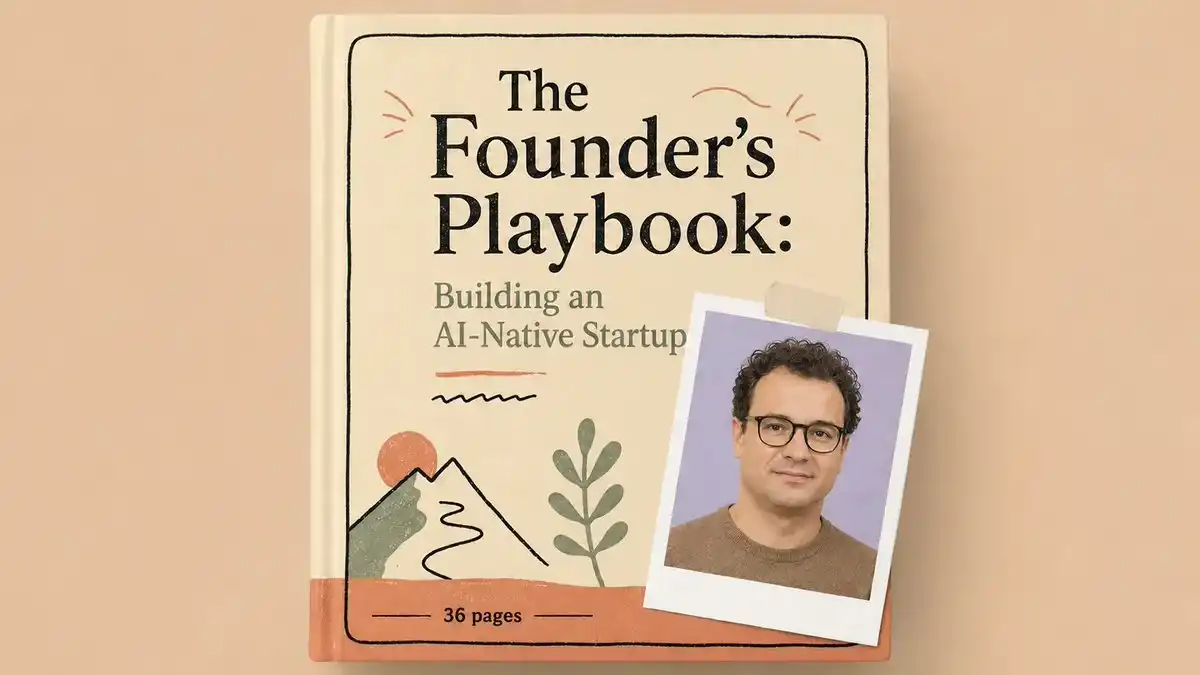
Anthropic Major Release: "The Founder's Playbook" - All 4 Stages of Entrepreneurship, Completely Reimagined with AI

**Anthropic Releases "The Founder's Playbook," Reimagining the Four Stages of Startups with AI** The logic of entrepreneurship is being fundamentally reshaped by AI. Anthropic's new handbook, "The Founder's Playbook: Building an AI-Native Startup," defines the AI-native startup as a new species: not a traditional company with AI tools, but a venture driven by AI from day one. The founder's role is transforming from a hands-on builder to a conductor or architect, orchestrating AI agents for execution while focusing on high-level judgment and strategy. Anthropic outlines a product matrix of Claude tools for different tasks: Claude Chat for interactive research, Claude Code for generating production-ready code, and Claude Cowork for automating knowledge-intensive workflows. The handbook structures the startup lifecycle into four stages, detailing core goals, pitfalls, and AI applications for each: 1. **Idea Stage**: Focuses on validating a real problem. The core challenge is avoiding confirmation bias. AI practices include using Claude as a "structured devil's advocate" to challenge assumptions and for automated market/competitor research. 2. **MVP Stage**: Aims to gather early signals of Product-Market Fit (PMF). Key risks are technical debt and scope creep due to rapid AI-assisted development. Recommended AI uses include maintaining project memory documents (e.g., CLAUDE.md), using Claude Code for structured coding, and automating user feedback analysis. 3. **Launch Stage**: Centers on establishing scalable growth, operations, and compliance. Challenges include accelerating technical debt and founders becoming bottlenecks. AI should be used to build an "operating system" for launch—automating routine tasks (scheduling, reporting, content) and code audits—freeing founders for critical decisions. 4. **Scale Stage**: Focuses on achieving sustainable business operations. The main challenge is delegating operational control. AI should be leveraged for differentiated marketing, operational optimization, and building competitive moats through data network effects. The handbook concludes that in the AI era, "Can we build it?" is no longer the primary constraint. The advantage shifts back to foundational strengths: **insight, judgment, and a deep understanding of a specific problem and audience.**

marsbit5 год тому

Anthropic Major Release: "The Founder's Playbook" - All 4 Stages of Entrepreneurship, Completely Reimagined with AI

marsbit5 год тому

Eight Departments Launch Severe Crackdown on Cross-Border Securities Firms, How to Interpret This?

China's top financial regulators, including the CSRC and seven other ministries, have launched a sweeping crackdown on unlicensed cross-border securities operations. The core action involves a joint enforcement plan and the issuance of administrative penalties against major offshore internet brokers like Futu and Tiger Brokers for conducting unauthorized securities business in mainland China without a domestic license. The primary legal basis is China's requirement for securities businesses to operate with proper, locally issued licenses. The crackdown aims to eliminate a major regulatory gray area, plugging channels that allowed massive, unmonitored capital outflows which posed risks to financial stability, currency controls, and foreign exchange reserves. It also seeks to protect mainland investors who previously lacked legal recourse when dealing with offshore platforms and to secure sensitive financial data. The immediate impact is severe for the targeted brokers, including a complete ban on new mainland business, forced liquidation of existing mainland client positions over two years, and the confiscation of illegal profits estimated in the billions. Their U.S.-listed shares plummeted in response. Market analysts warn that the forced sell-off of an estimated 250-280 billion RMB in assets, concentrated in U.S. tech stocks, Chinese ADRs, and Hong Kong equities, could create sustained selling pressure on these markets over the next two years, potentially lowering valuations. For mainland investors, legal cross-border investment channels will become extremely constrained. The high asset threshold for the Stock Connect program and the severe shortage of QDII fund quotas—leading to chronic high premiums on popular U.S.-focused ETFs—mean retail access to overseas markets like the U.S. will be sharply limited. Conversely, some of the returning capital may flow into domestic A-share sectors like AI, semiconductors, and advanced manufacturing. However, this could further inflate valuations in these already elevated sectors. In conclusion, regulators frame this move not as closing off cross-border investment, but as a necessary step to enforce compliance, manage systemic risk, and steer investors toward regulated, protected channels like QDII and Stock Connect for the long-term health of the financial system.

链捕手5 год тому

Eight Departments Launch Severe Crackdown on Cross-Border Securities Firms, How to Interpret This?

链捕手5 год тому

Торгівля

Спот
Ф'ючерси
活动图片