Worldcoin chạm đáy 6 tháng: Liệu $0.20 có trở thành mức hỗ trợ tiếp theo của WLD?

ambcryptoОпубліковано о 2026-03-28Востаннє оновлено о 2026-03-28

Анотація

Worldcoin (WLD) đã giảm xuống mức thấp nhất trong 6 tháng, phá vỡ hỗ trợ 0,3 USD và chạm mức 0,2701 USD, với mức giảm 9,03% trong ngày. Vốn hóa thị trường giảm từ 1 tỷ USD xuống còn 876 triệu USD, đồng thời hơn 4,26 triệu USD vị thế mua bị thanh lý. Đội ngũ Worldcoin đã chuyển 89,65 triệu WLD (tương đương 26,17 triệu USD) vào các sàn giao dịch, gây áp lực bán thêm. Khối lượng bán trên Binance chiếm ưu thế, trong khi dòng tiền ròng futures giảm mạnh -18,98 triệu USD. Chỉ số RSI cho thấy xu hướng giảm tiếp tục, với khả năng WLD có thể giảm xuống dưới ngưỡng hỗ trợ 0,2 USD nếu không thể phục hồi trên mức 0,3 USD.

Worldcoin [WLD] đã giao dịch trong xu hướng giảm mạnh kể từ khi giảm xuống dưới $1. Trên thực tế, altcoin này đã chốt ở mức thấp hơn kể từ tháng 1, phản ánh áp lực giảm giá mạnh.

Worldcoin kéo dài chuỗi giảm giá, vượt qua hỗ trợ $0.3 và giảm xuống mức thấp nhất trong 6 tháng là $0.2701. Tại thời điểm báo chí, WLD được giao dịch ở mức $0.282, giảm 9.03% trên biểu đồ hàng ngày.

Trong cùng kỳ, vốn hóa thị trường của altcoin giảm từ $1 tỷ xuống $876 triệu, cho thấy dòng vốn rút ra lớn. Sau đợt trượt giá này, mức thanh khoản tăng vọt với hơn $4.26 triệu vị thế mua bị thanh lý, tiếp tục kéo dài xu hướng giảm.

Giữa lúc thị trường yếu đi, đội ngũ Worldcoin đã chuyển một lượng tiền đáng kể vào các sàn giao dịch.

Đội ngũ WLD chuyển 89.65 triệu token

Onchain Lens báo cáo rằng Đội ngũ WorldCoin đã gửi 89.65 triệu WLD, trị giá $26.17 triệu, đến một ví mới. Sau khi chuyển tiền, đội ngũ sau đó bắt đầu gửi tiền đến nhiều sàn giao dịch tập trung (CEX).
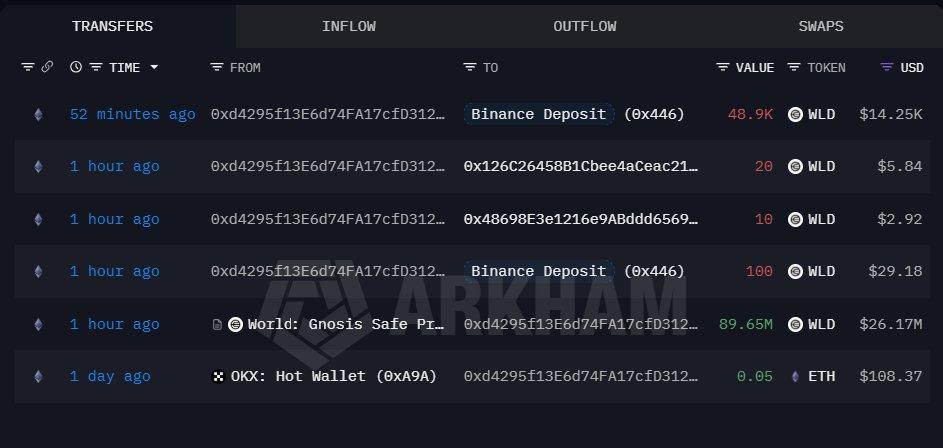
Nguồn: Onchain Lens

Khi một ví của đội ngũ thực hiện các giao dịch chuyển tiền như vậy, nó có thể có hai ý nghĩa quan trọng. Thứ nhất, việc chuyển tiền vào các sàn giao dịch có thể có nghĩa là token đang được chuẩn bị để bán.

Thông thường, động thái này gây lạm phát, tạo áp lực giảm giá ngắn hạn và dẫn đến giảm giá. Tuy nhiên, đôi khi các đội ngũ chuyển tiền vào các sàn giao dịch để cung cấp thanh khoản, hỗ trợ ổn định thị trường bằng cách tránh trượt giá cao hơn.

Mặc dù ít giảm giá hơn, nó cũng có thể tạo áp lực giảm nếu nhu cầu yếu. Kết hợp lại, cả hai động thái đều có thể dẫn đến áp lực giảm giá, kéo theo giá thấp hơn.

WLD đối mặt với áp lực giảm giá mạnh

Bên cạnh việc chuyển token của đội ngũ, Worldcoin đã phải đối mặt với áp lực đáng kể từ những người tham gia thị trường khác.

Ở phía giao ngay, người bán phần lớn thống trị thị trường, như được chứng minh bởi Khối lượng Mua Bán trên Binance. Vào thời điểm viết bài, Khối lượng Bán tăng lên 94 triệu, trong khi Khối lượng Mua giảm xuống 76 triệu tính đến thời điểm viết bài, với delta thị trường ròng giữ ở mức -152 triệu.
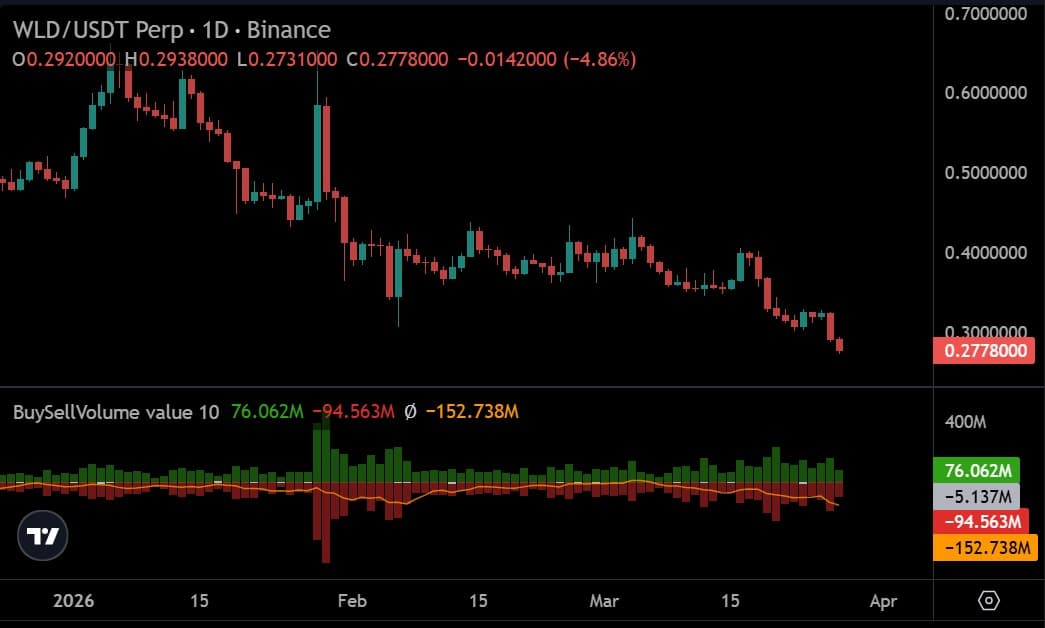
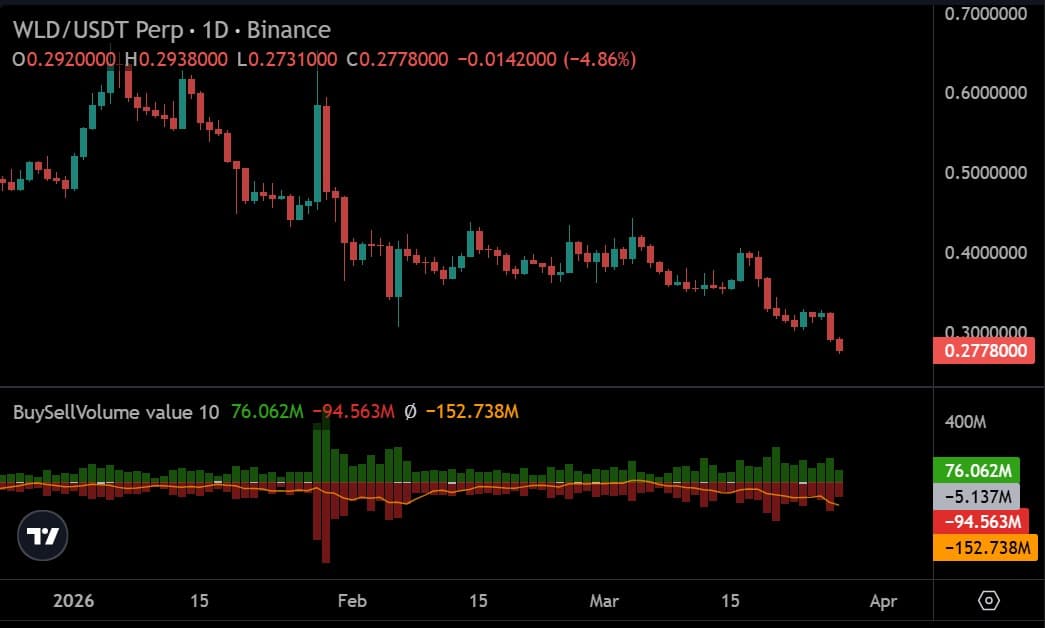
Nguồn: Coinalyze

Cùng hành vi thị trường được quan sát thấy ở phía Hợp đồng Tương lai. Theo dữ liệu từ CoinGlass, Dòng tiền vào Hợp đồng Tương lai giảm xuống $101 triệu trong khi dòng tiền ra tăng vọt lên $120.3 triệu.

Kết quả là, Dòng tiền ròng Hợp đồng Tương lai giảm 277% xuống -$18.98 triệu, một dấu hiệu rõ ràng của việc thoát hàng tích cực trên thị trường hợp đồng tương lai. Điều kiện thị trường như vậy cho thấy tâm lý né tránh rủi ro gia tăng với các trader đang giảm mức độ tiếp xúc.
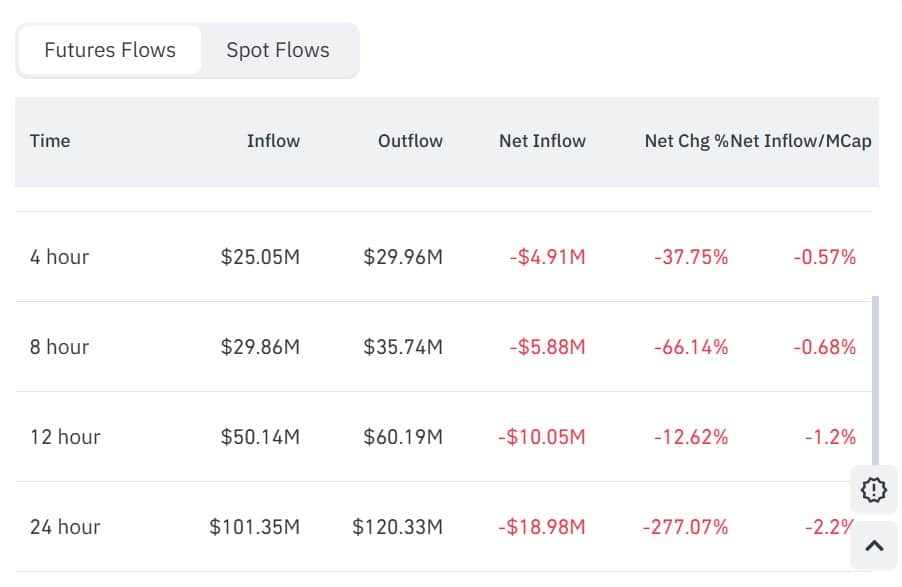
Nguồn: CoinGlass

WLD sẽ còn thua lỗ thêm?

Worldcoin đã phải đối mặt với áp lực giảm giá đáng kể, và việc chuyển token mới nhất của đội ngũ đã làm trầm trọng thêm xu hướng giảm.

Tại thời điểm báo chí, Chỉ số Sức mạnh Tương đối (RSI) của altcoin giảm sâu hơn vào vùng giảm giá và đang tiến gần đến điểm cắt giảm. Thông thường, khi chỉ số động lượng này giảm xuống các mức như vậy, nó cho thấy người bán đã vượt qua người mua.
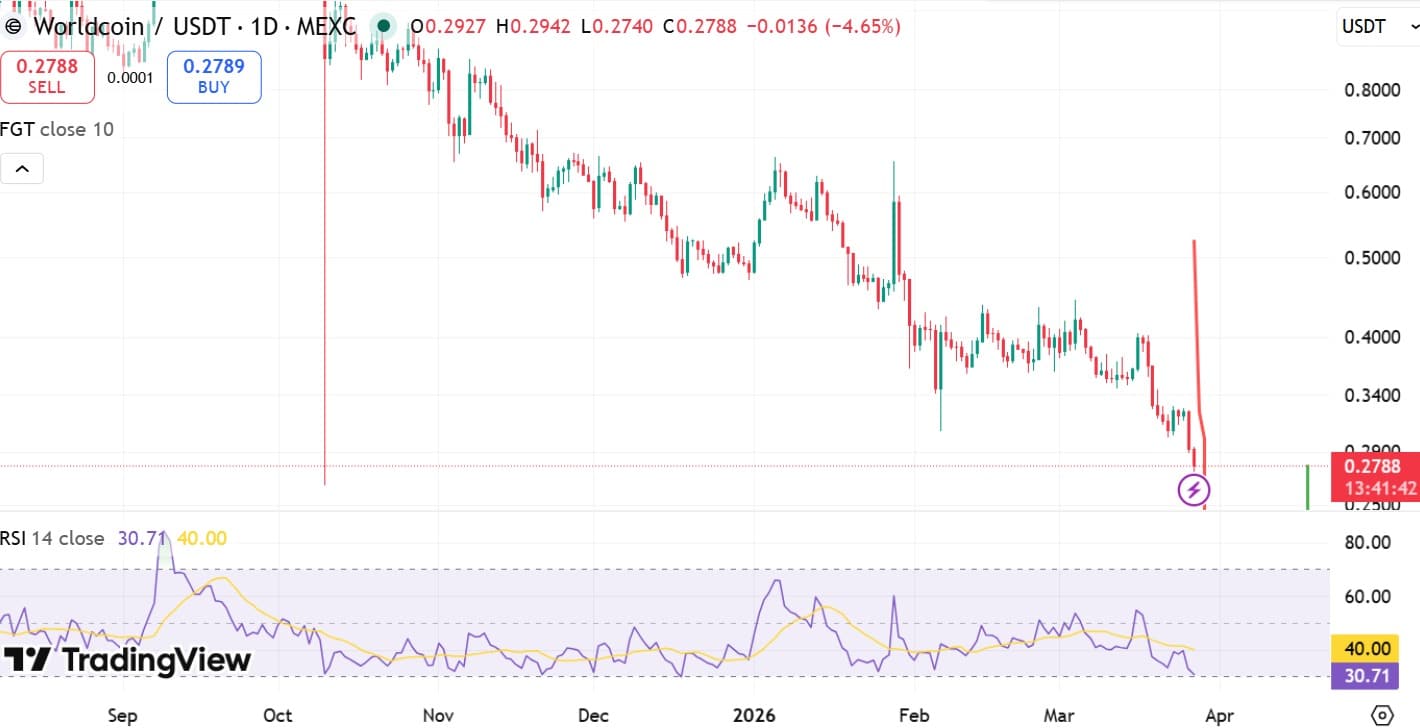
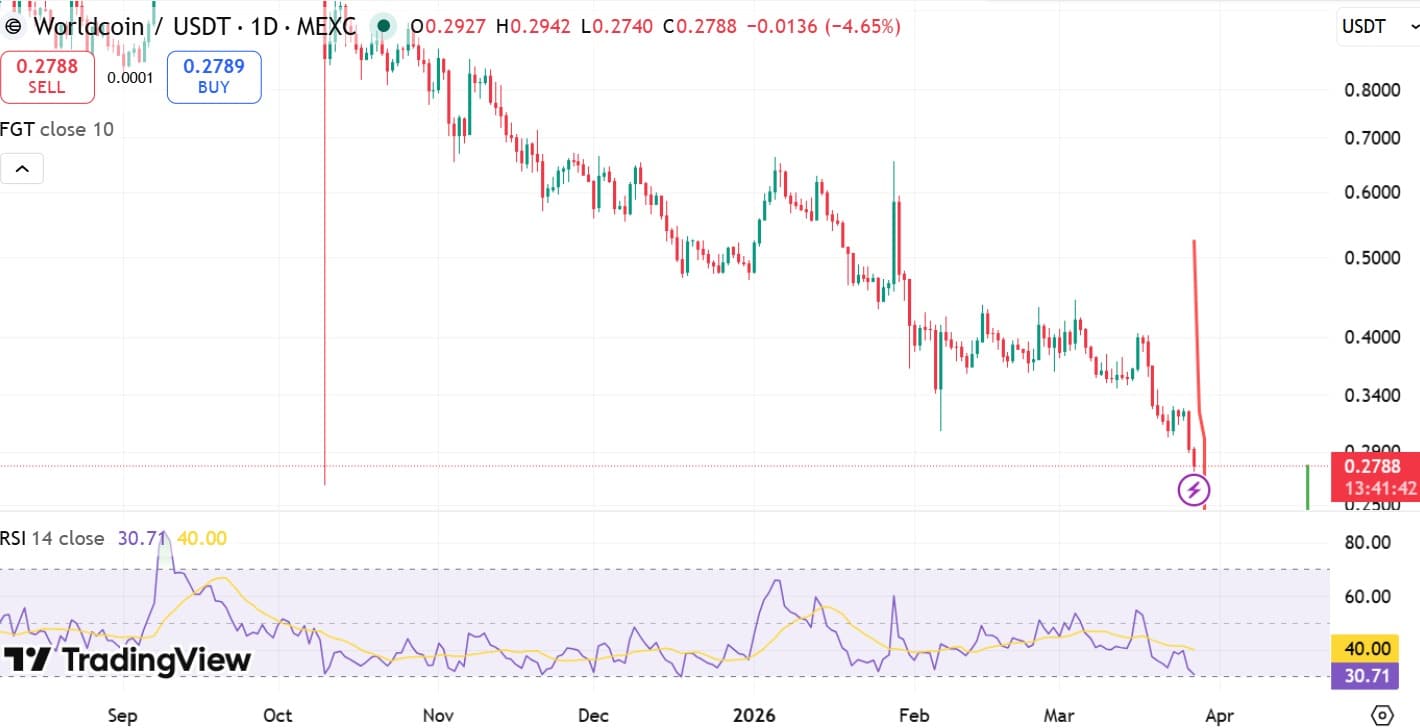
Nguồn: TradingView

Theo truyền thống, việc giảm vào vùng quá bán đã báo trước giá thấp hơn. Trên thực tế, chỉ số Future Grand Trend chỉ ra sự suy giảm tiếp tục của thị trường, với khả năng giảm xuống dưới mức hỗ trợ $0.2.

Để có khả năng đảo chiều xu hướng, WLD cần lấy lại mức kháng cự $0.3 và biến nó thành hỗ trợ.


Tóm tắt cuối cùng

  • Đội ngũ Worldcoin chuyển 89.65 triệu WLD, trị giá $26.17 triệu, đến nhiều sàn giao dịch.
  • WLD giảm 9.03%, vượt qua hỗ trợ $0.3 xuống mức thấp nhất 6 tháng là $0.27.

Пов'язані матеріали

The Gold Buy-on-the-Dip Guide: Watch Interest Rates, Not Just War

"Gold Buying Guide: Focus on Interest Rates, Not Just War" Four months ago, gold buyers likely didn't anticipate buying at a peak that even a war couldn't sustain. After hitting a record high of $5,596 on January 29, gold entered a bear market just 91 days later, its fastest decline since 2008. A key trigger was the Fed's hawkish shift, highlighting that monetary policy, not geopolitics, is the primary driver. The article argues that the traditional "buy gold in turmoil" script has changed. While the US-Iran conflict initially boosted prices, the sustained rally in oil prices heightened inflation fears, forcing central banks to maintain or consider tighter policy. Since gold yields no interest, higher rates increase its opportunity cost, eroding its appeal. This dynamic was evident when gold fell sharply on May 18 despite positive peace talks, as lower oil prices eased inflation and thus rate hike pressures. The recent sell-off is also part of a broader market deleveraging. Correlations between gold, Nasdaq, and Bitcoin spiked as leveraged investors sold liquid assets to cover losses, creating a synchronized downturn. Historically, gold bottoms align with policy shifts, not conflict resolutions. The 2008 and 2022 bear markets ended with shifts to extreme easing and peak inflation expectations, respectively. For potential buyers, the author suggests monitoring three signals: 1) Peak interest rate hike expectations, 2) Reopening of the Strait of Hormuz (to ease oil/inflation pressure), and 3) A return to net inflows for Gold ETFs, indicating the end of forced selling. While predicting the exact bottom is impossible, the author's personal strategy involves scaling into a position across price levels like $4000, $3700, and $3500, committing no more than 30% of the intended total allocation initially, and adding the remainder only if key signals emerge. The core conclusion: In turbulent times, watching interest rates is more crucial than watching wars.

marsbit4 хв тому

The Gold Buy-on-the-Dip Guide: Watch Interest Rates, Not Just War

marsbit4 хв тому

Recent On-Chain Review: No Clear Narrative Under U.S. Stock Market Pressure, Just Hype

This article analyzes the current state of the Solana meme coin and community token ecosystem, highlighting a market caught between two dominant forces: attention-based PvP and a gradual return to community-centric projects. The first part explores the "Attention PvP" dynamic, where success is driven by celebrity endorsements, viral events, and speed. Examples include $JOTCHUA, which surged after its meme creator's social media activity, and $WORLDCUP, which outperformed a similar Base chain project ($PITCH) largely due to influencer support. The recent "pump.fun GO" feature, allowing bounty tasks for token promotion, is critiqued for fostering sensationalist and often negative stunts—like people getting token tickers tattooed on their bodies for rewards—reminiscent of old internet shock content. In contrast, the article points to a resurgence of organic, community-driven tokens that survive market volatility through strong holder bases and shared ideology, not just hype. Influencer Ansem is cited, arguing that durable meme coins rely on communities willing to endure losses and promote their core message daily. Examples given are older tokens like $neet (anti-work ethos), $troll, $buttcoin, and $triplet, which have maintained relative price stability. A prime example of this community-build model is the new project $KINS, the token for the browser-based MMORPG Kintara. Its success stems not from advanced graphics but from consistently delivering updates, fostering player trust, and creating genuine engagement (e.g., in-game economies, events, property auctions). It has attracted a growing player base and even notable KOLs as participants, demonstrating that sustainable growth can come from building trust rather than orchestrating pumps. The article concludes by questioning whether the market is ultimately a game of mutual trust or mutual deception, expressing hope that such reflection might lead to a healthier ecosystem.

marsbit4 хв тому

Recent On-Chain Review: No Clear Narrative Under U.S. Stock Market Pressure, Just Hype

marsbit4 хв тому

On-Chain Scene on Opening Day: $20 Billion Already Staked, How Do On-Chain Contracts Know Who Wins?

On the opening day of the 2026 World Cup, over $2 billion had already been wagered on just the "tournament winner" contracts on platforms like Polymarket and Kalshi. This article explores how these blockchain-based prediction markets actually function once the games begin. It breaks down the massive volume and explains how single-game and tournament-long contracts are priced, with values moving between 1-99 cents to reflect implied probabilities. A key mechanism highlighted is "elimination zeroing," where a team's "champion yes" contract immediately settles to zero once they are mathematically eliminated. The core technical question answered is: how does a smart contract "know" who won a real-world match? The answer lies in oracles. The article details two primary paradigms: UMA's "optimistic oracle" (used by most of Polymarket), which allows a challenge period after a proposed result, and Chainlink's multi-source data aggregation (used by FIFA partners like ADI Predictstreet), which automates settlement with minimal dispute windows. Finally, the article injects a note of caution, citing research estimating that a significant portion of historical trading volume on these platforms might be "wash trading" to inflate numbers. It concludes by contrasting the legal status of these "event contracts" under CFTC rules in the U.S. versus traditional, state-regulated sports betting. As the tournament progresses, the real-time operation of this multi-billion dollar machine—its settlements, eliminations, and underlying mechanisms—becomes a story as compelling as the football itself.

marsbit19 хв тому

On-Chain Scene on Opening Day: $20 Billion Already Staked, How Do On-Chain Contracts Know Who Wins?

marsbit19 хв тому

Sequoia Dialogue with Jensen Huang: Computing Model Undergoes a 60-Year Transformation; You Won't Be Replaced by AI, But You Will Be Dimensionality-Reduced by 'Those Who Master AI'

NVIDIA founder and CEO Jensen Huang, in a conversation with Sequoia Capital's Konstantine Buhler, argues that we are witnessing the most significant computing shift in 60 years—from retrieval-based to generative computing. Instead of just storing and retrieving data, future systems will generate highly personalized content (text, images, video) on demand, powered by massive "AI factories." Huang envisions a global "intelligence network" that will envelop the planet, following the historical patterns of energy and communication grids. He outlines a five-layer investment framework: 1) Energy, 2) Chips/Computers, 3) Infrastructure (data centers), 4) AI Models, and 5) Applications. He predicts this ecosystem will reach a scale of $20 trillion annually. Crucially, Huang pushes back against fears of AI-driven job loss. He distinguishes between specific "tasks" (e.g., typing, analyzing images) and overall "jobs" (e.g., CEO, radiologist). While AI automates tasks, it increases efficiency and demand for the higher-value problem-solving aspects of professions, thus creating more jobs and "up-leveling" careers. The real risk, he asserts, is not being replaced by AI, but being outperformed by someone who effectively leverages it. He urges everyone to embrace AI as a tool for augmented capability and innovation.

marsbit1 год тому

Sequoia Dialogue with Jensen Huang: Computing Model Undergoes a 60-Year Transformation; You Won't Be Replaced by AI, But You Will Be Dimensionality-Reduced by 'Those Who Master AI'

marsbit1 год тому

Торгівля

Спот
Ф'ючерси

Популярні статті

Як купити WLD

Ласкаво просимо до HTX.com! Ми зробили покупку Worldcoin (WLD) простою та зручною. Дотримуйтесь нашої покрокової інструкції, щоб розпочати свою криптовалютну подорож.Крок 1: Створіть обліковий запис на HTXВикористовуйте свою електронну пошту або номер телефону, щоб зареєструвати обліковий запис на HTX безплатно. Пройдіть безпроблемну реєстрацію й отримайте доступ до всіх функцій.ЗареєструватисьКрок 2: Перейдіть до розділу Купити крипту і виберіть спосіб оплатиКредитна/дебетова картка: використовуйте вашу картку Visa або Mastercard, щоб миттєво купити Worldcoin (WLD).Баланс: використовуйте кошти з балансу вашого рахунку HTX для безперешкодної торгівлі.Треті особи: ми додали популярні способи оплати, такі як Google Pay та Apple Pay, щоб підвищити зручність.P2P: Торгуйте безпосередньо з іншими користувачами на HTX.Позабіржова торгівля (OTC): ми пропонуємо індивідуальні послуги та конкурентні обмінні курси для трейдерів.Крок 3: Зберігайте свої Worldcoin (WLD)Після придбання Worldcoin (WLD) збережіть його у своєму обліковому записі на HTX. Крім того, ви можете відправити його в інше місце за допомогою блокчейн-переказу або використовувати його для торгівлі іншими криптовалютами.Крок 4: Торгівля Worldcoin (WLD)Легко торгуйте Worldcoin (WLD) на спотовому ринку HTX. Просто увійдіть до свого облікового запису, виберіть торгову пару, укладайте угоди та спостерігайте за ними в режимі реального часу. Ми пропонуємо зручний досвід як для початківців, так і для досвідчених трейдерів.

149 переглядів усьогоОпубліковано 2024.12.11Оновлено 2026.06.02

Як купити WLD

Обговорення

Ласкаво просимо до спільноти HTX. Тут ви можете бути в курсі останніх подій розвитку платформи та отримати доступ до професійної ринкової інформації. Нижче представлені думки користувачів щодо ціни WLD (WLD).

活动图片