Crypto’s $30 billion lending boom is changing the market – Here’s how

ambcryptoОпубліковано о 2026-03-26Востаннє оновлено о 2026-03-26

Анотація

Crypto's lending sector, now valued at $30 billion, is emerging as a key pillar, shifting focus from Layer 1 blockchains like Ethereum and Tron. While L1s still dominate in value, lending protocols such as Aave and Morpho are at the center of a rapidly growing on-chain credit system. The rise of stablecoins as a medium of exchange and the expansion of tokenized assets are improving liquidity and market efficiency. This lending boom is creating a new "yield layer," where users earn returns through interest, leverage, and better capital utilization, turning holdings into productive assets.

For years, the crypto spotlight has been on L1s like Ethereum [ETH] and Tron [TRX]. Today, it seems like that’s changed.

On-chain lending is becoming one of the ecosystem’s most consequential pillars!

An assessment of the competitive landscape

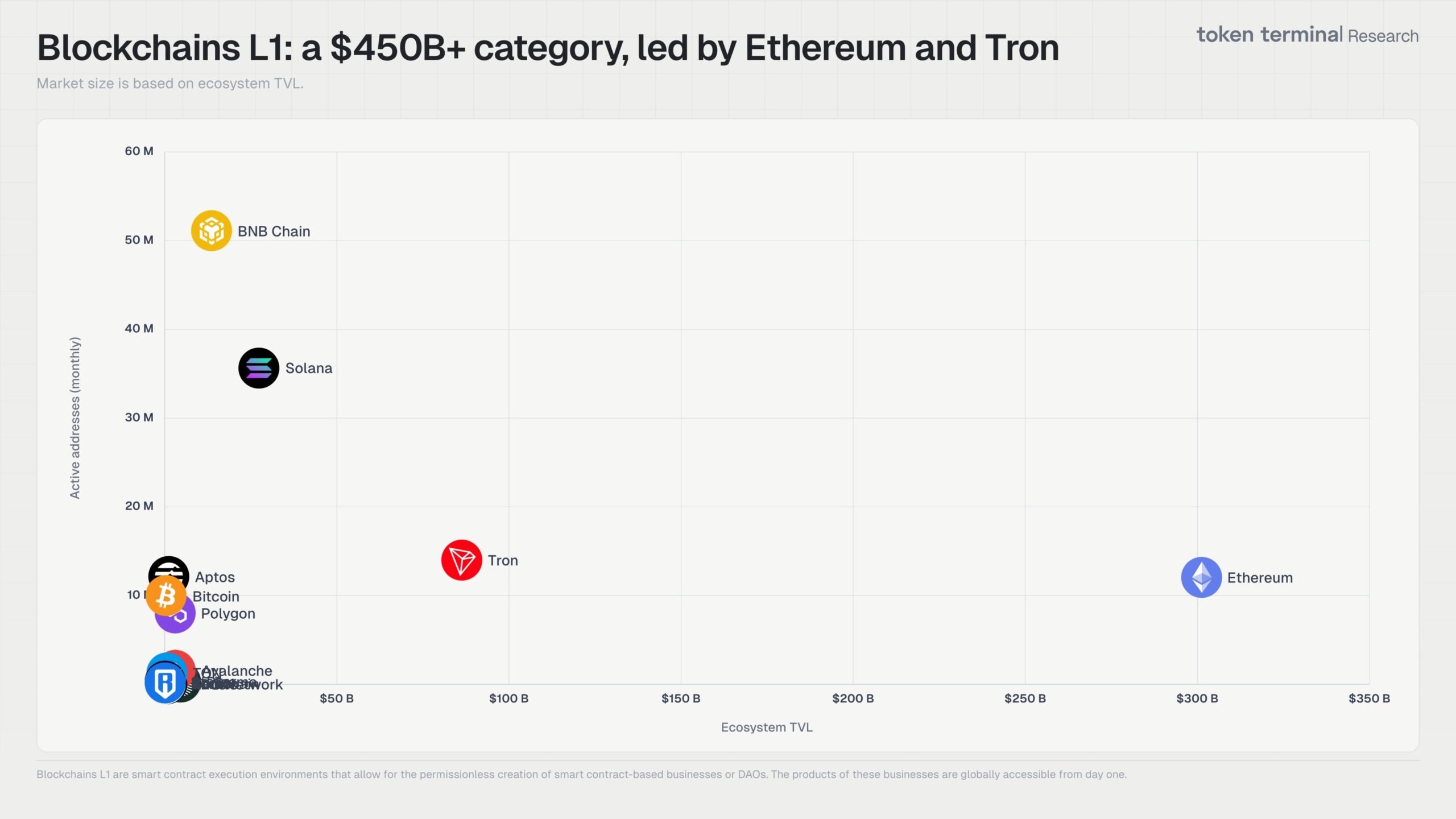
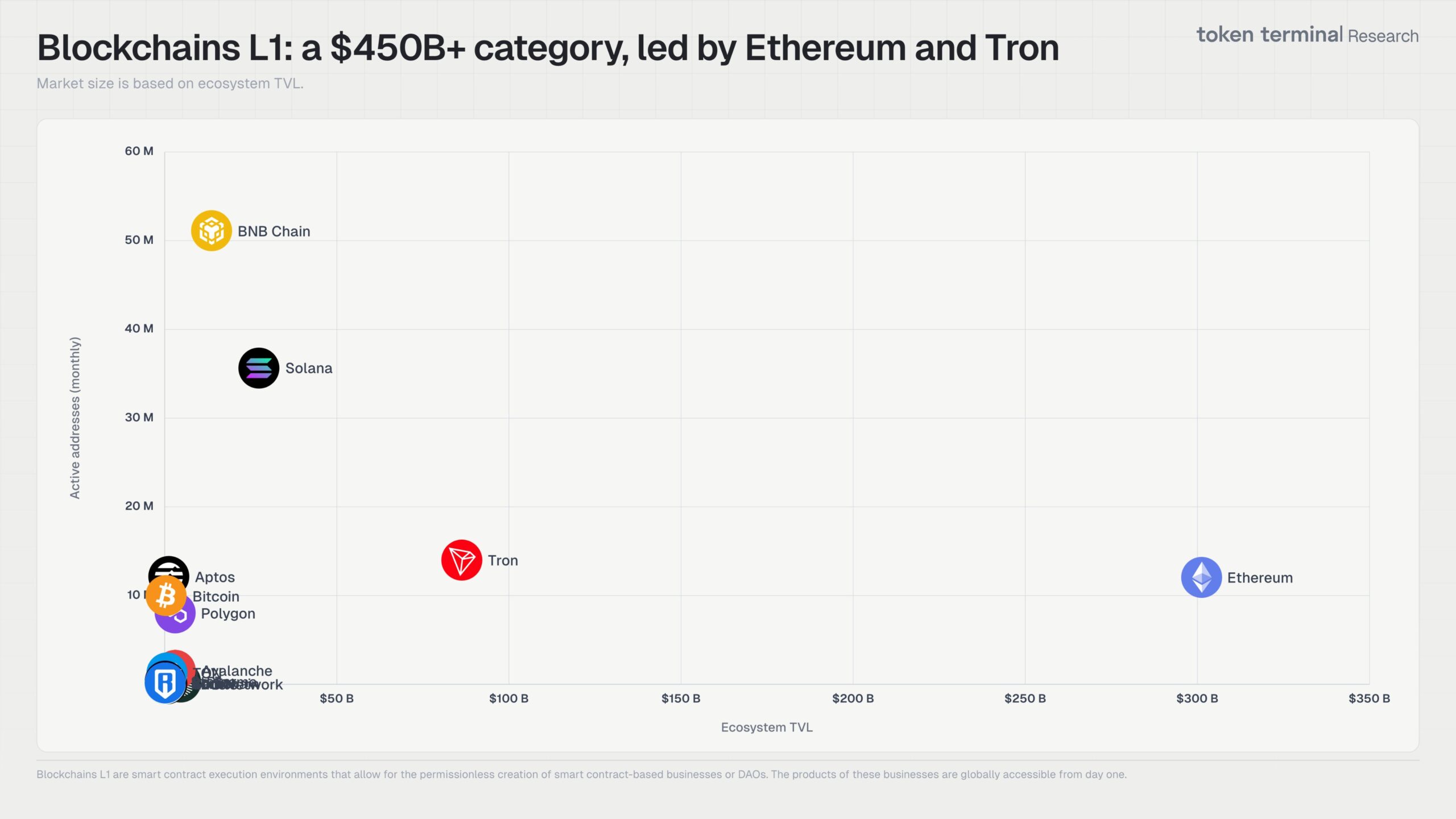
Layer 1 blockchains still anchor the crypto economy today, with the aforementioned L1s commanding a disproportionate share of ecosystem value. According to data from Token Terminal, the gap between these leaders and the rest of the race is stark.
Source: Token Terminal

Elsewhere, chains like BNB Chain [BNB] and Solana [SOL] are competing on the user activity front, even as their relative TVL lags.

The market is still concentrated at the top, but a lot more competitive than we think.

Is lending the new yield source?

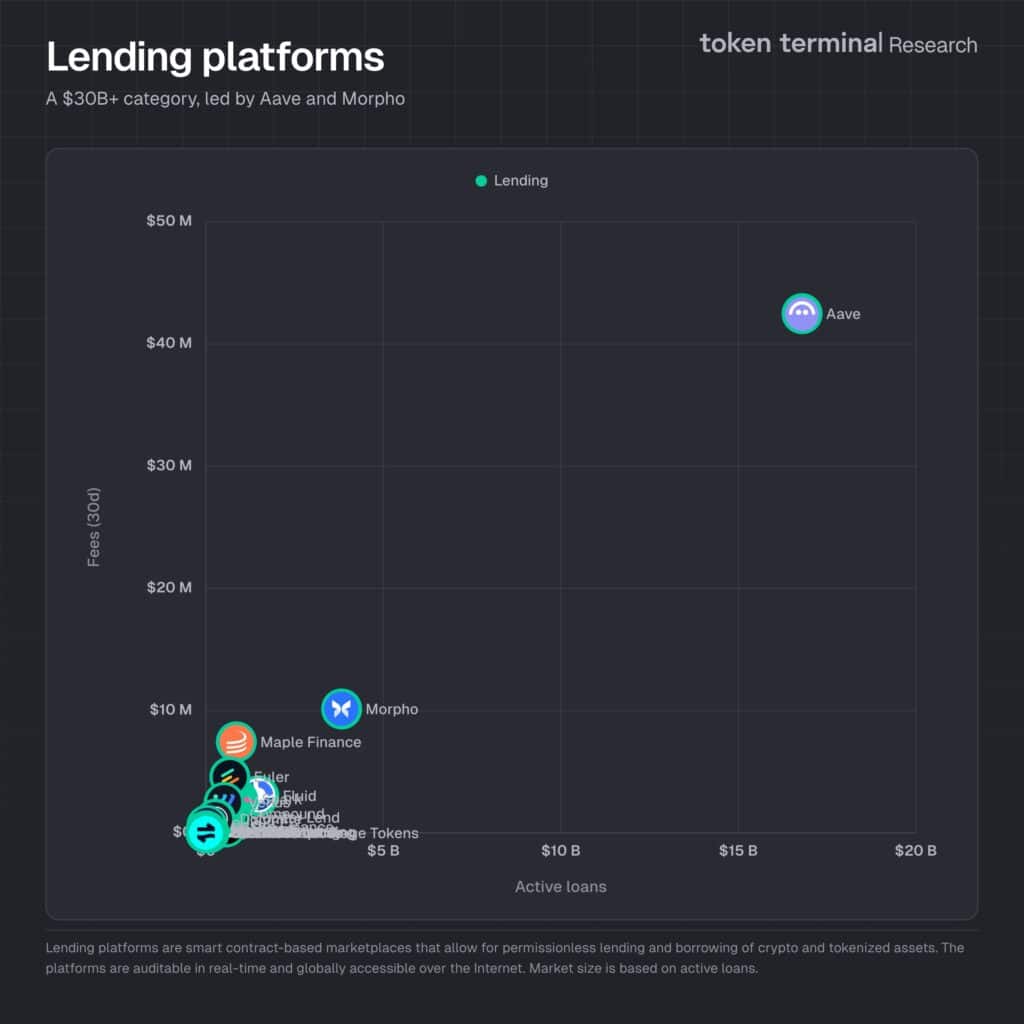
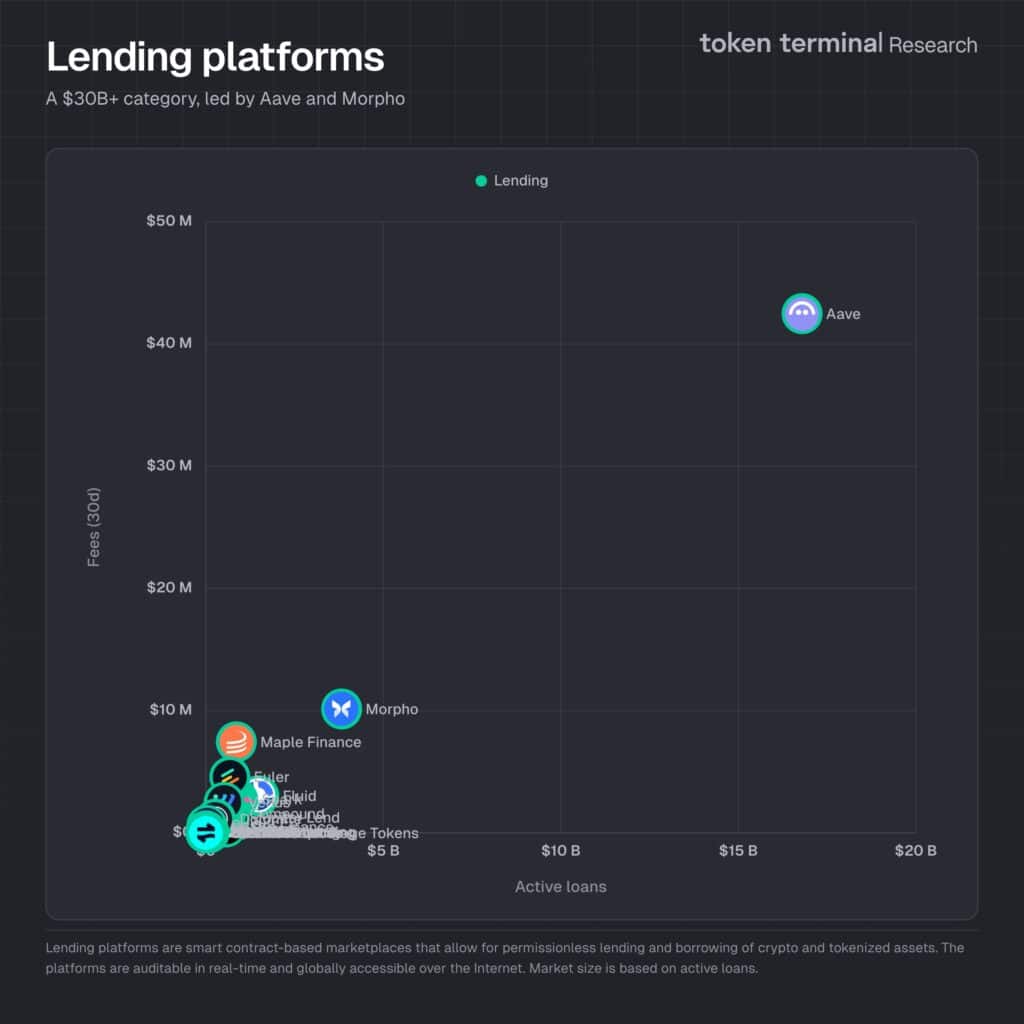
Building on that foundation, lending protocols like Aave and Morpho are now at the center of a fast-growing, on-chain credit system worth about $30 billion!

With stablecoins becoming a popular medium of exchange on-chain, they’re also a default asset for borrowing and lending. On the other hand, a new class of tokenized assets (from funds to commodities and even equities) are expanding the pool of usable collateral.
Source: Token Terminal

Together, they improve liquidity and make markets more efficient.

This is where lending begins to resemble what crypto twitter is now calling a “yield layer.” Instead of relying on buzz alone, users see returns through interest, leverage, and better capital.

In doing so, lending platforms turn holdings into productive assets, and the effects are far-reaching.

Case in point? Rhea Finance integrating with TRON.

Пов'язані питання

QWhat is the current estimated value of the on-chain credit system driven by lending protocols like Aave and Morpho?

AThe on-chain credit system driven by lending protocols like Aave and Morpho is worth about $30 billion.

QWhich Layer 1 blockchains are mentioned as commanding a disproportionate share of ecosystem value according to Token Terminal data?

AEthereum [ETH] and Tron [TRX] are mentioned as commanding a disproportionate share of ecosystem value.

QWhat are stablecoins becoming a popular medium for on-chain, according to the article?

AStablecoins are becoming a popular medium of exchange on-chain, and they are also a default asset for borrowing and lending.

QHow are lending platforms transforming user holdings, as described in the article?

ALending platforms are turning user holdings into productive assets by providing returns through interest, leverage, and better capital efficiency.

QWhat new class of assets is expanding the pool of usable collateral in the lending market?

AA new class of tokenized assets, from funds to commodities and even equities, is expanding the pool of usable collateral.

Пов'язані матеріали

Pricing OpenAI Pre-IPO: A New, Life-or-Death Business on Hyperliquid Lasting Half a Year

Pricing OpenAI Pre-IPO: Hyperliquid's High-Stakes, Six-Month Business Venture The article analyzes the nascent market for pre-IPO perpetual contracts on the Hyperliquid blockchain, exemplified by two contrasting teams: Trade.xyz and Ventuals. Trade.xyz, an anonymous team, successfully built the largest pre-market on Hyperliquid. Its strategy focused on near-term events, like the SpaceX IPO. By listing a SpaceX contract with a known launch date and price, the market had a tangible "anchor" (the eventual Nasdaq opening price) to converge upon, which kept speculation in check. This approach fueled significant growth. In stark contrast, Ventuals, backed by Paradigm, failed despite holding coveted contracts for OpenAI and Anthropic. Its critical flaw was its pricing mechanism for these companies, which have no imminent IPO. Ventuals' oracle price was half-derived from infrequent private market transactions and half from its own contract's moving average. This created a self-reinforcing loop where buying pressure artificially inflated the price, disconnecting it from real supply and demand. The market became illiquid and structurally skewed. Ventuals shut down nine months after launch, reportedly through an acquisition. Its final settlement prices—OpenAI at ~$1,341 and Anthropic at ~$1,618—were thus partially products of its flawed model. Ironically, some company employees and late-stage VCs reportedly used these prices for valuation reference, highlighting the desperate demand for price discovery in opaque private markets. The failure of Ventuals exposes the core challenge of this business: price for illiquid, non-public assets requires a robust, self-correcting market, which is absent without a definitive public listing event. Nevertheless, demand is driving major players like Coinbase and traditional finance (e.g., Citi) to enter the space, aiming to provide 24/7 trading for coveted private company shares. The venture's ultimate viability, however, hinges on solving the fundamental pricing problem Ventuals could not.

marsbit1 год тому

Pricing OpenAI Pre-IPO: A New, Life-or-Death Business on Hyperliquid Lasting Half a Year

marsbit1 год тому

Торгівля

Спот
Ф'ючерси

Популярні статті

Як купити TRX

Ласкаво просимо до HTX.com! Ми зробили покупку TRON (TRX) простою та зручною. Дотримуйтесь нашої покрокової інструкції, щоб розпочати свою криптовалютну подорож.Крок 1: Створіть обліковий запис на HTXВикористовуйте свою електронну пошту або номер телефону, щоб зареєструвати обліковий запис на HTX безплатно. Пройдіть безпроблемну реєстрацію й отримайте доступ до всіх функцій.ЗареєструватисьКрок 2: Перейдіть до розділу Купити крипту і виберіть спосіб оплатиКредитна/дебетова картка: використовуйте вашу картку Visa або Mastercard, щоб миттєво купити TRON (TRX).Баланс: використовуйте кошти з балансу вашого рахунку HTX для безперешкодної торгівлі.Треті особи: ми додали популярні способи оплати, такі як Google Pay та Apple Pay, щоб підвищити зручність.P2P: Торгуйте безпосередньо з іншими користувачами на HTX.Позабіржова торгівля (OTC): ми пропонуємо індивідуальні послуги та конкурентні обмінні курси для трейдерів.Крок 3: Зберігайте свої TRON (TRX)Після придбання TRON (TRX) збережіть його у своєму обліковому записі на HTX. Крім того, ви можете відправити його в інше місце за допомогою блокчейн-переказу або використовувати його для торгівлі іншими криптовалютами.Крок 4: Торгівля TRON (TRX)Легко торгуйте TRON (TRX) на спотовому ринку HTX. Просто увійдіть до свого облікового запису, виберіть торгову пару, укладайте угоди та спостерігайте за ними в режимі реального часу. Ми пропонуємо зручний досвід як для початківців, так і для досвідчених трейдерів.

1.5k переглядів усьогоОпубліковано 2024.12.10Оновлено 2026.06.02

Як купити TRX

Обговорення

Ласкаво просимо до спільноти HTX. Тут ви можете бути в курсі останніх подій розвитку платформи та отримати доступ до професійної ринкової інформації. Нижче представлені думки користувачів щодо ціни TRX (TRX).

活动图片