While Gains Have Been Slower Than Most Crypto Assets, Meme Coin Economy Swells by 24%

Bitcoin.comОпубліковано о 2022-08-14Востаннє оновлено о 2022-08-14

Анотація

While a great number of crypto asset values have improved over the last month, meme-based crypto assets have also advanced against the U.S. dollar.

While a great number of crypto asset values have improved over the last month, meme-based crypto assets have also advanced against the U.S. dollar. 53 days ago on June 21, the top meme coins by market valuation were once worth $14.5 billion and since then, the meme coin economy has grown by 24.82%, tapping $18.1 billion on August 13.

Meme Coins Advance Against the US Dollar, Hoge Finance and Baby Doge Lead the Pack

Meme-based tokens have seen an increase in value since the crypto economy’s recent downturn. While the rise has been beneficial, meme-based crypto tokens have not seen the bounce back in value a great majority of cryptocurrencies have experienced over the last few weeks. For comparison, dogecoin (DOGE) increased by 17.9% during the last 30 days while bitcoin (BTC) increased by 20.7% and ethereum (ETH) jumped 78.5%.
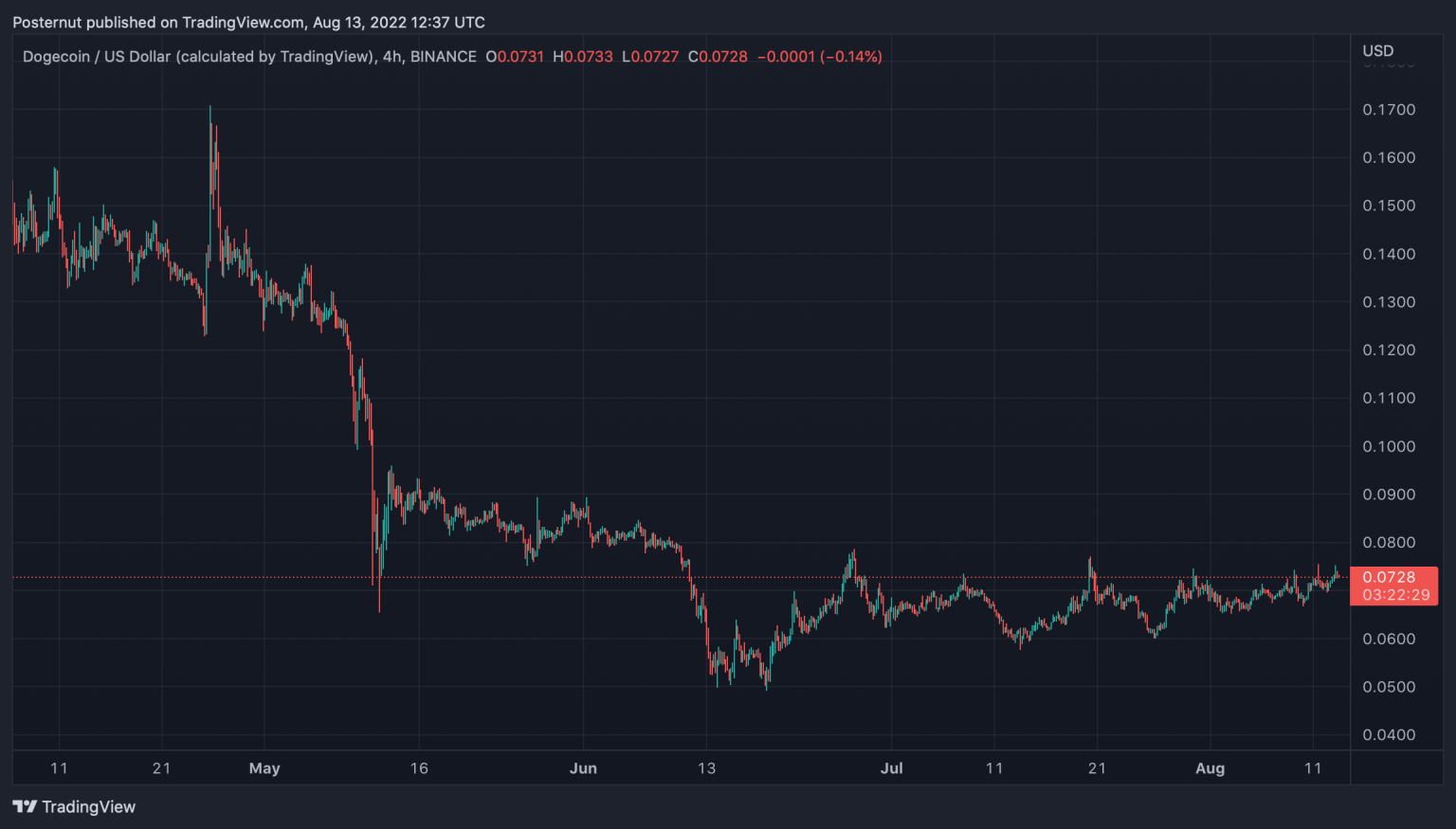
Dogecoin is still the king of all the meme coins with the largest market capitalization, which is roughly $9.7 billion today. DOGE has increased 5% against the U.S. dollar and 1% against BTC during the last 24 hours. In terms of global trade volume, $450 million worth of DOGE swaps took place during the last day. The top five pairs traded against DOGE include USDT, USD, BUSD, BTC, and KRW, while tether (USDT) commands more than 57% of all dogecoin trades.
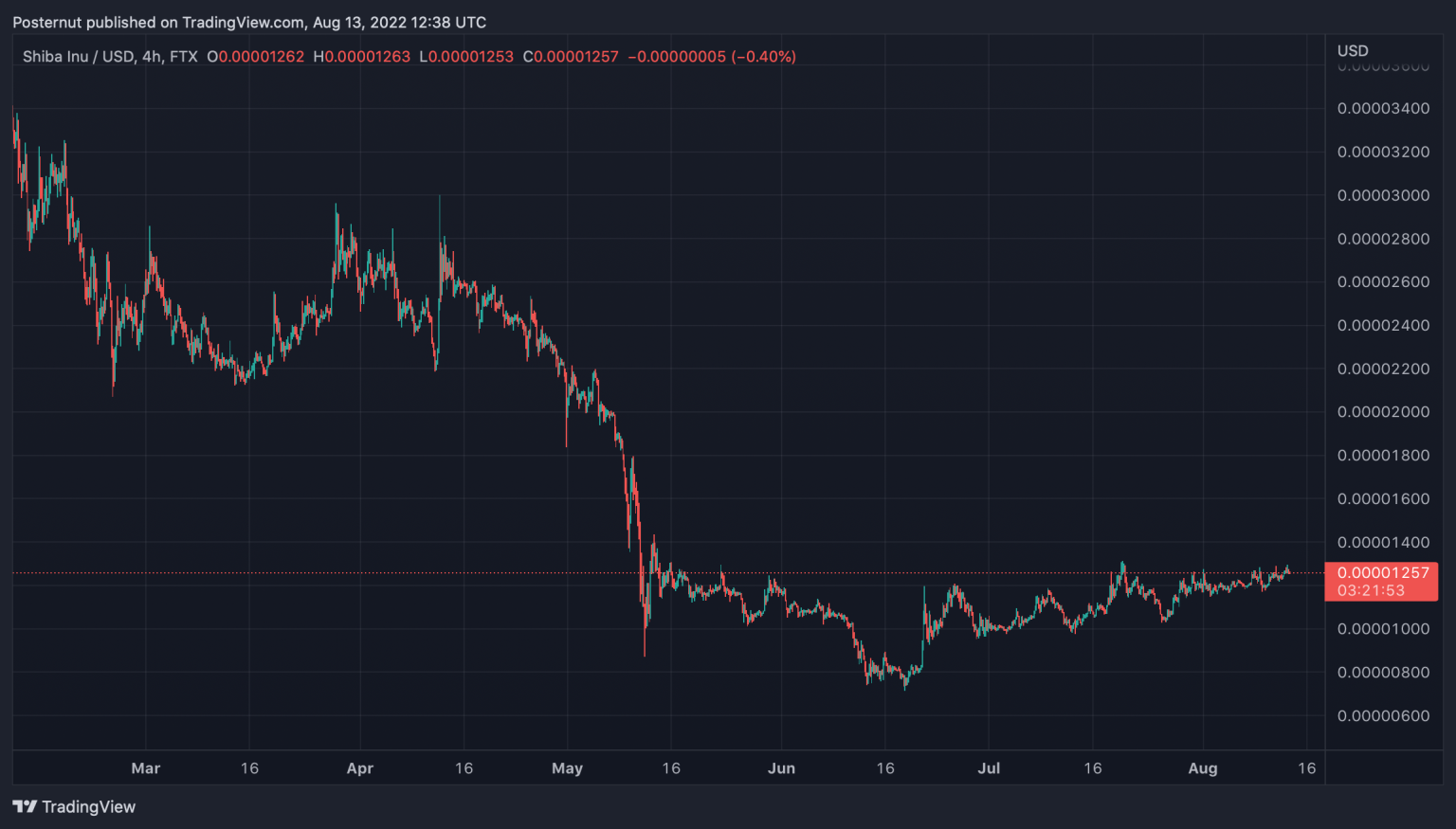
The second-largest meme coin by market cap is shiba inu (SHIB) as it has a $7.42 billion valuation on August 13. SHIB has seen better gains than DOGE during the last month, as 30 days stats show SHIB has swelled by 19.4%. Year-to-date, SHIB has gained 64% in value compared to the prices recorded in August 2021. SHIB has a touch less volume than DOGE with $446 million traded during the past 24 hours. SHIB’s top five trading pairs include USDT, USD, BUSD, TRY, and USDC, with tether (USDT) capturing over 66% of all SHIB swaps.
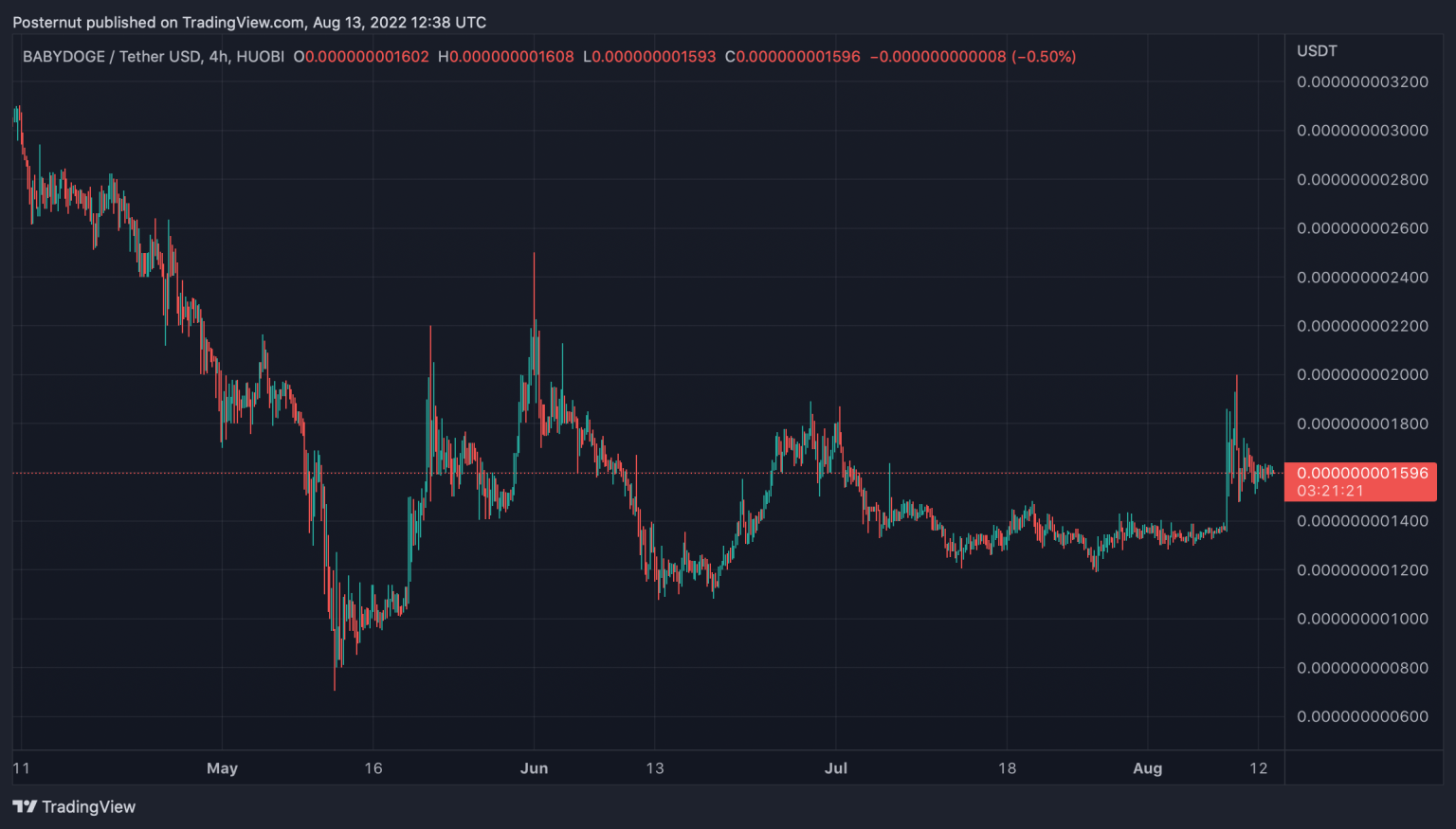
Meanwhile, the third-largest meme coin asset, baby doge coin (BABYDOGE) has seen larger gains than DOGE and SHIB during the last month. BABYDOGE has increased 21.4% against the U.S. dollar during the last 30 days. The BABYDOGE market capitalization today is much smaller than the top two meme coin asset leaders as it is coasting along at $245 million on August 13. 24-hour BABYDOGE trade volume is also lower, at $5.1 million in trades during the last day. USDT dominates BABYDOGE trading pairs by 77.38% while USDC, BUSD, and TRX follow.

Five meme coin assets have risen above 45% during the last week including hoge finance (HOGE), hot doge (HOTDOGE), dogebonk (DOBO), spooky shiba (SPKY), and moon cat (CAT). The biggest meme coin losers this past week includes chihuahua chain (HUAHUA), kitty coin solana (KITTY), catecoin (CATE), litedoge (LDOGE), and puli (PULI). Those five meme coin assets have lost between 13.6% and 33.9% during the last seven days. HOGE was this week’s leader, increasing by 71.2%, while the biggest meme coin loser HUAHUA shed 33.9% in value.


Пов'язані матеріали

Morgan Stanley Digital Asset Head: Bitcoin Reaching $1M Would Not Be Surprising, But a Real Catalyst Might Require a Crisis That Shatters the Old System

Summary: In a podcast interview, Morgan Stanley's Head of Digital Asset Strategy, Amy Oldenburg, discusses Bitcoin's potential and institutional adoption. She argues Bitcoin's next major surge might require a catalyst—a crisis that shatters the traditional financial system, after which Bitcoin could emerge as the only intact asset. While she sees a $1 million price as possible within five years, she expects slower, more stable growth. Oldenburg traces Bitcoin's logic to her experience in emerging markets, where decentralized mobile money (like M-Pesa) provided critical financial security where traditional banks failed. She notes that early Bitcoin adopters often came from international finance, seeking alternatives to centralized systems. Regarding institutions, she explains that Morgan Stanley, as a bank holding company, faces stricter regulatory hurdles than pure asset managers like BlackRock. While client demand drove their Bitcoin ETP launch (MSBT), which set a firm record, most financial advisors remain hesitant due to Bitcoin's recent price stagnation and volatility. She identifies an education gap as a major barrier, with many advisors and clients not understanding the differences between various crypto assets or between holding spot Bitcoin versus an ETP. Oldenburg also discusses the tension between Bitcoin's cypherpunk, self-custody ethos and the convenience of centralized financial products, acknowledging the value of both approaches. She concludes that the digital asset space is still in its early stages, with a long journey ahead involving more complex products and technologies.

marsbit11 хв тому

Morgan Stanley Digital Asset Head: Bitcoin Reaching $1M Would Not Be Surprising, But a Real Catalyst Might Require a Crisis That Shatters the Old System

marsbit11 хв тому

Cursor: Why Did It Board Elon Musk's Rocket?

SpaceX announced its first major acquisition after its historic IPO: a $60 billion all-stock deal to acquire AI programming startup Cursor (parent company Anysphere). Cursor is a popular AI coding assistant that allows developers to switch between models from OpenAI, Anthropic, Google, and others. Founded in 2022 by MIT graduates including CEO Michael Truell, Cursor saw explosive revenue growth, reaching a $4 billion annualized run rate by early 2026. However, its market share had declined as key supplier Anthropic launched its own competing product, Claude Code. Facing dependency risks, Cursor decided to build its own AI model, Composer, but lacked the necessary computing power. In April 2026, Cursor and SpaceX revealed a partnership and an option agreement: SpaceX could acquire Cursor for $60 billion post-IPO, or pay a breakup fee and provide substantial computing resources. After SpaceX's successful IPO, it exercised the option. The deal gives Cursor access to SpaceX's massive "Colossus" supercomputer, while SpaceX gains Cursor's strong foothold among elite software engineers to boost its AI capabilities, as Musk's xAI model Grok lags in programming. The acquisition aligns with SpaceX's broader AI and orbital data center ambitions, as Musk targets $1 trillion in revenue by 2030. For Truell, who once aimed to build an enduring independent company, joining SpaceX represents a monumental bet on an unprecedented scale.

marsbit11 хв тому

Cursor: Why Did It Board Elon Musk's Rocket?

marsbit11 хв тому

Торгівля

Спот
Ф'ючерси
活动图片