¡Un comienzo exitoso! USDD supera la barrera de los 10 mil millones de dólares en TVL, iniciando con fuerza el 2026

marsbitОпубліковано о 2026-01-16Востаннє оновлено о 2026-01-16

Анотація

"¡Gran comienzo! USDD alcanza un hito clave: su TVL supera los $1.000 millones en 2026. Este logro demuestra la creciente confianza del mercado en su mecanismo descentralizado, su respaldo de valor estable y su modelo sostenible. USDD ha logrado este crecimiento gracias a su mecanismo de generación de rendimiento sostenible, su expansión multichain y su sólida gestión de riesgos. Su token con rendimiento integrado, sUSDD, permite a los usuarios obtener ingresos pasivos de manera sencilla. Además, su integración en cadenas como TRON, Ethereum y BNB Chain ha impulsado su adopción. En 2026, USDD se centrará en impulsar casos de uso reales y reducir la dependencia de incentivos externos, priorizando la utilidad práctica en DeFi. Su enfoque en la transparencia y la resistencia a la censura lo posiciona como una alternativa atractiva frente a las stablecoins centralizadas. Con un TVL de $1.000 millones como punto de partida, USDD consolida su trayectoria ascendente y promete un mayor impacto en el ecosistema financiero descentralizado."

A principios de 2026, la stablecoin descentralizada USDD alcanzó un hito importante: ¡su valor total bloqueado (TVL) superó oficialmente los 10 mil millones de dólares! Este logro no solo marca la entrada de la construcción del ecosistema de USDD en una nueva fase, sino que también demuestra el alto reconocimiento del mercado hacia su mecanismo descentralizado, su sólido respaldo de valor y su modelo de desarrollo sostenible.
En un momento en que la industria DeFi aún se encuentra en un proceso de diferenciación estructural y reajuste continuo, este "comienzo exitoso" de USDD tiene un claro significado como indicador de tendencia. No solo valida la lógica de valor a largo plazo de USDD, sino que también inyecta nueva confianza de crecimiento en el sector de las stablecoins descentralizadas, marcando un comienzo positivo para el desarrollo de la industria en 2026.

Lógica subyacente del crecimiento en contra de la tendencia: sinergia entre mecanismos, ecosistema y gestión de riesgos

El crecimiento histórico de USDD se debe principalmente a tres ventajas centrales: un innovador mecanismo de rendimiento sostenible, una sólida expansión multichain y un excelente sistema de gestión de riesgos.

En cuanto al mecanismo de rendimiento, USDD se posicionado desde su creación como el "USDT con rendimiento". A través del mecanismo de distribución de ganancias Smart Allocator, el protocolo asigna dinámicamente parte de los fondos de reserva a proyectos on-chain de alta calidad, rigurosamente seleccionados, obteniendo así ganancias diversificadas como intereses, incentivos de protocolo y recompensas de plataforma. Según datos revelados, este mecanismo ha generado más de 8.34 millones de dólares en ganancias reales.

Sobre esta base, USDD lanzó el token con rendimiento sUSDD, que permite a los usuarios convertir USDD en sUSDD con un solo clic, participando directamente en la generación pasiva de intereses y el interés compuesto automático sin operaciones complejas. Este diseño reduce significativamente la barrera de entrada para los usuarios y transforma a USDD de una simple herramienta de anclaje de valor en una herramienta de eficiencia de capital con atributos de rendimiento, aumentando su atractivo dentro del ecosistema DeFi.

En cuanto a la expansión del ecosistema, USDD ha completado la transición clave de una sola cadena a múltiples cadenas, mostrando una buena capacidad de recepción de usuarios y retención de fondos durante el proceso de expansión. Por ejemplo, en la reciente actividad Yield+ lanzada en conjunto con Binance Wallet, la primera semana atrajo a más de 3000 usuarios participantes, y el TVL de sUSDD experimentó un crecimiento de más del 867% en un corto período, superando los 295 millones de dólares y convirtiéndose en el producto stablecoin de más rápido crecimiento durante ese período.

Actualmente, USDD se ha desplegado de forma nativa en cadenas principales como TRON, Ethereum y BNB Chain, construyendo gradualmente una infraestructura de stablecoin con sinergia cross-chain.

En cuanto a la gestión de riesgos, USDD adopta un modelo de deuda con garantía excesiva y establece requisitos estrictos de ratio de garantía mínima, asegurando que cada USDD tenga un respaldo de activos suficiente y transparente. Además, su módulo de anclaje estable permite a los usuarios intercambiar entre USDD y otras stablecoins principales en una proporción 1:1 y sin deslizamiento, proporcionando una doble garantía para la liquidez y la estabilidad de precios. Es este conjunto de diseños mecanicos lo que permite a USDD mantener su anclaje de precio incluso durante la volatilidad del mercado, ganándose continuamente la confianza de los usuarios.

Crecimiento impulsado por la adopción: diseño del ecosistema multichain y escenarios de uso real en 2026

Mirando hacia 2026, la hoja de ruta de USDD se está volviendo más clara y con una orientación a largo plazo. El equipo ha dejado claro que impulsará gradualmente la transición del ecosistema de "impulsado por incentivos" a "impulsado por el uso real". Esto significa que USDD se enfocará más en la construcción de escenarios de aplicación basados en necesidades reales, reduciendo gradualmente la dependencia de subsidios a corto plazo e incentivos externos, y en su lugar, creando valor distribuible de manera sostenible a través de mecanismos endógenos como Smart Allocator.

Al mismo tiempo, USDD planea profundizar aún más la cooperación con exchanges on-chain y protocolos DeFi centrales, y explorar un modelo de doble impulso que combine la sinergia on-chain y off-chain. Por un lado, ampliará el uso nativo de USDD en escenarios como trading, préstamos y estrategias de rendimiento; por otro lado, mejorará el alcance de usuarios y la acumulación de fondos a través de billeteras, pagos y herramientas de agregación, formando un ciclo positivo entre el protocolo, los socios y los usuarios.

Frente a la creciente competencia en el mercado de stablecoins, USDD ha establecido gradualmente un posicionamiento diferenciado y claro. En comparación con las stablecoins centralizadas, que tienen liquidez suficiente pero presentan riesgos de congelación y problemas de transparencia en los rendimientos, USDD ofrece una alternativa más atractiva a través de su arquitectura descentralizada, características anti-congelación y un mecanismo que retribuye a los tenedores. A medida que la industria exige cada vez más transparencia y sostenibilidad, esta ventaja de USDD tiene el potencial de amplificarse aún más.

Superar los 10 mil millones de dólares en TVL es solo el comienzo. En la fase inicial de 2026, USDD ya ha trazado率先 una curva ascendente clara y sólida, y su futuro espacio de crecimiento e influencia en la industria es cada vez más prometedor.


Трендові криптовалюти

Пов'язані питання

Q¿Qué hito importante alcanzó USDD a principios de 2026?

AEl valor total bloqueado (TVL) de USDD superó los mil millones de dólares, marcando un hito significativo en su ecosistema.

Q¿Qué mecanismo permite a USDD generar ingresos para sus titulares?

AEl mecanismo Smart Allocator asigna dinámicamente parte de los fondos de reserva a proyectos de calidad en la cadena, generando ingresos a través de intereses, incentivos y recompensas.

Q¿Qué ventaja ofrece sUSDD a los usuarios en comparación con USDD?

AsUSDD permite a los usuarios participar en la generación de ingresos pasivos y el interés compuesto automático sin operaciones complejas, mejorando la eficiencia del capital.

Q¿En qué cadenas de bloques principales está implementado USDD de forma nativa?

AUSDD está implementado de forma nativa en TRON, Ethereum y BNB Chain, construyendo una infraestructura estable de monedas estables multicaidena.

Q¿Cómo garantiza USDD la estabilidad de su precio y la confianza del usuario?

AUtiliza un modelo de colateralización excesiva con requisitos estrictos de ratio de garantía y un módulo de estabilidad que permite el canje 1:1 sin deslizamiento con otras monedas estables principales.

Пов'язані матеріали

Wall Street's Most Famous 'Cassandra' Now Has His Sights Set on Nvidia

Michael Burry, the famed "Big Short" investor, has once again captured Wall Street's attention with a series of short positions against major tech and semiconductor stocks, most notably Nvidia. In late June and July, through his "Cassandra Unchained" newsletter, Burry disclosed short bets against Nvidia, Tesla, Applied Materials, Caterpillar, the SOXX semiconductor ETF, and later, Micron Technology. His core thesis revolves around potential distortions in the AI infrastructure boom, specifically questioning whether extended depreciation schedules (e.g., 6 years vs. a realistic 2-3 years for AI chips) by cloud giants like Microsoft and Google artificially inflate profits. He also raises concerns about possible "off-balance-sheet circular financing," where chip demand might be propped up by vendor-backed funding to clients. Nvidia's stock experienced volatility following these disclosures, briefly dipping but largely holding near Burry's reported entry points, leaving his positions roughly flat or slightly underwater as of late July. This move is part of a pattern for Burry, whose track record since his legendary 2008 bet is mixed. He has faced notable losses, such as on Tesla in 2021, while scoring on broader market turns like the 2020 pandemic crash. His methodology focuses intensely on free cash flow and scrutinizing original financial documents to spot overvaluation and structural risks, but it often struggles with timing the market. The article contrasts Burry's stance with other prominent investors. Steve Eisman, another "Big Short" figure, is not shorting Nvidia, citing strong fundamentals but expressing nervousness about sustainability. Jim Chanos agrees with the broad "accounting mismatch" concern—comparing it to the dot-com bubble—but targets financial leverage in private equity firms rather than the chip stocks themselves. While Nvidia's short interest remains relatively low at 1.3-1.4% of float, the massive stock size means absolute short losses have been significant, exceeding $5 billion earlier this year. The piece concludes that for ordinary investors, the key takeaway is not replicating specific short bets but learning from the critical frameworks these investors use: questioning rosy accounting, identifying structural vulnerabilities, and maintaining skepticism during market euphoria, even if pinpointing the exact catalyst for a downturn remains elusive.

marsbit24 хв тому

Wall Street's Most Famous 'Cassandra' Now Has His Sights Set on Nvidia

marsbit24 хв тому

Weekly Selection丨Epic Stock Market Volatility, Changxin Tech's IPO Reshapes Storage Landscape, Saylor Aims to Re-Anchor STRC Around September 8th

PANews Weekly Digest: Market Turmoil, Tech Breakthroughs, and Crypto Developments. The week saw significant volatility across global markets. South Korea's KOSPI index experienced extreme turbulence, including multiple trading halts, largely driven by sharp declines in AI hardware stocks like SK Hynix. In contrast, China's Changxin Xinqiao (CXC) achieved a landmark IPO with a market cap surpassing 4 trillion yuan, marking a major success for the domestic DRAM industry after a decade of losses. In the crypto and Web3 space, several key narratives emerged. AI is driving demand for new infrastructure, with projects like AI agent wallets and programmable payments gaining traction, attracting interest from firms like Coinbase. The Bitcoin mining sector is pivoting, with companies like MARA focusing on energy management as electricity becomes a core AI-era asset. Meanwhile, the RWA (Real World Assets) sector faces a "utilization puzzle," with hundreds of billions in on-chain assets remaining dormant. Notable market movements included a historic single-day surge of over 17% for the KOSPI index and a significant migration of $16.5 billion in staked ETH within the Lido ecosystem. Michael Saylor announced a target to re-peg the STRC stablecoin around September 8th. Other highlights include discussions on Ethereum's ambitious 2030 roadmap for scaling and privacy, analysis showing high protocol revenues not always translating to token price gains, and warnings from Citi about potential extreme commodity price shocks by late 2026.

marsbit29 хв тому

Weekly Selection丨Epic Stock Market Volatility, Changxin Tech's IPO Reshapes Storage Landscape, Saylor Aims to Re-Anchor STRC Around September 8th

marsbit29 хв тому

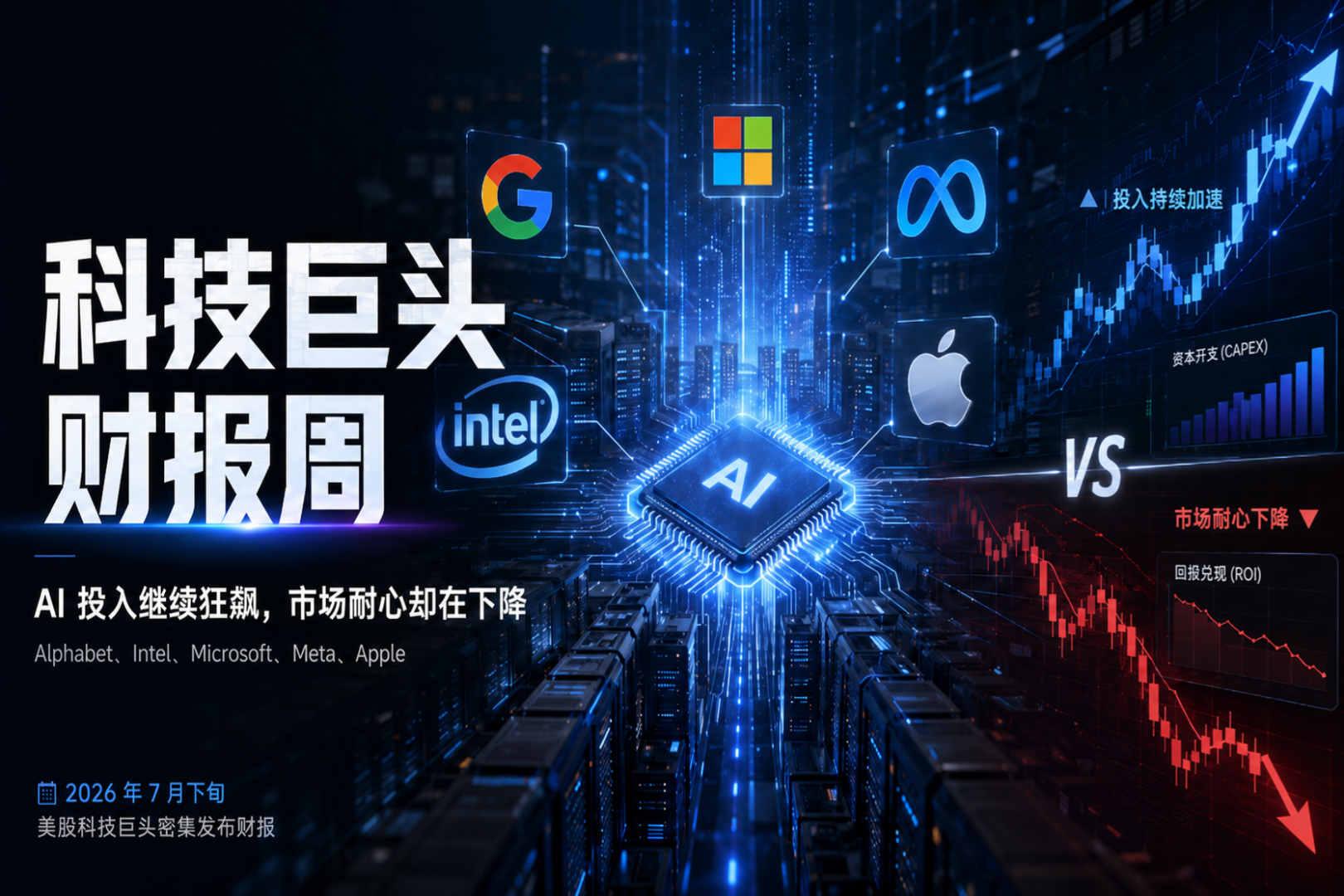
When the Market Begins to Question AI Capex: A Full Analysis of Q2 Earnings Reports from Five Tech Giants

In late July 2026, five major US tech giants—Alphabet, Intel, Microsoft, Meta, and Apple—released their Q2 earnings reports. While all companies exceeded revenue and profit expectations, driven by strong AI-related business growth, investor reactions diverged sharply due to concerns over escalating AI capital expenditures (capex) and their impact on free cash flow. Alphabet reported strong revenue growth and a surging cloud business, but its stock fell after announcing a doubled year-on-year capex and negative quarterly free cash flow for the first time. Intel posted its strongest revenue growth in over 15 years, but its stock experienced volatile trading after significantly raising its full-year capex guidance. Microsoft saw its stock surge after beating estimates and, crucially, lowering its capex forecast while projecting positive free cash flow. Meta faced the most severe sell-off as its profits declined despite revenue beats, with free cash flow plunging over 90% and its capex guidance raised. Apple reported record June-quarter results, but its stock plummeted after providing Q4 revenue guidance that fell short of expectations, citing supply chain constraints and forex headwinds. The overall takeaway is that the market's focus has shifted from validating AI demand to scrutinizing the timeline for returns on massive AI investments. Companies demonstrating a clearer path to managing capex and preserving free cash flow, like Microsoft, were rewarded, while those signaling continued aggressive spending faced investor skepticism.

Odaily星球日报38 хв тому

When the Market Begins to Question AI Capex: A Full Analysis of Q2 Earnings Reports from Five Tech Giants

Odaily星球日报38 хв тому

a16z: From Companies to DAOs, DUNA May Become the Next Generation Organizational Form

This article, "From Companies to DAOs: How DUNA Could Become the Next Organizational Form," traces the 500-year evolution of business collaboration. It begins with medieval structures like the *commenda* and Florentine *compagnia*, which exposed partners to personal risk. The modern corporation, exemplified by the Dutch East India Company (VOC), was a revolutionary leap, enabling large-scale, capital-intensive ventures by offering limited liability and reducing coordination costs. However, corporations introduced new challenges like principal-agent problems and bureaucratic overhead. The piece argues that software and internet-native protocols are now reducing these traditional overheads. Decentralized Autonomous Organizations (DAOs) emerged as a new model for coordination without centralized management. Yet, DAOs face a significant legal vacuum: they lack legal recognition, leaving members exposed to unlimited personal liability, and their tokens are vulnerable to being classified as securities under unclear regulations (e.g., the Howey Test). This has forced projects into suboptimal workarounds like offshore foundations. The article identifies the Decentralized Unincorporated Nonprofit Association (DUNA) as a potential solution. Recently legalized in states like Wyoming, the DUNA provides a legal wrapper for decentralized networks. It grants key protections—legal personality, limited liability, and perpetual existence—to a group without imposing a traditional hierarchical management structure. This allows token-holder communities to govern, hold assets, and contract as a single legal entity, aligning with their decentralized nature. While DUNA doesn't solve all governance challenges or magically resolve securities law questions, it represents a crucial step. It fills the legal recognition gap, offering a native legal form for internet-scale, decentralized collaboration and extending the separation of personal risk from organizational venture into a new domain.

marsbit1 год тому

a16z: From Companies to DAOs, DUNA May Become the Next Generation Organizational Form

marsbit1 год тому

2026 Mid-Year Report On-Chain RWA: Tokenized Stock Market Cap Doubles in a Year, But 90% of Rights Are Hollow Shells

The 2026 Mid-Year Report on On-Chain RWA highlights a significant growth in tokenized stock market capitalization, which nearly doubled from $951 million in March to $1.89 billion by July. However, the report reveals a fundamental contradiction in this "layer 2.5" ecosystem: products with the strongest legal foundation (like regulated U.S. infrastructure) lack liquidity and distribution, while freely tradable offshored wrapper products often lack substantive ownership rights. The increase is driven largely by a few products (SECZ, FGRS, STRCx) and platforms (Ondo, xStocks, Securitize collectively hold over 85% share). While distributed value across networks like Ethereum, Solana, and BNB Chain has grown, the market remains fragmented. Products referencing the same underlying asset (e.g., Apple stock) are distinct legal liabilities with different intermediaries and jurisdictional rules, offering varying degrees of legal claim. The report cautions that headline numbers are misleading, as they reflect changes in distributed token value—driven by issuance, conversions, and price movements—not pure investor inflows. True "canonical shares" with legal ownership, wide wallet distribution, institutional liquidity, and independent on-chain price discovery do not yet exist at scale. Tokenized treasuries show stronger product-market fit, and ETFs may be easier to scale than single stocks. The core takeaway is a trade-off: legal certainty versus liquidity and composability.

marsbit2 год тому

2026 Mid-Year Report On-Chain RWA: Tokenized Stock Market Cap Doubles in a Year, But 90% of Rights Are Hollow Shells

marsbit2 год тому

Торгівля

Спот

Популярні статті

Як купити USDD

Ласкаво просимо до HTX.com! Ми зробили покупку USDD (USDD) простою та зручною. Дотримуйтесь нашої покрокової інструкції, щоб розпочати свою криптовалютну подорож.Крок 1: Створіть обліковий запис на HTXВикористовуйте свою електронну пошту або номер телефону, щоб зареєструвати обліковий запис на HTX безплатно. Пройдіть безпроблемну реєстрацію й отримайте доступ до всіх функцій.ЗареєструватисьКрок 2: Перейдіть до розділу Купити крипту і виберіть спосіб оплатиКредитна/дебетова картка: використовуйте вашу картку Visa або Mastercard, щоб миттєво купити USDD (USDD).Баланс: використовуйте кошти з балансу вашого рахунку HTX для безперешкодної торгівлі.Треті особи: ми додали популярні способи оплати, такі як Google Pay та Apple Pay, щоб підвищити зручність.P2P: Торгуйте безпосередньо з іншими користувачами на HTX.Позабіржова торгівля (OTC): ми пропонуємо індивідуальні послуги та конкурентні обмінні курси для трейдерів.Крок 3: Зберігайте свої USDD (USDD)Після придбання USDD (USDD) збережіть його у своєму обліковому записі на HTX. Крім того, ви можете відправити його в інше місце за допомогою блокчейн-переказу або використовувати його для торгівлі іншими криптовалютами.Крок 4: Торгівля USDD (USDD)Легко торгуйте USDD (USDD) на спотовому ринку HTX. Просто увійдіть до свого облікового запису, виберіть торгову пару, укладайте угоди та спостерігайте за ними в режимі реального часу. Ми пропонуємо зручний досвід як для початківців, так і для досвідчених трейдерів.

475 переглядів усьогоОпубліковано 2024.12.11Оновлено 2026.06.02

Як купити USDD

Обговорення

Ласкаво просимо до спільноти HTX. Тут ви можете бути в курсі останніх подій розвитку платформи та отримати доступ до професійної ринкової інформації. Нижче представлені думки користувачів щодо ціни USDD (USDD).

活动图片