‘Waste of resources’? – Jupiter CTO explains why JUP buybacks may end

ambcryptoОпубліковано о 2026-01-04Востаннє оновлено о 2026-01-04

Анотація

Jupiter, a Solana-based DeFi super-app, is considering discontinuing its JUP token buyback program. Co-Founder and CTO Siong Ong stated that the $70 million spent on buybacks in the past year had minimal impact on the token’s price, calling it a "waste of resources." He suggested reallocating these funds toward growth incentives for users. The community is divided on the issue. Some propose distributing revenue to stakers to increase yields and potentially boost the token’s value, while others question whether this would hinder product growth. Critics also noted that buybacks have had mixed results across different protocols. Despite Jupiter’s expansion into various DeFi services and cumulative revenue of $369 million, JUP’s price has declined significantly, dropping 88% from its peak. The team has not decided on the future of the buyback program amid ongoing discussions.

The Solana-based DeFi super-app, Jupiter, is considering sunsetting the JUP token buyback.

In a social media post on the 2nd of January, Siong Ong, Co-Founder and CTO of Jupiter, said they haven’t seen much impact from the program and felt it was a “waste” of resources.

“We spent more than $70m on buyback last year, and the price obviously didn’t move much. We can use the $70m to give out for growth incentives for existing and new users.”

Ong was following the footsteps of Helium Founder Amir Haleem, who said they’ll “stop wasting money on HNT buybacks”, because the market isn’t concerned about the effort.

JUP community split

Jupiter initiated the JUP buyback program in mid-February 2025 and has reportedly spent approximately $70 million. Moreover, Jupiter [JUP] rallied about 300% in the first month after the buyback launch.

However, the token has printed new yearly lows in 2025, despite the aggressive buybacks that were previously viewed as bullish. At press time, it traded at $0.2, down from its peak of $1.8 –An 88% price crash.

However, the community was divided on whether to drop the buyback program. One user proposed sharing the revenue with stakers to increase staking yield and drive price.

“With 753 million JUP staked, that’s almost $0.09 per JUP. For me personally, that would a really nice passive income. That’s a 43% dividend yield. Of course the price would pump on such a news.”

But Ong wondered how the product would grow if everything were allocated to staking rewards.

For his part, analyst Fabiano stated there is currently no reason to hold the token because it is not tied to the protocol’s success (not equity).

According to him, a short-term solution would be sharing revenue with stakers to reduce their quarterly dumping pressure.

“What if we redirected those $10M toward staking rewards, instead of buying JUP for the Litterbox? At current prices, this could result in roughly 25% APY? -which is insanely attractive.”

What’s next for JUP?

Other critics pointed out Pump.fun [PUMP] muted performance despite a massive buyback, adding that not all protocols should jump on the trend.

However, the buyback programs have been successful for Hyperliquid [HYPE] and Aave [AAVE], particularly during periods of positive market sentiment.

As of writing, it was unclear which proposal and direction the team would lean on following several pieces of feedback on the proposal.

Jupiter has evolved from a DEX aggregator to a super-app spanning lending, prediction markets, and even perpetual trading. The ongoing development has also seen it scale cumulative revenue to $369 million.


Final Thoughts

  • The Jupiter team appeared disappointed with the limited impact of its buyback program despite committing $70 million.
  • But the community was split on the plan to stop the token buyback program.

Трендові криптовалюти

Пов'язані питання

QWhy is Jupiter considering ending its JUP token buyback program?

AJupiter's CTO, Siong Ong, stated that the program has not had a significant impact on the token's price and feels the $70 million spent on it last year was a 'waste of resources' that could be better used for growth incentives.

QWhat was the initial market reaction to the JUP buyback program when it launched?

AFollowing the launch of the buyback program in mid-February 2025, the JUP token rallied approximately 300% in its first month.

QWhat is one alternative use of funds that the community proposed instead of buybacks?

ASome community members proposed redirecting the funds to staking rewards, which could provide a high annual percentage yield (APY) and potentially reduce selling pressure from stakers.

QWhat was a key criticism from an analyst regarding the JUP token's utility?

AAnalyst Fabiano stated there is currently no reason to hold the JUP token because it is not tied to the protocol's success, meaning it does not function like equity in the project).

QWhich other protocols were mentioned as having successful buyback programs?

AThe article mentions that buyback programs have been successful for Hyperliquid (HYPE) and Aave (AAVE), particularly during periods of positive market sentiment.

Пов'язані матеріали

Silicon Valley VC's On-the-Ground Observations of Chinese Entrepreneurship: A Harsher Capital Environment Breeding Fiercer Companies

A Silicon Valley VC's on-the-ground observations of China's startup ecosystem reveal a harsher capital environment forging more aggressive and execution-driven companies. Unlike Silicon Valley's patient capital focused on long-term growth, China's venture landscape is characterized by intense pressure for exits. Startups often face "equity in name, debt in reality" terms with strict timelines and personal founder liability, pushing IPO as the nearly mandatory exit path due to a virtually non-existent M&A market. This high-stakes system, while potentially fostering short-termism, cultivates extreme cost discipline, rapid execution, and formidable commercialization skills—traits evident as these companies expand overseas. The funding ecosystem comprises three main pools: local RMB funds (often government-backed with economic development mandates), domestic USD funds (more founder-friendly, like Sequoia China), and dwindling direct foreign capital. Financial Advisors (FAs) play a crucial intermediary role, packaging deals and navigating China's opaque, relationship-based business networks where platforms like LinkedIn haven't taken root. Underpinning it all is significant state influence through industrial policy, directing capital and incentives toward strategic sectors like semiconductors and AI. The result is a distinct, parallel innovation model—less forgiving than Silicon Valley's, but capable of concentrating resources, accelerating iteration, and producing fiercely competitive companies in targeted industries.

marsbit1 хв тому

Silicon Valley VC's On-the-Ground Observations of Chinese Entrepreneurship: A Harsher Capital Environment Breeding Fiercer Companies

marsbit1 хв тому

SharpLink's Helm: Buying Only, Never Selling, Making ETH Generate Profits Through the Cold Winter

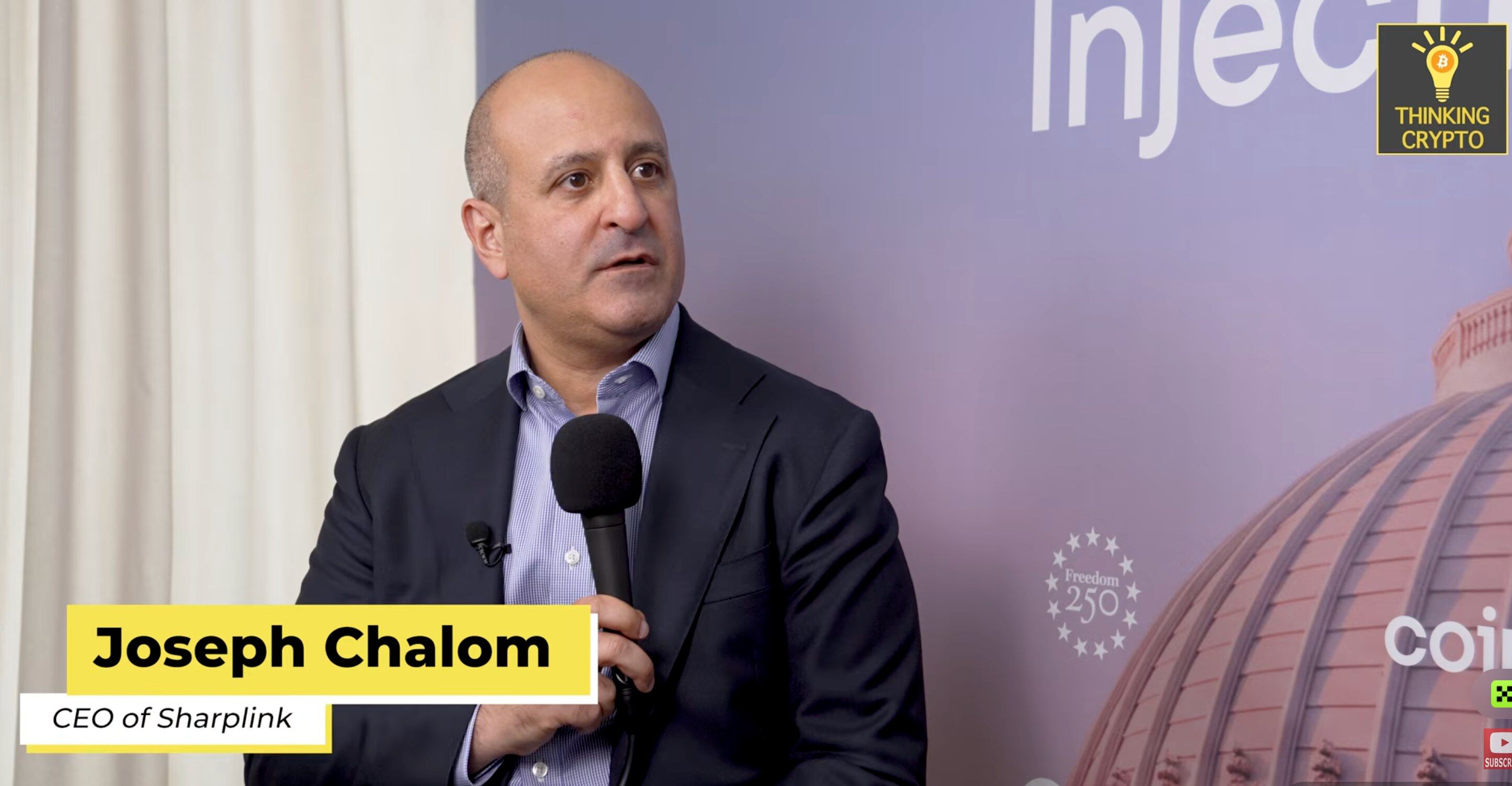
SharpLink co-CEO Joseph Chalom shares his bullish outlook on Ethereum during the recent "Injective Summit 2026." Despite prevailing negative market sentiment, Chalom argues that fundamentals and data tell a different story: Ethereum dominates with over 50% of stablecoin transaction volume, nearly 60% of tokenized real-world assets (RWA), and remains the uncontested leader in DeFi. He attributes the communication gap and lack of confidence partly to the Ethereum Foundation's restructuring. In response, SharpLink, alongside ConsenSys and Bitmain, is funding three key spin-off teams from the Foundation: ETH Labs (for institutional-scale scalability), Ethereum Institutional (for business development and marketing), and EthSystems (for next-gen privacy and compliance solutions). Chalom emphasizes these are critical for accelerating institutional adoption. Regarding SharpLink's strategy, Chalom details a conservative, yield-focused approach. The firm holds 886,725 ETH, acquired with zero leverage or debt. They generate revenue by staking ETH and strategically deploying capital into DeFi protocols via a dedicated fund, aiming for returns above the native staking yield. This contrasts with some Bitcoin-focused firms that have become net sellers. On the broader institutional adoption of tokenization, Chalom sees current progress as just the beginning. He breaks it down into layers: stablecoins as the currency/value layer, tokenized assets as the exposure layer, and DeFi as the execution layer. He predicts regulatory clarity, like the potential Clarity Act, will be a major catalyst. A key future inflection point will be when fiduciary managers prefer tokenized, 24/7 tradable digital assets over traditional "analog" versions due to their programmability and instant settlement. In conclusion, Chalom positions SharpLink not just as an ETH accumulator and yield generator, but as an active "ecosystem steward," funding essential development and marketing initiatives to support Ethereum's long-term growth, which he believes is directly aligned with shareholder interests.

Odaily星球日报1 хв тому

SharpLink's Helm: Buying Only, Never Selling, Making ETH Generate Profits Through the Cold Winter

Odaily星球日报1 хв тому

Ten European Banks Launch Blockchain Initiative RL1

On July 28, 2026, ten European financial institutions launched the Regulated Layer One (RL1) initiative. This open, neutral, and compliance-focused blockchain network is specialized for institutional digital asset operations. The founding members include ABN AMRO, Cecabank, Chartered Investment, Crédit Mutuel Alliance Fédérale, DekaBank, DZ BANK, LBBW, Natixis CIB, SC Ventures, and Seturion, formed as a European cooperative society (SCE) and led by Henning Voelkel, former head of SWIAT. The network is open to new participants, with NatWest currently in discussions to join. RL1 is built on the SWIAT blockchain, which will remain its software and services provider. The underlying SWIAT network, operational for three years, has processed 50 transactions totaling €700 million. The initiative is described as a collective European effort to create a foundation for a shared, openly and trustworthily managed distributed ledger. Its primary goal is to overcome fragmentation in the regulated financial sector by establishing a neutral, participant-owned, pan-European DLT infrastructure for tokenized assets, digital money, and next-generation financial services. The move responds to growing EU demand for scalable real-world asset (RWA) infrastructure, evidenced by projects like Pontes and Appia. This launch aligns with broader sector growth expectations, including Standard Chartered's forecast for DeFi and RWA market capitalization to reach $2 trillion.

cryptonews.ru7 хв тому

Ten European Banks Launch Blockchain Initiative RL1

cryptonews.ru7 хв тому

Losing the "Anchor": Walsh's Minimalist Communication is Forcing the Market to Price Itself

Losing the "Anchor": Walsh's Minimalist Communication Forces Markets to Self-Price The probability of a rate hike priced into the market ahead of the Thursday meeting is unusually high at 40%. This stems from the new framework under Chairman Walsh, characterized by "data dependence and low communication." Since taking office, Walsh has implemented reforms: drastically shortening statements, removing traditional forward guidance, and emphasizing that statements only provide facts. He has also established working groups to review practices and strongly reiterated a commitment to price stability amid prolonged high inflation. Walsh does not submit a personal dot-plot forecast, urging markets to price based on their own data interpretation rather than reflecting Fed signals. This has removed the traditional "anchor," forcing markets to independently price in the possibility of sudden action in a truly data-driven environment. Consequently, short-term rate volatility and tail risk premiums have increased, as markets pay for protection against a potential sudden hike to reinforce anti-inflation credibility. Specific catalysts supporting this uncertainty include: 1) Iran-related tensions and volatile energy prices raising inflation tail risks, and 2) The new chairman's potential need to establish his anti-inflation credibility with an early, decisive move. In essence, the 40% hike probability reflects the market pricing protection for tail risks under Walsh's new low-guidance framework, compounded by geopolitical and data uncertainties, rather than treating a hike as the base case. The outcome will signal how this new communication paradigm shapes market adaptation. If rates are held steady, focus will shift to September. An unexpected hike would reinforce the "data and credibility first" narrative, prompting a repricing for higher-for-longer rates and tighter financial conditions.

marsbit12 хв тому

Losing the "Anchor": Walsh's Minimalist Communication is Forcing the Market to Price Itself

marsbit12 хв тому

Nexo States That MiCAR Provides Customers With a Clear Standard of Trust in Platforms

Crypto asset management platform Nexo has restructured its European Economic Area (EEA) operations to comply with the EU's Markets in Crypto-Assets Regulation (MiCAR). Instead of directly obtaining a MiCAR license, Nexo has partnered with two regulated German firms: Tangany and DLT Finance. Tangany, a MiCAR-licensed custodian, provides segregated digital asset storage, while DLT Finance, licensed under MiCAR and MiFID II, offers brokerage and trade execution infrastructure. This collaboration allows Nexo to maintain all its EEA services without disruption. Nexo leadership views MiCAR as the most significant regulatory framework for digital assets in Europe, providing a clear standard that builds institutional trust and long-term stability. They argue that clear regulations benefit the industry's credibility and give clients a benchmark to evaluate platforms. While some criticize EU rules as over-regulation, Nexo believes companies that build operational models around MiCAR can operate confidently across the EEA. Nexo anticipates industry consolidation as users migrate to platforms prioritizing verified compliance and asset protection. The partnership is presented as a model for institutions operating in the post-MiCAR European market, strengthening Nexo's position as a major player in shaping the next phase of regulated digital asset management.

cryptonews.ru17 хв тому

Nexo States That MiCAR Provides Customers With a Clear Standard of Trust in Platforms

cryptonews.ru17 хв тому

Торгівля

Спот

Популярні статті

Як купити JUP

Ласкаво просимо до HTX.com! Ми зробили покупку Jupiter (JUP) простою та зручною. Дотримуйтесь нашої покрокової інструкції, щоб розпочати свою криптовалютну подорож.Крок 1: Створіть обліковий запис на HTXВикористовуйте свою електронну пошту або номер телефону, щоб зареєструвати обліковий запис на HTX безплатно. Пройдіть безпроблемну реєстрацію й отримайте доступ до всіх функцій.ЗареєструватисьКрок 2: Перейдіть до розділу Купити крипту і виберіть спосіб оплатиКредитна/дебетова картка: використовуйте вашу картку Visa або Mastercard, щоб миттєво купити Jupiter (JUP).Баланс: використовуйте кошти з балансу вашого рахунку HTX для безперешкодної торгівлі.Треті особи: ми додали популярні способи оплати, такі як Google Pay та Apple Pay, щоб підвищити зручність.P2P: Торгуйте безпосередньо з іншими користувачами на HTX.Позабіржова торгівля (OTC): ми пропонуємо індивідуальні послуги та конкурентні обмінні курси для трейдерів.Крок 3: Зберігайте свої Jupiter (JUP)Після придбання Jupiter (JUP) збережіть його у своєму обліковому записі на HTX. Крім того, ви можете відправити його в інше місце за допомогою блокчейн-переказу або використовувати його для торгівлі іншими криптовалютами.Крок 4: Торгівля Jupiter (JUP)Легко торгуйте Jupiter (JUP) на спотовому ринку HTX. Просто увійдіть до свого облікового запису, виберіть торгову пару, укладайте угоди та спостерігайте за ними в режимі реального часу. Ми пропонуємо зручний досвід як для початківців, так і для досвідчених трейдерів.

135 переглядів усьогоОпубліковано 2024.12.12Оновлено 2026.06.02

Як купити JUP

Обговорення

Ласкаво просимо до спільноти HTX. Тут ви можете бути в курсі останніх подій розвитку платформи та отримати доступ до професійної ринкової інформації. Нижче представлені думки користувачів щодо ціни JUP (JUP).

活动图片