Scaramucci’s SkyBridge Stops Withdrawals In Fund – Liquidation In The Offing?

BitcoinistОпубліковано о 2022-07-20Востаннє оновлено о 2022-07-20

Анотація

Anthony Scaramucci and SkyBridge Capital will be the talk of the town in the coming days -- until they make...

Anthony Scaramucci and SkyBridge Capital will be the talk of the town in the coming days — until they make sure there’s no “damage to investors who want to stay in the funds.”

The cryptocurrency market as a whole is still reeling from the market meltdown precipitated in part by the widely publicized implosion of the Terra (LUNA) ecosystem, which resulted in large investor losses.

On Tuesday, Scaramucci, founder and managing partner of SkyBridge Capital, acknowledged that the firm had temporarily stopped withdrawals in one of its funds.

There Won’t Be Any Liquidation, Scaramucci Says

This news added to the negative sentiment of the crypto market, but he reassured there is “no fear of any liquidation” because the fund is “unlevered.”

Anthony Scaramucci, founder and managing partner of SkyBridge Capital. Image - iGaming.org.

SkyBridge Fund Tied To Crypto

Bloomberg News reported on Tuesday that the SkyBridge funds have exposure to digital assets such as Bitcoin (BTC) and Ethereum (ETH).

In an interview with CNBC’s Squawk Box, Scaramucci, the former White House chief of communication, confirmed that the fund affected by the withdrawal suspension is called Legion Strategies.

Scaramucci stated that the decision was made as a result of the rapid decrease in the value of Legion’s stocks and cryptocurrency.

According to sources with knowledge of the situation, the Legion fund had to cease redemptions because private companies, which are more difficult to dispose, now account for approximately 20% of the holdings.

Bloomberg reported that the fund is one of SkyBridge’s smallest products, with expected assets under management (AUM) of $230 million.

According to a news agency’s report, the fund’s holdings include the crypto exchange FTX, but it only retains 10 percent of its assets in cryptocurrency.

Scaramucci stated in an interview with CNBC: “We have to strike a balance between many factors… we have some private investments there, and you don’t want to have to rebalance because of near-term redemptions.”

BTC total market cap at $442 billion on the daily chart | Source: TradingView.com

SkyBridge Will Lift Suspension When The Coast Is Clear

According to Scaramucci, the ratings for Legion are down 30 percent year-to-date but are up 5 percent so far this month. He indicated that SkyBridge will lift the suspension once “things begin to improve.”

“Our board has decided to temporarily cease operations until we are able to raise funds within the fund and then make sure when people get out they get out orderly,” he assured.

As of February 28th, about a quarter of the fund was exposed to cryptocurrencies. Bloomberg noted in its research that the current exposure has decreased to 10 percent. At the time of publication, SkyBridge had not issued a statement regarding the situation.

The broader stock and cryptocurrency markets have collapsed as the United States Federal Reserve jacks up interest rates to combat growing inflation, among other actions the central bank has initiated recently.

Scaramucci is an enthusiastic Bitcoin supporter. Interestingly, over half of the company’s entire assets, which are currently handled to the tune of $3.5 billion, are tied to digital asset investments.

Пов'язані матеріали

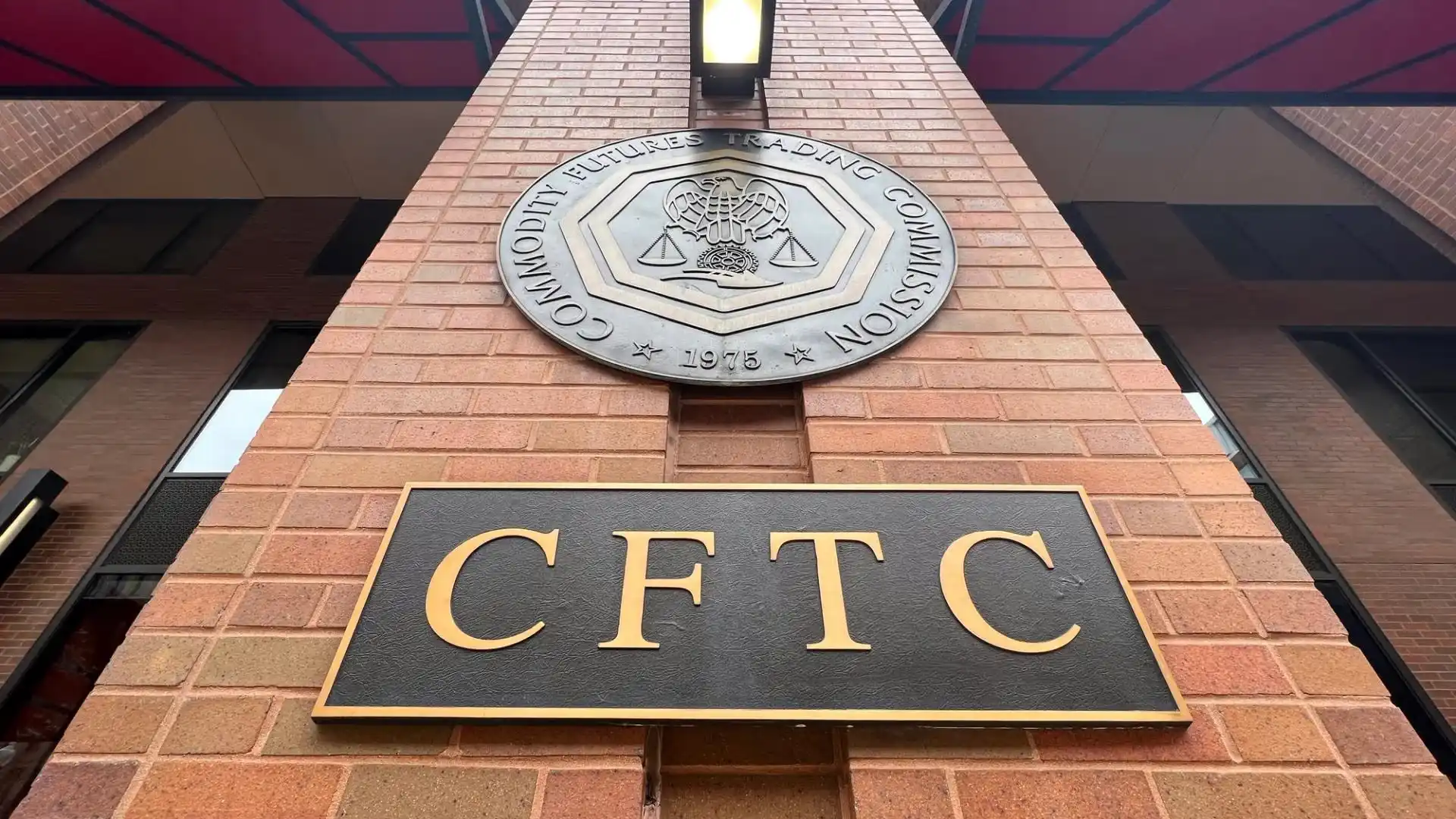
Kalshi and Coinbase Receive CFTC Approval, Ushering in the Most Regulation-Friendly Era for the Crypto Industry?

The U.S. Commodity Futures Trading Commission (CFTC) took two landmark actions on May 29. It approved Kalshi's application to list a Bitcoin perpetual futures contract and issued a no-action letter to Coinbase Financial Markets. This allows Coinbase to offer certain perpetual futures products to U.S. customers through a subsidiary, with digital assets permitted as collateral. These moves, coupled with a new CFTC policy statement, provide a clearer regulatory pathway for perpetual contracts in the U.S., moving them from a regulatory gray area. CFTC Chair Mike Selig stated this is a key step for U.S. crypto leadership but noted the policy is not yet permanent. The article explains that CFTC's previous reluctance stemmed from legal ambiguities, as perpetual contracts lack an expiration date. However, such contracts dominate global crypto derivatives, accounting for ~78% of centralized exchange volume in 2025, forcing U.S. regulators to adapt to competition from offshore platforms like Hyperliquid. The approvals offer two compliance paths: Kalshi's direct listing and Coinbase's model using foreign futures. This is expected to attract institutional capital back to regulated U.S. venues, stimulate the launch of more products like ETH perpetuals, and enhance U.S. competitiveness in the global crypto derivatives market. The author suggests this may signal a "regulatorily friendly" era for crypto.

marsbit1 год тому

Kalshi and Coinbase Receive CFTC Approval, Ushering in the Most Regulation-Friendly Era for the Crypto Industry?

marsbit1 год тому

Sharplink CEO: Ethereum's Future Is Playing Out Now

This article presents a perspective from Joseph Chalom, CEO of Sharplink and a former BlackRock executive. He argues that current controversies surrounding the Ethereum Foundation (EF) and ETH's price miss the bigger picture for institutional adoption. Chalom asserts that Ethereum is decisively winning in the three key attributes institutions value most: trust, security, and liquidity. He cites its dominance in stablecoin settlement, tokenized real-world assets (RWA), and high-value DeFi as evidence. This success is attributed to the EF's consistent, long-term protocol development over a decade, including major upgrades like The Merge and a robust future roadmap. He defends Ethereum's decentralization as a core strength, not a weakness, stating institutions require a neutral infrastructure not controlled by any single entity. Comparing ETH to Amazon, Chalom suggests critics focusing on short-term price are missing its potential to become the foundational settlement layer for the entire global financial system. The article encourages a contrarian "be greedy when others are fearful" investment approach, drawing parallels to Warren Buffett's strategy and BlackRock's continued investment during crypto winters. Chalom concludes that while the EF correctly focuses on core protocol attributes (CROPS: Censorship Resistance, Capture Resistance, Open Source, Privacy, Security), a leadership gap exists in market-facing narrative and institutional adoption. He calls for ecosystem participants, including his own firm Sharplink, to become more vocal advocates to support Ethereum's impending "supercycle" of institutional adoption.

链捕手2 год тому

Sharplink CEO: Ethereum's Future Is Playing Out Now

链捕手2 год тому

Deconstructing the Investment Methodology of the 'Stock God Serenity' in One Article

"Serenity's Bottleneck Investment Methodology: A Deep Dive" This article dissects the "bottleneck point investment" strategy of the pseudonymous investor Serenity, known for exceptional returns (YTD 4502.45%). The core methodology involves identifying a major technological trend (e.g., AI compute expansion), mapping its supply chain, and investing early in the most irreplaceable, supply-constrained upstream component before the market fully values it. The framework is broken down into a five-factor model: 1. **Deterministic Demand**: Anchored in a large, validated trend. 2. **Constrained Supply**: The component must be difficult to replicate or scale quickly. 3. **Low Market Attention**: Opportunities exist where coverage is sparse. 4. **Value Capture**: The company must have pricing power, high margins, and customer lock-in. 5. **Catalyst**: A near-term event to trigger price discovery (earnings, customer ramp, etc.). The article provides illustrative examples like $AXTI (InP substrates for photonics), $RPI (edge hardware for AI agents), and $AAOI/$LITE (components for cloud ASICs). To apply this method, a six-step process is outlined: identify the macro trend, map the supply chain, pinpoint the true bottleneck, gather evidence (client wins, certifications), assess risks ("anti-thesis table"), and size the position according to research depth. Crucially, the article notes significant limitations: risk of overfitting inferences from sparse data, valuation challenges for pre-revenue companies, liquidity/reflexivity risks due to Serenity's own market influence, and survivor bias amplified by a strong AI bull market. The key takeaway is to emulate the rigorous research process—finding the trend, the bottleneck, the evidence—rather than blindly copying specific stock picks, emphasizing the discipline of "walking through the narrow gate."

marsbit2 год тому

Deconstructing the Investment Methodology of the 'Stock God Serenity' in One Article

marsbit2 год тому

One Article Deconstructs the Investment Methodology of 'Stock God Serenity'

This article deconstructs the "bottleneck point" investment methodology of the renowned investor known as "Serenity" (aleabitoreddit). Characterized by a YTD return of over 4500%, the strategy involves identifying a major, confirmed trend (e.g., AI data center expansion), mapping its supply chain, and then pinpointing a critical, hard-to-replace upstream bottleneck that the market has yet to fully price in. The core framework is a five-factor model: 1) **Certain Demand** from a clear megatrend; 2) **Constrained Supply** with high barriers to entry and slow replication; 3) **Low Market Attention**, where the company is overlooked; 4) **Value Capture** potential through pricing power and market share; and 5) a near-term **Catalyst** to trigger re-evaluation. Case studies include **$AXTI** (InP substrates for photonics), **$RPI** (edge hardware for AI agents), and companies like **$AAOI** and **$LITE** tied to hyperscaler-specific ASIC demand (e.g., Microsoft Maia, Amazon Trainium). The article provides a six-step guide for applying this approach: 1) Identify a validated macro trend; 2) Map the entire supply chain; 3) Find the true bottleneck; 4) Gather concrete evidence (e.g., filings, customer contracts); 5) Perform rigorous risk assessment ("anti-thesis"); 6) Match position size to depth of research. Key limitations are also noted: the risk of narrative overfitting, difficulty in valuing early-stage companies, Serenity's own market-moving influence creating reflexivity, and potential survivorship bias due to the AI bull market. The essence of the method is not to copy picks but to adopt the research process: find the trend, locate the bottleneck, verify with evidence, assess valuation, await a catalyst, and then invest with discipline. The philosophy is summarized as "walking through the narrow gate"—seeking non-consensus, structurally vital points within booming industries before they become widely recognized.

链捕手2 год тому

One Article Deconstructs the Investment Methodology of 'Stock God Serenity'

链捕手2 год тому

Торгівля

Спот
Ф'ючерси
活动图片