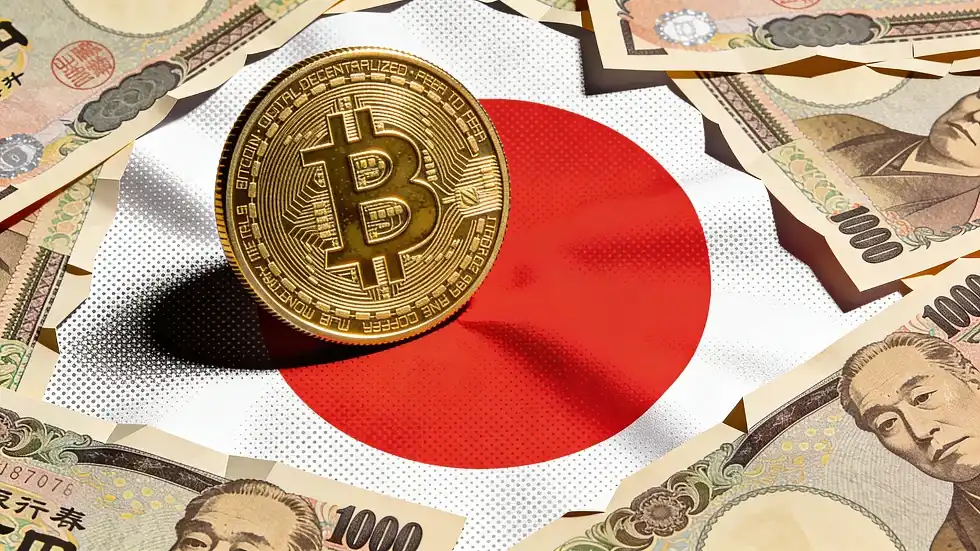
[Key interpretation] $744million eth flowed out of the exchange, significantly indicating an upward signal

Huobi ResearchОпубліковано о 2022-07-08Востаннє оновлено о 2022-07-11

Анотація

BTC and eth showed strong performance and wanted to confirm the reverse pattern.

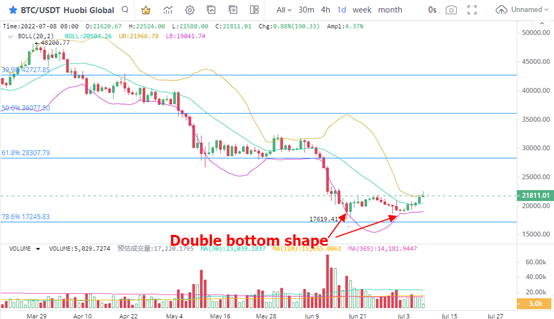
1、 BTC further confirms the double bottom

In the daily K-line chart of BTC, after the price increase of BTC expanded below $22500, the authenticity of the double bottom pattern was further verified. From the perspective of volume and price performance, the rising process of BTC is relatively conservative and does not continue to pull up strongly. The trading volume is always near the login line, which means that there is no signal of continuous and significant improvement in investor participation. Nevertheless, the value of BTC is expected to strengthen. Considering that the support of $17245 corresponding to 78.6% Fibonacci is effective, from the perspective of range fluctuation, BTC is far from releasing $28307 corresponding to 61.8% Fibonacci, and there is room for further rise.
2. BTC leverage increase

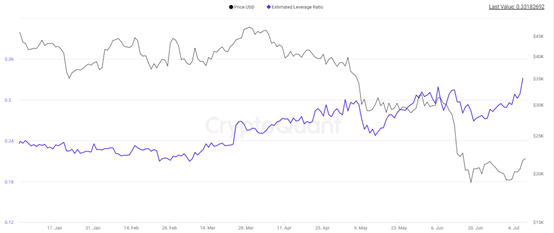
With the increase of BTC price rebound space and growth participation, one of its manifestations is the upward leverage. From the figure, the trading leverage ratio of BTC has rebounded to around 0.3318, which has significantly exceeded the peak leverage ratio in May and June. After the leverage ratio picks up, BTC volatility is expected to further strengthen. The price of BTC is expected to reach around $25000 within the week. Increased leverage will also increase volatility opportunities. In the near future, investors can still hold money and wait for the market to pick up.
3. Strong data performance on BTC chain

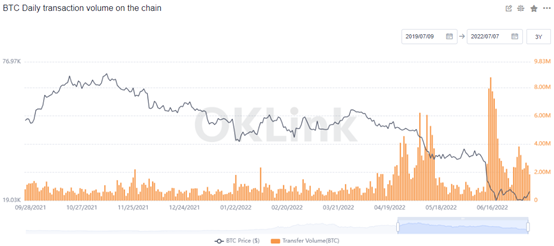
BTC's trading volume on the chain has continued to rise in the near future. Even after BTC bid farewell to the strong earthquake in June, investors' trading heat on the chain remains unabated. The figure shows that the trading volume on the chain is maintained at more than 1.85 million within a day, with an average of more than 2.2 million. Compared with the dull period, the online trading volume is less than 600000. At present, the online trading volume has increased by more than 200%. The trading volume on the chain remains high, indicating that the cost of holding money for investors may have changed. In other words, the high trading volume on the chain indicates that the turnover rate is at a high level, and the bottom confirmation process of BTC continues. Short term price rebound requires vigilance against possible price shocks.
4. Double bottom shape verification of eth recovery

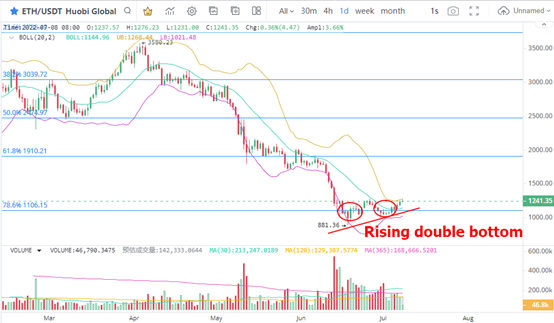
In the daily K-line chart of eth, after the bottom of the price rises, the double bottom reversal of the rebound is being confirmed. Although the trading volume contracted, the price trend of eth was still strong, reaching the pressure level below $1300. At present, the price has not effectively exceeded $1300. Below this point, the support effect is further verified during the period of price shock. Fibonacci 78.6% of the corresponding $1106 support is still effective, low absorption can refer to this point to buy eth.
5. Eth selling pressure is significantly low

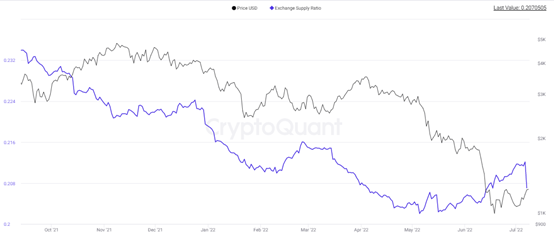
Recently, the number of eth inflows into exchanges has continued to grow, but the data on July 7 showed a reversal signal. The number of eth in the exchange quickly retreated from 0.212 to around 0.207. Judging from the trend of the index, it has almost become the largest change in the value of the year. Based on this judgment, the short-term price rebound of eth has been recognized by investors. The decline in the proportion of eth in the number of exchanges indicates that the selling pressure has decreased significantly, which means that the possibility of eth price rise has increased. At present, volume and price support eth to further rise. In absolute terms, the number of eth in the exchange fell from 25.22 million to 24.6 million in July, a decrease of 620000 eth, worth 744million US dollars. In other words, as much as $744million of eth flowed out of the exchange, and the selling pressure was reduced accordingly.

Пов'язані матеріали

Why Is the World Nervous About Japan Raising Interest Rates?

In June 2026, the Bank of Japan raised its policy rate to 1%, marking its first hike to this level since 1995. While this rate remains low compared to global peers like the US and Europe, the move signals a profound shift for a nation that has been a global source of ultra-cheap funding for decades. Japan's long-standing near-zero or negative interest rates had facilitated massive "yen carry trades," where international investors borrowed low-cost yen to invest in higher-yielding assets worldwide, such as US tech stocks and emerging market bonds. This made Japan a critical, often overlooked, source of global liquidity. Japan's ultra-loose policy stemmed from structural challenges post-1990s asset bubble: aging demographics, chronic low inflation/deflation, and high public debt. Recent shifts, including sustained wage growth (exceeding 5% in recent years) and inflation consistently above the 2% target, have created a "wage-price spiral" possibility, prompting the policy normalization. The global market's concern lies not in the absolute rate but in the potential unwinding of the yen carry trade. As Japanese borrowing costs rise, the economics of these leveraged global investments change, potentially triggering deleveraging and capital outflows from risk assets. Market anxiety focuses on the end of a thirty-year consensus that Japan would perpetually provide cheap funding. Ultimately, the global impact will depend on the interplay with US monetary policy. While Japan is tightening, the significant interest rate differential with the US remains. The key future dynamic is whether simultaneous Japanese hikes and eventual US rate cuts will narrow this gap, forcing a major recalibration of global capital flows and asset pricing built on an era of abundant, cheap yen liquidity.

marsbit1 год тому

Why Is the World Nervous About Japan Raising Interest Rates?

marsbit1 год тому

Research Report Analysis: MRVL's Optical AI Booming, Why High Valuation Keeps Morgan Stanley's Star Analyst Sidelined?

Report Recap: MRVL Optical AI Boom - Why High Valuation Led Morgan Stanley's Star Analyst to Stay Neutral? Morgan Stanley analyst Joseph Moore maintained an "Equal-weight" (Neutral) rating on Marvell Technology (MRVL) on May 28, raising the price target from $172 to $195, below the trading price. This stance comes despite Marvell reporting a record quarter and significantly raising its full-year outlook (FY27 revenue ~$11.5B, up ~40%). Moore's neutral view is based on valuation. The $195 target implies ~40x CY2027 P/E. He contrasts MRVL with NVDA: both trade near ~$200, but Nvidia's forward EPS is more than double Marvell's. For MRVL's valuation to hold, it needs consistent earnings upgrades, proof of networking market share gains, or certainty on large-scale custom AI chip shipments—none of which are confirmed yet. Growth is driven by two pillars: **1) Optical Interconnect** (the faster runner): Moore raised FY27 growth expectations to >70%, with the optical module product line nearing a $1B annualized run rate. **2) Custom AI Chips** (the climber): Confidence in FY28 is growing, but a major new customer project only ramps in FY28, with no current revenue visibility. Key risks are the underperforming Storage, Enterprise, and legacy Networking segments. Moore acknowledges the real AI opportunity but believes the current price already reflects it. For the stock to work from here, investors need to see the optical business hit its targets, custom chips ramp as planned, and a recovery in the weaker business units.

marsbit2 год тому

Research Report Analysis: MRVL's Optical AI Booming, Why High Valuation Keeps Morgan Stanley's Star Analyst Sidelined?

marsbit2 год тому

qinbaFrank: Review and Outlook of the AI Computing Power Wave — From the Three Debates on NVIDIA to Optical Interconnect and SpaceX IPO, How is Capital Rotating?

**Summary: Retrospective and Outlook on the AI Computing Wave - A Framework for Capital Rotation** Based on a presentation by investor qinbaFrank, this analysis reviews the AI computing market trajectory since 2023 and outlines a forward-looking framework. **Key Phases and Market Debates:** The AI bull market progressed through three major debates: 1) The necessity of massive capital expenditure (late 2023). 2) The sustainability of tech giants' spending (early 2024-early 2025). 3) Potential overestimation of compute needs (early 2025). Consensus solidified in late 2025 as model capabilities and utility demonstrably improved. **Core Thesis: Penetration Rate Drives Commercialization.** Unlike the 2000 dot-com bubble, the current AI wave benefits from mature digital infrastructure, enabling faster adoption. The critical threshold is 10% penetration; surpassing it (with recent enterprise intent surveys showing ~18%) indicates entry into a rapid growth "golden period" where user scale and willingness to pay increase simultaneously. **AI vs. Internet: A Fundamental Difference.** While the internet enhanced connection efficiency, AI directly substitutes human cognition and labor. Once AI performance exceeds the "societal average" human level, its commercial value scales exponentially as payment shifts from human labor costs to AI service fees. **Investment Logic Evolution in the Compute Chain.** The focus has expanded from GPUs to a systemic re-rating of the entire hardware stack: storage/HBM, CPUs, interconnects, power, and advanced packaging. The framework is: **short-term "scarcity pricing," mid-term "upgrade pricing" (e.g., optical interconnects, power networks), and long-term "Physical AI" pricing** (edge computing, robotics). **Market Focus Shift and Adjustment Framework.** The market is transitioning from "hardware scarcity" to "commercialization validation." The ultimate anchor for the narrative is sustained high growth in model providers' Annual Recurring Revenue (ARR) and cloud business revenue, which justifies continued capital expenditure. Adjustments are categorized into three levels: * **L1 (Minor):** Driven by valuation compression or macro noise (e.g., single CPI print). Fundamentals intact. * **L2 (Moderate):** Triggered by significant macro events requiring risk repricing. Requires new data for confidence restoration. * **L3 (Major):** Involves a reset of the core industrial narrative or macro regime (e.g., AI commercialization growth stalling). The **crucial dividing line** is whether AI commercialization growth slows. Without a slowdown, pullbacks are likely L1/L2 "repricing" events. A genuine growth deceleration would signal an L2/L3 narrative reset. **Conclusion: A Foundational Civilizational Leap.** AI represents a foundational upgrade to "intelligence" itself—akin to humanity mastering fire—rather than a single-point industrial revolution. This底层能力跃迁 (underlying capability leap) will spawn successive waves of innovation (Agent, robotics, industry workflow重构). The journey will be波浪式的 (wavelike), driven by cycles of scarcity, technological upgrades, and远期兑现 (long-term realization).

marsbit2 год тому

qinbaFrank: Review and Outlook of the AI Computing Power Wave — From the Three Debates on NVIDIA to Optical Interconnect and SpaceX IPO, How is Capital Rotating?

marsbit2 год тому

Торгівля

Спот
Ф'ючерси
活动图片