讲个鬼故事,连韩国人也不怎么炒币了

marsbitОпубліковано о 2025-11-03Востаннє оновлено о 2025-11-04

撰文|Liam,深潮 TechFlow

如果要评选世界上最爱炒币的人,韩国人一定榜上有名。

韩国,一直是全球加密货币最狂热的国度之一,市场甚至发明了一个词:“泡菜溢价” (Kimchi Premium),韩国交易者买比特币一度要比全球贵出 10%。

可到了 2025 年,风向却变了。

韩国最大加密交易平台 Upbit 的交易量相较去年同期下跌 80%,比特币韩元交易对的活跃度远不如往年;反而是韩国股市热火朝天,KOSPI 指数年内大涨超 70%,持续创下历史新高。

在 Kakao Talk、Naver 论坛上,曾经天天讨论山寨币的散户,如今都在谈论“AI 半导体概念股”。

币圈鬼故事来临,连韩国人都不怎么炒币了。

交易量腰斩,韩国人不炒币了

在过去几年里,韩国一直是全球加密市场的兵家必争之地。

对交易所和项目方来说,这里有高净值的优质客户,说得更通俗一点,韩国人往往是山寨币的接盘主力。

媒体与影视作品中,不乏韩国人通宵炒币、暴富又爆仓的故事。

所以,当有人告诉你,这个“炒币之国”的散户,如今不怎么炒币了,你或许会觉得荒诞。

但数据不会说谎。

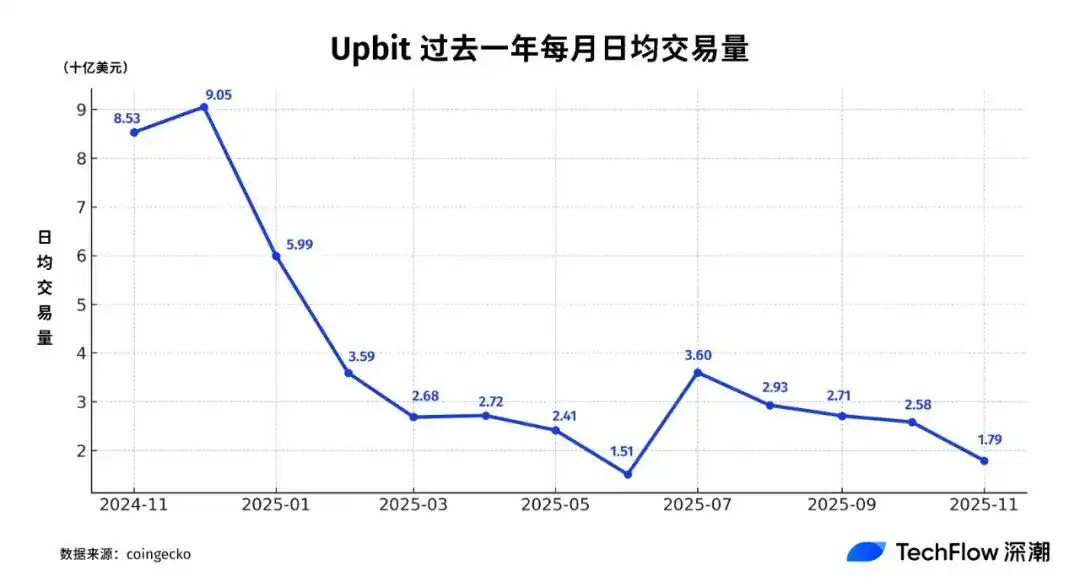
韩国最大交易所 Upbit 的交易量已崩塌式下滑。

2025 年 11 月,Upbit 日均交易量仅 17.8 亿美元,相比 2024 年 12 月的 90 亿美元,暴跌 80%,且已连续四个月下降。
图片

Upbit 的历史巅峰出现在 2024 年 12 月 3 日,韩国戒严令当晚,当日交易量高达 274.5 亿美元,是平时的十倍。

但那一夜的癫狂,成为顶点,此后市场迅速冷却,量能断崖式塌陷。

更值得注意的是,交易量的波动性也在显著降低。

在 2024 年底的狂热期,日交易量经常在 50-270 亿美元之间剧烈波动;而进入 2025 年后,大部分时间交易量都稳定在 20-40 亿美元的区间内,波动幅度大幅收窄。

韩国第二大交易所 Bithumb 的命运也相似。

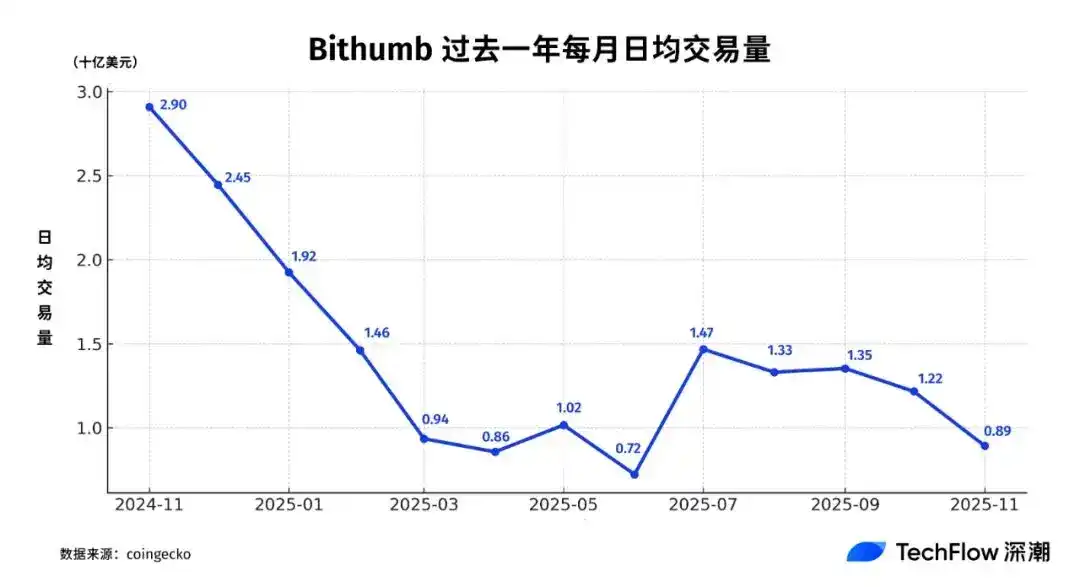
2024 年底 (12 月)Bithumb 日均交易量约为 24.5 亿美元,到 2025 年 11 月,仅剩 8.9 亿美元左右,整体下降约 69%,流动性损失近三分之二。
图片

韩国最大的两家本土交易所(Upbit 与 Bithumb)在同一周期内双双陷入“量能衰退”,不仅意味着交易的冷却,更是韩国散户情绪的全面退潮。

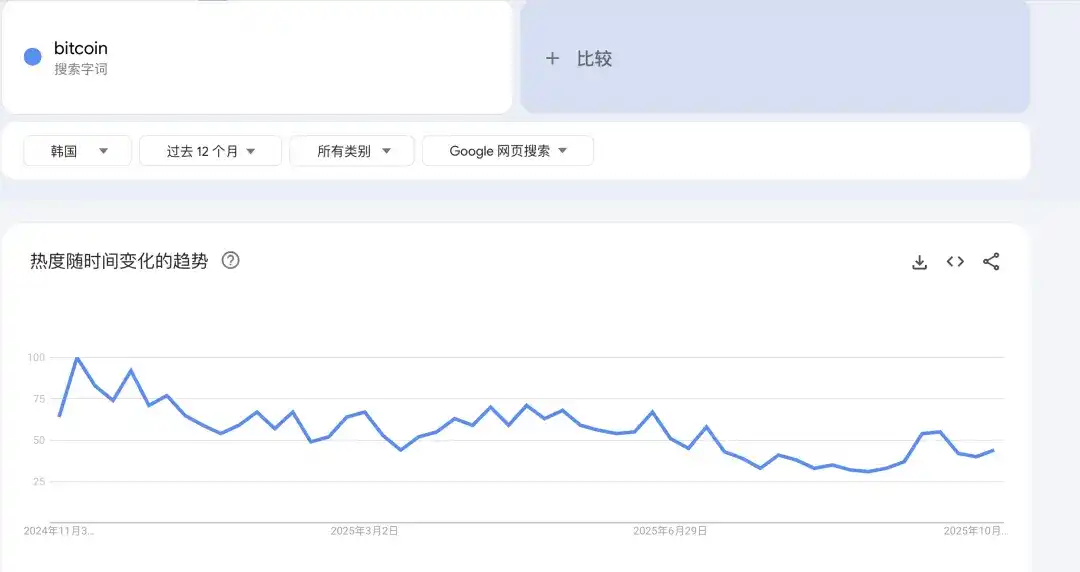
搜索数据印证了这一点,在韩国的 Google 搜索趋势中,比特币(Bitcoin)最新搜索指数为 44,较 2024 年底的最高点 100 下跌 66%。
图片

韩股疯牛

那么,韩国人的钱都去哪儿了?答案是:股市。

今年的韩国股市堪称 2017 年的比特币牛市转世,史诗级疯牛。

韩国基准 KOSPI 股指在刚刚过去的 10 月,17 次创下盘中历史新高,突破 4200 点大关,仅仅只是 10 月,累计上涨近 21%,创 2001 年来最佳单月。

年初至今,KOSPI 指数累计飙升了 72% 以上,领跑各大类资产。

KOSPI 10 月日均成交额达 16.6 万亿韩元(约 115 亿美元),单日最高成交 18.9 万亿韩元,环比 9 月大涨 44%,券商 APP 一度卡顿。

这还只是指数,个股更加疯狂。

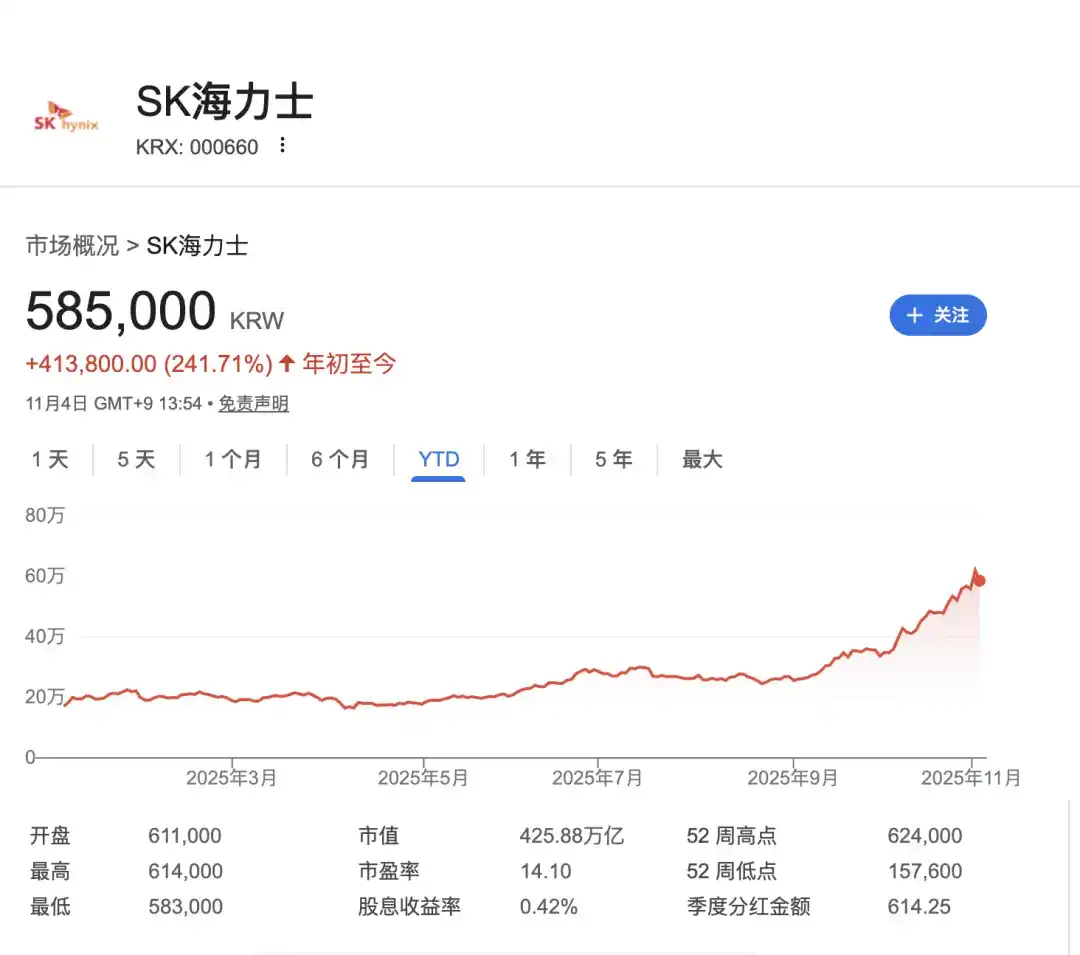
三星电子年初至今上涨 100%;存储龙头 SK 海力士股价本季度上涨 70%,年初至今暴涨 240%,两家公司合计日均成交 4.59 万亿韩元,占全市场 28%。
图片

市场热度高到连交易所都看不下去了,韩国交易所周一晚间表示,已对 SK 海力士股票发布“投资注意”公告,原因是该股涨势过快,这也让 SK 海力士股价周二跳水。

AI 成了“全民信仰”

曾经,韩国股市是一潭死水,十多年基本没涨,韩国本土媒体也频频唱衰,称“韩国股市没有出路”,这也让众多韩国投资者纷纷炒币或者投资美股,为何 2025 年韩国股市峰回路转?

图片

韩国股市这轮暴涨,看似“散户炒疯了”,但背后逻辑却异常清晰:

全球 AI 浪潮 + 政策推力 + 国内资金回流。

所有人都知道,这一轮行情的火种来自 AI

ChatGPT 点燃了全球科技泡沫的第二季,而韩国正好坐在产业链的“弹药库”位置。

韩国是全球存储芯片的龙头国家,SK 海力士、三星电子几乎垄断了高带宽内存(HBM)市场,而 HBM 正是训练 AI 大模型最关键的原料。

这意味着,每当英伟达、AMD 的 GPU 出货增长,韩国企业的利润曲线就会同步飙升。

10 月底,SK 海力士发布财报,三季度营收 171 亿美元,运营利润 80 亿美元,同比增长 62%,均创历史新高。

更为关键的是,SK 海力士已锁定 2026 年所有 DRAM 和 NAND 产能的客户需求,供不应求。

于是韩国人发现:

AI 是美国的叙事,但钱是韩国在赚。

如果说英伟达是美股的灵魂,韩国的散户则在 SK 海力士上找到了自己的信仰。

从币圈到股市,他们依然在追逐那个“可以翻十倍的梦”,但买三星或者 SK,还可以给自己戴上“爱国者”的桂冠。

另外,不要忽视一个关键背景:韩国政府,正在用力救股市。

长期以来,韩国股票存在所谓的“韩国折价(Korea Discount)”。

家族财阀垄断、公司治理混乱、股东回报低……导致韩国企业普遍被低估,哪怕三星电子也长期低于全球同类公司估值,SK海力士上涨240%后PE依然只有14。

尹锡悦政府上台后,推出了被称为“韩国版股东价值革命”的改革计划:

推动企业提升分红、回购股票;

打击财阀交叉持股;

降低资本利得税、鼓励养老金与散户加大本土配置。

这场改革被媒体称为“让韩国摆脱折价的国家行动”。

于是,海外资金开始回流,本地机构与散户也纷纷“回家买股”。

当然,另一个现实是,钱没地方去。

韩国楼市在高利率周期中降温,美股估值高企,而币圈又只能被动接盘。

投资者需要一个新的赌桌,而股市,刚好提供了一个合法的投机场。

韩国银行数据显示,今年上半年本土散户新开证券账户超过 500 万,券商 App 下载量暴增。

这波资金流入 KOSPI 的速度,比 2021 年散户冲进币圈还快。

同时,韩国养老金、保险资金也在加仓本土科技股。

从国家到机构到散户,大家都在冲进股市,你甚至可以说,这是一次“国家级的全民牛市。”

投机永不眠

和币圈靠“情绪”拉盘不同,韩国股市这次的“牛”,至少有一点业绩支撑。

最后必须承认一点:

这场股市牛市,本质上仍是一次全国性的“情绪共振”。

韩国人没有变,只是换了一个赌桌,他们不仅会赌,更会加杠杆。

根据彭博社报道,韩国散户投资者正大幅提高杠杆率,导致保证金贷款余额 5 年内翻了一番,他们大量涌入高杠杆及反向 ETF。

据格隆汇数据,2025 年,韩国散户杠杆资金占总持仓 28.7%,比去年多 9%;3 倍杠杆产品持仓从 5.1% 涨到 12.8%,25~35 岁年轻人杠杆使用率 41.2%。

这届散户,自带“梭哈基因”。

然而,当韩国散户集体奔赴股市,那么问题来了:

“韩国人都不炒币了,谁来接盘山寨币?”

过去几年,韩国市场往往是山寨币最后的接盘手。

从狗狗币到 PEPE,从 LUNA 到 XRP,几乎每一轮的疯狂牛市都能看到韩国散户的身影。

他们代表着全球加密市场的“终极情绪指标”,只要韩国还在买,泡沫就没到顶。

可现在,Upbit、Bithumb 的交易量双双暴跌,币圈失去了最后的信徒,也就失去了最大的燃料。

山寨币,无人接盘。

也许,要等到这轮全球 AI 股市的热度褪去,或者币圈能重新讲出一个足够动人的故事。

那时,沉睡的赌徒们又会被唤醒,重新回到链上继续押注。

毕竟,赌徒一直在,换了个赌场而已。

Пов'язані матеріали

Valuation $1 Billion, Nvidia Doubles Down! Is Prime Intellect Washing Off Its Web3 Label?

Prime Intellect, a decentralized AI infrastructure company founded in 2024, recently announced a $130 million Series A funding round at a $1 billion valuation, with investments from NVIDIA, Intel, and Dell's venture arms. The company claims its annualized recurring revenue (ARR) has exceeded $100 million within a year, serving over 6,000 enterprise clients. Initially rooted in Web3 and decentralized science (DeSci), Prime Intellect has evolved into a full-stack AI training and deployment platform. Its core technology enables distributed training of large language models across globally dispersed, heterogeneous GPU clusters. Key milestones include releasing open-source models like INTELLECT-1 and INTELLECT-3, and launching Prime Intellect Lab, a platform allowing users to train and optimize agentic models without managing their own GPU infrastructure. The company's deep collaboration with hardware giants, particularly NVIDIA, extends beyond investment to joint optimization of software (e.g., integrating NVIDIA Dynamo) and hardware systems. A notable commercial case involves fintech company Ramp using Prime Lab to train a specialized agent, demonstrating the platform's applied value. While achieving rapid commercial growth, Prime Intellect has systematically downplayed its earlier Web3 and token-based incentives from its official documentation, repositioning itself as a mainstream AI infrastructure provider focused on enterprise adoption and potential IPO.

Foresight News14 хв тому

Valuation $1 Billion, Nvidia Doubles Down! Is Prime Intellect Washing Off Its Web3 Label?

Foresight News14 хв тому

After 13% Daily Distribution, Why Did SATA Still Fall?

Strive Asset Management's BTC-linked preferred stock SATA transitioned from monthly to daily dividend distributions on June 16, with a current annualized yield of 13%. Despite this change, SATA's price fell approximately 9.9% from June 22 to June 26. The analysis highlights that this decline reflects fundamental credit and structural risks, not simply dividend frequency. SATA represents a perpetual, cumulative preferred equity interest in Strive, not a direct Bitcoin-backed bond. Its dividends depend on Strive's corporate credit and access to capital markets. While Strive's Bitcoin holdings grew from 15,009 to 19,864 BTC between May 12 and June 18, SATA's outstanding shares grew faster (from ~4.96 million to ~7.83 million). Coupled with a drop in BTC price, the pure Bitcoin coverage ratio for SATA's stated amount fell from ~2.44x to ~1.52x. A further ~34.3% decline in BTC to ~$39,416 would bring this coverage to 1.0x. Daily dividends smooth cash flow for investors and reduce dividend-capture trading, but do not eliminate price volatility or credit risk. SATA now trades at a ~12.25% discount to its $100 stated amount, implying a market yield of ~14.81% and a credit spread of ~1,117 bps over SOFR. Key risks include a negative feedback loop if SATA trades below par, making new issuance dilutive; reliance on capital markets for dividend funding despite a ~17-month cash buffer; and the perpetual nature of the security, where dividends can be deferred. In summary, SATA innovates by providing daily income from a Bitcoin-focused corporate balance sheet, but its recent price action underscores its exposure to Bitcoin valuation, company-specific financing risks, and perpetual duration. The market is repricing it from a near-par yield product to a deeply discounted high-risk credit instrument.

marsbit42 хв тому

After 13% Daily Distribution, Why Did SATA Still Fall?

marsbit42 хв тому

Unlocking 20%, $125 Million in Pressure, Can PUMP Hold Up?

"Pump.fun Faces Crucial Test with $125M Token Unlock Despite a cooldown in the meme coin market, Pump.fun remains one of Web3's top revenue-generating protocols, earning $28.4 million in the past 30 days. The platform has accumulated approximately $1.05 billion in total revenue from over 12 million tokens created. The protocol now faces its biggest challenge: the first unlock of team and investor tokens. A total of 82.5 billion PUMP tokens (8.25% of total supply, 20.23% of previous circulating supply), valued at around $125 million, have been unlocked. This potential selling pressure is significant compared to the token's 24-hour trading volume of only $28 million. While Pump.fun uses a portion of its revenue to buy back and burn PUMP tokens, creating buy-side pressure, this support has weakened. The buyback rate was reduced from 100% to 50% of net fees in April 2024. In June 2024, monthly buybacks totaled just $9.2 million, an over 80% drop from its peak. At this rate, selling just 7% of the newly unlocked tokens would offset a full month of buybacks. Furthermore, this unlock is only the first batch; team and investors still hold another 247.5 billion locked PUMP tokens, with 240 billion community tokens awaiting a release schedule. Despite these headwinds, PUMP is argued to be a relatively scarce asset in the current market. With a $610 million market cap against $28.4 million in monthly revenue, its valuation is lower than competitors like Hyperliquid. The investment thesis for PUMP is not betting on a single meme coin but on the persistent activity of the meme market and Pump.fun's ability to maintain its position as a key platform. The conclusion suggests that while the unlock tests short-term price resilience, the protocol's underlying revenue strength will determine PUMP's long-term trajectory, potentially making the current dip a viable entry point for long-term accumulation."

Odaily星球日报55 хв тому

Unlocking 20%, $125 Million in Pressure, Can PUMP Hold Up?

Odaily星球日报55 хв тому

Aave Withdrawal, TVL Plunges: Where is MegaETH's Valuation Anchor?

MegaETH, once a highly anticipated new blockchain, has seen a dramatic decline in its Total Value Locked (TVL) and token price. According to DefiLlama data, its TVL plummeted nearly 60% in 24 hours, falling to just over $30 million from a May peak, with the Aave V3 protocol withdrawing 80% of its liquidity. The MEGA token price dropped to around $0.048, with a market cap of ~$54 million and a fully diluted valuation (FDV) of ~$480 million. The analysis identifies three key mismatches between MegaETH's valuation and its fundamentals. First, its high FDV contrasts with minimal real usage: low protocol revenue (~$90k/30 days) and few daily active addresses. Second, its DeFi narrative is contradicted by its revenue structure, where a collectible card game (Monster) generates most income, not major DeFi protocols like Aave. Third, initial hype from VC backing and airdrop farming has faded without sustained user adoption or clear applications. The TVL was heavily concentrated in Aave and largely driven by cyclical arbitrage strategies involving stablecoins like USDm and USDe. As the yield for these strategies diminished, funds rapidly exited. The departure of this speculative capital has exposed a lack of substantial, organic ecosystem activity. While the sharp drop could be seen as a correction from inflated expectations, the article suggests MegaETH's valuation lacks a solid foundation. Future price movements may rely on short-term market sentiment rather than genuine improvement in network fundamentals, such as increased real usage, a diversified application ecosystem, and consistent user growth. The situation reflects a broader market trend of demanding clearer value propositions beyond just high TVL figures.

marsbit1 год тому

Aave Withdrawal, TVL Plunges: Where is MegaETH's Valuation Anchor?

marsbit1 год тому

Торгівля

Спот
活动图片