Bitcoin Taker Buy/Sell Ratio Short-Term Bull Signal Goes Off

newsbtcОпубліковано о 2022-07-06Востаннє оновлено о 2022-07-06

Анотація

On-chain data shows the Bitcoin taker buy/sell ratio has recently crossed above '1,' a sign that the crypto could experience short-term bullish momentum. Bitcoin Taker Buy/Sell Ratio Surges Up Above...

On-chain data shows the Bitcoin taker buy/sell ratio has recently crossed above ‘1,’ a sign that the crypto could experience short-term bullish momentum.

Bitcoin Taker Buy/Sell Ratio Surges Up Above A Value Of 1

As explained by an analyst in a CryptoQuant post, the current BTC taker buy/sell ratio trend may suggest the crypto might see sideways movement or a bullish reversal in the short-term.

The “taker buy/sell ratio” is an indicator that tells us about the ratio between the long and short volumes in the Bitcoin futures market.

When the value of this metric is greater than one, it means the long volume is more dominant at the moment. Such a trend suggests that the general sentiment is bullish right now.

On the other hand, the indicator’s value being less than that implies that the selling pressure is currently stronger than the buying pressure in the Bitcoin market.

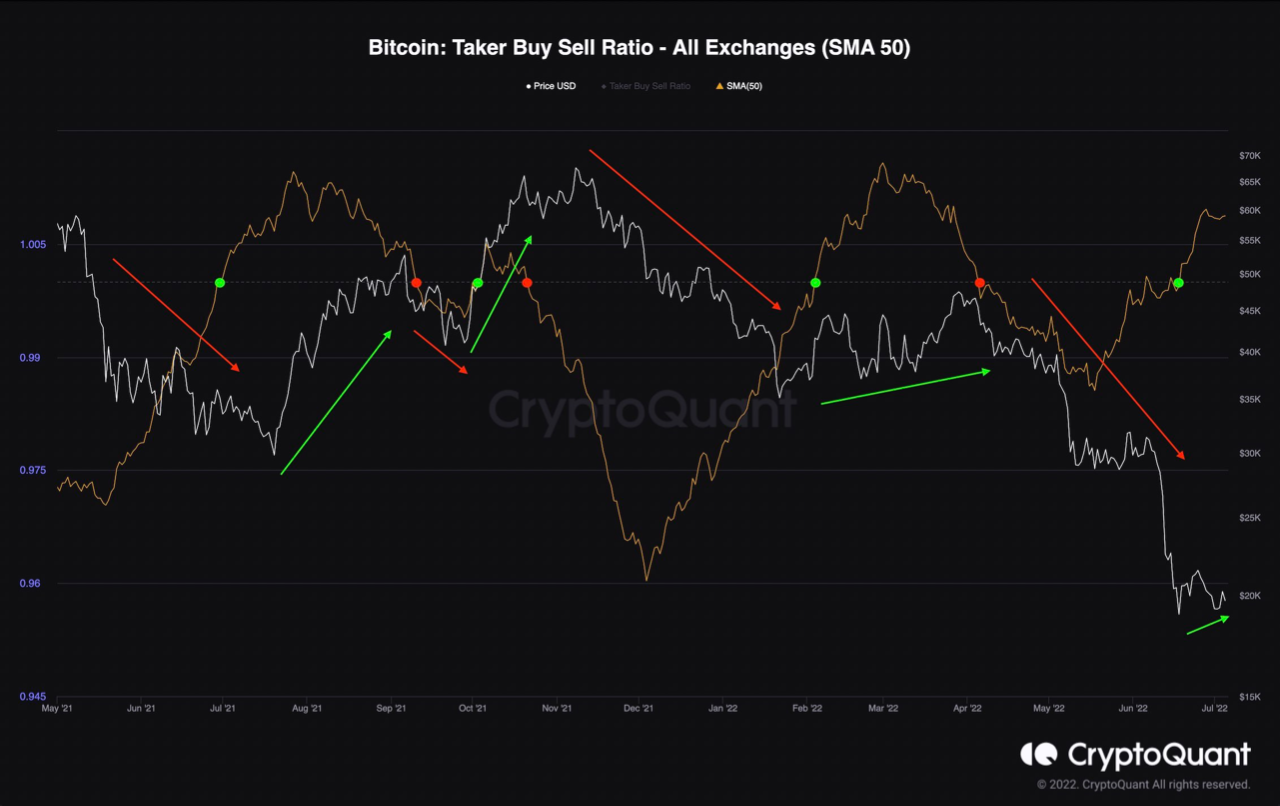
Now, here is a chart that shows the trend in the BTC 50-day moving average taker buy/sell ratio over the last year:
Bitcoin Taker Buy/Sell Ratio

Looks like the value of the metric has surged up in recent weeks | Source: CryptoQuant

As you can see in the above graph, the quant has marked the relevant points of trend for the Bitcoin taker buy/sell ratio.

It seems like whenever the indicator has sunk below a value of one, the coin’s price has observed a bearish trend soon after.

Similarly, the ratio crossing over the one line has usually been followed by a bullish reversal or sideways movement for the crypto.

In recent weeks, the taker buy/sell ratio’s value has once again observed a surge and has now gone past the “one” threshold.

If the past trend is anything to go by, this could mean that Bitcoin may have either a temporary bullish reversal or sideways movement in store for the near future.

BTC Price

At the time of writing, Bitcoin’s price floats around $20.5k, up 2% in the last seven days. Over the past month, the crypto has lost 31% in value.

The below chart shows the trend in the price of the coin over the last five days.

Bitcoin Price Chart

The value of the crypto seems to have shot up over the past day | Source: BTCUSD on TradingView

Over the last few days, Bitcoin has been mostly consolidating sideways. However, in the past twenty-four hours or so, the coin’s value seems to have gained some upwards momentum as it now breaks above the $20k mark again.


Пов'язані матеріали

Why Is the World Nervous About Japan Raising Interest Rates?

In June 2026, the Bank of Japan raised its policy rate to 1%, marking its first hike to this level since 1995. While this rate remains low compared to global peers like the US and Europe, the move signals a profound shift for a nation that has been a global source of ultra-cheap funding for decades. Japan's long-standing near-zero or negative interest rates had facilitated massive "yen carry trades," where international investors borrowed low-cost yen to invest in higher-yielding assets worldwide, such as US tech stocks and emerging market bonds. This made Japan a critical, often overlooked, source of global liquidity. Japan's ultra-loose policy stemmed from structural challenges post-1990s asset bubble: aging demographics, chronic low inflation/deflation, and high public debt. Recent shifts, including sustained wage growth (exceeding 5% in recent years) and inflation consistently above the 2% target, have created a "wage-price spiral" possibility, prompting the policy normalization. The global market's concern lies not in the absolute rate but in the potential unwinding of the yen carry trade. As Japanese borrowing costs rise, the economics of these leveraged global investments change, potentially triggering deleveraging and capital outflows from risk assets. Market anxiety focuses on the end of a thirty-year consensus that Japan would perpetually provide cheap funding. Ultimately, the global impact will depend on the interplay with US monetary policy. While Japan is tightening, the significant interest rate differential with the US remains. The key future dynamic is whether simultaneous Japanese hikes and eventual US rate cuts will narrow this gap, forcing a major recalibration of global capital flows and asset pricing built on an era of abundant, cheap yen liquidity.

marsbit6 год тому

Why Is the World Nervous About Japan Raising Interest Rates?

marsbit6 год тому

Торгівля

Спот
Ф'ючерси
活动图片