降息≠牛市,市场这次不吃那一套

比推Опубліковано о 2025-10-30Востаннє оновлено о 2025-10-30

原文来源:加密市场观察

原文标题:为何降息了,市场却还在跌?


北京时间今天凌晨,美联储宣布——降息25个基点,将联邦基金利率区间下调至 4.00%–4.25%。

同时,美联储还表示:量化紧缩(QT)将在 12 月 1 日正式结束。
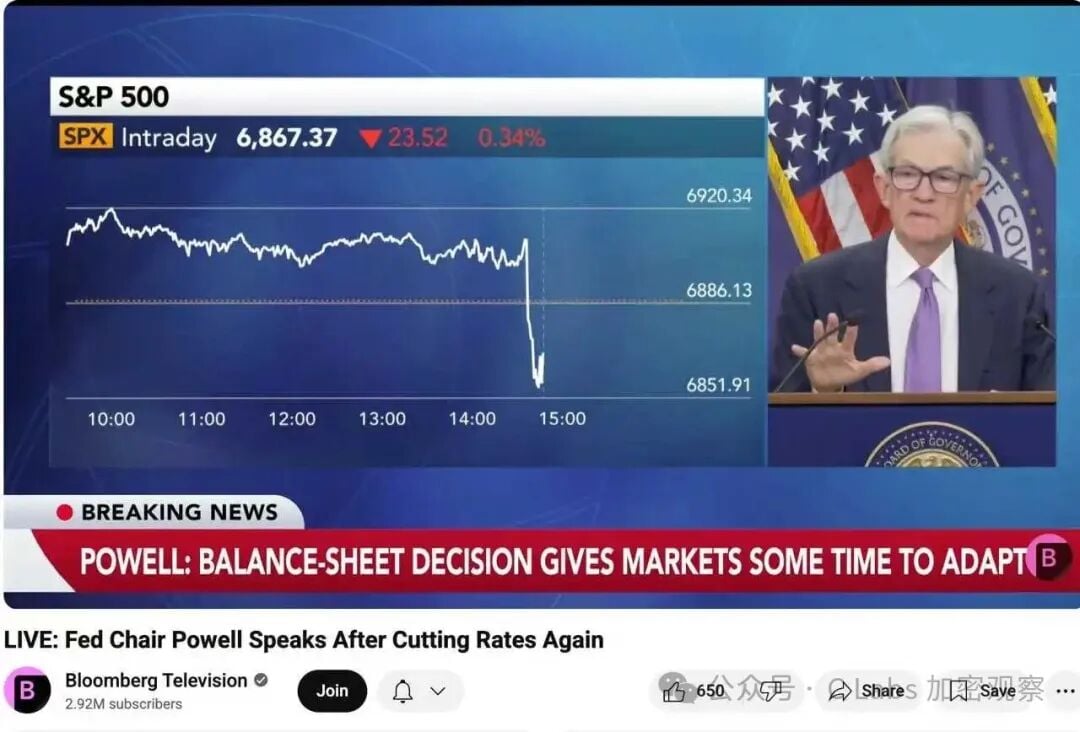
照理说,这本该是“利好”:降息、结束缩表、流动性预期改善。但结果却让很多人疑惑——为什么股市、加密货币、甚至黄金都没涨,反而普跌?

01、市场的“利好预期”早已透支

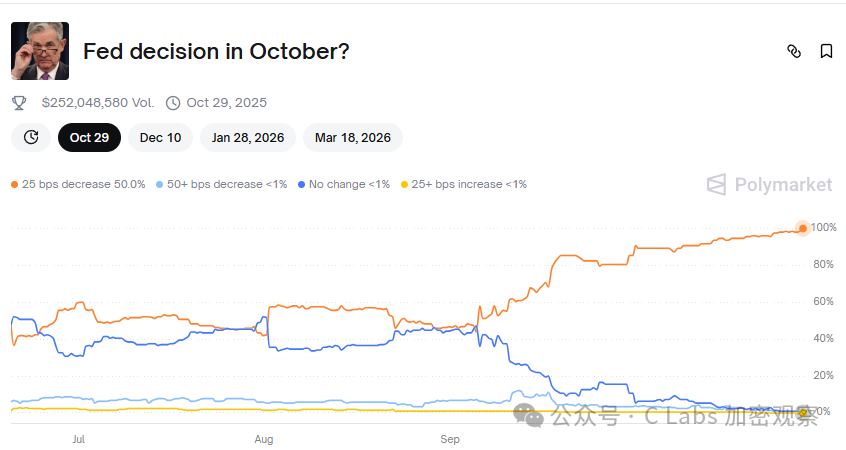
事实上,市场早在本月初就已经“押注”这次降息。根据 CME FedWatch 数据,在会议前,市场认为:

降息 25bp 的概率高达 95%,同时还有约 40% 的投资者预期美联储会立即宣布启动 QE(重新扩表)。

结果,美联储只是选择了“温和”降息。
换句话说:

这次降息,不是“新利好”,而是“低于预期”。

当预期兑现但没有惊喜,市场往往会选择获利了结。这也是典型的“买消息,卖事实(Buy the rumor, sell the news)”行情。

02、停止缩表 ≠ 开始放水

很多人看到“QT 结束”,就以为意味着“大放水”要来了。但其实,美联储这次的声明非常谨慎:

“我们将结束缩表,但暂不启动新的资产购买计划。”

也就是:

从“收水”阶段,转为“观望”阶段。

在金融市场的语言里,这叫:

流动性不再恶化,但也没有改善。

而投资市场要上涨,光“止跌”不够——还需要“增量资金”。这就是目前最大的缺口。

03、降息并未传导到“实际资金利率”

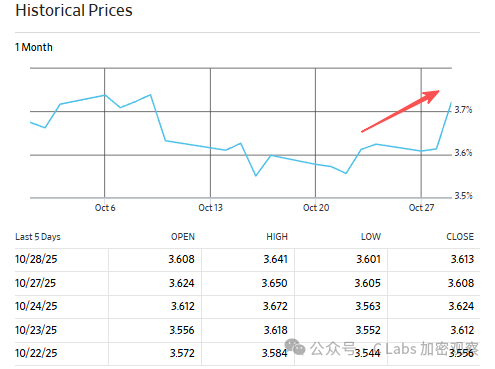
理论上,降息会让短端利率下降,带动资金成本降低。但这次的情况有点特殊——虽然名义政策利率降了 25 个点,但中长期资金成本并没有同步下降。

例如五年期国债收益率从3.6%涨到3.7%:
十年期国债收益率更是飙涨到4%以上:
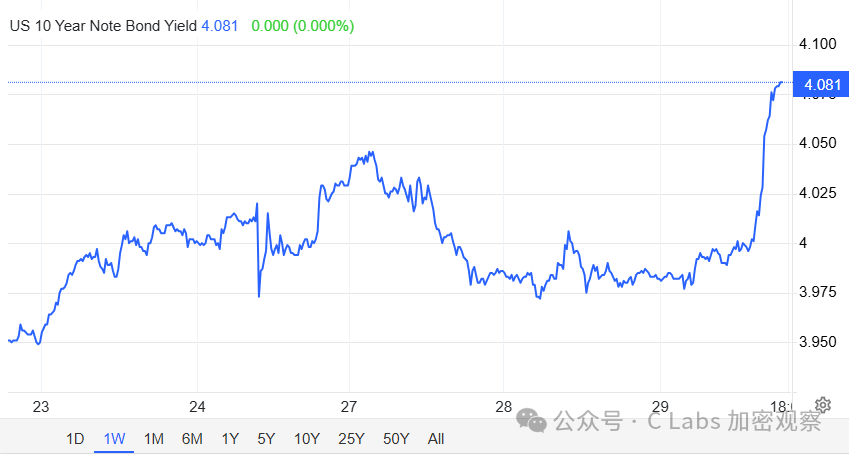
这说明什么?说明市场的真实流动性仍然紧张,投资机构并没有感受到“钱变多”。美联储的降息,还停留在“嘴上”,并没有真正“流到市场”。

04、“降息”背后的隐忧:经济下行压力依然大

从更宏观的角度看,美联储的这次降息,其实是一种“防御性操作”。近期的美国经济数据显示:

  • 房地产、制造业连续两个季度负增长;

  • 就业市场放缓,失业率重新升至 4.6%;

  • 企业盈利增长几乎停滞。

这意味着,美联储在“保增长”与“控通胀”之间,选择了轻微松动货币政策来缓冲下行风险。

但这种操作也释放出一个信号:

美国经济可能已经进入“缓衰期”。

在这种情况下,市场宁愿先锁定利润,也不敢轻易加仓风险资产。

05、总结:降息≠牛市,流动性才是核心变量

这次降息,市场的反应其实给出了一条最清晰的逻辑:

短期政策松动 ≠ 流动性充裕 ≠ 资产上涨。

真正能推动股市、加密市场全面反转的,是央行重新启动资产扩张(QE),或财政刺激配合大规模资本流入。

在那之前,降息只是“中性偏暖”——能稳住信心,但还不足以掀起新一轮牛市。

市场要的不是25个点的降息,而是一场真正的放水。

在那之前,‘风险资产’都还要再等等。


Twitter:https://twitter.com/BitpushNewsCN

比推 TG 交流群:https://t.me/BitPushCommunity

比推 TG 订阅: https://t.me/bitpush

说明: 比推所有文章只代表作者观点,不构成投资建议

Пов'язані матеріали

Pax Silica vs. WAICO: The US Wants to Prohibit Europe from Using Chinese Artificial Intelligence

The United States is preparing to demand that European and other partners abandon Chinese artificial intelligence initiatives, threatening exclusion from the American-led "Pax Silica" coalition, according to a leaked U.S. State Department document. This ultimatum forces signatories of the "AI Opportunity Statement" to choose between the Western technological ecosystem and alternative frameworks, with China not explicitly named but clearly targeted. Pax Silica is a U.S. strategy for AI and semiconductor hegemony, launched in late 2025. Its European presence expanded significantly in mid-2026. Concurrently, China, Russia, and 27 other nations established the World AI Cooperation Organization (WAICO) in July 2026 as an independent intergovernmental platform promoting AI governance based on UN principles. This situation creates a difficult choice, especially for European nations balancing strategic autonomy with dependence on U.S. tech and security. It also pressures Global South countries with pragmatic ties to both Washington and Beijing. The formation of competing blocks risks fragmenting the global tech landscape, forcing companies to split supply chains, increasing costs, and potentially leading to incompatible standards and protocols. The era of open globalization in AI may be ending, replaced by geopolitical confrontation where technological sovereignty trumps economic efficiency. The decisions made will shape the global digital economy for decades.

cryptonews.ru22 хв тому

Pax Silica vs. WAICO: The US Wants to Prohibit Europe from Using Chinese Artificial Intelligence

cryptonews.ru22 хв тому

Robert Kiyosaki Shares His Mentor's Predictions About the Emergence of Bitcoin and AI

American entrepreneur and author of "Rich Dad Poor Dad," Robert Kiyosaki, discussed the influence of futurist R. Buckminster Fuller on his worldview, linking Fuller's past technological predictions to the emergence of Bitcoin and the development of artificial intelligence. In an X post, Kiyosaki also reflected on personal purpose, sharing his journey from the music business—where he worked with bands like The Police and Iron Maiden—to creating the "Cashflow" board game and writing his famous book. He described feeling an inner emptiness despite his success, a turning point that came after meeting Fuller, whom he studied with for three summers. Kiyosaki described Fuller as a "friendly genius" who foresaw world-changing developments like Bitcoin and AI. However, the core of his post focused on Fuller's philosophical impact, particularly a quote about belonging to the universe and finding purpose by dedicating one's life to the maximum benefit of others. The entrepreneur remains a vocal advocate for cryptocurrencies. He regularly advises buying Bitcoin during market panics, viewing it and assets like Ethereum, gold, and silver as hedges against traditional financial system failures. Kiyosaki has predicted a major market crash by 2026, seeing it as an opportunity for prepared investors, with long-term price targets including $750,000 for Bitcoin and $95,000 for Ethereum.

cryptonews.ru2 год тому

Robert Kiyosaki Shares His Mentor's Predictions About the Emergence of Bitcoin and AI

cryptonews.ru2 год тому

Etherealize CEO Calls Wall Street's Private Blockchains a 'Race to the Bottom'

Etherealize co-founder and CEO Vivek Raman criticized Wall Street's growing interest in private, permissioned blockchains, calling them a "race to the bottom." In an interview with CoinDesk, Raman argued that consortium networks fragment liquidity and return the industry to the siloed systems that blockchain technology was meant to overcome. He stated that closed networks do not interoperate, undermining two key advantages of the technology: system compatibility and liquidity concentration. Etherealize promotes Ethereum as an open, foundational layer for institutional players. Raman insists that privacy and access restrictions should be built on top of public infrastructure—at the application or L2 level—rather than creating separate, closed networks. He compared Ethereum to HTTP as a base layer, with additional permissioned and private layers akin to HTTPS. Examples of this new wave of "closed" solutions mentioned include Canton Network from Digital Asset, Circle's Arc project, and Stripe's Tempo. Raman termed this trend "consortium chains 2.0," recalling earlier initiatives like the R3 interbank consortium and the Hyperledger corporate ecosystem from 2016 that failed to gain significant traction. He reiterated his firm belief that a global, open, permissionless infrastructure is necessary as a foundational base layer. Raman previously noted in June that traditional financial institutions had begun implementing Ethereum-based solutions into real business processes.

cryptonews.ru2 год тому

Etherealize CEO Calls Wall Street's Private Blockchains a 'Race to the Bottom'

cryptonews.ru2 год тому

Торгівля

Спот
活动图片