Dogecoin: Will DOGE’s latest approach find a different result this time

AmbcryptoОпубліковано о 2022-07-05Востаннє оновлено о 2022-07-05

Анотація

DOGE faced a stiff area of resistance. If it can flip this area to demand, another 10% move upward could be likely.

Dogecoin [DOGE] was at a confusing place on the price charts in terms of trends. Higher timeframe bearishness was fighting against lower timeframe uptrends, and it was unclear whether Dogecoin can climb higher. In the event that it does, how much higher can the meme coin go?

DOGE faced a stiff area of resistance at press time. If it can flip this area to demand, another 10% move upward could be likely.

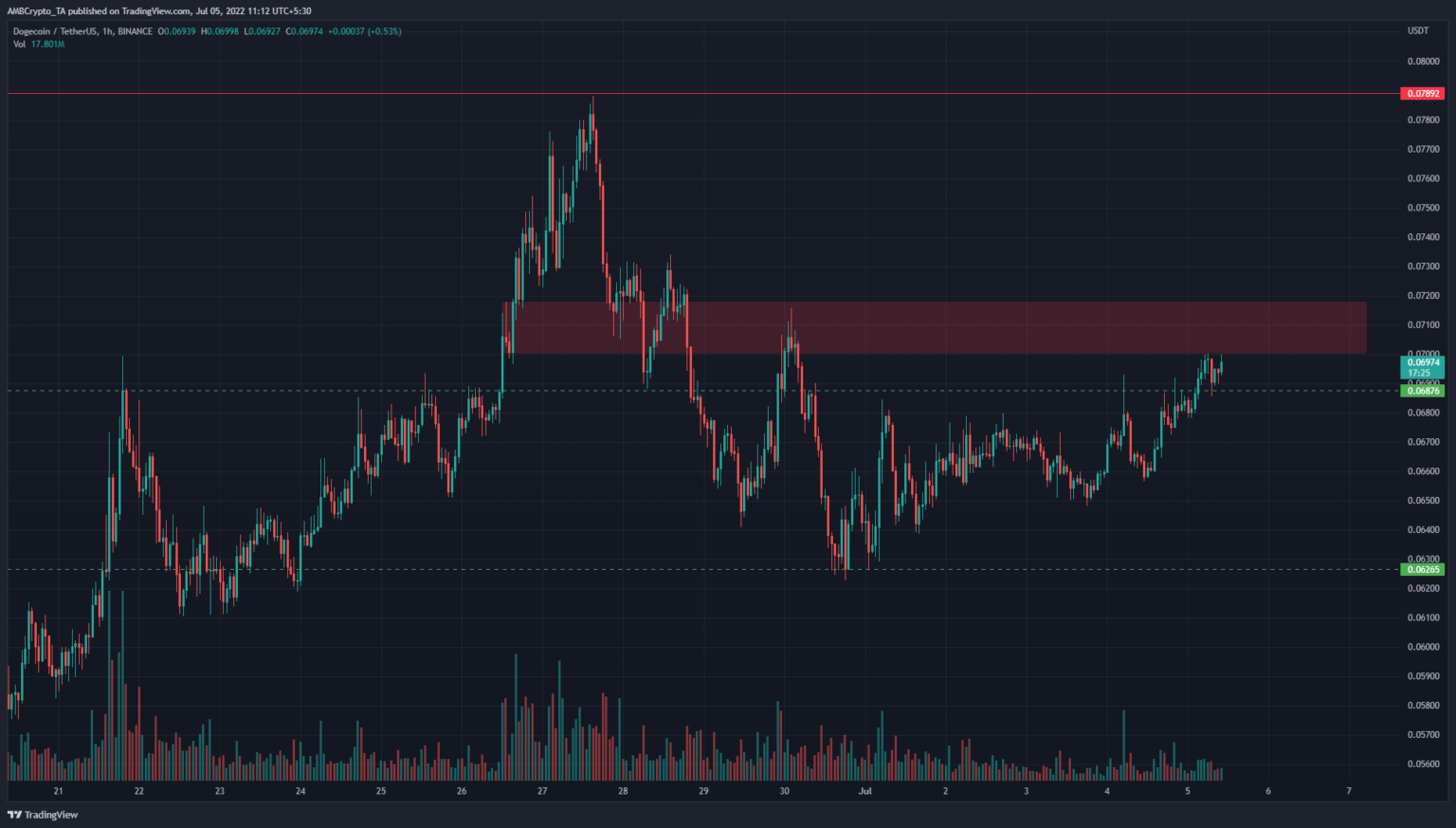
DOGE- 1 Hour Chart
Source: DOGE/USDT on TradingView

In the past week, the price dipped from $0.078 to $0.062, but the support level at $0.062 was defended. This defense spurred a short-term upward move back to the resistance at $0.068 and $0.071.

The previous week, Dogecoin had made steady gains from the $0.051 mark. This suggested that the past two weeks have been bullish overall. However, the longer-term market structure was bearish, and the price has set a series of lower highs since last May.

The $0.07-$0.073 was marked on the charts (red box) as an area where the price saw bullish impetus eight days ago. At the time of writing, the price approached the same area from below. Hence, another rejection could be on the cards.

Rationale
Source: DOGE/USDT on TradingView

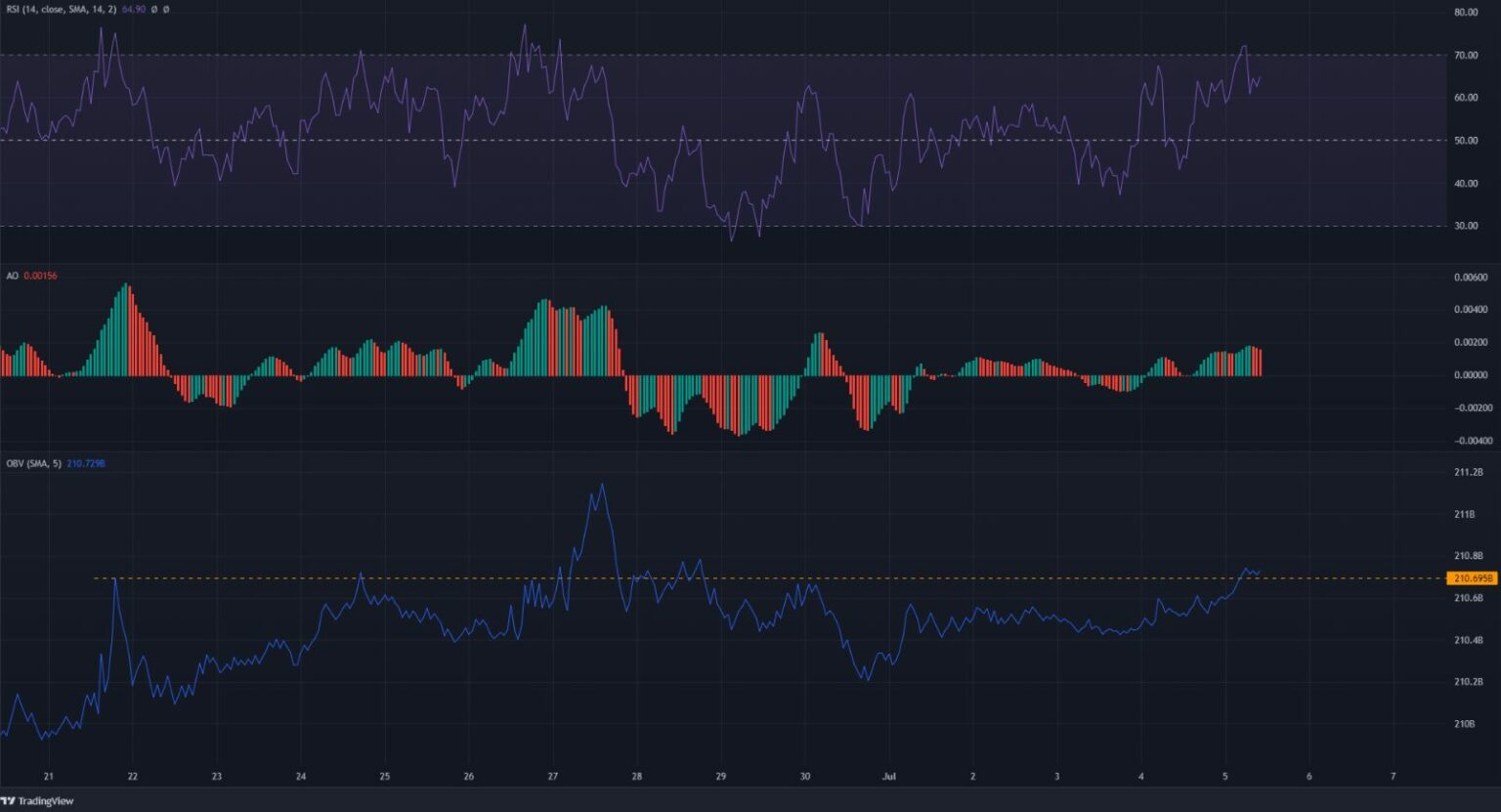
The indicators on the hourly chart showed bullish momentum. The Relative Strength Index (RSI) was above neutral 50 to show an upward trend. At the same time, the Awesome Oscillator (AO) was also above the zero line and has been over the past few days.

Combined with the higher lows that DOGE has formed since the retest of $0.062 support, the bias was bullish on the lower timeframes. The OBV was in a region of resistance as well. If it spiked upward once more to reflect strong buying pressure, it would be more likely that DOGE can break past the $0.073 resistance.

Conclusion

It must be remembered that even though Dogecoin showed bullishness on lower timeframes, the higher timeframe bias remained bearish. A move past $0.073 could be used as a buying opportunity targeting $0.078 as a take-profit.

However, it was unlikely that the long-term downtrend was reversed.

Пов'язані матеріали

Why Is the World Nervous About Japan Raising Interest Rates?

In June 2026, the Bank of Japan raised its policy rate to 1%, marking its first hike to this level since 1995. While this rate remains low compared to global peers like the US and Europe, the move signals a profound shift for a nation that has been a global source of ultra-cheap funding for decades. Japan's long-standing near-zero or negative interest rates had facilitated massive "yen carry trades," where international investors borrowed low-cost yen to invest in higher-yielding assets worldwide, such as US tech stocks and emerging market bonds. This made Japan a critical, often overlooked, source of global liquidity. Japan's ultra-loose policy stemmed from structural challenges post-1990s asset bubble: aging demographics, chronic low inflation/deflation, and high public debt. Recent shifts, including sustained wage growth (exceeding 5% in recent years) and inflation consistently above the 2% target, have created a "wage-price spiral" possibility, prompting the policy normalization. The global market's concern lies not in the absolute rate but in the potential unwinding of the yen carry trade. As Japanese borrowing costs rise, the economics of these leveraged global investments change, potentially triggering deleveraging and capital outflows from risk assets. Market anxiety focuses on the end of a thirty-year consensus that Japan would perpetually provide cheap funding. Ultimately, the global impact will depend on the interplay with US monetary policy. While Japan is tightening, the significant interest rate differential with the US remains. The key future dynamic is whether simultaneous Japanese hikes and eventual US rate cuts will narrow this gap, forcing a major recalibration of global capital flows and asset pricing built on an era of abundant, cheap yen liquidity.

marsbit8 год тому

Why Is the World Nervous About Japan Raising Interest Rates?

marsbit8 год тому

Торгівля

Спот
Ф'ючерси
活动图片