Глава криптоотдела BlackRock: Большинство альткоинов — бесполезные пустышки

cryptonews.ruОпубліковано о 2025-11-23Востаннє оновлено о 2025-11-23

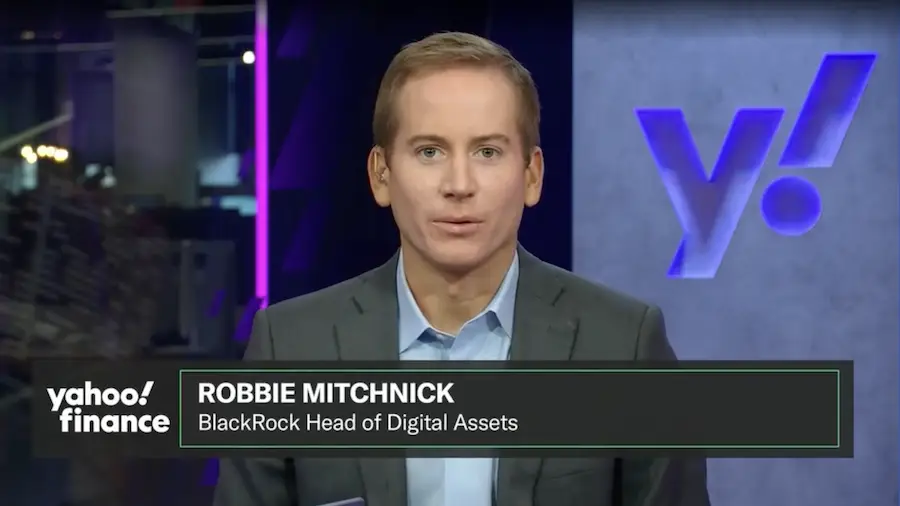
Обвал цены биткоина 10 октября и массовая ликвидация позиций криптотрейдеров доказали риск спекулятивной торговли на крипторынке и продемонстрировали бесполезность большинства других криптовалют, заявил руководитель направления цифровых активов BlackRock Роберт Митчник (Robert Mitchnick).

В интервью Yahoo Finance Митчник назвал биткоин «перспективным цифровым золотом», редким, независимым от стран и правительств активом, который может стать настоящей альтернативой деньгам. Тысячи других цифровых токенов, по его словам, это ставки на удачу, и на то, что какая-то новая технология или новая идея в конечном итоге принесет доход.

«Если посмотреть на криптоландшафт — у нас тысячи и тысячи активов, и большинство полностью бесполезно. Биткоин важен. Эфир — тоже. Плюс еще пара-тройка альткоинов. Но все остальное, это ставки на то, что какая-то идея выстрелит. Но чаще всего — не выстрелит», — заявил руководитель отдела инвестиционной компании.

Митчник видит будущее так: биткоин продолжит развитие по своим законам. У него есть собственные драйверы роста, защита от инфляции и интерес институциональных инвесторов.
385.png

Большинство альткоинов, которое «живет на эмоциях, хайпе и леверидже», может исчезнуть, уверен Митчик.

«Со временем торговля биткоином отделится от остального рынка. Его драйверы роста сильно отличаются от рисковых активов — он уже начинает вести себя независимо от акций и альткоинов», -- считает представитель инвесткомпании.

Ранее глава отдела цифровых активов компании BlackRock Роберт Митчник заявил, что в результате изменения законодательных норм в США может восстановиться аппетит инвесторов к эфиру.


Пов'язані матеріали

Interview with Strategy CEO: Can STRC Recover After Selling Bitcoin?

Interview with Strategy CEO Phong Le on the recent sale of 32 Bitcoin and its impact. He clarifies the move was a small, strategic action to demonstrate liquidity to debt holders, test internal processes, and prove operational discipline—not a response to fears of a "death spiral" from DeFi protocols leveraging STRC (Strategy's preferred stock product), which he notes holds less than 10% of STRC. Le emphasizes Strategy’s long-term focus as the largest corporate Bitcoin holder, using the adage that markets are a "voting machine" short-term but a "weighing machine" long-term. Decision-making is data-driven, involving the board, complex modeling, and multiple stakeholder considerations, moving beyond a founder-centric model. He outlines various capital options but stresses the strategic importance of "doing nothing" as a valid choice, citing resilience built during the 2022 bear market. Le expresses unwavering belief in Bitcoin's foundational value for global sovereignty and its future role in an AI-driven economy with trillions of autonomous agents. Addressing STRC's current price below its $100 face value, Le explains recent pressure was due to using dollar reserves for bond buybacks. He expects STRC to return to par as reserves are replenished and its semi-monthly dividend payments begin, noting the product is heavily over-collateralized. Finally, Le confirms the company sold Bitcoin the week prior to May 31st, as disclosed in an 8-K filing, leaving prediction market interpretations to others. The overarching philosophy remains "Spread Bitcoin with love," embracing all methods of gaining Bitcoin exposure.

marsbit11 хв тому

Interview with Strategy CEO: Can STRC Recover After Selling Bitcoin?

marsbit11 хв тому

IOSG Founder: Ethereum Doesn't Need Another Leap of Technical Faith, It Needs a Musk-style Compromise

Jocy, founder of IOSG Ventures, argues that Ethereum does not need renewed technological faith but a "Musk-like compromise." The recent formation of ETHLabs—funded by major ETH holders like BitMine and Lubin—highlights a market-driven move to fill a gap left by the Ethereum Foundation (EF), signaling a loss of confidence in its decentralized, hands-off approach. The core critique contrasts Vitalik Buterin's (V) idealistic, technology-first vision with Elon Musk's pragmatic, business-driven execution. The author asserts Ethereum's current shortage is not another technical roadmap but a clear, real-world application narrative and a leader willing to engage directly with commercial realities—like Musk. Internal issues are emphasized, citing EF's management problems and talent drain. While the new decentralized model with independent nodes like ETHLabs addresses the single foundation's limitations, it risks fragmentation without cohesive direction. True cohesion, the author suggests, must come from a shared, compelling narrative around ETH's value, not just from aligned financial interests. Independence claims for new entities are seen as aspirational, needing years of transparency to build trust. The ultimate threat is not competitors like Solana, but the broader shift of attention and talent toward AI. Ethereum has a limited window—12 to 18 months—to recapture focus by delivering tangible, real-world applications. The conclusion urges V to shift from abstract ideals to grounded, pragmatic leadership. The time for this crucial pivot is running out.

marsbit1 год тому

IOSG Founder: Ethereum Doesn't Need Another Leap of Technical Faith, It Needs a Musk-style Compromise

marsbit1 год тому

Google Starts Selling TPUs, Big Tech Aims to Produce "Low-Cost Tokens" with AI Chips

Google has begun selling its proprietary TPU chips and AI computing hardware directly to third-party data centers and clients, marking a strategic shift. Previously only accessible via cloud rentals, TPUs are specialized processors designed for the matrix and tensor operations central to AI models. By combining thousands into supercomputing clusters managed by CPUs, Google achieves high-efficiency AI processing. This move enables Google’s Gemini AI to offer competitive token pricing, challenging rivals like OpenAI. It also signals a broader industry trend where AI compute is becoming a commoditized resource like electricity. While NVIDIA remains dominant with its CUDA ecosystem and high-performance GPUs, the focus is shifting from raw power to cost efficiency and system integration. Google’s approach mirrors NVIDIA’s by selling an entire ecosystem—hardware, software, and data center expertise—rather than just chips. This threatens NVIDIA’s grip on the mid-range inference market, where lower-cost, efficient solutions are increasingly demanded. Similarly, cloud providers like Huawei Cloud and Alibaba Cloud in China are developing their own AI chip ecosystems (e.g., Ascend, Zhenwu), packaging chips, clusters, and tools into full-stack solutions. They aim to reduce token costs and capture market share through integrated systems. In summary, the AI infrastructure race is evolving from a competition for the strongest chips to a contest for the most efficient and cost-effective systems. Google’s TPU sales highlight this transition, emphasizing that future success lies in delivering affordable, scalable AI compute as a foundational service.

marsbit1 год тому

Google Starts Selling TPUs, Big Tech Aims to Produce "Low-Cost Tokens" with AI Chips

marsbit1 год тому

Торгівля

Спот
Ф'ючерси
活动图片