Биткоин-киты перевели более $3 млрд в ETF BlackRock после послаблений SEC

cryptonews.ruОпубліковано о 2025-12-20Востаннє оновлено о 2025-12-20

Биткоин-киты начали массово переводить активы в биржевые фонды (ETF). Среди них лидирует BlackRock, которая активно работает с владельцами ранних накоплений.

В интервью Bloomberg глава отдела цифровых активов BlackRock Робби Митчник сообщил, что компания уже помогла клиентам конвертировать более $3 млрд в акции своего спотового биткоин-ETF iShares (IBIT).

По словам Митчника, многие инвесторы, годами хранившие активы самостоятельно, осознают удобство размещения биткоина (BTC) у своих финансовых консультантов или частных банков.

Этот сдвиг позволяет им сохранять экспозицию к цифровому золоту, одновременно интегрируя активы в традиционную финансовую систему и получая доступ к кредитованию и более широкому спектру инвестиций.

Митчник отметил, что рост интереса связан с недавними изменениями правил Комиссии по ценным бумагам и биржам США (SEC), которая разрешила так называемый прямой обмен акций ETF на биткоин вместо фиатных средств.

По теме: SEC одобрила создание и погашение крипто-ETF в «натуральной» форме

Такая схема делает крупные конверсии более эффективными и налогово выгодными для институциональных инвесторов.
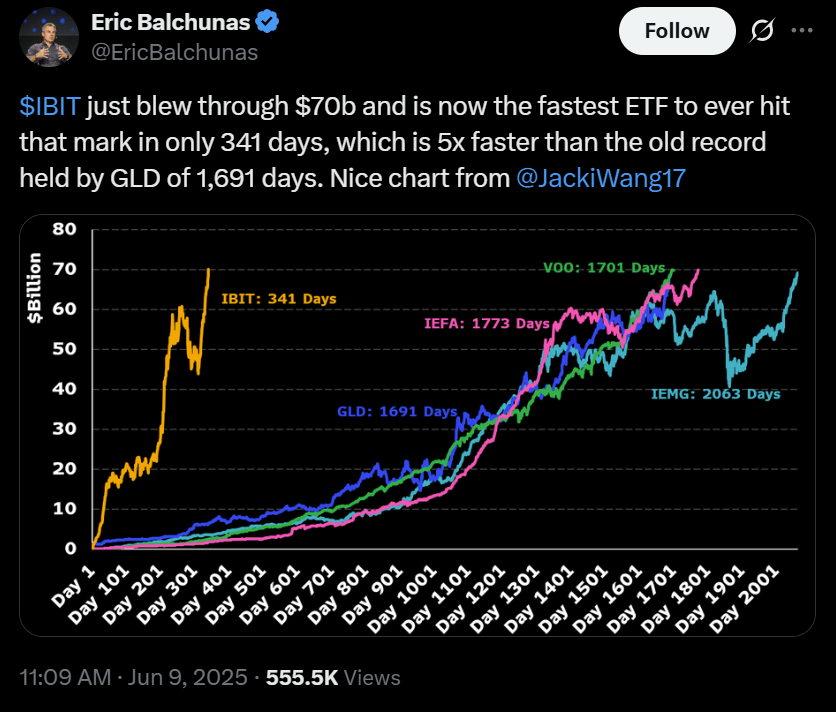
Источник: Эрик Балчунас.

По данным Bitbo, IBIT стал самым успешным среди всех спотовых биткоин-ETF, одобренных в США. В июне он стал самым быстрорастущим ETF в истории, превысив $70 млрд под управлением, а сейчас этот показатель достиг $88 млрд.
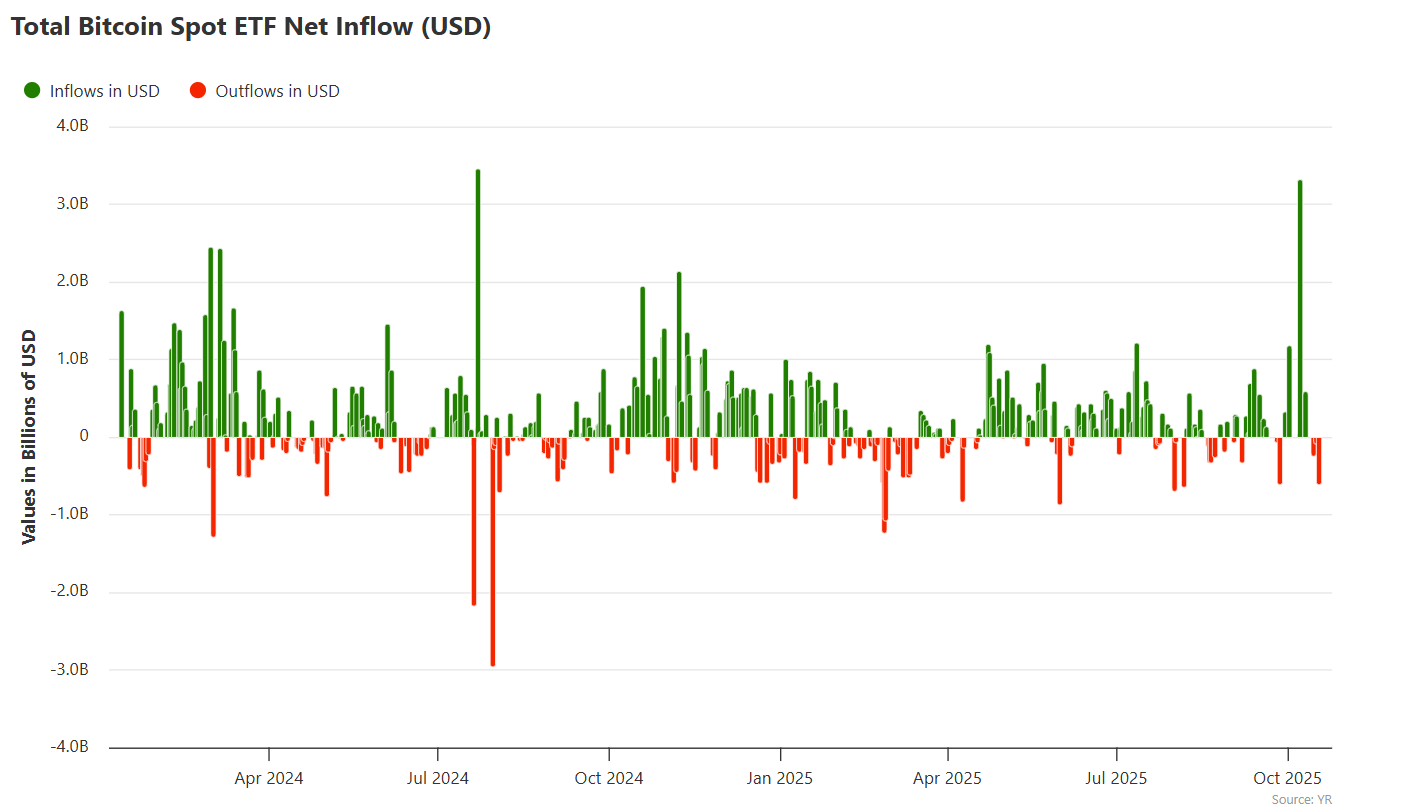
Резкий приток средств на фоне роста интереса инвесторов в текущем бычьем цикле. Источник: Bitbo.

С начала текущего бычьего цикла американские спотовые ETF фиксируют устойчивый приток капитала, так как инвесторы усиливают позиции в первой криптовалюте.

По теме: инвесторы в крипто-ЕTP проигнорировали новые «залпы» в торговой войне США и Китая

«Не твои ключи — не твои монеты»

Рост популярности ETF подчеркивает институционализацию биткоина, спустя 15 лет после появления первого блока, добытого Сатоши Накамото, который задумывал цифровое золото как актив с самостоятельным хранением.

Сторонники раннего биткоина традиционно считали, что самостоятельное хранение — единственный надежный способ защиты средств, что выражалось в известной фразе: «не твои ключи — не твои монеты».

Однако рост ETF и корпоративных хранилищ биткоина поставил под вопрос этот принцип. Новая модель владения все больше сближается с традиционными кастодиальными системами.

По теме: биткоин не имеет ничего общего с криптовалютами — Джек Дорси

Хотя спотовые ETF и прямое владение не конкурируют напрямую, они ориентированы на разные типы инвесторов. Аналитик Вилли Ву еще в июле отметил, что спрос на ETF мог снизить интерес к самостоятельному хранению криптовалют.

Он указал, что объем биткоина на личных кошельках начал снижаться впервые за 15 лет, что может означать смену поведенческой модели инвесторов.
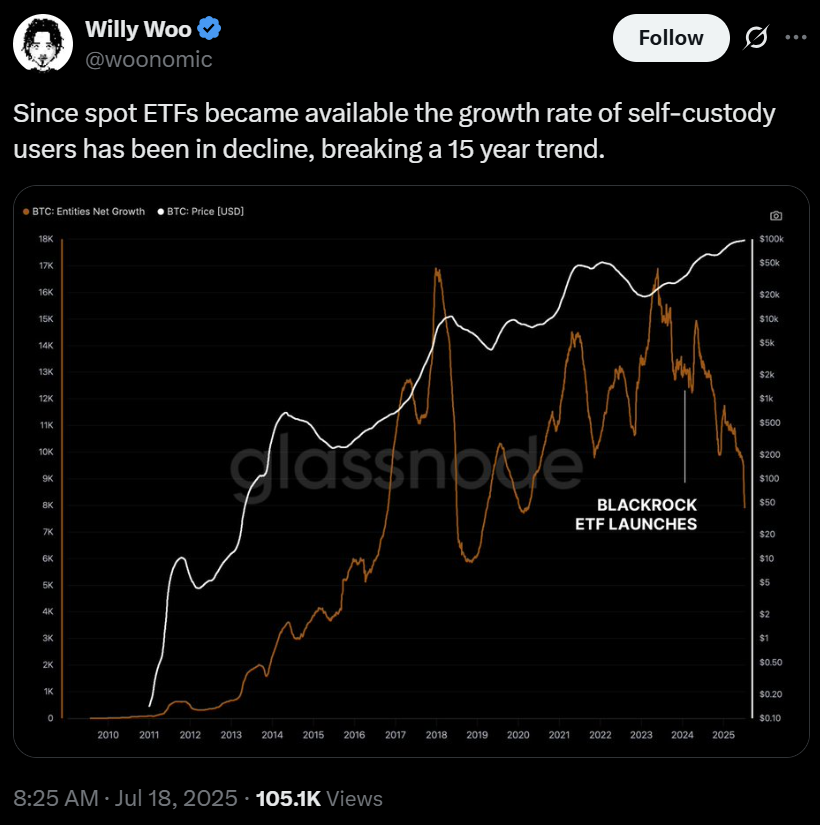
Источник: Вилли Ву.

Тем не менее, по словам аналитиков, ETF открыли новый уровень институционального участия в биткоине, ранее недоступный для крупных фондов и частных банков. Этот сдвиг затронул и ранних китов, которые раньше влияли на рынок через прямые покупки и продажи.


Пов'язані матеріали

STRC Hits Historic Low, Saylor's Perpetual Motion Machine Grinds to a Halt

STRC, the perpetual preferred stock issued by MicroStrategy to fund its Bitcoin purchases, hit a historic low of $85.32, a 17% discount to its $100 par value. Designed as a "digital credit engine" to trade stably near par and enable continuous share issuance for buying Bitcoin, its plunge signals a breakdown in this model. Three key factors drove the decline: 1. Bitcoin's price fell over 50% from its peak, trading around $63,000 amid hawkish Fed signals. 2. MicroStrategy's cash reserves were depleted after a $1.5 billion convertible note repayment, slashing the dividend coverage for STRC's 11.5% yield to ~7 months. The company then sold 32 BTC to cover dividends—Michael Saylor's first Bitcoin sale since 2022—damaging the "never sell" narrative. 3. A competing Bitcoin-backed preferred stock, Strive's SATA, offers a higher yield (~13%) and daily dividends, drawing investors away from STRC. The drop triggers a negative cycle: STRC below par halts ATM share issuances, cutting off a key funding source for Bitcoin buys and potentially forcing more BTC sales for dividends, further eroding confidence. While Saylor argues the model is mathematically sound—needing only 2.3% annual Bitcoin growth to sustain itself—the market is testing the resilience of the leveraged Bitcoin treasury strategy in a bear market. The STRC price now reflects rising skepticism about this financial machinery's durability during downturns.

marsbit21 хв тому

STRC Hits Historic Low, Saylor's Perpetual Motion Machine Grinds to a Halt

marsbit21 хв тому

A Guide to Grayscale’s ‘Bottom Fishing’: Using Cash Flow to Assess Cryptocurrency Value

**Title:** Grayscale's Guide to Bottom-Fishing: Valuing Cryptoassets Using Cash Flows **Summary:** This report by Grayscale Research presents a fundamental valuation framework for cryptocurrency assets, moving beyond pure speculation to analyze those with underlying cash flows. It distinguishes between "commodity-like" assets (e.g., Bitcoin) and "cash-flow" assets, primarily within DeFi. Using the leading decentralized lending protocol Aave as a case study, the analysis applies traditional financial methodologies like Discounted Cash Flow (DCF) and Price-to-Earnings (P/E) multiples. Key findings indicate that AAVE tokens are currently undervalued. Despite recent challenges, the protocol's strong revenue growth, ~50% net profit margin, and diversified treasury support a fundamental valuation range of $80-$100 per token (compared to a ~$75 market price at the time of writing). In a base-case scenario driven by stablecoin adoption and regulatory clarity, the fair value could rise to around $175 within a year. The report emphasizes that protocol success does not automatically translate to token value. It critically examines the "value capture" mechanisms—such as buybacks, burns, and staking rewards—that channel protocol profits to token holders. Furthermore, it addresses the legal and governance complexities of Decentralized Autonomous Organizations (DAOs), noting their difference from traditional corporate equity but highlighting how robust, transparent governance can align protocol economics with holder interests. The conclusion is that the crypto market is maturing, with capital increasingly flowing towards projects with demonstrable fundamentals, real adoption, and disciplined capital allocation, creating opportunities for value-based investors.

marsbit1 год тому

A Guide to Grayscale’s ‘Bottom Fishing’: Using Cash Flow to Assess Cryptocurrency Value

marsbit1 год тому

After semiconductors lead the gains, are funds buying into AI orders or a macroeconomic rebound?

After US-Iran talks led to a temporary ceasefire and framework for reopening the strategic Strait of Hormuz, U.S. stocks rose on June 18, with the Nasdaq gaining 1.9%. The semiconductor and AI hardware sectors outperformed. This rally stemmed primarily from reduced geopolitical risk, which lowered oil prices and inflation expectations, easing discount rate pressure on high-valuation growth stocks like tech. The key question is not whether tech rebounded, but the nature of the rebound. The market appears to be selectively repricing AI infrastructure plays rather than broadly chasing AI narratives. Gains were concentrated in chips, optical interconnects, memory, and domestic manufacturing—segments tied to tangible data center build-outs and capital expenditure. Intel's ~10% surge, fueled by a Trump statement about potential Apple collaboration, exemplifies this mixed dynamic. It reflects policy catalysts and domestic manufacturing sentiment more than confirmed fundamentals. Meanwhile, strong earnings from companies like Astera Labs (revenue up 93% YoY) provided concrete evidence of AI-driven demand in hardware. In essence, the rally represents a risk-premium recalibration. Lower Middle East tensions opened a valuation repair window, and capital flowed first into AI infrastructure segments with visible near-term revenue streams. The sustainability of this move hinges on upcoming Q2 earnings, specifically continued strength in cloud provider capex, AI server orders, and hardware company guidance. Policy hopes alone are insufficient; the cycle needs validation from orders and financials.

marsbit1 год тому

After semiconductors lead the gains, are funds buying into AI orders or a macroeconomic rebound?

marsbit1 год тому

Торгівля

Спот
Ф'ючерси
活动图片