Капитуляция биткоина усиливается: STH ежедневно теряют 750 миллионов долларов. Пора покупать на спаде?

cryptonews.ruОпубліковано о 2025-01-19Востаннє оновлено о 2025-10-20

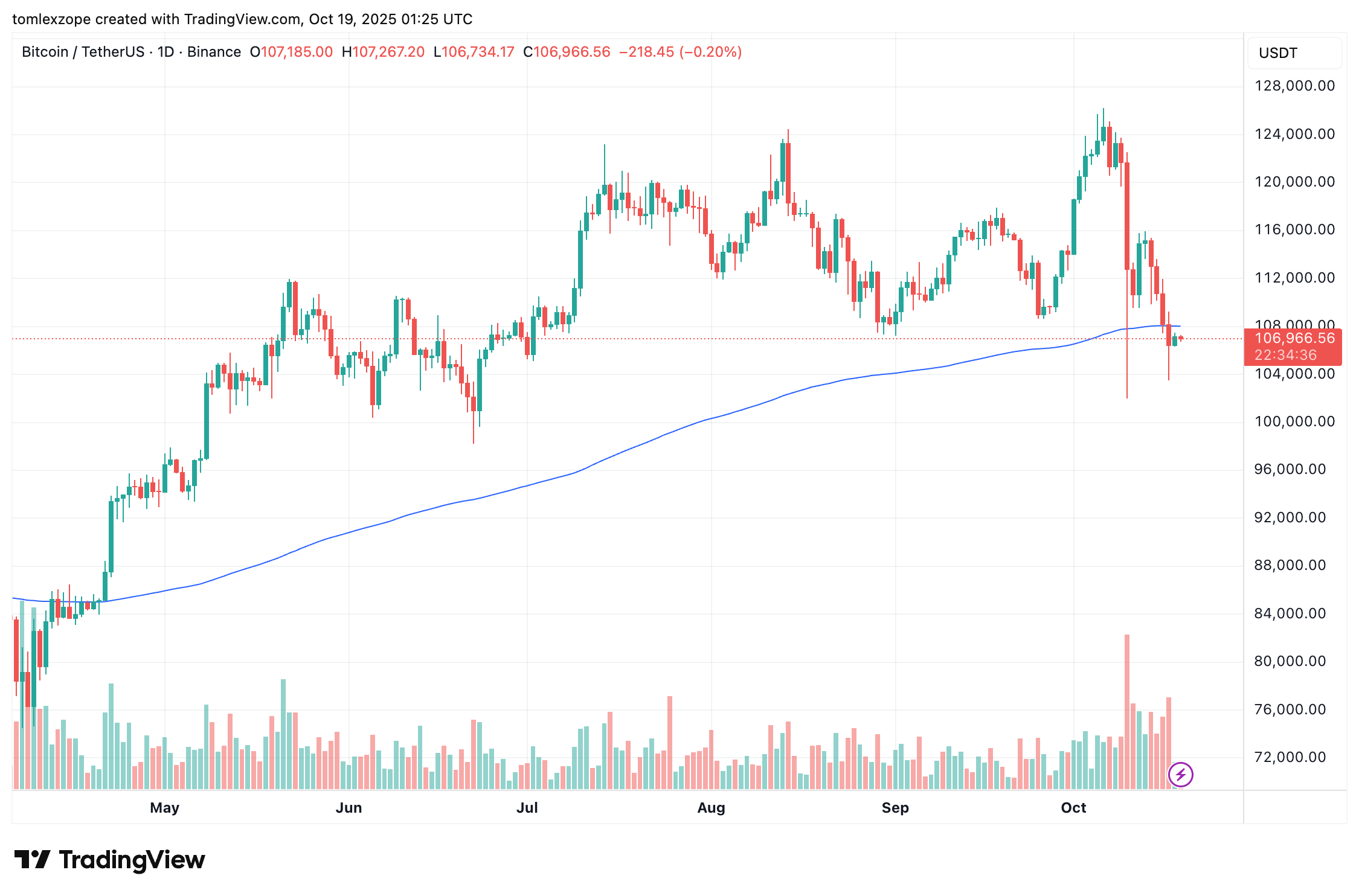
Динамика цен на биткоин за последние две недели вызывает серьёзное беспокойство, поскольку стоимость монеты продолжает снижаться (сейчас она примерно на 15 % ниже своего исторического максимума). По мере замедления темпов роста флагманской криптовалюты последние данные о блокчейне свидетельствуют о том, что группа инвесторов массово выходит из рынка.

Всё больше краткосрочных инвесторов отказываются от своих активов

В сообщении, опубликованном 18 октября на платформе X, сетевой аналитик Darkfost сообщил, что значительное число краткосрочных инвесторов в биткоин начали закрывать свои позиции и фиксировать убытки.

Анализ Darkfost был основан на показателе чистой реализованной прибыли/убытка, который отслеживает чистую сумму (в долларах США) прибыли или убытков, реализованных в сети. Этот показатель измеряет чистую прибыль или убыток за день, в данном случае усреднённый за семь дней. Он даёт представление о том, сколько инвесторов продают активы в убыток или сохраняют прибыль.

По данным криптоэксперта, реальные убытки инвесторов в BTC выросли примерно до 750 миллионов долларов в день, что является одним из самых высоких показателей за текущий цикл. Интересно, что, по словам Darkfost, масштабы этих капитуляций легко сравнимы с теми, что наблюдались во время летней коррекции 2024 года.
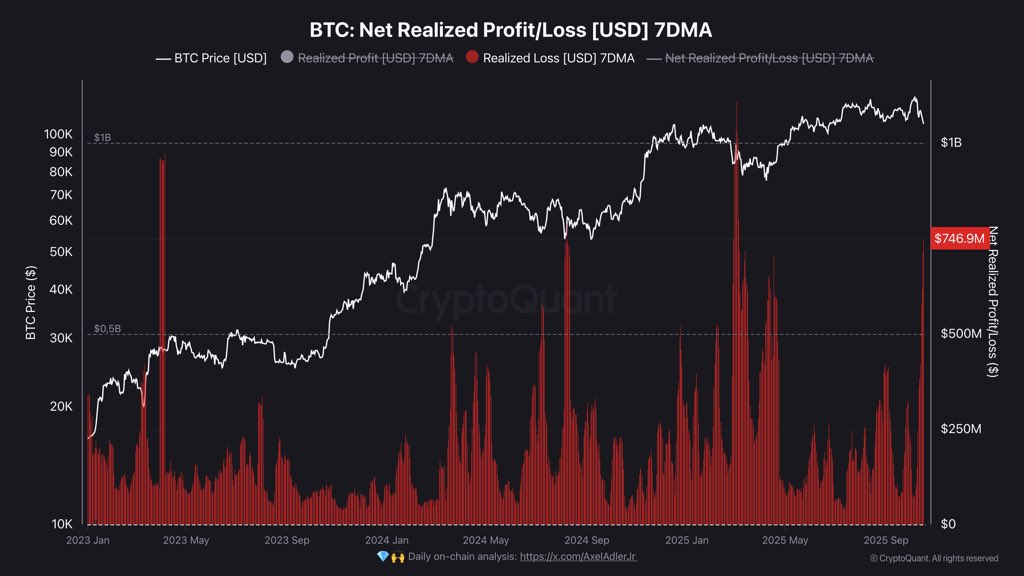
Что стоит отметить в этой фазе капитуляции, так это то, что может за ней последовать. По мнению аналитика, подобные события обычно предшествуют локальным минимумам. Это означает, что после того, как краткосрочные держатели (известные как «слабые руки») передадут свои активы более уверенным в себе долгосрочным держателям («крепкие руки»), у криптовалюты появится шанс на восстановление цены — это ожидание соответствует историческим тенденциям.

Однако, проявляя осторожность, Darkfost осторожно намекнул, что в ситуации, когда рынок находится на ранней медвежьей фазе, может произойти и обратное.

Биткойн-киты, возможно, снова накапливают активы

Пост Quicktake на платформе CryptoQuant от Abramchart, поддерживающий теорию позитивного перераспределения, даёт участникам рынка биткоина проблеск надежды. Ссылаясь на показатель Inflows To Accumulation Addresses (Dynamic Cohort), аналитик отметил значительный приток более 26 500 BTC на кошельки крупных инвесторов.

Когда происходит перемещение больших объёмов биткоинов, таких как этот, это обычно сигнализирует о накоплении активов институциональными инвесторами или «китами», поскольку монеты обычно переводятся с бирж на эти кошельки для долгосрочного хранения.

Судя по историческим тенденциям, весьма вероятно, что это накопление предшествует дальнейшему бычьему росту флагманской криптовалюты. Как объяснил Абрамчарт, эта тенденция указывает на то, что умные инвесторы «тихо скупают на спаде».

На момент написания этой статьи биткоин оценивается примерно в 106 870 долларов, и за последние 24 часа не наблюдалось значительного движения цены.

Пов'язані матеріали

How Collector Crypt Uses 'Recirculating Buybacks' to Create an Illusion of Growth

Title: How Collector Crypt Creates a Growth Illusion with "Buyback Loops" Key Findings: Collector Crypt's (CC) net take rate has halved from 11.2% in Q3 2025 to 5.6% in Q2 2026, while GMV grew 4.7x. This growth is driven by higher-tier card packs ($250, $1,000, $2,500) which have lower platform dollar retention rates. The newly launched $2,500 Mythic tier captured 36.7% of June GMV within 13 days. Growth is fueled by a small cohort of high-spending, high-frequency wallets rather than broad user base expansion. The economic model faces pressure from three key areas: 1) **Shifting GMV Mix**: Pushing users towards larger, lower-retention card packs increases GMV but reduces overall profitability. 2) **Physical Redemptions**: Card redemptions for physical items remove reusable inventory from the system, creating costly replenishment needs. In May, redemptions consumed 41.6% of pre-redemption net income. Only 75 wallets drove redemptions in June. 3) **B2B/API Strategy**: Partner revenue remains negligible (cumulatively $1.83M) and dependent on CC for inventory, vaulting, and buyback services, failing to create a scalable, asset-light recurring revenue stream. The core product is a repetitive pack-buyback loop with limited secondary market activity and token value accrual. Sensitive modeling shows CC's economics turn negative when any two of the following pressures coincide: replenishment costs near market price, redemption rates exceeding 9%, or high-tier buyback rates around 93%. While CC operates in a large and growing collectibles market, its current growth levers—bigger packs, high buyback rates, and capital recycling by a few wallets—create a volume illusion without demonstrating sustainable collector engagement, deep secondary markets, or a viable path to improved margins. Future proof points include broadening collector participation, deepening secondary trading, and developing true asset-light B2B revenue channels.

Foresight News14 хв тому

How Collector Crypt Uses 'Recirculating Buybacks' to Create an Illusion of Growth

Foresight News14 хв тому

Grayscale's Latest Research: What is Solana's Next Growth Engine?

Grayscale's latest report, "Solana: Crypto's Financial Bazaar," signals a shift in how the market views Solana, moving beyond its high-performance and meme-centric reputation. The report frames Solana as an evolving application platform for large-scale economic activity, akin to a bustling digital marketplace. The analysis highlights that public chain competition has moved past raw throughput (TPS) to focus on genuine economic activity—daily users, transaction volume, and real revenue. Solana's metrics, such as over 1,000 dApps, 100M+ daily transactions, and ~4.3M daily active users, showcase this shift toward application-layer prosperity. The report identifies three key growth drivers: 1. **Jupiter**: Evolving from a DEX aggregator to a core liquidity hub and comprehensive financial platform for Solana's DeFi. 2. **Pump.fun**: Demonstrates Solana's capacity for consumer-scale applications, attracting millions of users and generating significant, sustainable revenue, validating network stability under high load. 3. **Helium & DePIN**: Represents expansion into real-world infrastructure, connecting blockchain to physical resources like wireless networks and positioning services, opening new long-term use cases. Solana Foundation's recent focus aligns with this broader vision, emphasizing AI Agents (for machine-to-machine transactions), payments, stablecoins, and Real-World Assets (RWA) to build a sustainable growth model beyond cyclical trends. While challenges remain—such as value capture for SOL and maintaining ecosystem sustainability beyond hot trends—institutional interest is growing due to Solana's maturing application business models, expanding payment/stablecoin ecosystem, and persistent developer activity. The competition is no longer about speed alone, but about which network can foster the most vibrant and valuable digital economy.

marsbit35 хв тому

Grayscale's Latest Research: What is Solana's Next Growth Engine?

marsbit35 хв тому

They Waited 7 Years for This Money

The article discusses the significant drop in share price of Circle, known as the "first stablecoin stock," triggered by the announcement of a new alliance including Visa, Stripe, Mastercard, Coinbase, BlackRock, Google, IBM, and Ripple. This alliance plans to launch Open USD, a USD stablecoin, later this year. Key to the market reaction is Open USD's plan to distribute reserve-generated profits to its adopters, directly challenging Circle's core revenue model from USDC's reserve interest. The piece draws a parallel to Facebook's 2019 Libra (later Diem) project, which involved many of the same companies. Libra failed due to regulatory pressure, its association with Facebook's controversial reputation, and overly ambitious global currency narratives. However, the underlying desire of these major financial and tech firms to create a new digital payment infrastructure persisted. Over seven years, the landscape changed: clearer US stablecoin regulations (GENIUS Act), mature blockchain infrastructure, and companies gaining practical experience with crypto payments. Open USD presents a more modest, compliance-focused narrative—a settlement tool and enterprise payment rail rather than a revolutionary global currency. While the new alliance poses a serious threat to Circle's profitability and exclusivity, it faces challenges typical of large consortia: slow decision-making and complex profit-sharing. USDC's established liquidity, trust, and integrations provide Circle with significant defenses. The market's reaction is seen partly as an emotional overreaction but also a necessary reevaluation of Circle's business model from a unique "stablecoin era ticket" to a "strong issuer" in a competitive commodity market. Ultimately, the core ambition from the Libra era remains: to digitize the movement of dollar value on the internet and capture the adjacent commercial opportunities. The lesson learned is to pursue this goal not as a high-profile, platform-led revolution, but as a quiet, utility-focused infrastructure play.

marsbit35 хв тому

They Waited 7 Years for This Money

marsbit35 хв тому

Торгівля

Спот
活动图片