Solana Corporate Playbook Expands With VisionSys AI’s $2 Billion SOL Treasury Plan

bitcoinistОпубліковано о 2025-10-02Востаннє оновлено о 2025-10-02

Анотація

NASDAQ-listed VisionSys AI today announced that its subsidiary, Medintel Technology Inc., has signed an exclusive partnership with staking protocol Marinade...

Trusted Editorial content, reviewed by leading industry experts and seasoned editors. Ad Disclosure

NASDAQ-listed VisionSys AI today announced that its subsidiary, Medintel Technology Inc., has signed an exclusive partnership with staking protocol Marinade Finance to launch a Solana-based (SOL) digital treasury program, valued at up to $2 billion.

Solana Corporate Adoption Gains Momentum

According to an announcement earlier today, VisionSys AI – a technology services firm specializing in brain-machine interaction and advanced AI systems – stated that its subsidiary is set to acquire and stake $500 million worth of SOL in the next six months.

In the announcement, VisionSys AI stated that the partnership is aimed toward strengthening the firm’s balance sheet, enhancing liquidity, and creating long-term strategic value through SOL acquisition. 

Notably, Marinade Finance, a leading player in the Solana decentralized finance (DeFi) ecosystem, will function as VisionSys AI’s exclusive staking and ecosystem partner. Commenting on the development, Heng Wang, CEO of VisionSys AI, stated:

This partnership represents a once-in-a-generation opportunity to integrate digital assets into our corporate DNA. It positions VisionSys as a pioneer of AI-driven blockchain treasury management. By leveraging Marinade’s unparalleled expertise, we are not just strengthening our treasury; we are building a foundation for the future.

While the firm will start with buying and staking $500 million worth of SOL, it eventually plans to scale up and create a treasury worth $2 billion of SOL. That said, the announcement makes no mention of how VisionSys AI plans to buy SOL.

Assuming the firm can bag $500 million worth of SOL, then it would instantly find itself among the top five leading public firms with the largest Solana-based treasuries. Currently, the medical design firm Forward Industries holds the largest SOL treasury, worth $1.5 billion.

Meanwhile, DeFi protocol Marinade Finance currently holds more than 10.4 million SOL tokens, worth approximately $2.2 billion according to current market prices. According to data from Coingecko, the protocol’s native token, MRND, is up 11.6% in the past 24 hours, trading at $0.14.
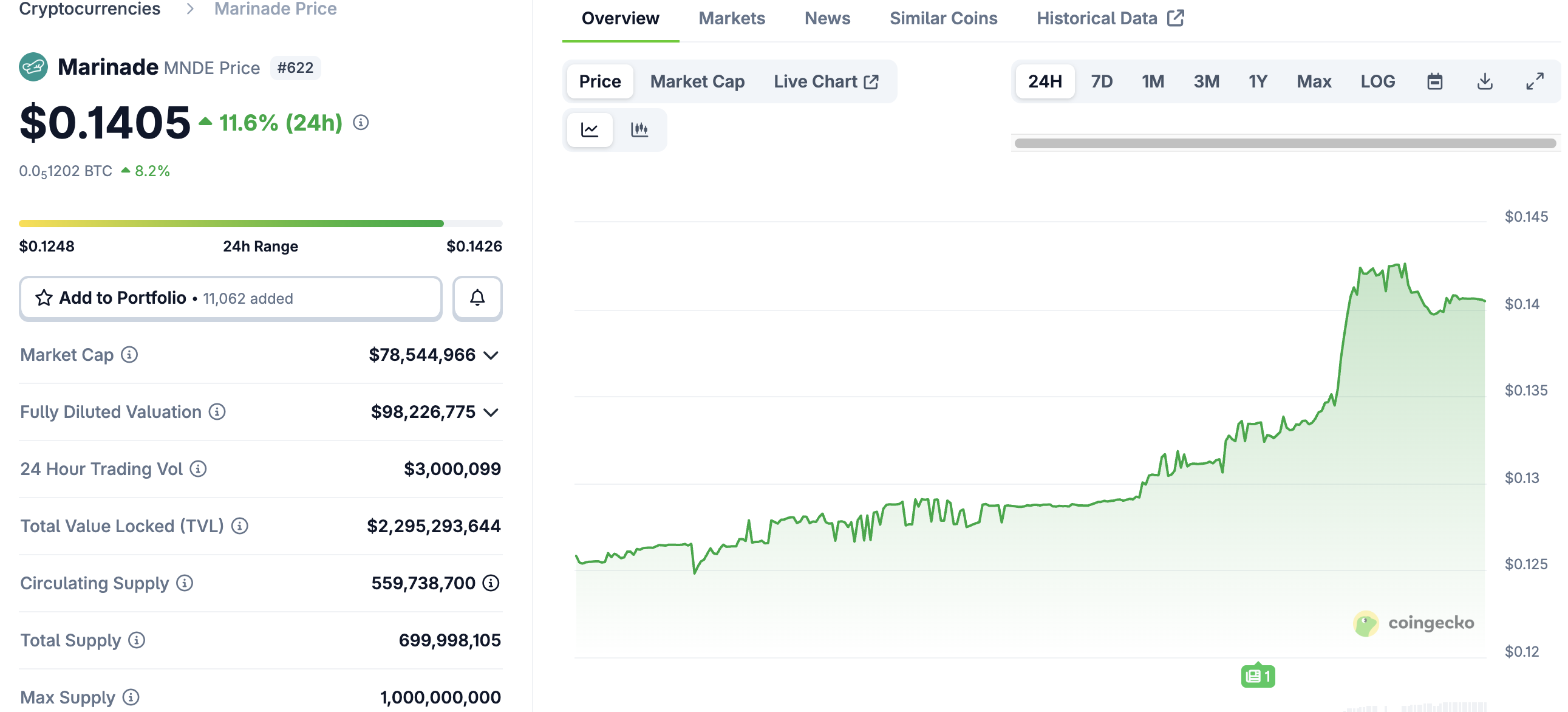
coingecko
Source: Coingecko

On the contrary, VisionSys AI’s stock plummeted following today’s announcement. The stock is down a massive 35.17% in the past 24 hours, trading at $2.23 at the time of writing. However, it is up an impressive 462% over the last six months.
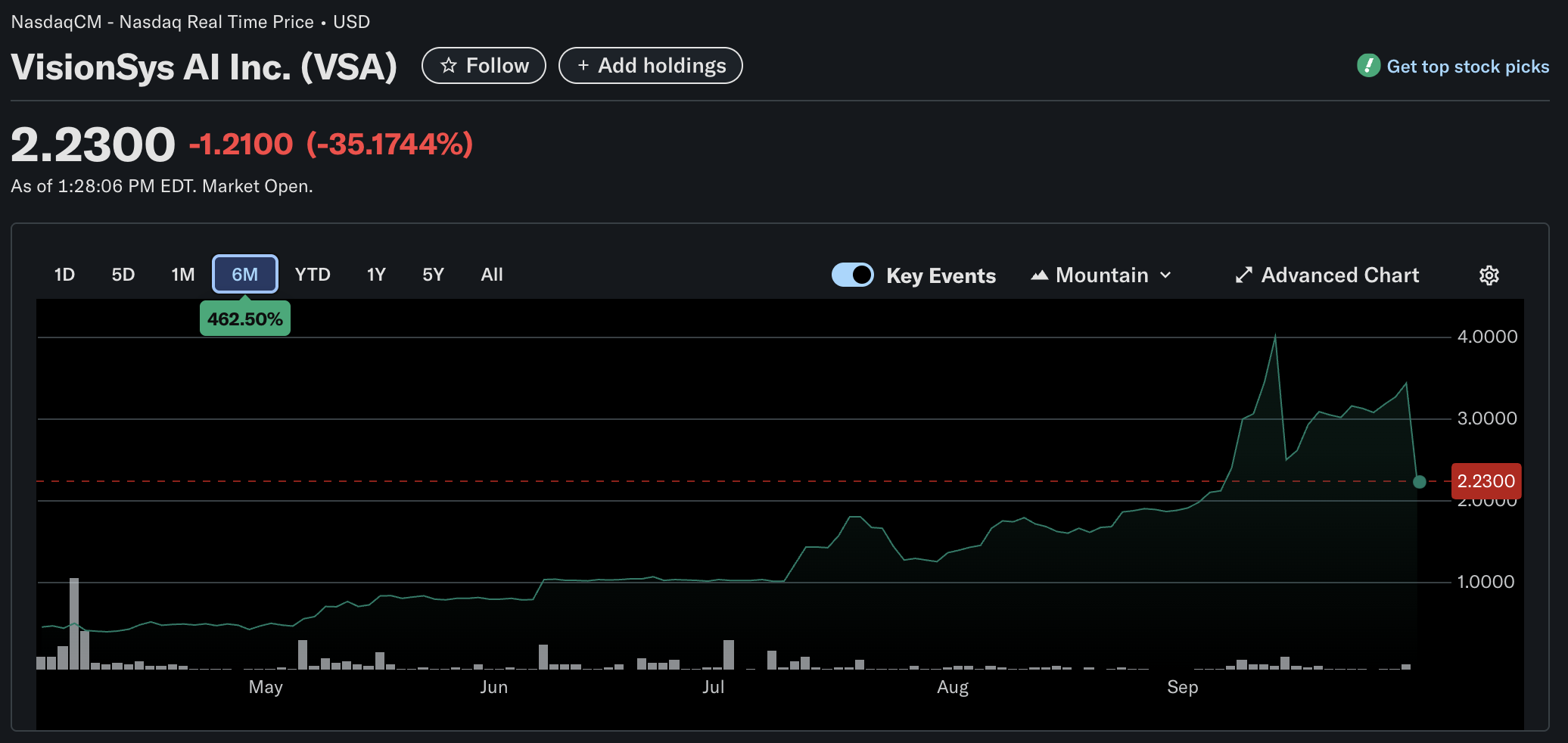
yahoo
Source: Yahoo! Finance

Where Is SOL Headed?

As corporate adoption of SOL continues at a rapid pace, analysts are not shying away from giving predictions about the digital asset’s price movement. Chinese AI tool DeepSeek recently forecasted that SOL could surge past $450 by the end of 2025.

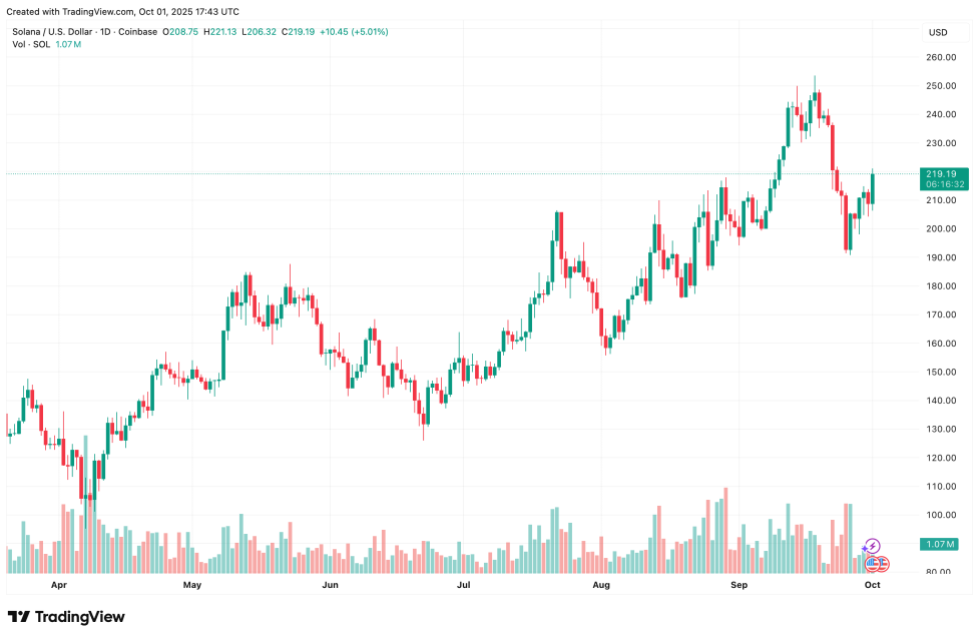
Solana is also taking the spotlight from the two leading cryptocurrencies, Bitcoin (BTC) and Ethereum (ETH), as SOL-based crypto investment products recently attracted inflows to the tune of $291 million. At press time, SOL trades at $219.19, up 6.7% in the past 24 hours.

solana
Solana trades at $219.19 on the daily chart | Source: SOLUSDT on TradingView.com
Featured image from Unsplash.com, charts from Coingecko, Yahoo! Finance, and TradingView.com
Editorial Process for bitcoinist is centered on delivering thoroughly researched, accurate, and unbiased content. We uphold strict sourcing standards, and each page undergoes diligent review by our team of top technology experts and seasoned editors. This process ensures the integrity, relevance, and value of our content for our readers.

Ash is a seasoned freelance editor and writer with extensive experience in the blockchain and cryptocurrency industry. Over the course of his career, he has contributed to major publications, playing a key role in shaping informative, timely content related to decentralized finance (DeFi), cryptocurrency trends, and blockchain innovation. His ability to break down complex topics has allowed both seasoned professionals and newcomers to the industry to benefit from his work. Beyond these specific roles, Ash's writing expertise spans a wide array of content, including news updates, long-form analysis, and thought leadership pieces. He has helped multiple platforms maintain high editorial standards, ensuring that articles not only inform but also engage readers through clarity and in-depth research. His work reflects a deep understanding of the rapidly evolving blockchain ecosystem, making him a valuable contributor in a field where staying current is essential. In addition to his writing work, Ash has developed a strong skill set in managing content teams. He has led diverse groups of writers and researchers, overseeing the editorial process from topic selection, approval, editing, to final publication. His leadership ensured that content production was timely, accurate, and aligned with the strategic goals of the platforms he worked with. This has not only strengthened his expertise in content strategy but also honed his project management and team coordination skills. Ash's ability to combine technical expertise with editorial oversight is further bolstered by his knowledge of blockchain analysis tools such as Etherscan, Dune Analytics, and Santiment. These tools have provided him with the data necessary to create well-researched, insightful articles that offer deeper market perspectives. Whether it’s tracking the movement of digital assets or analyzing blockchain transactions, his analytical approach adds value to the content he produces, ensuring readers receive accurate and actionable information. In the realm of content creation, Ash is not limited to just cryptocurrency markets. He has demonstrated versatility in covering other emerging technologies, market trends, and digital transformation across various industries. His in-depth research, coupled with a sharp editorial eye, has made him a sought-after professional in the freelance writing community. From developing editorial calendars to managing content delivery schedules, he has honed a meticulous approach to project management that ensures timely, high-quality work delivery. Throughout his freelance career, Ash has consistently focused on improving audience engagement through well-researched, insightful, and relevant content. His ability to adapt to the evolving needs of clients, whether it's enhancing the visibility of digital platforms or producing thought-provoking pieces for a wide range of audiences, sets him apart as a dynamic force in the field of digital content creation. His contributions have helped to shape a well-rounded portfolio that showcases his versatility, technical expertise, and dedication to elevating the standards of journalism in blockchain and related sectors.

Пов'язані матеріали

Bitcoin's 'Rally Ends,' Officially Entering the Later Stage of a Bear Market?

Bitcoin prices declined 13% this week, reversing the recent rebound and signaling a likely transition into the later stages of a bear market. Key on-chain metrics deteriorated, with the short-term holder cost basis falling below the Realized Price—a pattern last seen in early 2022, characteristic of bear market maturity. The rally to ~$82k proved to be a bear market bounce, as evidenced by the 90-day realized profit/loss ratio failing to sustain above the bullish threshold of 2. Daily realized losses surged to $1.35B, including significant selling from long-term holders who accumulated near cycle tops, indicating ongoing supply redistribution. Price was rejected almost precisely at the aggregate US spot ETF cost basis of ~$83k, turning that level into resistance and leaving the average ETF investor underwater again. Spot market selling pressure intensified, with the 7-day volume delta turning significantly negative to its weakest level since February. While a major long liquidation event cleared over $400M in leverage, spot demand has not yet stepped in to absorb the resulting supply. Options markets continue pricing in higher future volatility (elevated volatility risk premium) and maintain a skew toward put options, reflecting persistent demand for downside protection, though not yet panic. Overall, market structure remains fragile. Sustained recovery likely requires a reclaim of the ETF cost basis, a shift back to positive spot demand, and a slowdown in realized loss-taking. Until then, the market risks further downside or extended consolidation within the broader bear trend.

Foresight News1 год тому

Bitcoin's 'Rally Ends,' Officially Entering the Later Stage of a Bear Market?

Foresight News1 год тому

How Risky is the "Death Spiral" of MSTR and STRC?

Summary: This article explores the perceived "death spiral" risk between MicroStrategy (MSTR), its Bitcoin holdings, and its perpetual preferred stock (STRC), drawing comparisons to the LUNA-UST collapse. While both systems feature price anchors, high yields for holders, and potential feedback loops, their core mechanisms differ fundamentally. The MSTR-STRC structure relies on continuous financing to sustain its high dividend payouts, primarily through stock ATM offerings. A negative feedback cycle could occur: falling MSTR stock price makes raising equity capital harder, increasing pressure to sell Bitcoin, which undermines STRC confidence and further depresses MSTR. However, unlike LUNA-UST's automated, direct linkage, the MSTR-STRC loop is weaker and has brakes: STRC dividends can be deferred or rates lowered, and STRC holders have a $100/share liquidation preference in bankruptcy, providing a price floor. The company's sustainability hinges on its ability to continue financing. Its current ~$900 million USD reserves cover only about 6.3 months of its ~$1.71 billion annual interest/dividend burden. The next six months are critical, aligning with both the potential bottom in Bitcoin's four-year cycle and the depletion timeline of its reserves. While a LUNA-style catastrophic collapse is deemed highly unlikely due to structural differences, the key question is whether MicroStrategy can navigate this period through healthy deleveraging to restart its capital engine.

Foresight News1 год тому

How Risky is the "Death Spiral" of MSTR and STRC?

Foresight News1 год тому

Торгівля

Спот
Ф'ючерси
活动图片