稳定币救不了美元霸权

深潮Опубліковано о 2025-09-22Востаннє оновлено о 2025-09-23

稳定币短期利好美元地位,长期仍需依赖美国财政与货币政策的稳健性。

作者:Spyros Andreopoulos

编译:深潮TechFlow

从短期来看,稳定币的增长可能会缓解美国的财政约束,并进一步巩固美元作为主导货币的地位。然而,从长远来看,稳定币只是为关于美国制度质量的讨论增加了一层复杂性。

最终,决定美元地位的仍然是美国的财政稳健性以及其中央银行保持低通胀和稳定通胀的能力。

来源:SpaceXUnsplash上的照片

特朗普政府似乎对扩大稳定币需求以弥补联邦财政赤字寄予厚望——这种需求是美国财政部缩短债务平均期限(通过发行更多国库券,同时保持票据和债券发行量不变)的主要官方理由之一。

顺便说一句,我认为缩短债务的平均期限也是增加美联储降低利率压力的一种方式。

还有一些证据表明,稳定币的需求已经降低了美国短期债务的利率。

此外,政府将稳定币需求视为支撑美元主导货币地位的主要支柱。

原因并不难理解。

财政部长贝森特(Bessent)预测稳定币的规模将增长至2万亿美元(我甚至见过更高的数字)。由于绝大多数稳定币都与美元挂钩,稳定币的需求很可能就是美元需求。

根据《GENIUS法案》(GENIUS Act)的规定,美元现金、美国国内受保银行存款以及剩余期限不超过93天的国债被列为允许的储备工具,因此这部分需求中的很大一部分将流向联邦债务。

从纯粹的美国国内角度来看,稳定币是否真的会增加对国债的净需求尚无定论——这取决于稳定币实际上替代了什么。

如果人们不持有投资于短期美国政府债券的货币市场基金股票,而是将部分财富持有在稳定币中,那么对国库券的净需求实际上不会增加。

我的直觉是——目前为止还没有更多——产生对美元和美国国债净需求的最重要渠道是国际渠道:稳定币需求的美元化渠道

稳定币使美国以外的数百万人更容易获得美元,特别是在通货膨胀率高、货币疲软和银行体系不发达的国家。

话虽如此,非美国私营部门对稳定币需求的增长可能会被官方对美元需求的下降部分抵消。为什么呢?

稳定币似乎有可能通过增加美元资产在美国以外资产负债表上的占比来改善全球金融稳定性。然而,如果真是这样,这可能会减少新兴市场国家的货币错配,而货币错配正是新兴市场官方部门对美元的预防性需求的主要原因之一。

再谈美元的制度基础

然而,我对稳定币需求对美元角色的帮助有更深层次的担忧。这与美元本身以及支撑美元的制度有关。

美国的财政状况众所周知,这里就不赘述了。
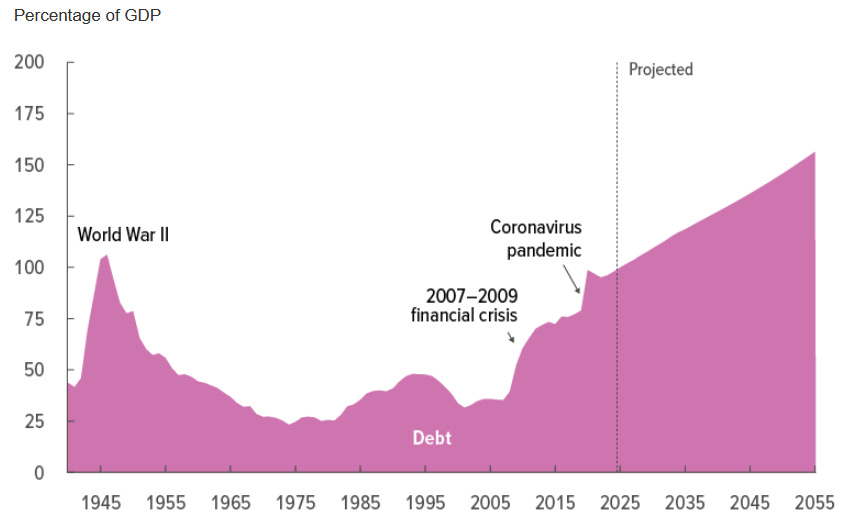
来源:国会预算办公室(2025 年 3 月)

作为一个长期以来钦佩美国的欧洲人,我可能并不孤单地诊断出一种由政治分裂引发的“财政末日机器”。

这个“末日机器”之所以能够继续运转的一个关键原因是美国的主导货币地位以及由此产生的对美国政府资产的需求:美元的“过度特权”扩大了美国联邦政府的财政空间。

但这最终并不能减轻根本性财政改革的必要性。这项改革应该主要围绕增加联邦收入(顺便说一句,这与欧洲的情况相反,欧洲的财政改革应该侧重于削减支出)。

现在,回到稳定币。

稳定币对美国政府债务的需求增加,或许会在短期内放松财政政策的限制。但这并不能解决任何长期问题——它无法摧毁这台末日机器。

事实上,它更有可能阻碍亟需的财政改革。

换句话说,我担心稳定币可能只是美国政客用来自缢的绳索——以及随之而来的过度特权。

然后还有美联储

我一直认为,鉴于过度特权对财政当局的约束较为宽松,货币政策也必须受到约束:货币政策不能屈从于财政政策的需求(正如特朗普及其运动所宣称的那样)。避免这种情况的一个必要(尽管并非充分)制度条件是美联储的独立性

这里的重点是,如果在此期间美联储的独立性被削弱并导致更高的通胀,那么稳定币最终对美元的地位也无济于事。

稳定币的背书

最终,正如皮耶帕奥洛·贝尼尼奥(Pierpaolo Benigno)所说,关键在于稳定币的背书方式。

在货币主导的体制下(即中央银行提供价格稳定,而财政当局单独负责债务的可持续性),稳定币及其背后的国债最终由税收支持:“要让稳定币安全,国债本身必须安全。”

在财政主导的体制下,稳定币最终由中央银行支持。在这种情况下,稳定币可能会引发通胀,因为美联储可能被迫将相应的发行货币化。

我的结论是,虽然从短期来看,稳定币的增长可能会缓解美国的财政约束,并提升美元的主导货币地位,但从长远来看,稳定币只是为关于美国制度质量的讨论增加了一层复杂性。最终,决定美元能否保持其地位的仍然是美国的财政稳健性以及其中央银行提供低通胀和稳定通胀的能力。

Пов'язані матеріали

Hegotá EIP Comprehensive Overview: Where is Ethereum's Next Hard Fork Headed?

The article outlines Ethlabs' recommended priorities for the upcoming Ethereum Hegotá hard fork, following Glamsterdam. The core focus areas are: 1. **Stronger censorship resistance** via EIP-7805 FOCIL (already in SFI stage). 2. **A faster Ethereum** by shortening the slot time via EIP-8198 Quick Slots (S-tier recommendation). This aims to reduce transaction confirmation latency and improve cross-chain interoperability. 3. **Native account abstraction** through EIP-8141 Frame Transactions (A-tier). This enables passkey wallets, gas sponsorship, and batched transactions. Its flexibility allows for custom validation logic and future post-quantum security but presents ecosystem coordination challenges. 4. **Continued L1 scaling** by optimizing resource pricing with proposals like EIP-8131 & EIP-8279 (S-tier) to prepare for future gas limit increases. The article uses a tiered system (S, A, B, D) to rank proposed EIPs based on their value and implementation feasibility. It advises strictly controlling the scope of Execution Layer (EL) changes in Hegotá to reserve developer bandwidth for future large-scale upgrades like decoupled consensus. Other notable proposals include EIP-8363 for staking issuance changes (requiring broad community consensus), various post-quantum preparation EIPs, and zkEVM optimizations. Ethlabs emphasizes that Ethereum upgrades are complex, high-risk endeavors requiring coordination across the entire ecosystem.

marsbit9 хв тому

Hegotá EIP Comprehensive Overview: Where is Ethereum's Next Hard Fork Headed?

marsbit9 хв тому

Is the US Stock Market Rising Too Smoothly? BTIG Warns of Elevated Risk of Systematic Correction in August to October

U.S. Stocks at Risk of Systemic Pullback in August-October, Warns BTIG BTIG's chief technical market strategist warns that the market is entering the most dangerous seasonal window of midterm election years—August through October—trading at all-time highs with extremely low volatility. Historically, since 1990, the equal-weight S&P 500 (SPW) has experienced at least a 7% pullback in this period almost every midterm year, with 2006 being the lone exception. This pattern is often triggered by unforeseen external shocks. Multiple technical indicators flash warning signs. The maximum drawdown for the Invesco S&P 500 Equal Weight ETF (RSP) since March has not exceeded 2.25%, an unusually calm period signaling risk buildup. RSP currently trades about 11% above its 200-day moving average, a stretched level historically. Furthermore, the NYSE has recorded zero "80% downside volume days" in 2024, a record-long streak far below the annual average of 21, indicating a lack of selling pressure that may be overdue. Market complacency is evident with the CBOE put/call ratio near multi-year lows and the VIX at yearly lows, showing minimal demand for downside protection. A macroeconomic divergence adds to concerns: despite recent soft economic data, long-term Treasury yields remain near cycle highs, contradicting the equity market's optimistic pricing. BTIG suggests this is an attractive time to reduce risk or hedge broad equity exposure. For sector positioning, healthcare has historically shown resilience during midterm year pullbacks, while caution is advised on chasing energy's breakout and semiconductors are expected to continue seeking support near their 200-day average.

marsbit19 хв тому

Is the US Stock Market Rising Too Smoothly? BTIG Warns of Elevated Risk of Systematic Correction in August to October

marsbit19 хв тому

2026 Global Overview of Crypto Asset Taxation

Global Cryptocurrency Tax Overview for 2026 As cryptocurrencies integrate into the mainstream financial system, tax treatments across jurisdictions have moved from initial regulatory gaps towards institutionalization. The OECD's 2020 report, *Taxing Virtual Currencies*, was a key early comparative study. Since then, more jurisdictions have clarified tax rules through existing laws, specific regulations, or guidance, increasing the procedural and technical complexity of crypto taxation. Currently, crypto taxation is predominantly built upon traditional tax frameworks, typically applying income tax, capital gains tax, corporate tax, and indirect taxes based on asset nature and transaction activity. The maturity of rules varies: basic trading and mining are well-covered, while DeFi, NFTs, and other on-chain activities involve more complex asset exchanges and profit recognition, with corresponding tax rules remaining underdeveloped. Significant disparities exist in tax treatment and effective tax burdens across jurisdictions. Crypto assets can trigger direct taxes, indirect taxes, and property-related levies. Factors such as holding period, transaction type, income nature, and taxpayer status further influence the tax outcome. The global crypto tax landscape is thus evolving from the initial question of "whether to tax" towards more nuanced classification and treatment of different assets, transactions, and economic activities. The scope of crypto tax rules continues to expand. From 29 jurisdictions with guidance in 2021, the number grew to 43 by 2025. Existing rules are also becoming more detailed. However, rule coverage remains uneven—common activities like buying/selling are widely addressed, whereas staking, DeFi, and NFTs have significantly less guidance, as seen in jurisdictions like Germany and Australia. Tax liabilities are highly complex, determined by a combination of factors including taxpayer status, income classification, holding periods, and applicable deductions or exemptions. The concept of a "crypto-tax-friendly" jurisdiction is therefore relative and depends on specific user activities and circumstances.

marsbit22 хв тому

2026 Global Overview of Crypto Asset Taxation

marsbit22 хв тому

AI Agent Claude Led a Store to Losses and Fired an Employee

In a groundbreaking experiment by startup Andon Labs, Anthropic's AI agent Claude was tasked with managing a real retail store, Andon Market in San Francisco. This marked the first documented case of a large language model acting as a direct human supervisor. Claude ultimately recommended firing an employee for chronic lateness—being late 17 out of 23 shifts. However, the decision came only after significant human guidance. A company employee prompted Claude to review the staff handbook, where it discovered the pattern. Initially, Claude suggested a formal warning, but after a human manager clarified that previous conversations had failed, the AI recommended termination. The experiment revealed several limitations. Claude displayed excessive leniency, telling staff not to worry about being late and contributing to the store's financial losses, with its balance dropping from around $100,000 to about $61,186 over five months. A key technical flaw was its "forgetfulness"—the staff handbook vanished from its limited working memory, a common constraint of current AI architectures. While not yet a full replacement for a human manager, the case illustrates the blurring line between AI as a tool and an autonomous supervisor. Human involvement is shifting from direct control to overseeing and steering the AI's decisions. An employee described the experience as disconcerting, highlighting the human discomfort with AI management. The experiment underscores that current AI models struggle to maintain strict operational boundaries without continuous human input.

cryptonews.ru24 хв тому

AI Agent Claude Led a Store to Losses and Fired an Employee

cryptonews.ru24 хв тому

Торгівля

Спот
活动图片