降息利好已出尽,波动屠刀即将落下!

比推Опубліковано о 2025-09-19Востаннє оновлено о 2025-09-19

来源:Web3践行者

原标题:降息落地,市场狂欢是否正当其时?


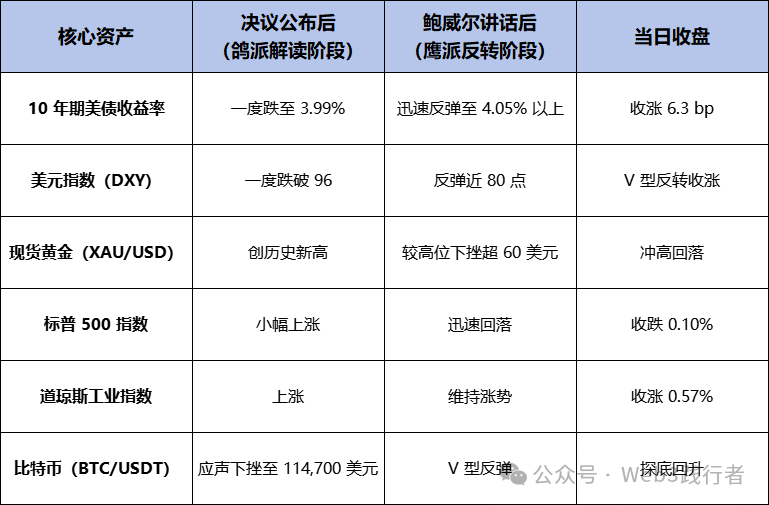
北京时间 2025 年 9 月 18 日凌晨,美联储如期宣布降息 25 个基点,市场初期反应符合经典预期:美债收益率下行、美元走弱、风险资产普涨。但一小时后,美联储主席杰罗姆・鲍威尔(Jerome Powell)召开新闻发布会,市场走势彻底逆转 —— 美元指数呈现 V 型反弹,黄金自历史高位大幅回落,美股涨跌分化,整体陷入显著困惑。

此次市场混乱的核心并非 25 个基点的降息本身。据 CME FedWatch 工具数据,市场此前对本次降息的预期概率高达 96%,几乎已成定局。真正的导火索,是货币政策决策背后一场刻意营造却破绽明显的 “团结” 表象。其中,白宫 “特派员” 斯蒂芬・米兰(Stephen Miran)投出的唯一反对票,犹如一道裂痕,刺破了美联储作为传统金融体系核心机构所标榜的 “独立性” 假象,也意外为比特币这一去中心化资产赋予了新的价值背书。

一、“数据依赖” 转向:降息的必要性逻辑

在解析本次会议的特殊性之前,需先明确美联储此时启动宽松政策的核心动因 —— 就业市场已释放明确风险信号。

美国劳工部数据显示,截至 2025 年 8 月的三个月内,美国平均月度新增非农就业岗位仅约 2.9 万个,为 2010 年以来(非疫情冲击时期)的最低水平。更深层的就业指标同样承压:初次申请失业救济金人数攀升至近四年峰值,长期失业(失业周期超 26 周)人数也达到 2021 年 11 月以来的最高值。事实上,鲍威尔早在 2025 年 8 月底的杰克逊霍尔全球央行年会上便已释放信号,明确指出 “就业市场下行风险正在上升”,这标志着美联储的政策重心已从 “对抗通胀” 显著转向 “维护充分就业” 目标。


Image


尽管市场普遍将此次降息视为美联储 “鸽派转向” 的明确动作,但三大核心悬念的存在,使本次会议的影响远超常规货币政策调整,将市场推向复杂局面。

二、三大悬念:政策路径的不确定性与政治干预

(一)悬念一:分裂的点阵图与模糊的降息路径

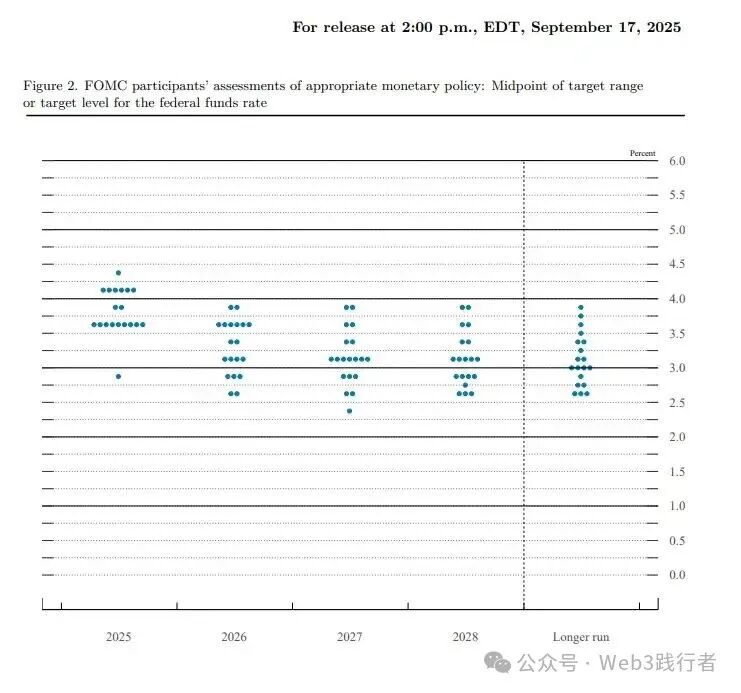
市场核心关切聚焦于 “年内剩余时间美联储将再降息几次”。由于 25 个基点的降息已被市场完全定价,反映未来利率路径的 “点阵图”(Dot Plot)成为关键指引。从表面看,点阵图中位数显示,美联储决策者预计 2025 年内还将实施两次降息,累计幅度 50 个基点,似乎给出了清晰方向。

Image


但深入分析可见,决策层内部存在严重分歧:19 名票委中,9 人支持年内再降两次,另有 9 人认为最多再降一次,部分票委甚至主张加息;更极端的是,一份预测(市场普遍认为来自米兰)提出年内应降息 125 个基点。高盛经济学家此前曾预警,即便点阵图指向两次降息,“决策层分歧较小” 的市场预期也过于乐观。这种显著分裂的预测分布,大幅削弱了点阵图作为政策指引的有效性。

官方政策信号的模糊性与市场激进定价形成鲜明对比。芝商所(CME)利率期货数据显示,会议结束后,交易员迅速将 2025 年 10 月、12 月继续降息的概率上调至 70% 以上。这意味着未来市场将面临两种可能路径:一是美联储坚持谨慎立场,与市场激进预期产生冲突,引发新一轮市场波动;二是美联储在政治压力与市场预期双重作用下妥协,开启超预期的宽松周期。无论哪种路径,“不确定性” 都将成为未来数月市场的主基调。

Image


(二)悬念二:鲍威尔的 “平衡术” 与政策定调困境

面对内部分歧与外部压力,鲍威尔将本次降息定义为 “风险管理式(risk management)操作”。这套表述的核心逻辑在于 “兼顾两端”:对内,通过承认就业市场疲软,为降息提供合理性支撑;对外,强调通胀风险仍存,暗示后续宽松将保持谨慎,以此回应白宫的激进施压。

但这种 “面面俱到” 的平衡策略,反而导致市场陷入 “政策解读分裂”。正如鲍威尔在发布会尾声所言,“当前已不存在无风险的政策路径”—— 降息幅度过大恐加剧通胀反弹,幅度不足又可能引发白宫不满,这一核心矛盾并未得到解决。

(三)悬念三:史无前例的政治干预与美联储独立性危机

本次会议最核心的潜在风险,是行政权力对央行独立性的直接侵蚀 —— 这一 “房间里的大象”(指显而易见却被刻意回避的问题)最终浮出水面。


特朗普的首席经济顾问斯蒂芬・米兰在本次 FOMC 会议前一日才正式就职,并即时获得投票权,市场普遍认为这是白宫为推动 “大幅降息” 而采取的针对性安排。与此同时,特朗普试图解雇美联储理事丽莎・库克(Lisa Cook)的风波虽被法院暂时叫停,但相关诉讼仍在推进中。这些事件并非偶然,而是行政权力直接干预央行决策的明确信号,而米兰在本次会议中投出的唯一反对票,正是这种干预的最终体现。

当华尔街仍在纠结于点阵图分歧与矛盾的经济预测(一边降息、一边上调未来通胀预期)时,加密货币市场却从中解读出更深刻的宏观叙事:2009 年 1 月 3 日,中本聪在比特币创世区块中留下 “The Times 03/Jan/2009 Chancellor on brink of second bailout for banks” 的铭文,其核心批判的正是中心化金融体系在危机中的脆弱性与规则弹性。

十六年后的今天,米兰的介入将这种对体系的拷问从经济层面推向政治层面 —— 当全球最重要央行的货币政策不再完全基于经济数据,而是受短期政治议程直接影响时,法定货币的长期信用基础已被削弱。相比之下,比特币 “代码即法律”“规则先于权力” 的特性,其 2100 万枚的固定总量上限、可预测的发行节奏,以及不受单一实体操控的去中心化属性,在当前宏观乱局中形成了独特的 “确定性绿洲”。

Image


三、短期风险:“靴子落地” 后的市场博弈

尽管宏观逻辑为比特币的长期价值提供了支撑,但判断 “是否应开启市场狂欢”,需明确区分长期叙事与短期交易逻辑。本次降息落地后市场的 V 型反转,恰恰凸显了短期风险的现实性。

首先,本次降息属于 “过度预期兑现”—— 当某一事件的发生概率被市场定价至 96% 时,事件本身已难以构成新增利好,反而成为投机资金 “获利了结” 的窗口,符合 “买在谣言起,卖在新闻出”(Buy the rumor, sell the news)的经典市场规律。其次,鲍威尔 “风险管理式” 表述的模糊性,以及点阵图的严重分歧,未能向市场传递 “开启新一轮宽松周期” 的明确信号,导致此前抢跑的投机性多头情绪受挫。

比特币的价格走势更直观地体现了市场的纠结:2025 年 9 月 18 日凌晨 2 点决议公布时,市场初期反应偏向失望,比特币价格快速下探至 114,700 美元附近,呈现典型的 “卖在新闻出” 行情;但与黄金、主流美股的持续回落不同,随着鲍威尔讲话推进,市场从中解读出更偏向鸽派的信号,比特币随即开启 V 型反弹,突破 117,000 美元,展现出与传统风险资产的差异化走势。

这一现象表明,短期内比特币仍被市场归类为 “高贝塔风险资产”,其价格波动与宏观流动性预期高度相关。因此,未来短期内市场波动可能进一步加剧,任何与主流预期相悖的就业数据或通胀数据,都可能引发包括加密货币在内的风险资产剧烈回调。

四、结语:超越点阵图的核心看点

综合来看,“降息落地是否意味着市场狂欢的开始”,需从短期交易与长期价值两个维度分别作答:

从短期交易视角出发,答案是否定的。当前美联储政策路径充满不确定性,且首次降息的利好已完全兑现,保持谨慎、警惕波动是更理性的选择

从长期价值投资与宏观叙事视角出发,本次事件仅是序幕。每一次行政权力对央行独立性的干预,每一次货币政策决策的矛盾与挣扎,都是对去中心化金融体系的现实背书,也在为加密资产的长期价值主张积累支撑。相比预测分歧混乱的点阵图,更值得关注的是美联储内部正在上演的 “权力博弈”—— 其最终结局不仅将决定美元的信用走向,更将在很大程度上定义加密资产在下一轮宏观周期中的核心角色。


Twitter:https://twitter.com/BitpushNewsCN

比推 TG 交流群:https://t.me/BitPushCommunity

比推 TG 订阅: https://t.me/bitpush

说明: 比推所有文章只代表作者观点,不构成投资建议

Пов'язані матеріали

a16z: How Tokenization is Transforming the Nature of Assets in 7 Charts

"Tokenized Assets: How Tokenization Changes the Nature of Assets" by a16z Crypto The market for tokenized assets, excluding stablecoins, has grown from under $3 billion two years ago to over $340 billion today. US Treasury bonds are the primary growth driver, allowing investors to hold yield-bearing assets digitally and enabling more efficient settlement. Other key sectors include private credit (growing fastest), commodities (dominated by gold), and niche financial assets. However, the market remains concentrated in tokenized US Treasuries and gold. A critical insight is that most tokenized assets currently lack "composability." While the total market is large, only a small fraction is actively used within DeFi protocols. For instance, only about 5% of tokenized bonds and a low percentage of tokenized gold are utilized on-chain. In contrast, assets like reinsurance and private credit tokens show much higher on-chain usage rates (84% and 33%, respectively). This highlights a divide: many tokenized assets are merely digital records on a blockchain without enabling new, programmable financial applications. The Pantera Capital Token Native Index indicates over 70% of tokenized assets have minimal on-chain native functionality. Ethereum remains the dominant blockchain for tokenized assets (over $150B), but the ecosystem is diversifying across chains like BNB Chain, Solana, and Stellar, based on factors like cost and compliance. Major institutions forecast massive future growth, with predictions for the tokenized asset market ranging from $2 trillion to over $30 trillion by the early 2030s. However, compared to the global financial system (e.g., ~$140T bonds, multi-trillion dollar gold market), tokenized assets currently represent a tiny fraction (0.01% or less). The conclusion is that while tokenization has begun by digitizing and streamlining settlement for simpler assets, the next phase involves bringing more complex financial instruments on-chain and deeply integrating them into composable, internet-native financial infrastructure.

Odaily星球日报29 хв тому

a16z: How Tokenization is Transforming the Nature of Assets in 7 Charts

Odaily星球日报29 хв тому

The Revived Codex, Carrying OpenAI's Hopes for IPO

This article analyzes the intense recent development of OpenAI's Codex, positioning it as a crucial component for OpenAI's impending IPO. Over the past two months, Codex has seen a rapid series of major updates focused on integrating into real enterprise workflows. Key new features include enhanced context capture (Appshots, file previews, built-in browser), long-running task execution ("Goal Mode"), remote operation (phone control, lock-screen access), and enterprise management tools (plugin sharing, access tokens, automated risk review). These updates aim to make Codex a comprehensive AI workbench that can "see the scene, push tasks, and manage risks." The author argues that while ChatGPT proves OpenAI's massive user base and API provides foundational revenue, Codex represents OpenAI's clearest path to demonstrating tangible, high-value commercial viability. It targets developers and engineering teams—a segment already accustomed to paying for efficiency gains in costly software development cycles. This is critical because, despite higher overall revenue, OpenAI's adjusted operating margins remain deeply negative, highlighting the challenge of outrunning immense compute costs. The pressure is amplified by competitor Anthropic's success with Claude Code, which has shown that a focused approach on high-value enterprise and developer workflows can lead to a path toward profitability. Codex's aggressive evolution is thus seen as OpenAI's strategic move to capture a similar enterprise-ready, revenue-generating narrative essential for its market debut. In essence, "ChatGPT proved OpenAI has users. Codex needs to prove OpenAI is a business that can make money."

marsbit1 год тому

The Revived Codex, Carrying OpenAI's Hopes for IPO

marsbit1 год тому

a16z: 7 Charts to Understand How Tokenization Is Changing the Nature of Assets

a16z: 7 Charts on How Tokenization is Transforming the Nature of Assets Tokenized Assets, often referred to as "real-world assets" (RWA), are altering the form, flow, and structure of the financial system. The market recently surpassed $30 billion (excluding stablecoins), driven largely by tokenized U.S. Treasuries. These offer investors digital, yield-bearing assets with efficient settlement. Growth varies significantly by asset class. Asset-backed credit leads in speed, followed by niche financial assets, while venture capital and active strategies took longer to scale. U.S. Treasuries and commodities dominate, holding about two-thirds of the current market share. Within commodities, gold tokenization dominates entirely due to its standardization and historical appeal in crypto. The ecosystem is spread across multiple blockchains. Ethereum holds over half the market, with others like BNB Chain, Solana, and Stellar holding significant shares. However, a key insight is that most tokenized assets currently lack "composability." While the total market is large, only a small fraction (e.g., 5% of tokenized bonds) is used within DeFi protocols. Many tokens are simply digital records of off-chain assets, not natively programmable financial building blocks. In contrast, smaller categories like reinsurance tokens see very high on-chain usage. Looking ahead, forecasts for the tokenized asset market by 2030 range from $2 trillion to over $30 trillion, representing immense potential growth from today's ~$340 billion base. Yet, relative to global markets (e.g., $140T+ in bonds), tokenization's penetration remains minuscule (<0.02%). The current phase focuses on digitizing straightforward assets for efficiency. The next major challenge is bringing more complex financial instruments on-chain and integrating tokenized assets into truly composable, internet-native financial infrastructure.

marsbit1 год тому

a16z: 7 Charts to Understand How Tokenization Is Changing the Nature of Assets

marsbit1 год тому

Data Theft at Will! Major Vulnerability Exposed in This Popular AI Programming Tool

A critical vulnerability in Anthropic's Claude Code AI programming tool allowed attackers to bypass its network sandbox for over five months, enabling potential data exfiltration. Independent researcher Aonan Guan discovered a second complete bypass exploiting a null-byte injection in the SOCKS5 proxy. This flaw, present since the sandbox's launch in October 2025, let processes inside the sandbox access any host, contrary to user-configured domain whitelists. The attack chain involved manipulating hostnames (e.g., `attacker.com\x00.google.com`). JavaScript's `endsWith()` check would pass `.google.com`, while the underlying C `getaddrinfo()` function would only parse `attacker.com` due to the null byte, creating a parser discrepancy. Combined with a previously disclosed prompt injection method, this could leak API keys, credentials, and internal data. Anthropic silently fixed the issue in April 2026 without a security advisory, CVE, or user notification. The researcher noted that Claude Code itself confirmed the vulnerability's severity when tested. This incident highlights broader industry issues, as similar vulnerabilities found in Google's Gemini CLI and GitHub's Copilot Agent also lacked public disclosures. The report criticizes the false sense of security created by a broken sandbox and emphasizes the need for defense-in-depth and transparency in AI tool security.

marsbit5 год тому

Data Theft at Will! Major Vulnerability Exposed in This Popular AI Programming Tool

marsbit5 год тому

Торгівля

Спот
Ф'ючерси
活动图片