ООН запустит блокчейн-академию для правительств

cryptonews.ruОпубліковано о 2025-03-15Востаннє оновлено о 2025-09-16

Фонд Exponential Science объявил о партнерстве с Программой развития ООН (ПРООН). Стороны создадут академию, которая поможет правительствам из разных стран внедрять блокчейн, ИИ и другие технологии в государственный сектор.

UNDP & Exponential Science Unveil Government Blockchain Academy to Drive Public Sector Innovation

Exponential Science is partnering with @UNDP to co-create the Government Blockchain Academy, a global initiative to help governments harness blockchain, AI, and emerging… pic.twitter.com/T4ILEJOKna

— Exponential Science (@Exponential_Sci) September 15, 2025

Новая структура сосредоточится на пяти направлениях:

  • расширении доступа к финансовым продуктам;
  • прозрачном управлении в борьбе с коррупцией;
  • целостности цепочки поставок — подотчетности в государственных закупках и логистике;
  • применении смарт-контрактов и токенов для обеспечения прозрачности финансирования мер по борьбе с изменением климата;
  • расширении цифровой идентификации.

Обучение будет включать очные семинары, онлайн-курсы и форумы, специально адаптированные под нужды государственного сектора и местных условий. Каждая правительственная команда получит структурированную поддержку на всех этапах программы.

Точные сроки начала работы блокчейн-академии остаются неизвестными. Сообщается, что первые образовательные программы стартуют в некоторых странах с 2026 года.

Официальный анонс инициативы состоится на конференции TOKEN2049 в Сингапуре, которая пройдет с 1 по 2 октября.

«Правительственная блокчейн-академия предоставит странам возможность решать сложные задачи развития новыми способами, переходя от экспериментов к внедрению с акцентом на прозрачность, инклюзивность и устойчивость», — заявила руководитель отдела по инновациям ПРООН в Европе и Центральной Азии Ирена Черович.

Исполнительный председатель Exponential Science профессор Паоло Таска назвал структуру «коллективным планом для публичных инноваций».

Первые инициативы по созданию блокчейн-академии появились в 2023 году, когда агентство объявило о партнерстве с Algorand Foundation. В рамках сотрудничества ПРООН намеревалась обучить 22 000 сотрудников из 170 стран технологии распределенного реестра.

🚨 Breaking news from #AlgoImpactSummit 🚨

The @UNDP partners with the Algorand Foundation to launch the Algorand Blockchain Academy.

The academy will be made available to over 22,000 United Nations staff in 170+ countries.

🔗 https://t.co/wfWBaFOW0E

🧵 pic.twitter.com/lCqNEQonrV

— Algorand Foundation (@AlgoFoundation) November 30, 2023

Напомним, в апреле в ООН обеспокоились отмыванием денег через майнинг.

Пов'язані матеріали

RWA Deposits Triple as Traditional Finance Embraces Blockchain

The DeFi sector is undergoing a structural transformation, with tokenized real-world assets (RWA) taking center stage. According to a joint report from CoinShares and Token Terminal, deposits in RWA on decentralized lending and trading platforms surged to $7.4 billion in Q2 2026, a more than threefold increase from $2.3 billion a year earlier. This growth starkly contrasts with a 15% decline in overall DeFi deposits and a nearly 70% drop in DEX trading volume over the same period. Analysts see this as a fundamental shift driven by the real financial utility of blockchain for traditional capital, not speculation. Primary drivers include tokenized U.S. Treasury bonds and multi-strategy funds, with products like BlackRock's BUIDL being used as collateral to access liquidity while earning yields of 3.2% to 5.5%. Ethereum remains the dominant network, holding about 70% of all RWA collateral. Beyond bonds, tokenized equities and commodity derivatives are also gaining traction, with the tokenized stock market now valued at roughly $2.2 billion. Decentralized platforms like TradeXYZ have seen explosive growth in RWA-based perpetual futures for assets like oil and the S&P 500. Looking ahead, Standard Chartered projects the total market capitalization of tokenized assets could reach $4 trillion by the end of 2028. The RWA sector's growth demonstrates that tokenization has moved beyond crypto market cycles, offering tangible value, deep liquidity, and 24/7 access to global capital as traditional finance actively scales its blockchain integration.

cryptonews.ru1 хв тому

RWA Deposits Triple as Traditional Finance Embraces Blockchain

cryptonews.ru1 хв тому

From Bitcoin to Solana: How 8 Cryptocurrency Networks Achieve Consensus

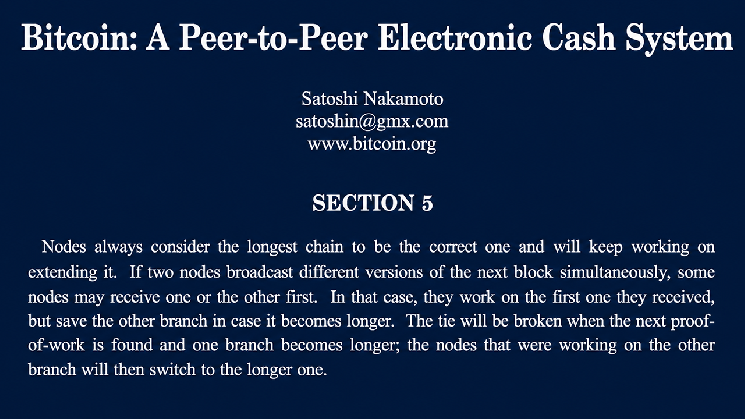
This article explains how eight major cryptocurrency networks achieve consensus, moving beyond the simple proof-of-work (PoW) vs. proof-of-stake (PoS) distinction. Bitcoin established the "Nakamoto consensus" model, where miners compete through PoW, and the valid chain is the one with the most cumulative computational work. Dogecoin and Zcash follow this core model but use different mining algorithms (Scrypt and Equihash, respectively) and have faster difficulty adjustment periods. Ethereum transitioned to a PoS system called Gasper after The Merge. Validators stake ETH to propose and vote on blocks, with finality reached in about 12.8 minutes through a combination of the LMD-GHOST fork-choice rule and Casper FFG. Other networks employ more delegated or permissioned structures. BNB Smart Chain uses a Proof-of-Staked-Authority model with 45 elected validators for high speed, achieving finality in under a second. Solana combines Proof-of-History (a cryptographic clock) with a stake-weighted Tower BFT algorithm for voting, targeting finality in about 12.8 seconds. Tron uses delegated PoS where 27 super representatives take turns producing blocks on a schedule, with finality requiring confirmation by 19 of them. The XRP Ledger takes a unique approach, relying on Unique Node Lists (UNLs). Each server maintains a list of trusted validators, and consensus is reached through repeated rounds of voting until an 80% quorum agrees, typically within 4-5 seconds, without mining or staking lotteries. The core takeaway is that consensus mechanisms fundamentally define who or what the network trusts: anonymous miners' computational work (Bitcoin), economic stake (Ethereum), elected validator committees (BNB Chain, Solana, Tron), or pre-vetted validator lists (XRPL). The trade-offs involve balancing decentralization, speed, and security assumptions.

cryptonews.ru5 хв тому

From Bitcoin to Solana: How 8 Cryptocurrency Networks Achieve Consensus

cryptonews.ru5 хв тому

Торгівля

Спот
活动图片