ЦБ России: Цифровой рубль может повлиять на ситуацию с банковской ликвидностью

cryptonews.ruОпубліковано о 2025-01-03Востаннє оновлено о 2025-09-04

Внедрение цифрового рубля не должно привести к существенному оттоку капитала из традиционного банковского сектора, заявили в Банке России.

Цифровой рубль как третья форма национальной валюты дополнит, а не заменит наличные и безналичные рубли. Таким образом, риски оттока средств из банковского сектора после внедрения цифрового рубля будут минимальны, считают в ЦБ.

«Введение цифрового рубля может повлиять на ситуацию с банковской ликвидностью, но не приведет к значительному оттоку средств из банковского сектора», — заявил регулятор.

В частности, Банк России не ожидает масштабного оттока средств с банковских вкладов и других финансовых инструментов из-за отсутствия начисления процентов на остатки средств в цифровых рублях.

По прогнозу регулятора, кредитные организации смогут успешно адаптироваться благодаря поэтапному внедрению новой цифровой формы российской валюты.

Ранее в санкт-петербургском аэропорту Пулково впервые прошла операция по оплате услуги цифровыми рублями с использованием QR-кода, сообщила пресс-служба управляющей компании «Воздушные ворота Северной столицы».


Пов'язані матеріали

Building USDC by Its Own Hands, Why Does Coinbase Turn to Support Competitor OUSD?

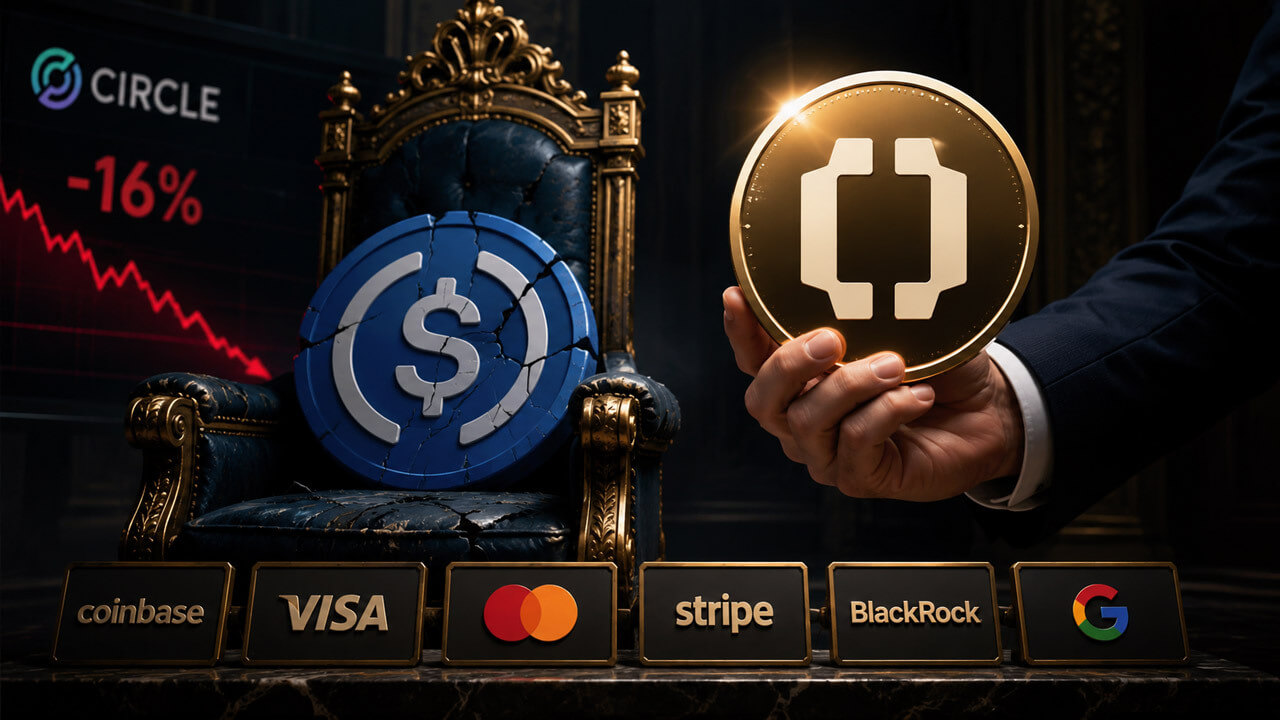
Coinbase, a key distributor of the dominant stablecoin USDC, has joined over 140 major companies—including Visa, Mastercard, and BlackRock—as a founding member of the Open USD (OUSD) alliance, a move that directly challenges the current stablecoin economic model. The new project aims to upend the established profit structure by offering zero minting and redemption fees and allocating the majority of reserve interest earnings to distribution partners, rather than the issuer. This shift highlights a growing power struggle in the $320+ billion stablecoin market, where platforms with massive user bases are demanding a larger share of the revenue generated from the underlying reserves. Circle, the issuer of USDC, saw its stock plummet 16% on the day of the OUSD announcement, reflecting investor concern over the potential strain on its crucial partnership with Coinbase. While Coinbase earned over $900 million from its USDC partnership in 2024, its support for a competing model gives it significant leverage as its revenue-sharing agreement with Circle nears expiration in August 2026. Circle CEO Jeremy Allaire defended the USDC model, emphasizing its decade-long development, deep liquidity, and extensive ecosystem integration, which he argues cannot be easily replicated by a large, potentially slow-moving consortium. He also questioned the sustainability of a zero-fee model and warned that diverting all reserve interest would leave issuers without funds for critical compliance and operational infrastructure. Analysts remain skeptical of OUSD's prospects, citing the "cold start" problem of building liquidity, potential governance challenges within a large alliance, and heightened regulatory scrutiny. The emergence of OUSD signals a broader industry bifurcation, where stablecoins are increasingly viewed as backend settlement tools. The core competition is shifting from technology to a direct negotiation over how profits from the network are distributed between issuers and the powerful distribution channels.

Foresight News1 год тому

Building USDC by Its Own Hands, Why Does Coinbase Turn to Support Competitor OUSD?

Foresight News1 год тому

Торгівля

Спот
活动图片