KOL的黄昏:叙事已死,韭菜觉醒

比推Опубліковано о 2025-09-03Востаннє оновлено о 2025-09-03

原文作者:TM

原文编译:Luffy,Foresight News

原标题:加密KOL自述:我们的时代已经落幕


我对接下来要提到的这些人没有个人恩怨,尽管他们中的大多数人因为我敢说真话而讨厌我。没关系,这无关个人恩怨,只关乎真相。

在「指责」别人之前,先说说我自己是怎么成为 KOL 的。

我是如何成为 KOL 的

我从 2017 年开始交易加密货币,2020 年起活跃在加密推特社区。

上一轮牛市时,情况还很简单:一边是有真知灼见的声音,另一边是刷互动量的 「流量玩家」。但当时没人太在意这些,因为主流玩法是炒作山寨币。有影响力的人无法单凭自己的力量推高某个币种,真正重要的是分享投资逻辑和核心观点。

对我来说,成为 KOL 曾是梦想中的工作,靠谈论自己热爱的技术就能赚钱。

但在熊市吞噬了我大部分净资产后,我开始想主动赚钱,而不是守着一堆 「持仓」,寄希望于命运的垂青。

也就是从这时起,一切都变了。
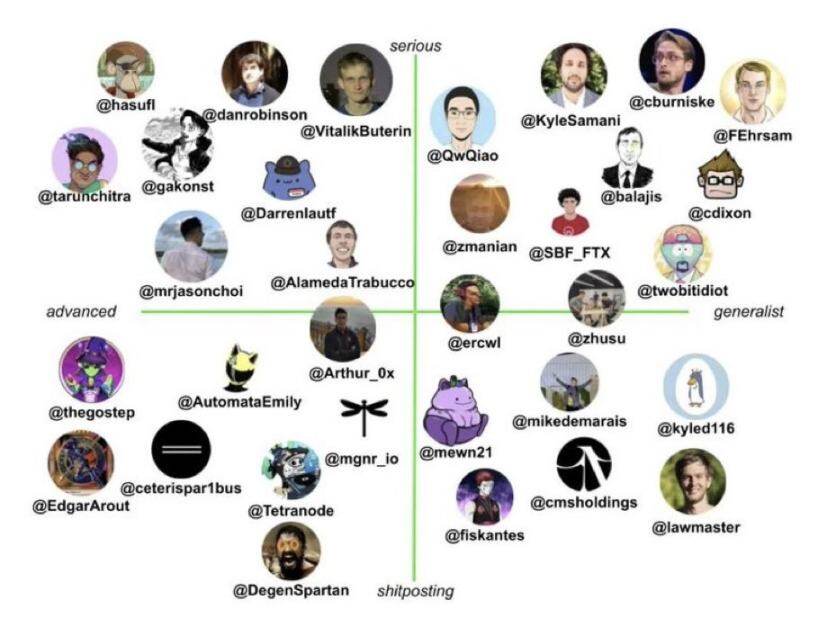
2021 年牛市的 KOL

Meme 币 KOL 的崛起

2023 年冬天,首个有影响力的 Solana 生态 Meme 币 WIF 迅速走红,市值也一度飙升至数十亿美元。他们曾承诺搞个大营销事件:把 WIF 的 logo 投到拉斯维加斯球体建筑上,结果这事不了了之。从社区筹集的 300 万美元,至今仍被冻结着。

即便如此,当时发行 Meme 币并非易事。这种情况在 2024 年夏天随着 Pump.fun(Meme 币发行平台)的出现发生了改变,Mitch 是首个在该平台发行代币 Xiwifhat 的人。

这里有个规律:KOL 总能早一步抓住趋势,然后成为焦点。但你不妨问问自己:他们能抢占先机,是因为真的眼光独到,还是因为他们和平台、基金有着直接联系?

以 Mitch 为例,他用自己的公开钱包 「收割」 粉丝,因为人们真的会跟单交易他的持仓。他会精心挑选币种,先建仓,等粉丝跟风买入推高价格后,就在翻倍时卖掉一半仓位。对他来说,这是零风险的操作。

他并非个例,只是做得比较大而已。

在此之前,宣传 Meme 币会被视为纯粹的诈骗。但一夜之间,这些 「诈骗者」 反而变得受欢迎起来。

随后登场的是 Murad。他曾是银行从业者,很懂如何包装自己:制作幻灯片、提出看似可信的投资逻辑、拆解 「粉丝心理」,所有内容都裹着一层专业的外衣。

他还搭建了自己的跟单交易平台,发布 「精选币种列表」,同时在背后操控代币供应量。巧的是,他 「推荐」 的币种之一 SPX,一周后就上线了某中心化交易所。这真的只是巧合吗?

那时我意识到:在这轮周期里,想赚钱就只能当 Meme 币 KOL。我出卖了自己的原则,也为此付出了代价。

为什么我只谈论 Meme 币 KOL?因为过去两年里,其他领域的 KOL 基本都无关紧要了。要是错过了一整个周期,你的观点也就没什么分量了。

新面孔的崛起

到 2024 年 10 月,我突然遇到了一些新面孔:Orangie、Rasmr、Mika。他们涨粉速度惊人,毫无征兆,步调还很一致,典型的 「行业推手」。

不过公平地说,Threadguy 不属于这类人。他是靠发长文帖子、在 X Spaces 里畅所欲言,一步步积累起影响力的。

Faze Banks 再次入局,还带来了 「洛杉矶电子烟小圈子」—— 一群以 「收割」 为目的的诈骗者抱团取暖。之后的事,也就不用多说了。

在那之后,Orangie 曾一度全网爆火,吸引了一大批喜欢《堡垒之夜》、《周五夜放克》的年轻粉丝,这些粉丝很容易对他产生认同感。
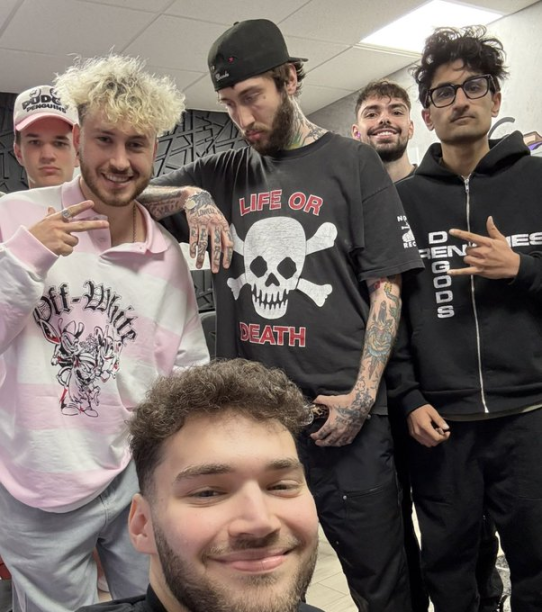
Adin Ross 意识到自己被骗前的瞬间

KOL 的 无人区

如今的加密圈,已经没有真正的 「焦点人物」 了。人们不再听 KOL 的意见,甚至反感他们。

我在好几个社群里问过大家 「最喜欢的 KOL 是谁」,得到的答案都是:「没有。这帮人都该死。」

现在连明确的 「主流玩法」 都没有,更像是 Meme 币的 「终局」—— 没有实际用途,只剩下代币发行本身。每个项目都在从同一批有资金的小体量交易者那里争夺注意力。

这个市场的 「收割属性」 已经到了极致,大多数交易者都亏得一塌糊涂。「赌场里不许哭」 的心态,逼着人们把最后一点钱投入到那些 「千分之一概率暴涨、千分之九百九十九概率跑路」 的币种里。

这是一个可悲的市场。KOL 靠这种环境生存,还让情况变得更糟,但我们也不能全怪他们。是我们把他们捧到了这个高度,或者说,是我们纵容了他们的壮大。

他们在 「下棋」,而我们在看热闹

当这个领域 99% 的人连自己的观点都没有时,「KOL」 这个词本身就是个笑话。他们像风中的羽毛,被一波又一波的流量浪潮推着走,毫无主见。

你上一次看到 「没有隐藏利益、不搞互动刷量」 的真诚建议是什么时候?

这篇文章里提到的每一个 KOL,都把我拉黑了。

为什么?因为我会独立思考、敢说真话,而这威胁到了他们的 「游戏」。

以我的经验来看,人们宁愿拉黑你,也不愿面对真相。看不到自己造成的伤害,才能更心安理得地继续诈骗。

但因果报应是真实存在的,「链上灵性(指链上行为终将留下痕迹,善恶有报)」 也不是空话。你种下什么因,终会收获什么果。

事已至此,多说无益。

KOL 的未来

加密圈里没有什么会重复上演,无论是叙事、诈骗手段,还是荒诞闹剧。有时历史会相似,但绝不会完全重复。

未来会怎样?我认为市场会转向 「实用性」。下一轮周期里,只靠嘴炮是不够的,KOL 必须真的去做事,至少要投入真金白银。这样一来,权力才会回到真正的建设者手中,而不是那些 「装模作样的人」 手里。

我已经发现,付费社群的收入在下降。人们正在清醒过来,不想再被收割了。未来,对 KOL 的抵制还会更多。

以前,跑路的开发者会收到死亡威胁。我不是说这种极端方式好,但它确实能让开发者三思而后行。我们可能不会回到那种极端状态,但市场一定会走向 「基于声誉的体系」。而这,将改变一切。


Twitter:https://twitter.com/BitpushNewsCN

比推 TG 交流群:https://t.me/BitPushCommunity

比推 TG 订阅: https://t.me/bitpush
说明: 比推所有文章只代表作者观点,不构成投资建议

Пов'язані матеріали

New AMD Paper Overturns Conventional Wisdom: FP4 Training Instability's Cause Is Not Insufficient Randomness

AMD's new research challenges the conventional understanding of FP4 training instability. While reducing precision from FP8 to FP4 promises doubled computational throughput and is supported by new hardware like NVIDIA Blackwell and AMD MI350 series, training large language models natively with FP4 has been notoriously unstable, often attributed to insufficient stochasticity. The paper "Pretraining large language models with MXFP4 on Native FP4 Hardware" demonstrates successful end-to-end FP4 pre-training of Llama 3.1-8B on AMD MI355X GPUs using the MXFP4 format, achieving a 9-10% overall speedup over FP8. Crucially, it identifies the root cause of instability: not randomness, but the accumulation of *structural micro-scaling errors* along the sensitive weight gradient (Wgrad) path. Through controlled experiments, researchers found that quantizing the Wgrad operation to FP4 caused significant convergence degradation. Counterintuitively, common stochasticity-based mitigation techniques like stochastic rounding and randomized Hadamard transforms worsened performance. In contrast, applying a *deterministic* Hadamard transform successfully stabilized training by ensuring consistent error patterns, reducing the extra token cost from 26-27% to just 8-9%. This work has significant implications: 1) It provides a clear diagnostic for low-precision training instability, steering focus towards structural errors. 2) It pushes FP4 from a primarily inference-focused format into the realm of viable training. 3) It leverages the open OCP Microscaling (MX) standard, promoting cross-vendor compatibility. The research marks a critical step towards more economical large model training by further pushing the boundaries of low-precision computation.

marsbit3 хв тому

New AMD Paper Overturns Conventional Wisdom: FP4 Training Instability's Cause Is Not Insufficient Randomness

marsbit3 хв тому

Will ONDO's 'Tokenization Narrative' Change After Its CEO's Unexpected Passing?

Ondo Finance founder and CEO Nathan Allman has passed away unexpectedly. Allman, a Brown University graduate with a background in private credit and Goldman Sachs' digital asset team, was a key architect of Ondo's pivot from DeFi structured yield products to becoming a leading Real-World Asset (RWA) protocol. He drove the strategy to tokenize traditional financial assets like US Treasuries (OUSG), yield-generating dollar assets (USDY), and US stocks/ETFs (Ondo Global Markets) for on-chain accessibility. The company announced that President Ian De Bode, a former McKinsey partner with a strong institutional strategy and operations background, will succeed Allman as CEO. While Allman's sudden departure presents a near-term challenge, testing market confidence and Ondo's continuity, the project is seen as more than a founder-driven narrative. It has an established product suite and a management team with deep traditional finance experience. The long-term impact hinges on the new leadership's ability to execute. De Bode's expertise in compliance, distribution, and institutional partnerships aligns with RWA's next phase of scaling infrastructure. The core question is whether Ondo can maintain its product momentum and institutional relationships. Ondo's native ONDO token represents governance and RWA narrative value, not direct revenue from the underlying assets. Its future as a "top tokenization play" will depend on the team's continued delivery of product growth, asset scale, and real-world demand, moving beyond the initial emotional shock.

marsbit50 хв тому

Will ONDO's 'Tokenization Narrative' Change After Its CEO's Unexpected Passing?

marsbit50 хв тому

Bankless Co-founder's Confession on Selling Off ETH: Ethereum Did the Right Thing, but 'ETH as Money' Has No Future

Bankless co-founder David Hoffman recently sold his remaining ETH holdings, sparking debate within the Ethereum community. In a detailed explanation, Hoffman clarifies that his decision was not based on bearish sentiment towards Ethereum itself, which he remains highly optimistic about, but rather on the conclusion that the "ETH is Money" narrative has largely run its course. Hoffman argues that for ETH to achieve its envisioned status as global money, Ethereum needed to execute flawlessly across multiple layers—governance, technology, and market dominance—in a highly coordinated manner. He acknowledges Ethereum's significant successes and current justified valuation but suggests the window for a major revaluation based on this monetary narrative is closing. The post examines several challenges: the strong correlation between L1 chain activity/fees and native token value; the perceived failure of the "strong version" of crypto (user-owned, egalitarian systems) versus the rise of a "weak version" (efficient ledger technology for traditional finance); and the possibility that ETH's momentum as money was uniquely tied to the distorted conditions of the 2020-2021 period. Crucially, Hoffman highlights a structural tension: Ethereum is architected as a "giver, not a taker," providing critical infrastructure like secure block space and tokenization at cost. This ethos benefits the broader ecosystem (applications, L2s) but doesn't prioritize extracting maximum value for ETH itself. The "ETH is Money" thesis required Ethereum to win a war of overwhelming market dominance—a war its design philosophy refuses to explicitly fight. Therefore, while he sees continued immense success for the Ethereum network and its ecosystem (following a "fat application" theory where value accrues to apps and L2s), Hoffman finds it increasingly difficult to foresee a structural upward revaluation for the ETH asset based on the monetary narrative. His capital reallocation reflects a belief that this particular investment thesis has played out.

Odaily星球日报56 хв тому

Bankless Co-founder's Confession on Selling Off ETH: Ethereum Did the Right Thing, but 'ETH as Money' Has No Future

Odaily星球日报56 хв тому

Торгівля

Спот
Ф'ючерси
活动图片