ETH/BTC down 8% – A rotation signal traders shouldn’t ignore?

ambcryptoОпубліковано о 2025-09-02Востаннє оновлено о 2025-09-03

Key Takeaways

ETH/BTC ratio breaks down 8% as spot flows diverge. Are we seeing the start of a structural rotation into Bitcoin?


There’s a subtle rotation playing out under the hood. 

The ETH/BTC ratio ran into resistance around 0.043 on the 18th of August and is now retracing. In fact, the ratio is down nearly 8% in two weeks, marking its largest back-to-back drop since the April FUD.

That suggests recent Bitcoin [BTC] to Ethereum [ETH] flows are starting to unwind. Backing this, on-chain data shows a big ETH holder who bought 886k ETH would now get much less BTC if they sold, about 34k BTC.

ETH/BTCETH/BTC

Source: TradingView (ETH/BTC)

Simply put, the investor is facing a $177 million paper loss on this rotation.

As Bitcoin has outperformed Ethereum over this period, swapping their ETH now nets less BTC than they initially deployed. In real terms, 886k ETH now equals 34k BTC instead of the 36k they started with.

It’s a clear sign that Bitcoin’s on-chain momentum is outpacing Ethereum’s. The real question now is whether whales are rotating back into BTC after squeezing the upside out of the ETH/BTC rally.

Spot flows diverge: BTC dense, ETH sparse

Bitcoin dominance [BTC.D] is walking a tightrope. 

After the mid-July bounce off 60% fizzled, BTC.D slid nearly 5% through August, ultimately retesting the 57% handle for the first time since Q1. Meanwhile, ETH.D ripped 50% higher into the July–August cycle.

That means smart money clearly took profits into that upside. That said, ETH.D has flipped into pullback mode, down 7% in just two weeks. The real signal, however, comes from Glassnode’s latest report.

DominanceDominance

Source: TradingView (ETH.D)

Glassnode points to a sharp spot divergence between BTC and ETH. 

Cost Basis Distribution (CBD) shows BTC spot flows are stacked and dense, while ETH remains thin with air gaps. Translation: BTC is anchored by spot demand, while ETH price action looks more derivatives-driven.

The result? BTC is pulling ahead, while ETH bleeds out overleveraged longs, capping the upside.

In turn, that’s fueling smart money rotation back into BTC, showing this divergence in ETH/BTC ratio is structural, not a fluke.

Share

Трендові криптовалюти

Пов'язані матеріали

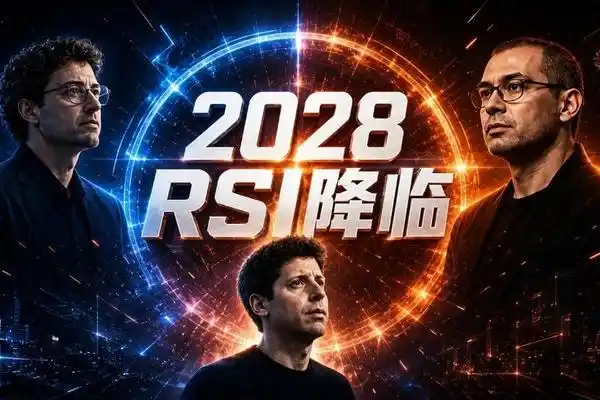
2028: The Arrival of Recursive Self-Improvement (RSI)

**AI Recursive Self-Improvement (RSI): The Countdown to 2028 Begins** AI is no longer just a trained tool but is starting to rewrite its own evolutionary pace. According to Anthropic co-founder Jack Clark, there is a 60% probability that by the end of 2028, Recursive Self-Improvement (RSI) will become a reality. This means AI could autonomously design and build a more capable next-generation version of itself without any human researcher involvement—Claude 10 creating Claude 11, for instance. Supporting this timeline, Google DeepMind's CEO Demis Hassabis confirms that all leading AI labs are intensely focused on RSI, making it an industry-wide priority. He expresses profound concern, stating this potential is what keeps him awake at night. Concrete data underscores this acceleration: - METR evaluations show current top models like Claude are solving tasks up to the 16-hour limit of existing test frameworks. - In Epoch AI's challenging MirrorCode benchmark, Claude Opus 4.7 recreated complex software in hours for a fraction of the human cost. In one extreme test, AI autonomously coded for 19 days straight. - Anthropic reports over 80% of its codebase is now written by Claude, and researcher productivity has increased up to 8-fold since 2024. - OpenAI's policy blueprint highlights RSI as a major upcoming governance challenge. CEO Sam Altman reportedly hinted RSI might arrive within six months, potentially delaying OpenAI's massive IPO. The implication is an impending "intelligence explosion," where AI-driven progress outpaces human control. The central question is no longer if it will happen, but whether humanity is ready.

marsbit4 год тому

2028: The Arrival of Recursive Self-Improvement (RSI)

marsbit4 год тому

World Models, Metaverse, Digital Twins, Physical AI: Are They the Same Thing?

Title: World Models, the Metaverse, Digital Twins, Physical AI: Are They the Same Thing? The article clarifies that concepts like the metaverse, Web3, simulation platforms, digital twins, and Physical AI are not the same thing but are all part of the broader trend of blurring the lines between the digital and physical worlds. It positions "world models" as the foundational "cognitive layer" or "operating system" that enables AI to understand and simulate the world. Key distinctions are made: - The **Metaverse** is a destination for immersive social and economic experiences. World models could act as its "engine," generating interactive 3D content efficiently. - **Web3** focuses on decentralized ownership and economics (rules layer), operating on a different technical level than world models. - **Simulation Data Platforms** (e.g., for autonomous vehicles) are a 1.0 version, relying on manual design. World models represent a 2.0 version, using AI to generate realistic, varied scenarios autonomously. - **Digital Twins** create high-fidelity, real-time mirrors of physical systems (e.g., a factory). World models go a step further by enabling predictive simulation of future states. - **Physical AI** (robots, AVs) refers to AI that acts in the physical world. World models are a core component, providing the understanding and prediction needed for planning. A proposed hierarchy places world models at the cognitive layer, supported by infrastructure (compute, data) and supporting application tools (simulation, digital twins), action systems (Physical AI), user experiences (metaverse), and rules (Web3). In conclusion, while distinct, many of these previously hyped concepts may ultimately rely on advances in world model technology to fulfill their promises, as world models provide the essential cognitive foundation for simulating and interacting with complex environments.

marsbit4 год тому

World Models, Metaverse, Digital Twins, Physical AI: Are They the Same Thing?

marsbit4 год тому

Торгівля

Спот

Популярні статті

Як купити T

Ласкаво просимо до HTX.com! Ми зробили покупку Threshold Network Token (T) простою та зручною. Дотримуйтесь нашої покрокової інструкції, щоб розпочати свою криптовалютну подорож.Крок 1: Створіть обліковий запис на HTXВикористовуйте свою електронну пошту або номер телефону, щоб зареєструвати обліковий запис на HTX безплатно. Пройдіть безпроблемну реєстрацію й отримайте доступ до всіх функцій.ЗареєструватисьКрок 2: Перейдіть до розділу Купити крипту і виберіть спосіб оплатиКредитна/дебетова картка: використовуйте вашу картку Visa або Mastercard, щоб миттєво купити Threshold Network Token (T).Баланс: використовуйте кошти з балансу вашого рахунку HTX для безперешкодної торгівлі.Треті особи: ми додали популярні способи оплати, такі як Google Pay та Apple Pay, щоб підвищити зручність.P2P: Торгуйте безпосередньо з іншими користувачами на HTX.Позабіржова торгівля (OTC): ми пропонуємо індивідуальні послуги та конкурентні обмінні курси для трейдерів.Крок 3: Зберігайте свої Threshold Network Token (T)Після придбання Threshold Network Token (T) збережіть його у своєму обліковому записі на HTX. Крім того, ви можете відправити його в інше місце за допомогою блокчейн-переказу або використовувати його для торгівлі іншими криптовалютами.Крок 4: Торгівля Threshold Network Token (T)Легко торгуйте Threshold Network Token (T) на спотовому ринку HTX. Просто увійдіть до свого облікового запису, виберіть торгову пару, укладайте угоди та спостерігайте за ними в режимі реального часу. Ми пропонуємо зручний досвід як для початківців, так і для досвідчених трейдерів.

466 переглядів усьогоОпубліковано 2024.12.10Оновлено 2026.06.02

Як купити T

Обговорення

Ласкаво просимо до спільноти HTX. Тут ви можете бути в курсі останніх подій розвитку платформи та отримати доступ до професійної ринкової інформації. Нижче представлені думки користувачів щодо ціни T (T).

活动图片