Мемкоин Канье Уэста принес ботам-снайперам $24,5 млн — трейдеры проиграли

cryptonews.ruОпубліковано о 2025-06-21Востаннє оновлено о 2025-08-22

Вчера Канье Уэст (Kanye West) запустил мемкоин YZY, и результат оказался катастрофическим для розничных инвесторов. Всего за час цена взлетела на 1 400%, достигнув пика в $3, а затем рухнула на 74% до $0,77. Но самое интересное — кто на этом заработал.
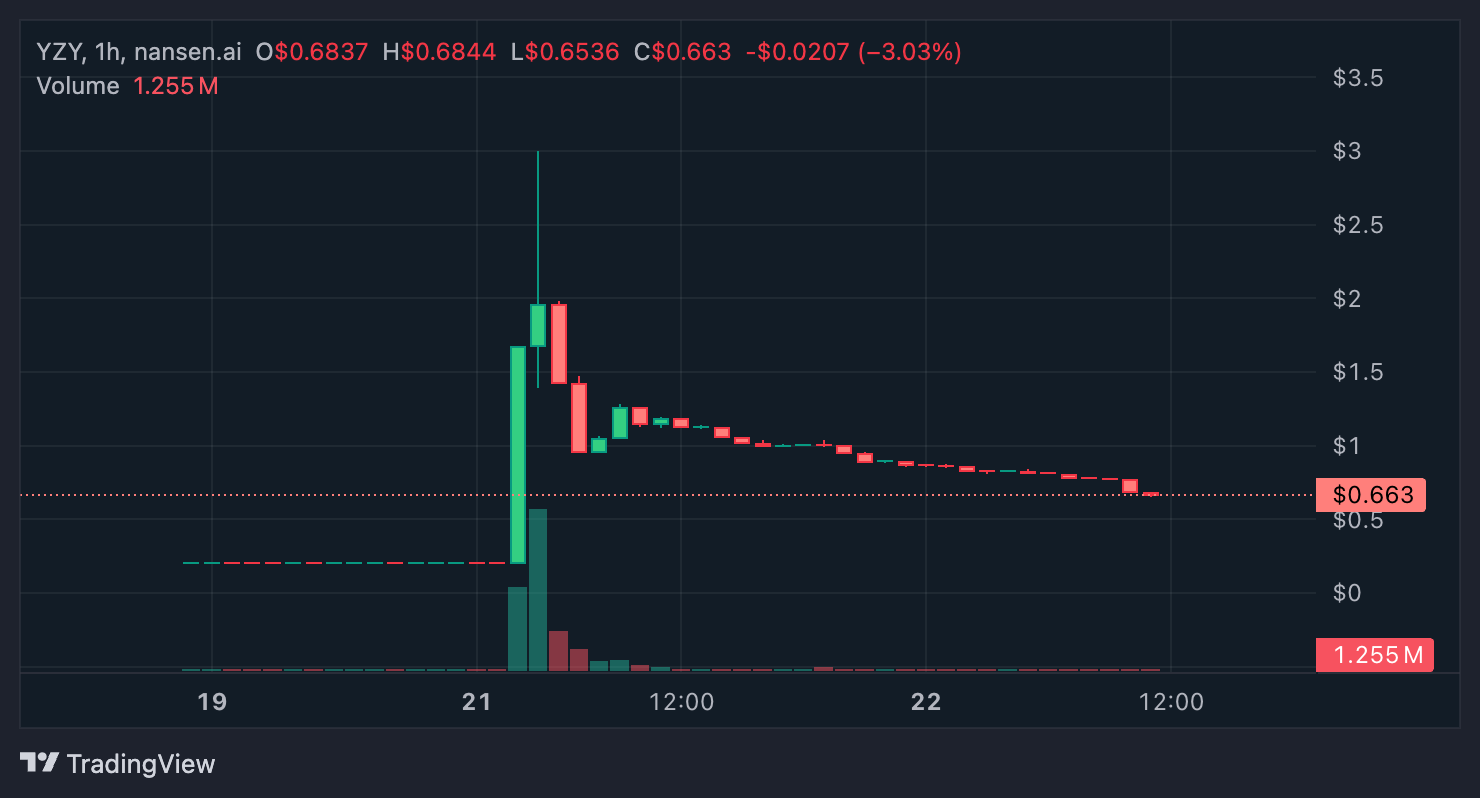
1-часовой график YZY/USD. Источник: Nansen

Элитная группа снайперов выкачала миллионы

По данным Nansen, 13 кошельков заработали более $24,5 млн на торговле YZY, причем каждый из них получил прибыль свыше миллиона долларов. Из первых 99 адресов, купивших токен, только девять до сих пор держат хоть какие-то YZY.

Провайдер криптоданных Bubblemaps выяснил, что первым покупателем был тот же бот-снайпер, который ранее заработал миллионы на мемкоине TRUMP. «Это хуже, чем мы думали», — заявили в компании, обнаружив координацию между снайперами.

«Существует элитная группа снайперов, которые не конкурируют, а координируют действия, зарабатывая миллионы и разрушая графики», — отметили аналитики.

Массовые потери розничных трейдеров

Пока инсайдеры считали прибыль, обычные инвесторы несли огромные убытки. Самый крупный неудачник потерял $1,8 млн, второй — $1,2 млн. Один трейдер все еще держит токены с нереализованными убытками более $800 000.

Свыше 56 000 кошельков взаимодействовали с мемкоином, и более 27 000 до сих пор держат токенов на сумму более $1.

«Опс… семья, в следующий раз не позволяйте мне торговать дерьмом вроде YZY», — прокомментировал соучредитель BitMEX Артур Хейс (Arthur Hayes).

Запуск YZY от Канье Уэста стал очередным примером того, как знаменитости используют свою популярность для обогащения узкого круга инсайдеров за счет миллионов розничных инвесторов. Эти проекты не привлекают людей в мир криптовалют, а вместо этого становятся инструментами перераспределения богатства в пользу тех, кто имеет доступ к закулисной информации.

Пов'язані матеріали

South Korean Stocks Stage Violent Rebound as Multiple Positive Factors Converge

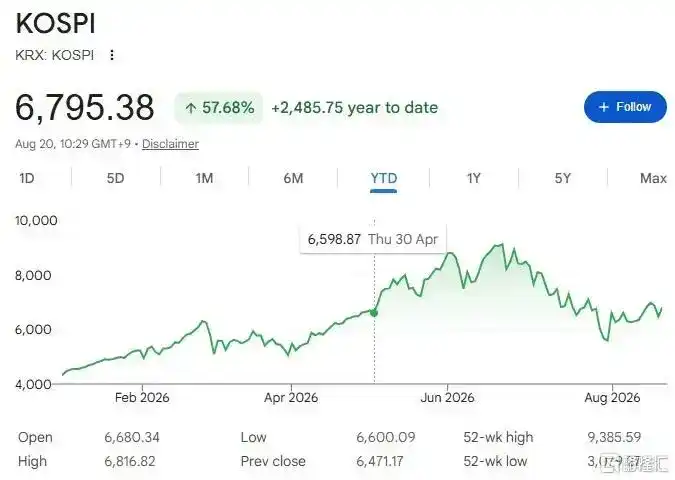
South Korean stocks surged sharply today, with the KOSPI index rising over 5% to 6,848.81 points. Major companies like SK Hynix and Samsung Electronics saw gains exceeding 12% and 8%, respectively. The rally was triggered by multiple positive factors. A key catalyst was the U.S. Treasury's announcement to at least double its buyback size for long-term bonds, signaling intervention to curb high yields. This boosted risk sentiment globally. Concurrently, significant corporate news provided support: SK Hynix unveiled a massive 40 trillion won share buyback plan, while Samsung Electronics is reportedly preparing a record shareholder return policy potentially worth 100 trillion won. The market rebound follows a volatile period for Korean equities, which had soared earlier in the year on AI-driven semiconductor demand before correcting sharply. Analysts note the pullback cleared excess leverage. HSBC upgraded South Korean stocks to "overweight," citing robust domestic demand. Industry leaders like SK Group's Chairman forecast a severe memory chip shortage in 2025, with analysts predicting continued strong demand and price increases for HBM and other memory products. Despite the strong bounce, analysts caution about potential near-term profit-taking and ongoing market volatility, influenced by upcoming earnings, U.S. monetary policy, and external uncertainties.

marsbit13 хв тому

South Korean Stocks Stage Violent Rebound as Multiple Positive Factors Converge

marsbit13 хв тому

UBS Research Report Analysis: Murata's MLCC Factory Opens to the Public for the First Time in 20 Years, 20% Production Increase Potential from Optimization of Existing Assets

On August 18, UBS analysts visited Murata's Fukui Takefu factory, its first public opening in about 20 years. As the global MLCC leader with ~35% market share, this plant serves as the mother factory for advanced MLCCs used in AI servers and premium smartphones. UBS confirmed key findings: deep technical barriers remain, existing equipment holds ~20% latent production capacity, and physical expansion is nearing its limits. Murata's competitive edge lies in a closed-loop system encompassing proprietary ceramic material uniformity control, capacitance-maximizing self-developed technology, and self-built production equipment—a "black box" model difficult to replicate. Its flexible segmented production system efficiently manages over 50,000 product types. With new facility construction constrained and equipment lead times lengthening, optimizing existing lines becomes a crucial, lower-cost path to increase output. Murata's strategy involves shifting generic production to overseas sites like Thailand while focusing Japanese facilities on advanced, high-margin products. UBS projects significant operating margin expansion from 15.4% in FY2026 to 37.6% in FY2029, driven by this product mix upgrade toward high-capacitance, small-size MLCCs for AI and smartphones. Primary risks include U.S. economic slowdown, technology diffusion in Asia, and circuit integration trends. UBS maintains a positive industry outlook, noting potential for guidance upgrades, and sets a 13,200 yen target price based on a 30x FY2029 P/E, implying ~76% upside contingent on successful MLCC product structure advancement.

marsbit23 хв тому

UBS Research Report Analysis: Murata's MLCC Factory Opens to the Public for the First Time in 20 Years, 20% Production Increase Potential from Optimization of Existing Assets

marsbit23 хв тому

Arthur Hayes: Awaiting Fed Signal, Replenishing Ammo to Position for Crypto Bull Market

Arthur Hayes, co-founder of BitMEX, argues that the yen is significantly undervalued and analyzes three potential paths for its appreciation. He dismisses the first two options—the Bank of Japan raising interest rates or Japanese institutions selling foreign assets—as politically or economically unfeasible. Instead, he identifies the preferred method: Japan's Ministry of Finance (MOF) using the Federal Reserve's FIMA (Foreign and International Monetary Authorities) repo facility to borrow dollars against its U.S. Treasury holdings, then selling those dollars to buy yen in the forex market. Hayes explains that U.S. Treasury Secretary "Besant" has already called for removing the FIMA per-counterparty limit to enable this. The execution depends on Fed Chair "Warsh" convening a subcommittee to adjust the FIMA rules. Hayes is confident this will happen, signaling a major shift in USD/JPY dynamics and the end of the "cheap" yen era. He connects this potential massive dollar liquidity injection directly to a surge in asset prices, particularly Bitcoin, physical gold, and gold miners' stocks, drawing parallels to the Fed's balance sheet expansion during COVID-19. Within crypto, besides Bitcoin, he views Ethereum as undervalued and highlights Ethena (ENA) as a high-potential, speculative altcoin that could see 5-10x returns if liquidity increases and boosts Bitcoin basis trade yields. Hayes concludes he is waiting for the Fed's signal to fully deploy capital, anticipating a significant crypto bull market.

marsbit1 год тому

Arthur Hayes: Awaiting Fed Signal, Replenishing Ammo to Position for Crypto Bull Market

marsbit1 год тому

BTC Sees Largest Single-Day Short Liquidation in History: Overnight $1.1 Billion Short Positions Evaporate, But Calling a Bull Return is Premature

Bitcoin experienced its largest single-day short liquidation in history, with approximately $1.191 billion in short positions being forcibly closed within 24 hours as the price surged nearly 7% to approach $70,000. This event, occurring on the evening of August 19, resulted in total liquidations of about $1.345 billion across the network. The massive short squeeze was attributed to a combination of catalysts: a White House meeting between former President Trump and crypto industry executives fueling regulatory optimism, and a more substantial signal from the U.S. Treasury doubling its liquidity support for long-term bond repurchases, hinting at looser macro liquidity for risk assets. Data showed strong institutional buying, with U.S. spot Bitcoin ETFs seeing significant inflows. The liquidation process itself created a feedback loop, accelerating the price rise as forced buy-backs pushed prices higher. This event surpassed the previous record for BTC perpetual short liquidations set during the volatile "5.19" period in 2021. While such extreme short liquidations have historically signaled a potential medium-term bottom formation, analysts caution that the market often undergoes weeks of consolidation and "cooling off" afterward. Current sentiment remains mixed, with the Fear & Greed Index still in "Fear" territory, and the key test for the rally being whether it can sustain momentum to challenge higher resistance levels like $75,000. The article concludes by warning against immediate "bull market is back" assumptions, emphasizing that history provides context but not guaranteed outcomes.

marsbit1 год тому

BTC Sees Largest Single-Day Short Liquidation in History: Overnight $1.1 Billion Short Positions Evaporate, But Calling a Bull Return is Premature

marsbit1 год тому

Торгівля

Спот
活动图片