BIO 持续上涨,长寿 AI 代理能否帮助 DeSci 复苏?

深潮Опубліковано о 2025-08-21Востаннє оновлено о 2025-08-22

BIO 近期逆势上涨,一场由 AI 驱动的长寿研究革命正在链上悄然发生。

撰文:Nicky,Foresight News

Bio Protocol 的代币 BIO 最近表现抢眼。据 Bitget 数据显示,BIO 的价格从 2025 年 8 月 6 日的 0.056 美元起步,一路攀升至 8 月 22 日的 0.2081 美元峰值,期间涨幅超过 270%。
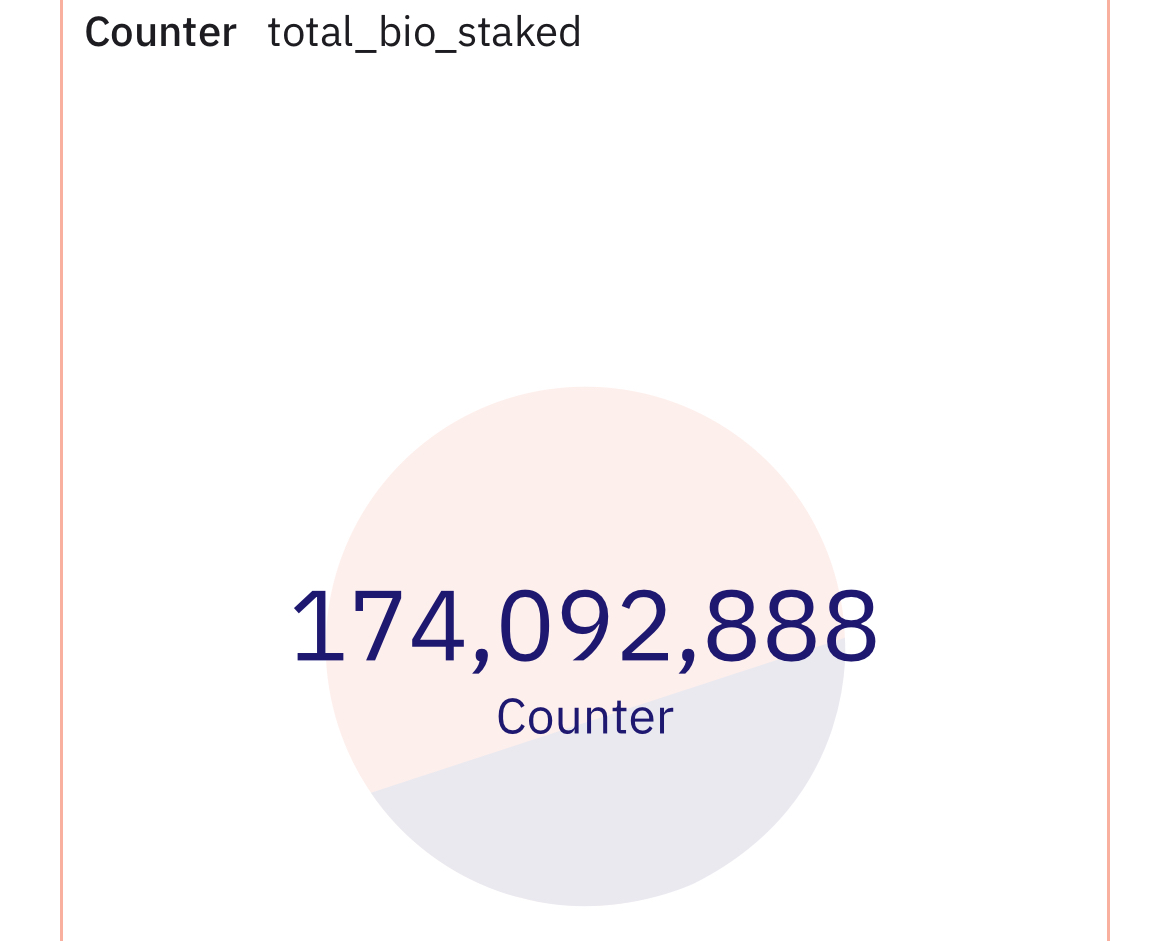
当前,BIO 的质押规模已达约 1.74 亿枚,占流通总量 18.54 亿枚的约 9.3%。同时 BIO 已在多家主流交易所上线,包括 Binance、Coinbase、Bithumb 等。

2024 年末 DeSci 热潮仅持续数月,自 BIO 登陆 Binance 后,其代币表现堪称「灾难」,自上线后达到 0.8 美元的历史高点后一路下滑,直到 2025 年 8 月,该代币价格一直徘徊在 0.05 美元附近,距离历史高点价格已下跌 90% 以上。那到底是什么让 BIO 重新复活呢?

回溯项目起源,2024 年 11 月 8 日,Binance Labs(现 YZi Labs)宣布投资 Bio Protocol。尽管投资细节未公开,但这一举动标志着主流资本对 DeSci 赛道的认可。

作为 DeSci 赛道的代表性项目,Bio Protocol 的核心目标是「改造早期生物科技研究的资助与商业化模式」,构建生物技术 DAO 的网络。

通过区块链技术,让全球科学家、患者和投资者共同参与新药物研发,解决传统科研中「资金集中于大药企、成果封闭化」的痛点。帮助全球参与者资助并共同参与新药开发,尤其针对罕见病、长寿研究和新兴健康等问题。

2025 年 6 月 3 日,DeSci 项目代币 PYTHIA 上涨启动,自 0.0168 美元持续上涨至 8 月 14 日的 0.122 美元,涨幅达 626%

2025 年 7 月 31 日,Coinbase 同时上线 BIO 和 RSC 两个 DeSci 项目代币,标志着 DeSci 重新回归了西方主流数字货币市场的视野。

自此之后,DeSci 项目 VitaDAO 的代币 VITA 自 8 月 1 日的 1.17 美元持续上涨至 8 月 22 日的高点 2.22 美元,总涨幅达 89%。Cerebrum DAO 的代币 NEURON 在 8 月同样表现出色,在本月涨幅超 180%。同时 CryoDAO 代币 CRYO 本月涨幅超 200%,ValleyDAO 代币 GROW 本月涨幅达 76%,HairDAO 代币 HAIR 本月涨幅达 67.5%。由此可见,DeSci 正在复苏。

Aubrai:AI 科学家如何改写长寿研究规则?

进入 2025 年,Bio Protocol 加速迭代。8 月 21 日,Bio Protocol 联合 VitaDAO 推出首个 BioAgent Launch 项目 Aubrai,标志着其「去中心化科研代理」计划的正式落地。这场销售仅持续 24 小时,用户通过质押 BioXP 并投入 BIO 代币参与,代币 AUBRAI 的 TGE 将于 8 月 25 日进行。
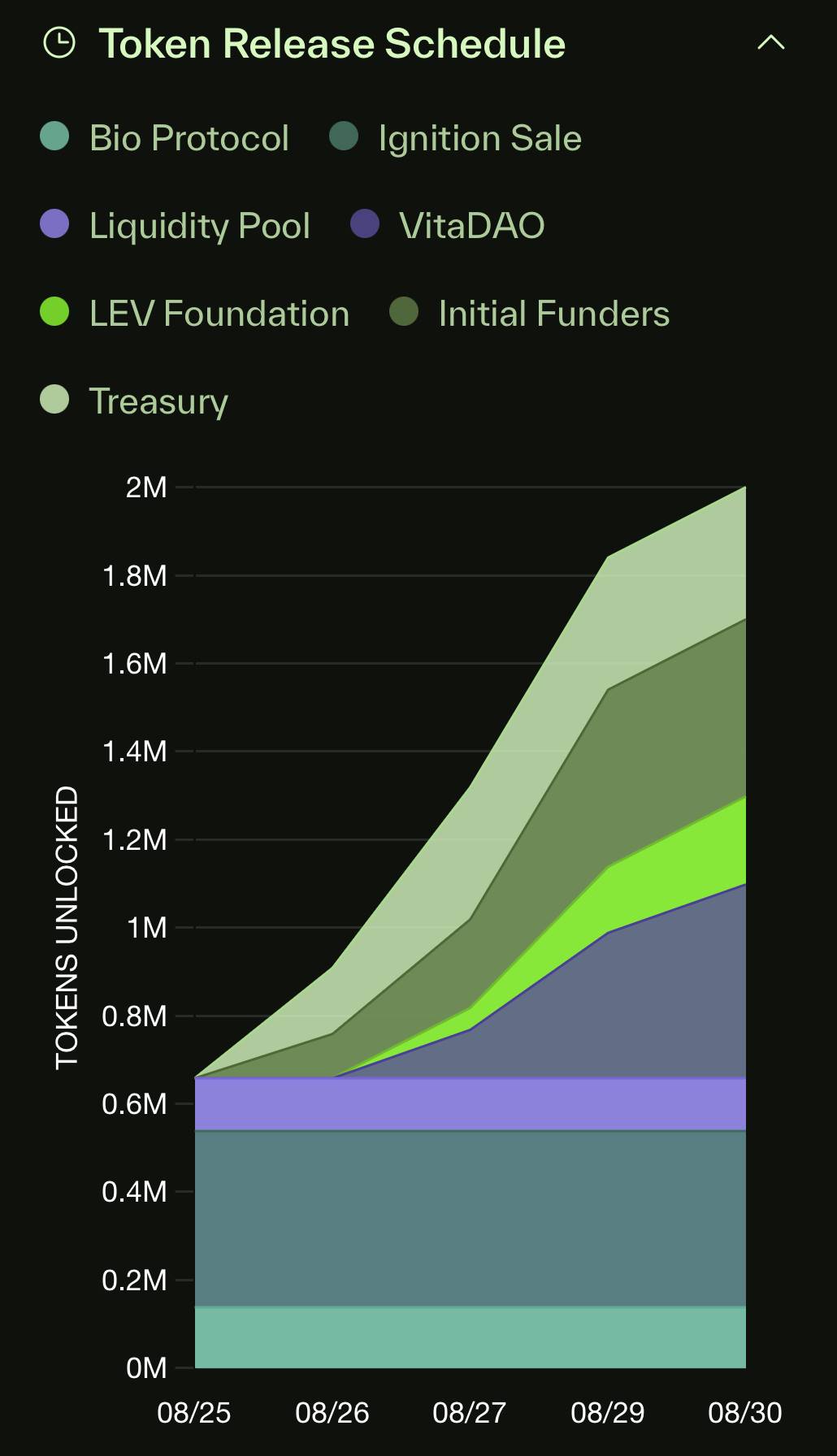
目前 AUBRAI 的代币经济学已经公布,总供应量 200 万枚,代币分配为:20% 用于销售、6% 用于流动性池、15% 归财库所有、20.1% 分配给初始资助方、10% 分配给 LEV 基金会、22% 分配给 VitaDAO、6.9% 分配给 Bio Protocol。

Aubrai 源于长寿研究先驱 Aubrey de Grey 博士的私人实验室数据,他提出「工程性可忽略衰老策略」(SENS),旨在通过修复人体衰老细胞的损伤预防年龄相关疾病。并持有剑桥大学计算机科学学士和生物学博士学位,曾著书如《线粒体自由基衰老理论》(1999)和《结束衰老》(2007)。

de Grey 现任 LEV Foundation 主席兼首席科学官。该基金会聚焦于长寿研究,其旗舰项目「Robust Mouse Rejuvenation」通过大规模小鼠寿命实验,测试晚期干预疗法组合。这些实验与 Ichor Life Sciences 合作,强调损伤修复方法,避免基因修改等早期干预,以加速向人类的临床转化。

另一个 LEV 项目「Transplants on Demand」探索组织工程,资助 Keinice Bio 的低温保存技术,使用超冷氦气实现器官玻璃化保存。这避免了传统冷冻剂的毒性问题,目标是提供「现成」年轻器官替换,应对衰老引发的器官衰竭。

LEV Foundation 还支持 Alliance for Longevity Initiatives,这是一个 501(c)(4)非营利组织,旨在推动美国政府对长寿研究的政策支持。通过与相关专家合作,以提升公众对衰老相关慢性病的认识,争取国家层面资金注入。

通过这些研究,其私人实验室积累了数千份未公开的研究笔记、内部实验数据及全球长寿领域的集体知识。这些曾仅限核心团队使用的「私域科研资产」,如今被 Aubrai 整合为训练数据。

在实际应用中,Aubrai 已改造 de Grey 团队的工作流程。它管理十多项复杂长寿研究,将原本需数周的手动审查压缩至几天。同时识别剂量冲突、时间不匹配和隐藏偏差,甚至发现团队未觉察的新问题。

据官方路线图显示,当前 Aubrai 已获 Bio Protocol 与 VitaDAO 联合资助 RMR2 试点研究,旨在验证候选干预措施并优化给药方式;社区科学家可通过封闭测试版 CHAT UI 体验其作为「共同科学家」的协作能力。同时钱包支持 Coinbase Developer Platform 构建的自托管 EOA 钱包,具备有限交易授权功能。

未来规划中,Aubrai 将于 2025 年四季度推出半自主代理(集成 Base AgentKit,支持全交易执行与金融自主),并开放 FAILURE DB 数据库(记录负面结果与设计缺陷以避免重复错误),最终实现「完全自主研究」 — 从假设生成、实验设计到湿实验执行与论文发表的全流程科学输出。

V2 升级:构建「科研 - 资本」高效循环

Aubrai 的落地,离不开 Bio Protocol V2 版本的支撑。其 V2 版本采用「launch and grow」理念,通过社区驱动的发射台实现可持续增长:

  • 低估值启动:参考 Pump.fun 等平台模式,项目首发估值降至 20.5 万美元 FDV,37.5% 的代币直接售出,每位用户最多可认购销售总代币的 0.5%;

  • 可持续流动性:首发后全部筹集资金(BIO 代币)将自动生成 LP 池,与 12. 5% 的供应代币相结合。对二级市场每笔交易收取 1% 的手续费(70% 归项目国库,30% 归协议),形成「交易活跃 — 科研经费增加 — 成果推进 — 市场热度再起」的正向循环;

  • 积分激励机制:用户通过质押、治理投票、社群传播、参与新发射项目等行为获得 BioXP 积分,积分可用于参与低估值项目的配额认购。

这些机制的落地,让 Bio Protocol 从「科研融资平台」升级为「科研生态操作系统」,不仅解决了资金问题,更通过社区激励与自动化工具,提升科研成果的转化效率。

DeSci 的「长期主义」与未来

BIO 的市场表现与 Aubrai 的落地,让 DeSci 赛道重新进入公众视野。但这个领域的挑战从未消失:科研周期长(即使 Aubrai 加速实验,长寿疗法从实验室到临床仍需数年)、市场耐心短(加密投资者习惯「快涨快跌」)、监管不确定性(涉及人体实验的合规成本高)。

对此,币安创始人赵长鹏曾在接受 Foresight News 专访时直言:「DeSci 和 Meme 币完全是两个极端。DeSci 项目周期长,而数字货币行业投资者注意力普遍较短,Meme 币很火,这类项目反而不被关注。但从长远看,这类项目对人类和社会的贡献很大,我相信未来一定会发展起来,只是不确定具体时间。」


Пов'язані матеріали

Has the Cryptocurrency Market Hit Bottom? Here's What Institutions Think

"Has the crypto market bottomed out? Major institutions are divided on the outlook, according to a recent analysis by Matt Hougan, Chief Investment Officer of Bitwise. Three prominent research firms published in-depth reports on the topic with differing conclusions. Galaxy Digital argues Bitcoin has not yet found its bottom, pointing to only 4 out of 13 historical bottoming indicators being met. Their analysis suggests a potential bottom range of $30,000 to $54,000. NYDIG adopts a more cautious stance, noting that while metrics are close to historical bear market lows, a classic panic-selling capitulation event is missing. They acknowledge the possibility of a bottom but consider it unlikely, citing structural changes from institutional adoption. In contrast, Standard Chartered Bank asserts the bottom is already in at around $59,000. Their revised bullish view, predicting a year-end target of $100,000, hinges on anticipated reductions in ETF selling pressure linked to events like a potential SpaceX IPO. Despite the surface-level disagreement on the exact price floor, the reports share significant common ground crucial for long-term investors. All three institutions agree that a market bottom will likely form within the current year, that current prices are closer to the bottom than to previous cycle highs, and that Bitcoin is poised for another major bull cycle in the future. The core takeaway is that while the precise bottom level remains debated, the long-term value proposition for Bitcoin remains strong and may even be strengthening. Key supportive trends include rising global debt, persistent inflation, declining trust in traditional institutions, accelerating digitization, and improving market infrastructure. Therefore, for investors with a long-term horizon, the focus should shift from pinpointing the exact bottom to recognizing that the cycle's peak is likely still ahead, making current levels an attractive entry point for substantial potential upside."

Foresight News20 хв тому

Has the Cryptocurrency Market Hit Bottom? Here's What Institutions Think

Foresight News20 хв тому

2029 Finale Prediction: When Cryptocurrency Completely "Vanishes", Who Can Remain in This Financial Upheaval?

By 2029, the crypto industry will have transformed into a largely invisible but foundational layer for traditional finance. This timeline outlines the key shifts from now until then. By mid-2026, the most sought-after assets on-chain will not be traditional tokens, but synthetic perpetual contracts for private, high-growth companies (like SpaceX, OpenAI). These become primary price discovery tools, highlighting the market's craving for real-world asset value. Most altcoins enter a sustained bear market as their fundamental lack of asset-backed value is exposed. In late 2026, the "AI + Crypto" narrative largely fades as AI giants prove they don't need crypto infrastructure, except for prediction markets betting on model performance. Simultaneously, a quiet but significant wave of tokenization for institutional assets (money market funds, private credit) begins. The industry splits into a noisy speculative economy and a silent institutional one. Throughout 2027, major public blockchain foundations pivot decisively to serve institutional clients, building compliance toolkits and sales teams. However, key sectors hit growth ceilings: private perpetual contracts are legally restricted from public promotion, stable币 growth is capped by looming political uncertainty, and tokenization projects remain cautious. In 2028, following a U.S. election assumed to maintain a regulatory (not prohibitive) stance, a pivotal change occurs. After a major liquidation crisis exposes the flaws of synthetic contracts lacking a real-asset anchor, new regulations allow the *public solicitation* of private security sales (secondary market shares) to accredited investors. This creates a legitimate, direct on-ramp for retail capital into previously illiquid private equity. By 2029, the resulting bull market is driven by trading in real, innovative company shares (biotech, robotics, AI labs), not speculative tokens. "Crypto" as a distinct asset class recedes; it becomes the mundane, unseen plumbing for this new global private markets infrastructure. Tokens that survive are those capturing real cash flows from this infrastructure. Speculation persists but is marginalized. The core questions posed at the start are answered: token value is tied to legally enforceable claims on real assets, frontier tech adoption happens via private market channels, and crypto's absorption into traditional finance is marked by its becoming boring and invisible. The key validation for this entire thesis is whether, by late 2028, a legal pathway exists for ordinary accredited investors to access private assets directly.

marsbit1 год тому

2029 Finale Prediction: When Cryptocurrency Completely "Vanishes", Who Can Remain in This Financial Upheaval?

marsbit1 год тому

After the U.S. Banned Fable 5, Zhipu's Stock Soared 47%

On June 15, Chinese AI company Zhipu's stock surged up to 47.6% in Hong Kong, closing with a 32.82% gain. This sharp rise followed two key industry events. On June 12, Anthropic was compelled by a U.S. government export control order to suspend global access to its latest flagship models, Claude Fable 5 and Claude Mythos 5, impacting developers and businesses reliant on them. The next day, Zhipu announced it was opening access to its new open-source flagship model, GLM-5.2, for all Coding Plan users, with API and model weights (under the MIT license) to follow. The Anthropic incident highlighted a critical shift in the AI industry: beyond raw capability, the stability, continuous accessibility, and control over AI models are becoming equally vital, especially as AI integrates deeper into business workflows. Zhipu's move, emphasizing that "frontier intelligence should not belong to a few nor be subject to arbitrary revocation," positioned its open, accessible model as an alternative. GLM-5.2 focuses on "Long Horizon Tasks" with a 1M context window, aiming for consistency in complex, extended projects. Market analysts suggest this event exposes the risk of dependency on closed-source models subject to single jurisdiction policies, potentially accelerating a shift toward domestic base models and localized deployments. The investment response indicates a new valuation metric is emerging—prioritizing which companies can provide AI capabilities that are not only advanced but also reliably and sustainably accessible.

marsbit1 год тому

After the U.S. Banned Fable 5, Zhipu's Stock Soared 47%

marsbit1 год тому

Торгівля

Спот
Ф'ючерси

Популярні статті

Як купити BIO

Ласкаво просимо до HTX.com! Ми зробили покупку BIO Protocol (BIO) простою та зручною. Дотримуйтесь нашої покрокової інструкції, щоб розпочати свою криптовалютну подорож.Крок 1: Створіть обліковий запис на HTXВикористовуйте свою електронну пошту або номер телефону, щоб зареєструвати обліковий запис на HTX безплатно. Пройдіть безпроблемну реєстрацію й отримайте доступ до всіх функцій.ЗареєструватисьКрок 2: Перейдіть до розділу Купити крипту і виберіть спосіб оплатиКредитна/дебетова картка: використовуйте вашу картку Visa або Mastercard, щоб миттєво купити BIO Protocol (BIO).Баланс: використовуйте кошти з балансу вашого рахунку HTX для безперешкодної торгівлі.Треті особи: ми додали популярні способи оплати, такі як Google Pay та Apple Pay, щоб підвищити зручність.P2P: Торгуйте безпосередньо з іншими користувачами на HTX.Позабіржова торгівля (OTC): ми пропонуємо індивідуальні послуги та конкурентні обмінні курси для трейдерів.Крок 3: Зберігайте свої BIO Protocol (BIO)Після придбання BIO Protocol (BIO) збережіть його у своєму обліковому записі на HTX. Крім того, ви можете відправити його в інше місце за допомогою блокчейн-переказу або використовувати його для торгівлі іншими криптовалютами.Крок 4: Торгівля BIO Protocol (BIO)Легко торгуйте BIO Protocol (BIO) на спотовому ринку HTX. Просто увійдіть до свого облікового запису, виберіть торгову пару, укладайте угоди та спостерігайте за ними в режимі реального часу. Ми пропонуємо зручний досвід як для початківців, так і для досвідчених трейдерів.

315 переглядів усьогоОпубліковано 2025.01.02Оновлено 2026.06.02

Як купити BIO

Обговорення

Ласкаво просимо до спільноти HTX. Тут ви можете бути в курсі останніх подій розвитку платформи та отримати доступ до професійної ринкової інформації. Нижче представлені думки користувачів щодо ціни BIO (BIO).

活动图片