South Korea Set To Unveil New Stablecoins Framework In October

bitcoinistОпубліковано о 2025-08-19Востаннє оновлено о 2025-08-19

Анотація

South Korea’s financial authority is expected to release the long-awaited regulatory framework next quarter, offering clear guidelines for the issuance...

Trusted Editorial content, reviewed by leading industry experts and seasoned editors. Ad Disclosure

South Korea’s financial authority is expected to release the long-awaited regulatory framework next quarter, offering clear guidelines for the issuance and distribution of won-pegged stablecoins.

Stablecoin Guidelines By October

On Monday, local news media outlets reported that South Korea’s financial regulator, the Financial Services Commission (FSC), is expected to release a bill for a stablecoin pegged to the Korean won (KRW) within two months.

According to MoneyToday, a member of the Democratic Party of Korea (DPK), Park Min-kyu, confirmed that he had “recently received a report from the FSC on the direction of stablecoins,” affirming, “The government’s bill is expected to be submitted to the National Assembly around October.”

The bill is anticipated to be included in the second phase of the Virtual Asset User Protection Act. Notably, the FSC has been working to develop digital assets legislation and shift its regulatory approach for over a year, establishing the Virtual Asset Committee in November to prepare the next phase of its plan and finalize it by the second half of 2025.

The second phase of the Virtual Asset User Protection Act includes regulations on the distribution of digital assets and stablecoins, continuing its efforts to align with global standards. The FSC’s Vice Chairman Kim So-young previously stated that the Korean government was “speeding up efforts” to develop the Korean crypto market while protecting users.

Attention will be focused on the content of the rules, the report affirmed, as the FSC plans to unveil a regulatory framework outlining requirements for issuing won-pegged stablecoins, collateral management, and internal control systems, which have been a concern among both the crypto and banking industries.

The FSC’s Secretary-General warned in January that the regulator needed to address listing standards, how to deal with stablecoins, and how to create rules for the behavior of virtual asset exchanges.

Meanwhile, the banking sector has been studying two legalization scenarios, since it remains unclear whether non-bank entities will be allowed to be stablecoin issuers. Financial institutions have also been considering a business model in which banks establish a joint venture to issue stablecoins.

Stablecoins’ Momentum In South Korea

As the new media outlet noted, institutionalization of won-pegged stablecoins has gained significant attention after President Lee Jae-myung pledged it during his presidential campaign. The electoral promise, which also vowed to address the status of crypto-based exchange-traded funds (ETFs), followed the US’s regulatory shift under the Trump administration and its push for USD-pegged stablecoins, which currently lead the sector.

Previously, the chairman of the South Korea Stock Exchange, Jeong Eun-bo, urged authorities to institutionalize crypto in the country, noting that the Korean market needs to be revitalized to compete with other nations and prevent falling behind international markets.

Over the past two months, multiple bills related to the issuance and distribution of KRW-pegged stablecoins have been introduced in South Korea’s National Assembly. As reported by Bitcoinist, Korea’s ruling and opposition parties proposed rival bills in July to establish the highly anticipated regulatory framework for digital assets pegged to the Korean won.

Member of the Planning and Finance Committee from the Democratic Party, Ahn Do-gil, introduced the “Act on the Issuance and Distribution of Value-Stable Digital Assets,” while member of the Land, Infrastructure, and Transport Committee from the People Power Party (PPP), Kim Eun-hye, proposed the “Act on Payment Innovation Using Value-Fixed Digital Assets.”

Both bills share several similarities, including the assignment of stablecoin oversight to the Financial Services Commission (FSC). However, the two proposed legislation differ in the issue of interest payments, with the PPP’s bill allowing interest payments and the DPK’s bill completely banning interest payments to prevent market disruption.

Min Byung-deok, a member of the National Assembly’s Government Committee, also introduced the “Digital Assets Basic Act” in June, which proposes allowing the issuance of won-pegged stablecoins and establishing a Digital Asset Committee under the direct authority of the president.

Amid the global push for stablecoins, Korean individuals investing in overseas stocks have reportedly shifted from US big tech equities to crypto-linked stocks, with a focus on stablecoin-related companies throughout July, suggesting growing interest in the sector.
stablecoins, bitcoin, btc, btcusdt

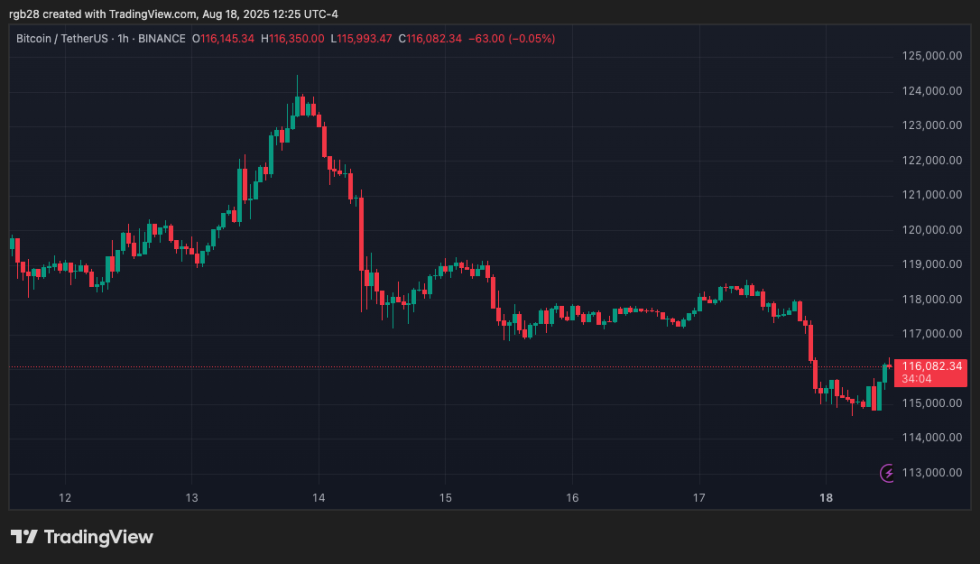
Bitcoin (BTC) trades at $116,082 in the one-week chart. Source: BTCUSDT on TradingView
Featured Image from Unsplash.com, Chart from TradingView.com
Editorial Process for bitcoinist is centered on delivering thoroughly researched, accurate, and unbiased content. We uphold strict sourcing standards, and each page undergoes diligent review by our team of top technology experts and seasoned editors. This process ensures the integrity, relevance, and value of our content for our readers.

Rubmar is a crypto enthusiast who likes learning and improving constantly. She enjoys reporting on the latest news and developments in the crypto industry. Rubmar also enjoys scrapbooking, crafting, simulation games, and watching football.

Пов'язані матеріали

Will History Repeat Itself? Fidelity Lists Five Catalysts to End the Crypto Winter

Fidelity's new report suggests that the current crypto winter for Bitcoin may be nearing its end, identifying five potential catalysts that could drive a market turnaround based on historical patterns. First, Bitcoin's approximately four-year cycle, driven by its halving mechanism, historically marks peaks and troughs. The last bottom was in November 2022, potentially pointing to the next around November 2026, though cycle length can vary. Second, clearer regulation has often preceded past bull markets. The focus is now on the CLARITY Act, which aims to clarify US digital asset oversight between the SEC and CFTC. Its passage could unlock domestic activity currently held back by legal uncertainty. Third, Federal Reserve monetary policy plays a role. A shift to lower interest rates tends to correlate with rising crypto prices by reducing borrowing costs and boosting risk appetite, though markets may price this in well ahead of any official change. Fourth, the emergence of breakthrough applications can fuel investor interest. Current trends like real-world asset tokenization, AI-related crypto infrastructure, and stablecoins are being watched, but history shows the biggest catalysts are often unexpected. Fifth, a new wave of institutional adoption could be a trigger. While ongoing adoption in 2026 hasn't sparked a new bull run, a major unexpected move—like a significant purchase by a tech giant or adoption as a hedge in a global crisis—could create a powerful new narrative. Fidelity concludes that while the market is in a downturn, historical turning points have often resulted from a combination of such factors, and the next phase for Bitcoin may depend on which of these catalysts materializes first.

Foresight News7 хв тому

Will History Repeat Itself? Fidelity Lists Five Catalysts to End the Crypto Winter

Foresight News7 хв тому

US CFTC Launches Broad Investigation into Polymarket, Is the Prediction Market Party Coming to an End?

The U.S. Commodity Futures Trading Commission (CFTC) is conducting a broad investigation into the prediction market platform Polymarket, focusing on its business practices including social media promotions. This follows a bipartisan letter from U.S. senators urging the CFTC to probe alleged fraudulent marketing tactics used to promote gambling-like products. The action coincides with a period of explosive growth for the prediction market sector, driven by events like the World Cup, with platforms like Kalshi and Robinhood reporting record trading volumes and revenue. The investigation signals a potential end to the sector's unregulated expansion and may lead to clearer federal oversight, particularly regarding investor protection and distinguishing prediction markets from traditional sports betting. The CFTC's move has also intensified a jurisdictional conflict with multiple U.S. states (including Kentucky and New York), which have sued platforms like Polymarket and Kalshi, accusing them of operating illegal sports betting and threatening state gambling tax revenues. Furthermore, the CME Group has sued the CFTC, challenging its approval of certain prediction market products. The report also highlights the political and capital interests intertwined with the industry. Donald Trump Jr. holds advisory and investment roles in both Kalshi and Polymarket, and the Trump administration has previously emphasized federal regulatory authority over these markets. The CFTC's investigation into Polymarket is framed as a step towards formalizing the industry's regulatory landscape, moving it from a phase of "wild growth" towards a more structured future.

marsbit2 год тому

US CFTC Launches Broad Investigation into Polymarket, Is the Prediction Market Party Coming to an End?

marsbit2 год тому

U.S. CFTC Launches Extensive Investigation into Polymarket, Is the Prediction Market Frenzy Season Cooling Down?

The U.S. Commodity Futures Trading Commission (CFTC) has launched a broad investigation into the prediction market platform Polymarket, focusing on its business practices including social media activities. This follows a bipartisan letter from U.S. senators urging the CFTC to probe allegations of paid influencer false marketing and fraudulent promotion of gambling-like products to American users. The investigation comes as the prediction market sector experiences explosive growth, largely driven by the World Cup. Weekly trading volumes have hit record highs, exceeding $14.4 billion, with platforms like Kalshi and Robinhood's new venture seeing significant activity. Major firms like Meta are also showing interest in the space. This regulatory scrutiny signals a potential end to the sector's "wild growth" phase. The CFTC's move also highlights an escalating jurisdictional conflict between federal regulators and state authorities. Over a dozen states, including Kentucky and New York, have sued platforms like Polymarket and Kalshi, accusing them of operating illegal sports betting, which threatens state gambling tax revenues. The CFTC is countersuing to assert its exclusive federal jurisdiction over these "event contracts" as derivatives. Furthermore, the CFTC's approval of Kalshi's Bitcoin perpetual futures contract has sparked a lawsuit from traditional exchange CME, alleging regulatory overreach. The political and capital landscape is intricate, with Donald Trump Jr. holding advisory roles and investments in both Kalshi and Polymarket. This connects capital, political influence, and regulatory bodies, suggesting the current investigation may be a step toward formalizing the industry's rules rather than halting its progress.

Odaily星球日报2 год тому

U.S. CFTC Launches Extensive Investigation into Polymarket, Is the Prediction Market Frenzy Season Cooling Down?

Odaily星球日报2 год тому

Торгівля

Спот
活动图片