回顾2021加密大V牛顶言论:谁口出狂言?谁人间清醒?

marsbitОпубліковано о 2025-08-17Востаннє оновлено о 2025-08-18

我回头去看了看 2021 年牛市顶点时,大家最关注的那些加密推特账号发了些什么内容。他们那些观点大多早就站不住脚了,不过也有几条像美酒一样越品越有味道。

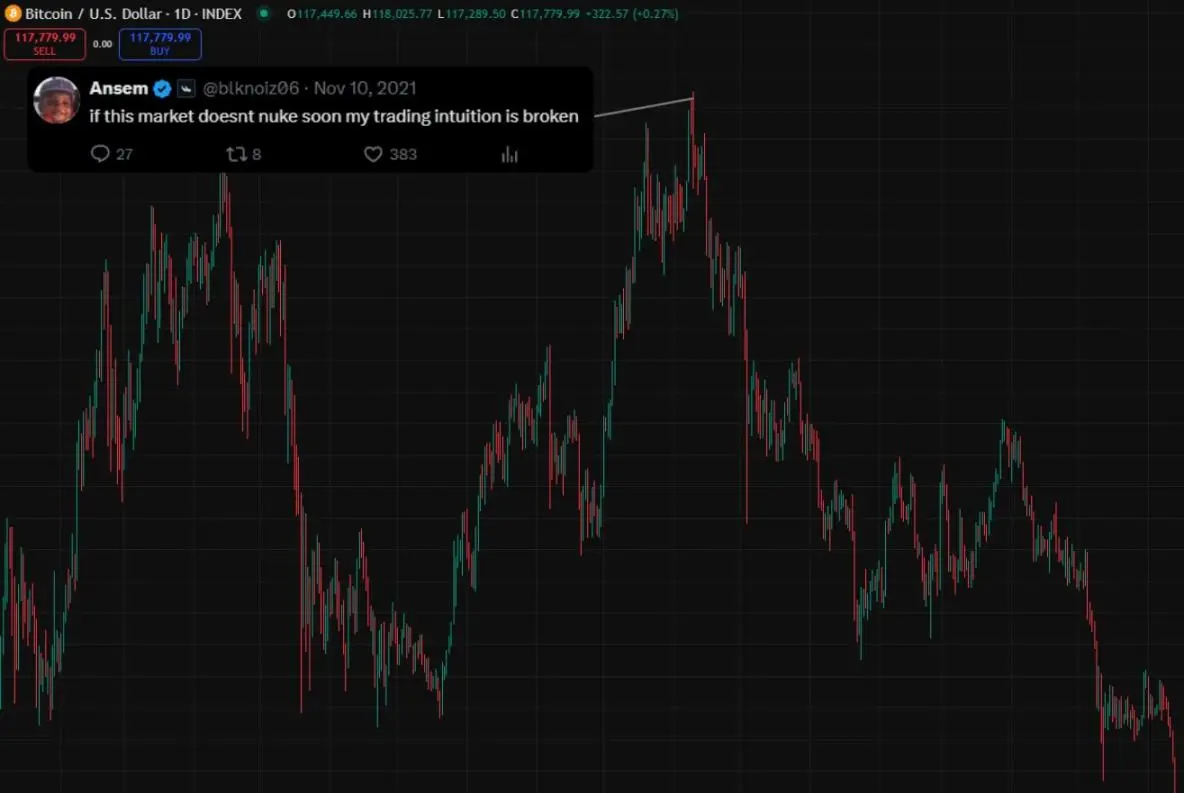
Ansem

原文:if this market doesnt nuke soon my trading intuition is broken.

翻译:要是这市场不赶紧暴跌,那我的交易直觉可就失灵了。

作者点评:时机绝佳,好得吓人。
CZ

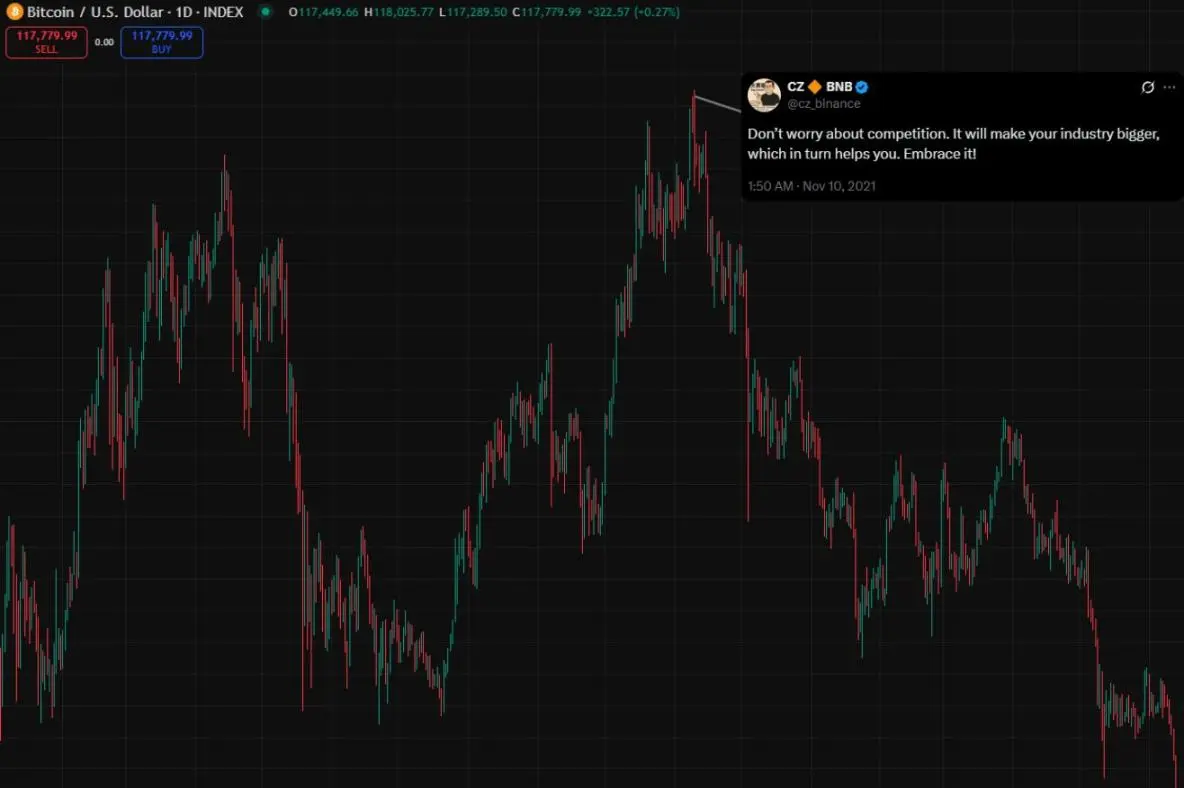
CZ

原文:Don't worry about competition. It will make your industry bigger, which in turn helps you. Embrace it!

翻译:不要担心竞争。它会让你的行业更大,反过来也会帮助你。拥抱它!

作者点评:「不用担心竞争。」兄弟不小心剧透了(FTX 一年后就被淘汰了)。
CZ

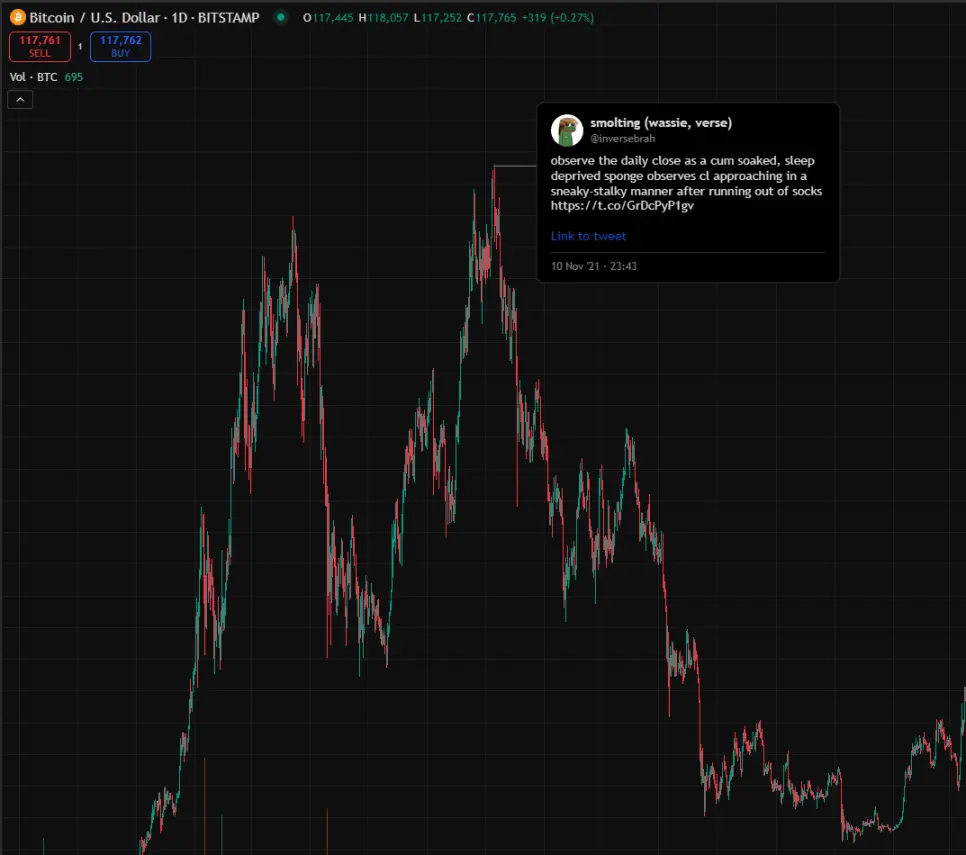
Smolting

原文:observe the daily close as a cum soaked, sleep deprived sponge observes cl approaching in a sneaky - stalky manner after running out of socks.

翻译:把每日收盘看作是一块被精液浸湿、睡眠不足的海绵,在袜子都没了之后,偷偷摸摸、蹑手蹑脚地观察着靠近。

作者点评:说实话,我也不知道该怎么解读这个。
CZ

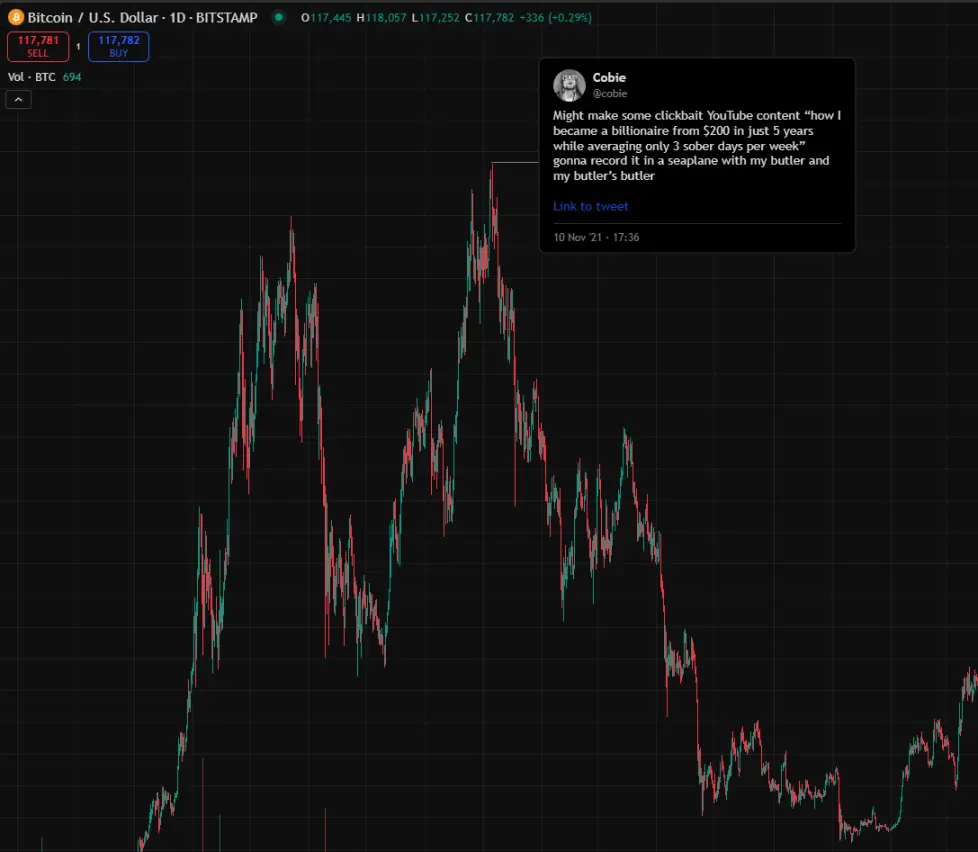
Cobie

原文:Might make some clickbait YouTube content "how I became a billionaire from $200 in just 5 years while average only 3 sober days per week" gonna record it in a seaplane with my butler and my butler's butler.

翻译:或许会做些标题党 YouTube 内容「我每周平均只有 3 天清醒,却如何在短短 5 年内用 200 美元变成亿万富翁」,而且我会和我的管家以及管家的管家一起在水上飞机里拍摄这些内容。

作者点评:「我的管家的管家」,我仍在等待这个消息。
CZ

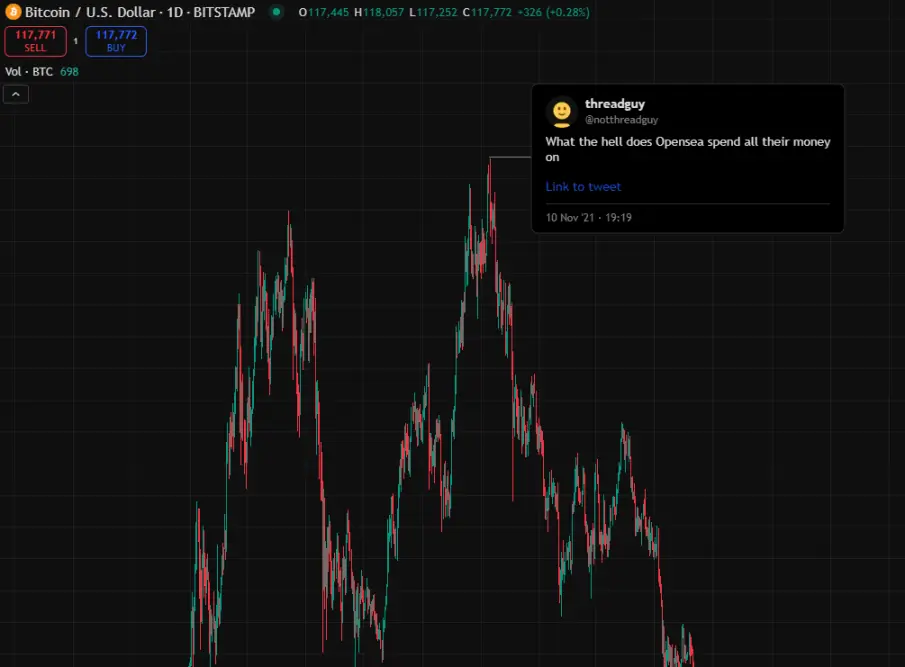
ThreadGuy

原文:What the hell does Opensea spend all their money on?

翻译:OpenSea 到底把他们所有的钱都花在什么地方了?

作者点评:提出了真正的问题。
CZ

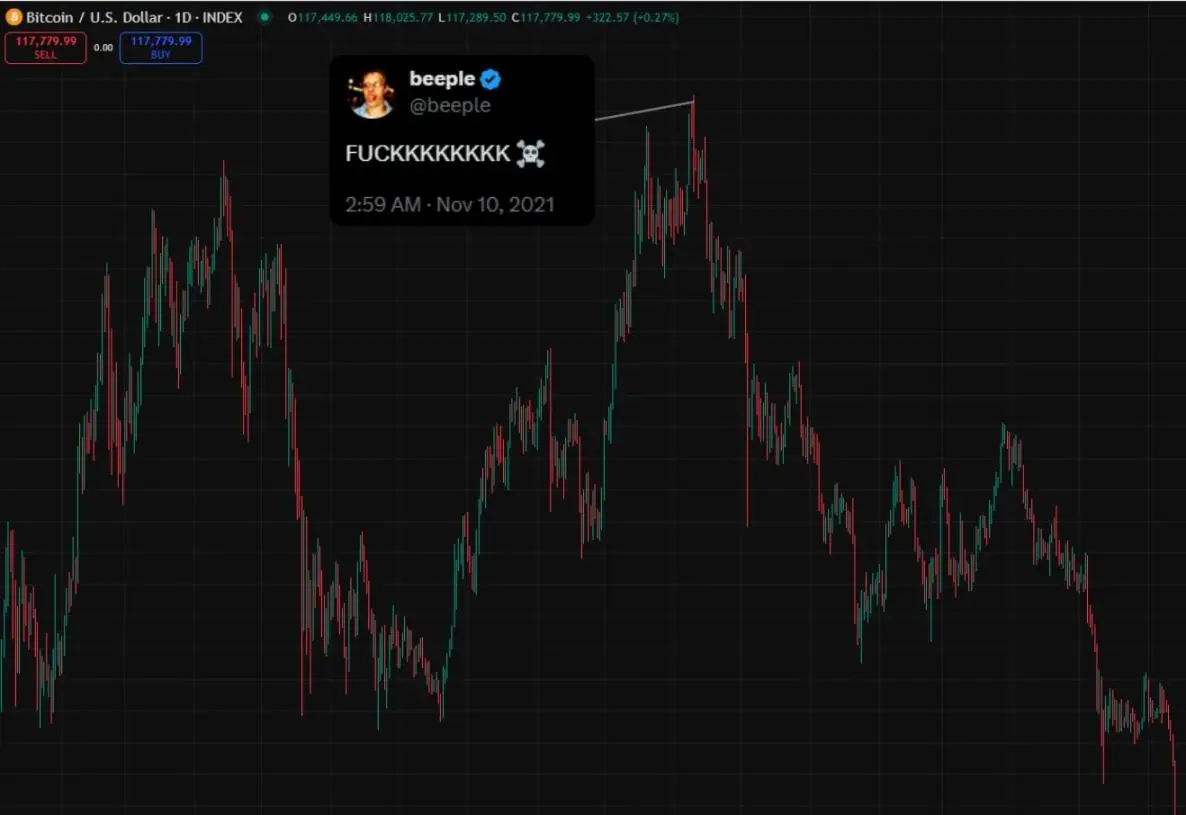
Beeple

原文:FUCKKKKKKKK

作者点评:他知道什么??

CZ

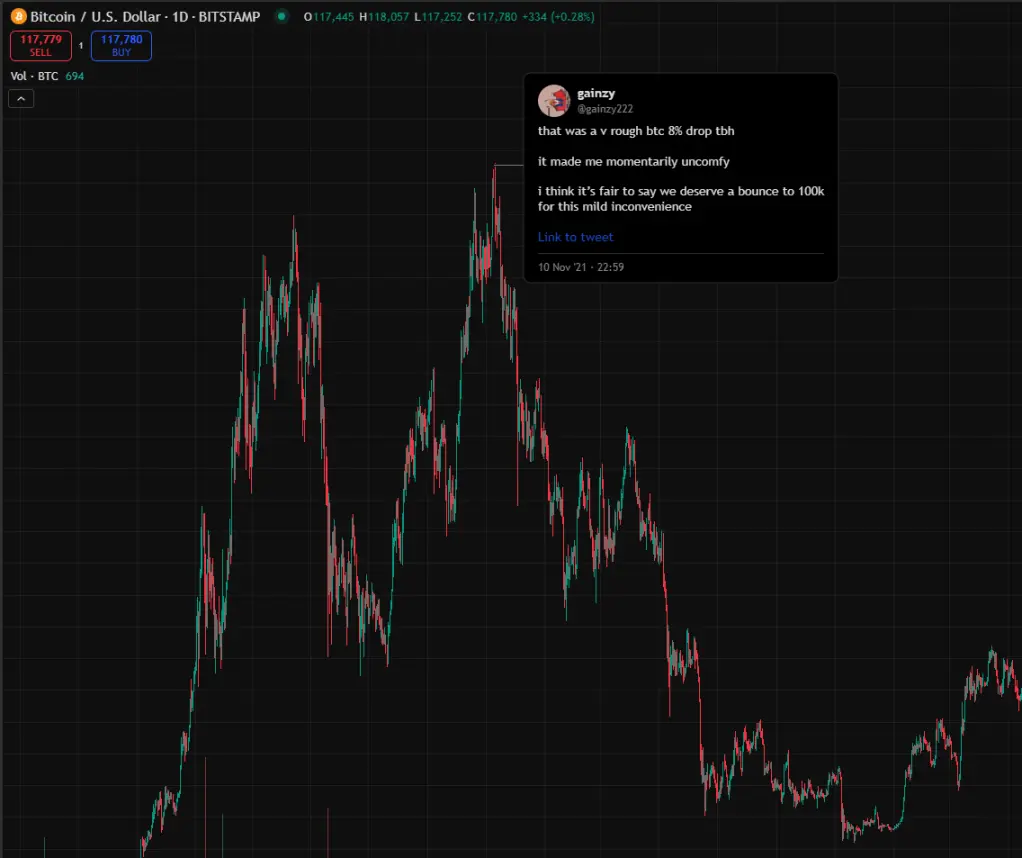
Gainzy

原文:

that was a v rough btc 8% drop tbh

it made me momentarily uncomfy

i think it's fair to say we deserve a bounce to 100k for this mild inconvenience

翻译:

说实话,比特币跌了 8%,这波跌得挺猛的。

这让我一时有点不舒服。

我觉得,就冲这波下跌,咱们也该反弹到 10 万美元,这很合理。

作者点评:之后两年下跌了 70%。
CZ

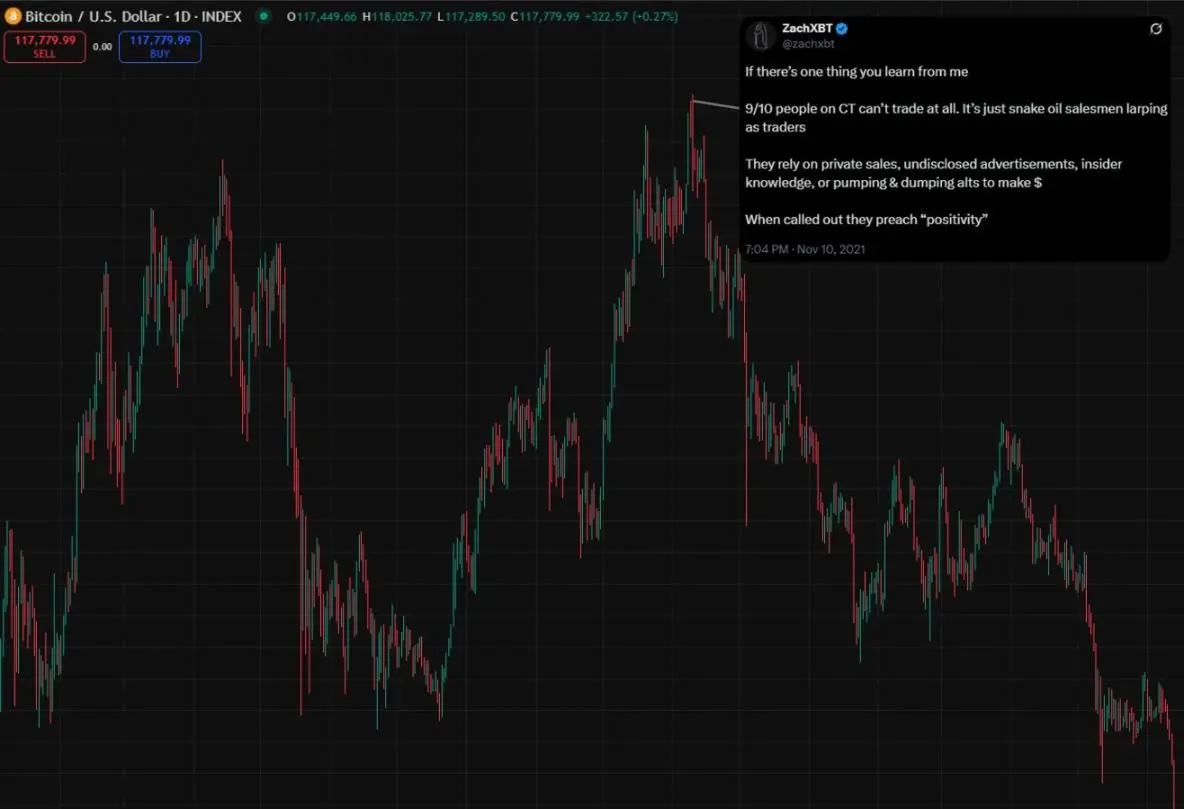
ZachXBT

原文:

If there’s one thing you learn from me

people on CT can’t trade at all. It’s just snake oil salesmen larping as traders

They rely on private sales, undisclosed advertisements, insider knowledge, or pumping & dumping alts to make $

When called out they preach "positivity".

翻译:

如果你们能从我的话里学到一件事,那就是加密推特(CT)上十分之九的人根本不会交易。他们只是些装成交易员的江湖骗子。

他们靠私下销售、未披露的广告、内幕消息,或者拉高出货山寨币来赚钱。

当被指责时,他们就大谈 「积极心态」。

作者点评:中肯的建议,至今仍然适用。
CZ

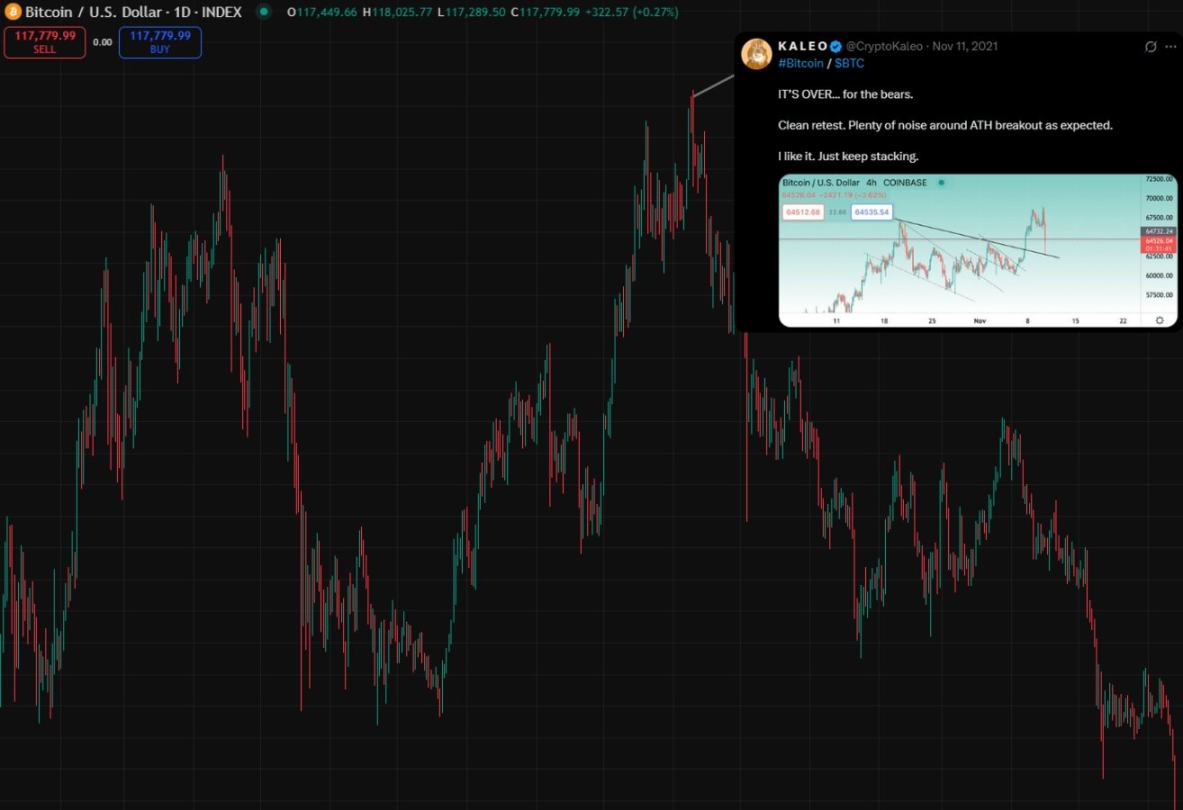
Kaleo

原文:

IT'S OVER... for the bears.

Clean retest. Plenty of noise around ATH breakout as expected.

I like it. Just keep stacking.

翻译:

熊市结束了……

很彻底的回测。正如预期的那样,在历史最高点突破前后有大量的(市场)噪音。

继续囤币就好。

作者点评:实际上是牛市结束了。
CZ

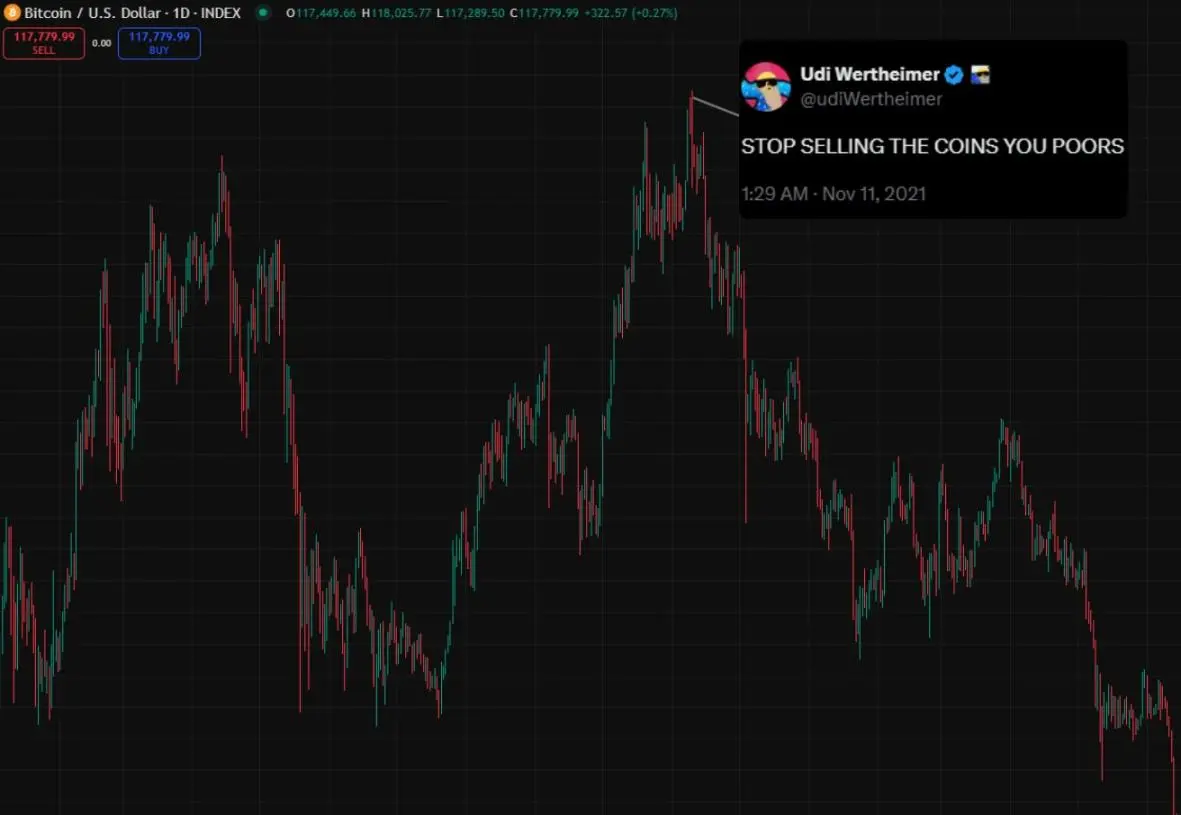
Udi

原文:STOP SELLING THE COINS YOU POORS

翻译:穷鬼们,别再卖币了。

作者点评:(旁白声):事实上,他们并没停止卖币。
CZ

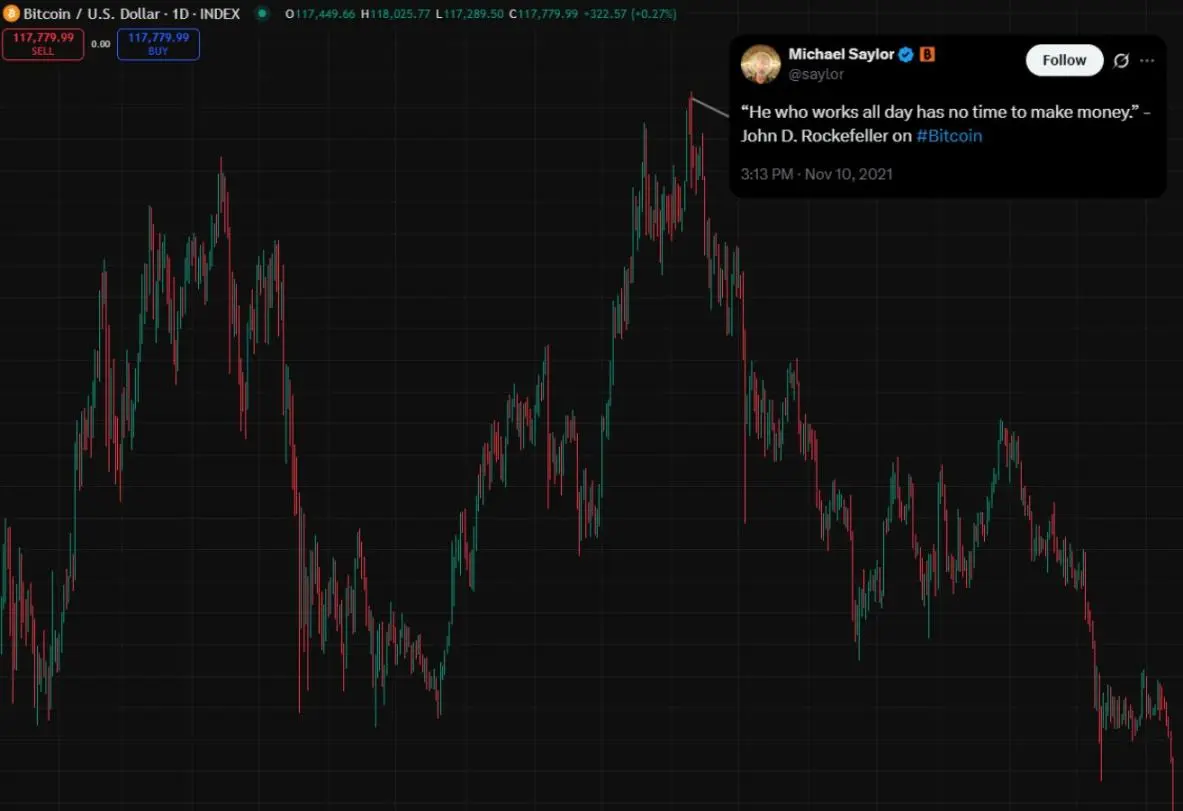
Michael Saylor

原文:"He who works all day has no time to make money." - John D. Rockefeller on #Bitcoin

翻译:「整天工作的人没时间赚钱。」—— 约翰・D・洛克菲勒谈比特币

作者点评:他只是一直不停地发表比特币的多头言论。
CZ

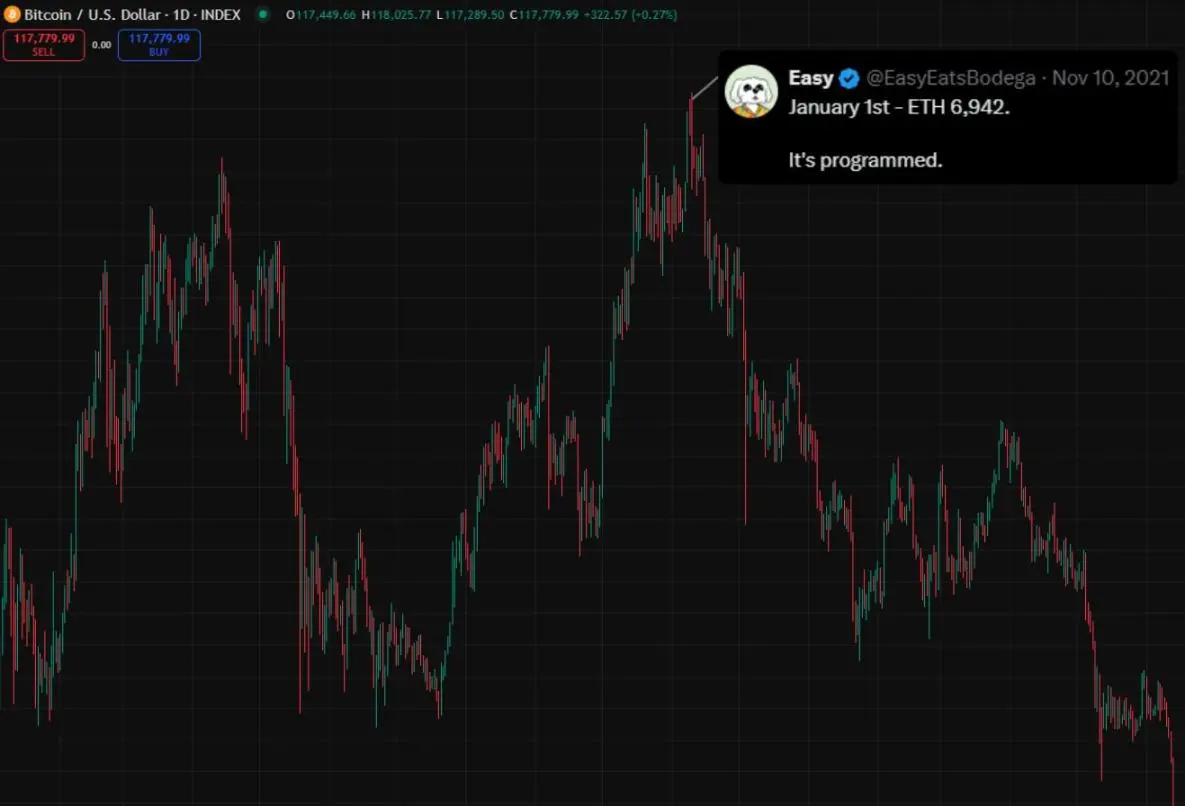
Easy

原文:January 1st - ETH 6,942. It's programmed.

翻译:1 月 1 日 —— 以太坊价格 6942 美元。剧本已经写好。

作者点评:看来这并非既定走势。不过 Easy 没说是哪一年 1 月 1 日(预言说不定还能应验呢?)
CZ

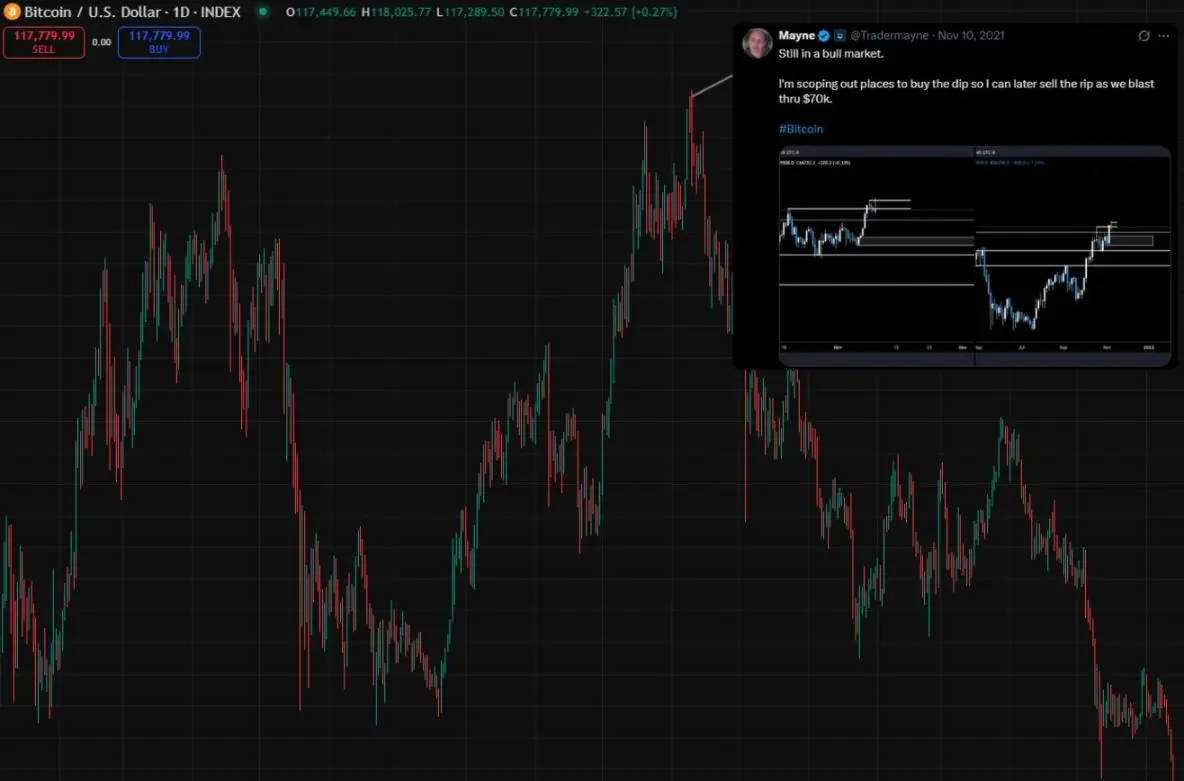
Mayne

原文:Still in a bull market. I'm scoping out places to buy the dip so I can later sell the rip as we blast thru $70k.

翻译:仍然处于牛市。我正在寻找逢低买入的时机,这样之后当比特币价格冲破 7 万美元时,我就能逢高卖出。

作者点评:接刀子了。
CZ

这个帖子是 2021 年的一个提醒:

在历史最高点时的推特信息流看起来很疯狂。要是连最厉害的人都没法在顶部卖出,你也一样做不到。做好相应准备吧。
Пов'язані матеріали

How the CLARITY Act Reshapes the Stablecoin Yield Economy

The CLARITY Act, recently advanced by the U.S. Senate Banking Committee, fundamentally reshapes the stablecoin yield economy by closing loopholes left by the earlier GENIUS Act. Its Section 404 expands the ban on "hold-to-earn" rewards to all Digital Asset Service Providers (DASPs) and their affiliates, prohibiting any passive, interest-like yield. Crucially, it introduces a legal distinction, permitting "use-to-earn" rewards based on actual activities like spending, trading, or staking. In anticipation of this regulatory shift, major Wall Street asset managers—Morgan Stanley, BlackRock, and JPMorgan—have launched a series of tokenized money market funds (e.g., BlackRock's BRSRV, JPMorgan's JLTXX) designed explicitly for stablecoin reserve assets. These products represent a new, compliant yield layer: the stablecoin issuer earns interest from the underlying tokenized fund, which can then be passed to users through redesigned activity-based rewards. This marks a paradigm shift from a "hold-to-earn" to a "use-to-earn" market. While pathways remain for exchanges to redesign rewards (Path A) and for DeFi protocols to offer yield (Path B), the tokenized reserve asset layer (Path C) emerges as the most robust and strategically positioned infrastructure. However, this concentration—exemplified by BlackRock's BUIDL fund backing over 90% of USDtb's reserves—introduces new systemic risks. The final outcome hinges on regulatory decisions, particularly the OCC's proposed 20% cap on tokenized assets in reserves, which will determine the scalability of this new financial infrastructure layer.

marsbit1 год тому

How the CLARITY Act Reshapes the Stablecoin Yield Economy

marsbit1 год тому

Kalshi and Coinbase Receive CFTC Approval, Ushering in the Most Regulation-Friendly Era for the Crypto Industry?

The U.S. Commodity Futures Trading Commission (CFTC) took two landmark actions on May 29. It approved Kalshi's application to list a Bitcoin perpetual futures contract and issued a no-action letter to Coinbase Financial Markets. This allows Coinbase to offer certain perpetual futures products to U.S. customers through a subsidiary, with digital assets permitted as collateral. These moves, coupled with a new CFTC policy statement, provide a clearer regulatory pathway for perpetual contracts in the U.S., moving them from a regulatory gray area. CFTC Chair Mike Selig stated this is a key step for U.S. crypto leadership but noted the policy is not yet permanent. The article explains that CFTC's previous reluctance stemmed from legal ambiguities, as perpetual contracts lack an expiration date. However, such contracts dominate global crypto derivatives, accounting for ~78% of centralized exchange volume in 2025, forcing U.S. regulators to adapt to competition from offshore platforms like Hyperliquid. The approvals offer two compliance paths: Kalshi's direct listing and Coinbase's model using foreign futures. This is expected to attract institutional capital back to regulated U.S. venues, stimulate the launch of more products like ETH perpetuals, and enhance U.S. competitiveness in the global crypto derivatives market. The author suggests this may signal a "regulatorily friendly" era for crypto.

marsbit4 год тому

Kalshi and Coinbase Receive CFTC Approval, Ushering in the Most Regulation-Friendly Era for the Crypto Industry?

marsbit4 год тому

Sharplink CEO: Ethereum's Future Is Playing Out Now

This article presents a perspective from Joseph Chalom, CEO of Sharplink and a former BlackRock executive. He argues that current controversies surrounding the Ethereum Foundation (EF) and ETH's price miss the bigger picture for institutional adoption. Chalom asserts that Ethereum is decisively winning in the three key attributes institutions value most: trust, security, and liquidity. He cites its dominance in stablecoin settlement, tokenized real-world assets (RWA), and high-value DeFi as evidence. This success is attributed to the EF's consistent, long-term protocol development over a decade, including major upgrades like The Merge and a robust future roadmap. He defends Ethereum's decentralization as a core strength, not a weakness, stating institutions require a neutral infrastructure not controlled by any single entity. Comparing ETH to Amazon, Chalom suggests critics focusing on short-term price are missing its potential to become the foundational settlement layer for the entire global financial system. The article encourages a contrarian "be greedy when others are fearful" investment approach, drawing parallels to Warren Buffett's strategy and BlackRock's continued investment during crypto winters. Chalom concludes that while the EF correctly focuses on core protocol attributes (CROPS: Censorship Resistance, Capture Resistance, Open Source, Privacy, Security), a leadership gap exists in market-facing narrative and institutional adoption. He calls for ecosystem participants, including his own firm Sharplink, to become more vocal advocates to support Ethereum's impending "supercycle" of institutional adoption.

链捕手5 год тому

Sharplink CEO: Ethereum's Future Is Playing Out Now

链捕手5 год тому

Deconstructing the Investment Methodology of the 'Stock God Serenity' in One Article

"Serenity's Bottleneck Investment Methodology: A Deep Dive" This article dissects the "bottleneck point investment" strategy of the pseudonymous investor Serenity, known for exceptional returns (YTD 4502.45%). The core methodology involves identifying a major technological trend (e.g., AI compute expansion), mapping its supply chain, and investing early in the most irreplaceable, supply-constrained upstream component before the market fully values it. The framework is broken down into a five-factor model: 1. **Deterministic Demand**: Anchored in a large, validated trend. 2. **Constrained Supply**: The component must be difficult to replicate or scale quickly. 3. **Low Market Attention**: Opportunities exist where coverage is sparse. 4. **Value Capture**: The company must have pricing power, high margins, and customer lock-in. 5. **Catalyst**: A near-term event to trigger price discovery (earnings, customer ramp, etc.). The article provides illustrative examples like $AXTI (InP substrates for photonics), $RPI (edge hardware for AI agents), and $AAOI/$LITE (components for cloud ASICs). To apply this method, a six-step process is outlined: identify the macro trend, map the supply chain, pinpoint the true bottleneck, gather evidence (client wins, certifications), assess risks ("anti-thesis table"), and size the position according to research depth. Crucially, the article notes significant limitations: risk of overfitting inferences from sparse data, valuation challenges for pre-revenue companies, liquidity/reflexivity risks due to Serenity's own market influence, and survivor bias amplified by a strong AI bull market. The key takeaway is to emulate the rigorous research process—finding the trend, the bottleneck, the evidence—rather than blindly copying specific stock picks, emphasizing the discipline of "walking through the narrow gate."

marsbit5 год тому

Deconstructing the Investment Methodology of the 'Stock God Serenity' in One Article

marsbit5 год тому

Торгівля

Спот
Ф'ючерси
活动图片