从钱包到社交帝国:Base App更名背后的875%暴涨密码

marsbitОпубліковано о 2025-08-11Востаннє оновлено о 2025-08-12

Coinbase 于 7 月 16 日正式将其 Coinbase Wallet 更名为 Base App,将钱包升级为一个“一站式”社交和支付平台。

一、市场表现

Coinbase 于 7 月 16 日正式将其 Coinbase Wallet 更名为 Base App,将钱包升级为一个“一站式”社交和支付平台。Base App 集成了 Farcaster 社交信息流和 Zora 协议,支持用户将个人资料和帖子铸成为可交易的代币。用户发布每条内容,即可通过 Zora 铸造内容币,创建个人档案即可生成创作者币,并能实现链上曝光、交易和直接变现等功能 。

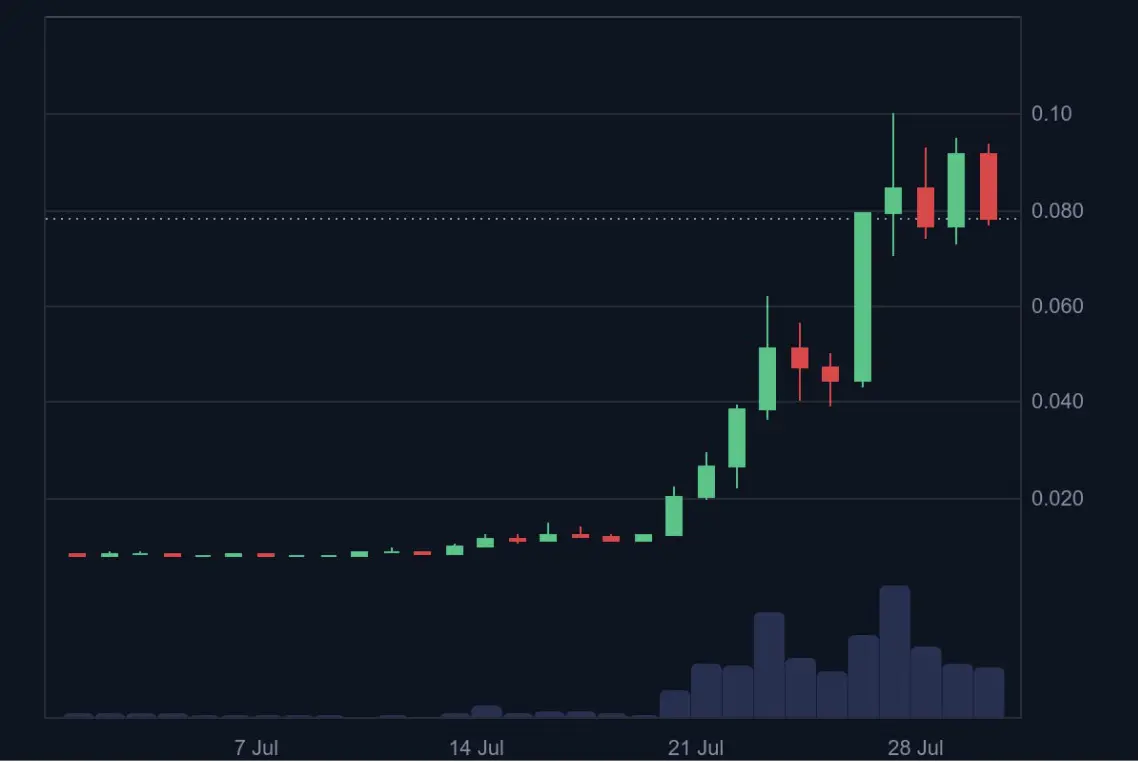
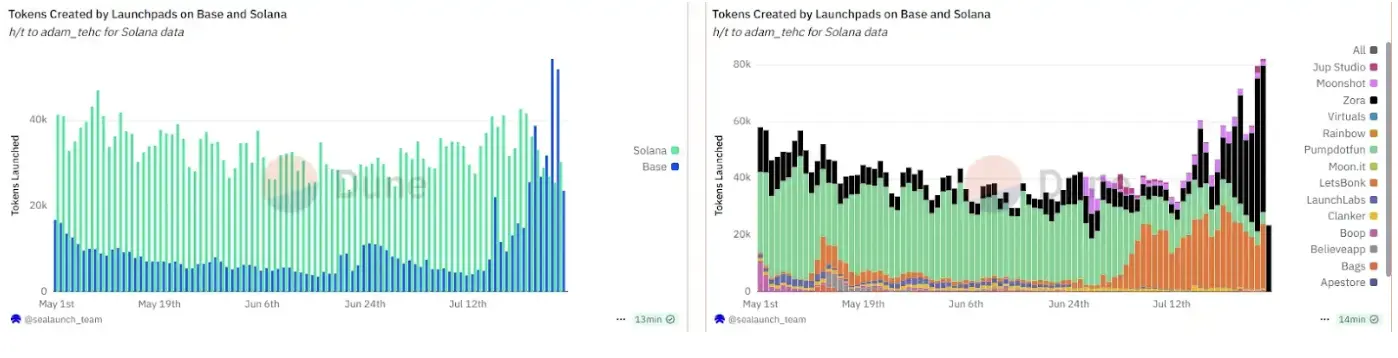
截至 7 月 30 日,ZORA 代币自月初的约 0.008 美元已上涨至 0.078 美元,曾于 7 月 27 日短暂触及历史高点 0.1003 美元,一个月总涨幅约达 875%,市值一度升至 7.81 亿美元,成为本轮行情最受关注的项目之一 。与此同时,自 7 月 26 日起,Base 网络日均代币发行数已连续三日超过 Solana,这在历史上尚属首次;在 Base 与 Solana 各自的发币市场份额中,自 7 月 23 日以来,Zora 平台持续领跑,截至 7 月 28 日当天,共发币 51,575 枚,占 Base 总发币量的 62.69%,超过同行项目 Letsbonk 与 pump.fun 当日发币总量之和。
Zora

Zora

二、项目机制

Zora 是一个去中心化的链上社交与创作者经济平台,允许用户将社交媒体的内容(文字、图片、AI 艺术等)自动铸造成可交易的 ERC‑20 内容币。此外,每位注册用户还会同时自动拥有一个创作者币,代表其个人资料。每一次内容发布、社区互动、交易行为都在链上记录,创作者因此能直接通过市场实现变现,无需依赖传统平台广告或订阅模型。

1.内容币(Content Coin)

  • 来源:每篇用户发布的内容在 Zora 被自动铸造成一个独立的 ERC‑20 token,通常总供应为固定 10 亿枚,作者初始可获得 1% 份额,即 1000 万枚。
  • 用途:代表一篇具体内容的“作品代币”,可被市场交易,更多是表达性和投机集合体。
  • 收益机制:内容币每次交易会产生交易手续费(round‑trip 约为 3%),其中 1% 会奖励给内容作者,以 ZORA 代币发放。

2. 创作者币(Creator Coin)

  • 来源:每个用户注册 Zora 并建立个人档案后,即自动生成他们的 Creator Coin,同样总供应为 10 亿枚。
  • 分配机制:立即可交易的占 50%,剩余 50%(5 亿枚)由创作者所有,按月线性解锁,解锁期为 5 年,但解锁条件下需其代币被交易才实质释放。
  • 收益机制:创作者可通过两条路径赚取收益:
  • 内容币交易所产生的手续费;
  • Creator Coin 本身的交易与解锁收益(交易越活跃,解锁越多,收益越大)。

平台机制采用绑定曲线方式:每个内容币都与对应的创作者币配对,并部署在 Uniswap v4 上进行交易,所有代币均以 ZORA 代币为计价单位。用户必须持有 ZORA 才能铸币或交易这些内容币与创作者币,而内容交易所产生的手续费(约 3%)中,有 1% 会以 ZORA 形式奖励创作者。此外,随着创作者币的交易活跃,更多代币逐步解锁,创作者可获得创作者币增值收益。这样形成一个自我强化的经济闭环:创作者发布内容 → 内容币交易 → ZORA 奖励 → 提高创作者币流动性与价值 → 推高 ZORA 需求,激发生态增长。

三、生态热门项目

1.内容代币(Base is for everyone)

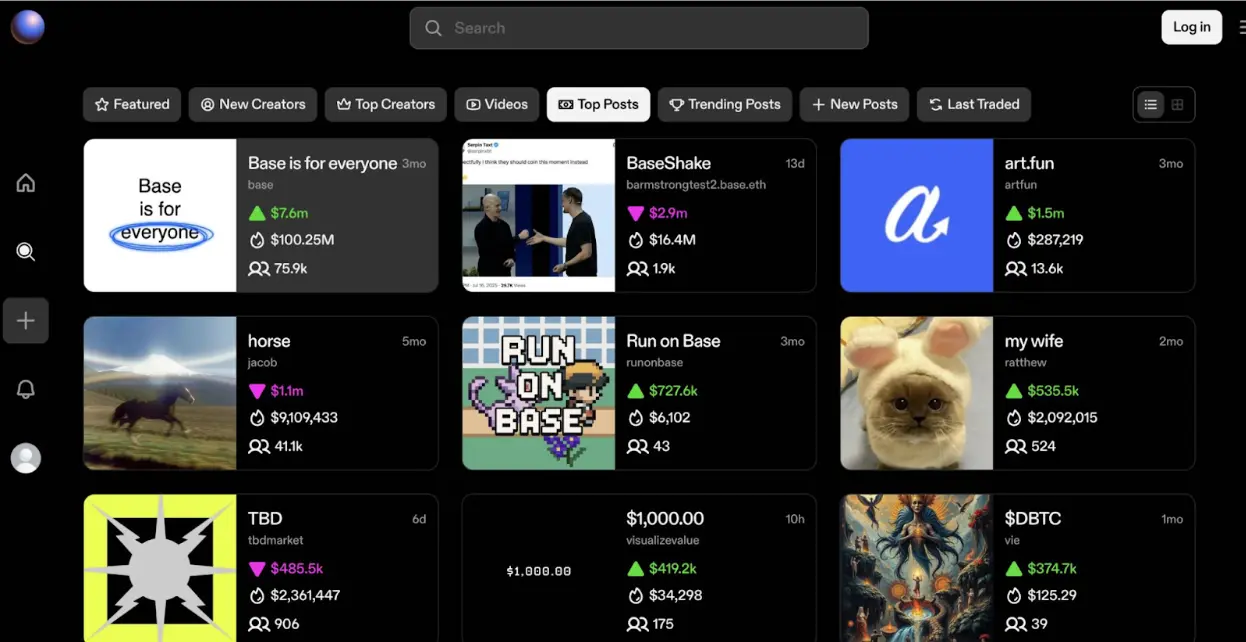
Base is for everyone最初由 Base 官方推特一条推文自动在 Zora 上生成。大量用户误以为 Base 官方发行了正式代币,从而引发抢购和投机行为,短时间内市值一度升至约 1,700 万美元,然后迅速暴跌至 190 万美元(跌幅高达 90%)Coinbase 表示:“Base 并未发行代币,也未销售该代币。这仅是 Base 在 Zora 上发布内容,Zora 平台会将内容自动代币化。” 同时声明这不是 Base、Coinbase 或任何相关产品的官方代币。

目前Base is for everyone市值回升至约 760 万美元。该代币在 Zora 内容类 MEME 中,无论是市值、交易量还是持币人数,均为最高(数倍于其他项目),尽管未获得 Coinbase 官方背书,该代币凭借市场共识与社区热度,仍保持极高关注度。
Zora

四、未来发展

随着 Base App 深度整合 Zora 协议与 Farcaster 社交层,Zora 不再仅是代币化工具,更成为 SocialFi 核心基础设施。未来,Zora 有望推出 链上品牌赞助体系,使品牌方可在内容中投放赞助、持有内容币,甚至激活创作者的影响力。例如,平台已支持内容币持有者在帖子中置顶评论,未来这一功能可扩展为品牌推广接口、活动赞助入口等原生广告形式。结合内容币交易与代币奖励机制,Zora 有机会构建一个真正将品牌资金直接导入创作者经济体系的生态闭环,无需依赖传统广告样式,如横幅或弹窗展示 。

虽然目前品牌方尚未全面介入 Zora 内容经济,但可见的市场潜力正在形成。据 Zora 头部的创作者 Balaji 表示,这类广告机制正在逐渐演进:当前已有最大持币者可以通过置顶评论参与内容曝光,这本质是一种初级广告单元。如能全面系统化将此机制与品牌合作整合,将不仅为创作者带来收益,也能使广告收入以代币形式原生融入系统,而非走传统路径 。

Zora

风险提示:

所提供的信息仅供参考,不应被视为购买、出售或持有任何金融资产的建议。所有信息均真诚提供。然而,我们不对此类信息的准确性、充分性、有效性、可靠性、可用性或完整性作出任何明示或暗示的陈述或保证。

所有加密货币投资(包括收益)本质上都具有高度投机性,并涉及重大损失风险。过去、假设或模拟的表现并不一定代表未来的结果。数字货币的价值可能上涨或下跌,购买、出售、持有或交易数字货币可能存在重大风险。您应该根据个人投资目标、财务状况和风险承受能力,仔细考虑交易或持有数字货币是否适合您。BitMart不提供任何投资、法律或税务建议。

Пов'язані матеріали

Robotic GPT-3 Moment Shakes Silicon Valley: Zero Lines of Code, Learns Instantly, with Investments from Jensen Huang and Fei-Fei Li

Generalist AI's newly released robot foundation model GEN-1.5 is being hailed as the "GPT-3 moment" for embodied AI. The model demonstrates remarkable one-shot and few-shot learning capabilities in physical manipulation tasks. By watching a single 3-12 second demonstration video (physical prompting) without any training or code, the robot can attempt the task with a 59% average success rate across 10 tasks. With just 5 minutes of demonstration data and minimal fine-tuning (10 gradient steps), the success rate jumps to 83%. The most significant breakthrough is the emergence of spontaneous, improvisational problem-solving abilities not present in the training data. For instance, after learning to sweep blocks with a brush, the robot can adapt to use a banana similarly or switch to a completely new "scoop-and-pour" strategy when given a dustpan. Other emergent behaviors include removing obstacles, correcting errors, and spontaneously sorting objects. These capabilities stem from over 8 months of large-scale pre-training on physical interaction data, suggesting the existence of a Scaling Law for embodied intelligence—where model generalization improves with more data and training time. This approach drastically reduces the cost and expertise needed to teach robots new skills, potentially democratizing robot programming. The release coincides with a surge in the humanoid robotics sector, marked by events like the World Robot Conference and significant investments. While the demonstrated tasks are still relatively simple, the scaling trend and emergent behaviors point toward a future where general-purpose robot "brains" could be easily adapted to various hardware "bodies," reshaping the industry's competitive landscape.

marsbitЩойно

Robotic GPT-3 Moment Shakes Silicon Valley: Zero Lines of Code, Learns Instantly, with Investments from Jensen Huang and Fei-Fei Li

marsbitЩойно

Semiconductor Industry Sees a New Wave of Price Hikes, with STMicroelectronics, Maxscend and Others Increasing Prices Intensively

The semiconductor industry is experiencing a new wave of price increases driven by supply-demand dynamics and rising costs. Throughout August, multiple international and domestic semiconductor companies have issued price adjustment notices to clients, with a focus on analog and RF chips. Key companies adjusting prices include STMicroelectronics, which is implementing its third price hike in 2026 effective August 23, citing sustained demand pressure and rising costs across the supply chain. Analog Devices, Inc. (ADI) has also announced a second price increase for 2026, effective September 13, due to "unprecedented" demand growth and escalating manufacturing costs. In China, RF chip leader Zhuosheng Microelectronics issued a price adjustment notice for its full RF product line, effective September 1, its first hike this year, attributing it to rising raw material and foundry costs. Additionally, Chinese MCU manufacturer Nations Technologies announced a 10-20% price increase for some products from October 1. This new round of price hikes has shifted its focus to mature process nodes (e.g., analog, RF, power, MCUs), partly due to AI computing demand consuming 8-inch wafer capacity. This contrasts with the first half of 2026, when the surge was led by AI memory chips like HBM and server DRAM. Analysts note that the long lead time for expanding analog/power semiconductor capacity (18-24 months) may sustain price resilience in the short term. However, downstream manufacturers' cost tolerance and fluctuating global demand could become constraints, potentially limiting further significant price increases. Companies have linked the hikes to ensuring future supply stability by funding capacity expansion.

marsbit4 хв тому

Semiconductor Industry Sees a New Wave of Price Hikes, with STMicroelectronics, Maxscend and Others Increasing Prices Intensively

marsbit4 хв тому

Торгівля

Спот
活动图片