3 Million-Follower Goddess Fully AI-Synthesized, Fake Orphanage, Cross-Border ‘Fake Charity’ Collapses Overnight

marsbitОпубліковано о 2026-07-21Востаннє оновлено о 2026-07-21

Анотація

An Australian influencer named Lily Jay, with nearly 3 million Instagram followers, is at the centre of a major AI-fueled charity scam. Her 'Lily Jay Foundation' claimed to build orphanages, mosques, and deliver aid in places like Uganda and Gaza, using emotionally powerful videos of herself with children. However, an investigation by ABC NEWS Verify revealed these scenes—including a key video announcing an orphanage's opening—were entirely AI-generated, complete with telltale flaws like garbled text on clothing. The foundation's 'humanitarian award' was also faked using AI images. The foundation admitted in small print on its website that it is not a registered charity, avoiding financial transparency laws. While based in Kosovo, its operations and the influencer's lavish personal lifestyle raised further red flags. Following media inquiries, the foundation selectively hid donation buttons and removed fraudulent content for Australian visitors, but kept them active internationally. Experts warn this case is a textbook example of how AI can be weaponized to exploit public trust and generosity, creating believable but entirely fabricated narratives of aid. The incident highlights the growing danger of deepfakes in eroding trust within the charitable sector, urging donors to critically verify causes before giving.

【Introduction】Absolutely horrifying! An Australian influencer with 3 million followers actually used AI to fabricate an entire orphanage out of thin air. Fake trophies, fake refugees, fake charity—a textbook-level AI charity scam is wildly harvesting public goodwill.

An Instagram account with nearly 3 million followers.

In the footage, a blonde woman in a headscarf beams with joy, surrounded by a group of African children, each holding a lollipop.

She cheers at the camera, "Praise be to Allah, the orphanage is open"!
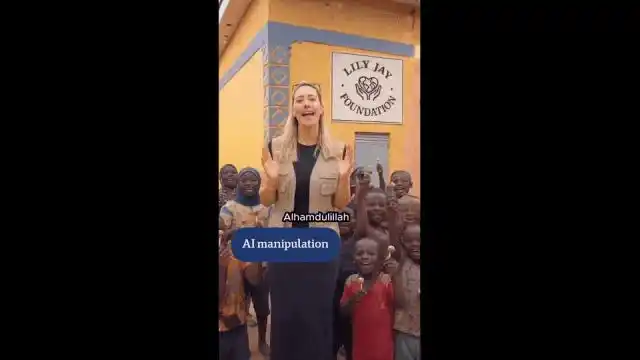
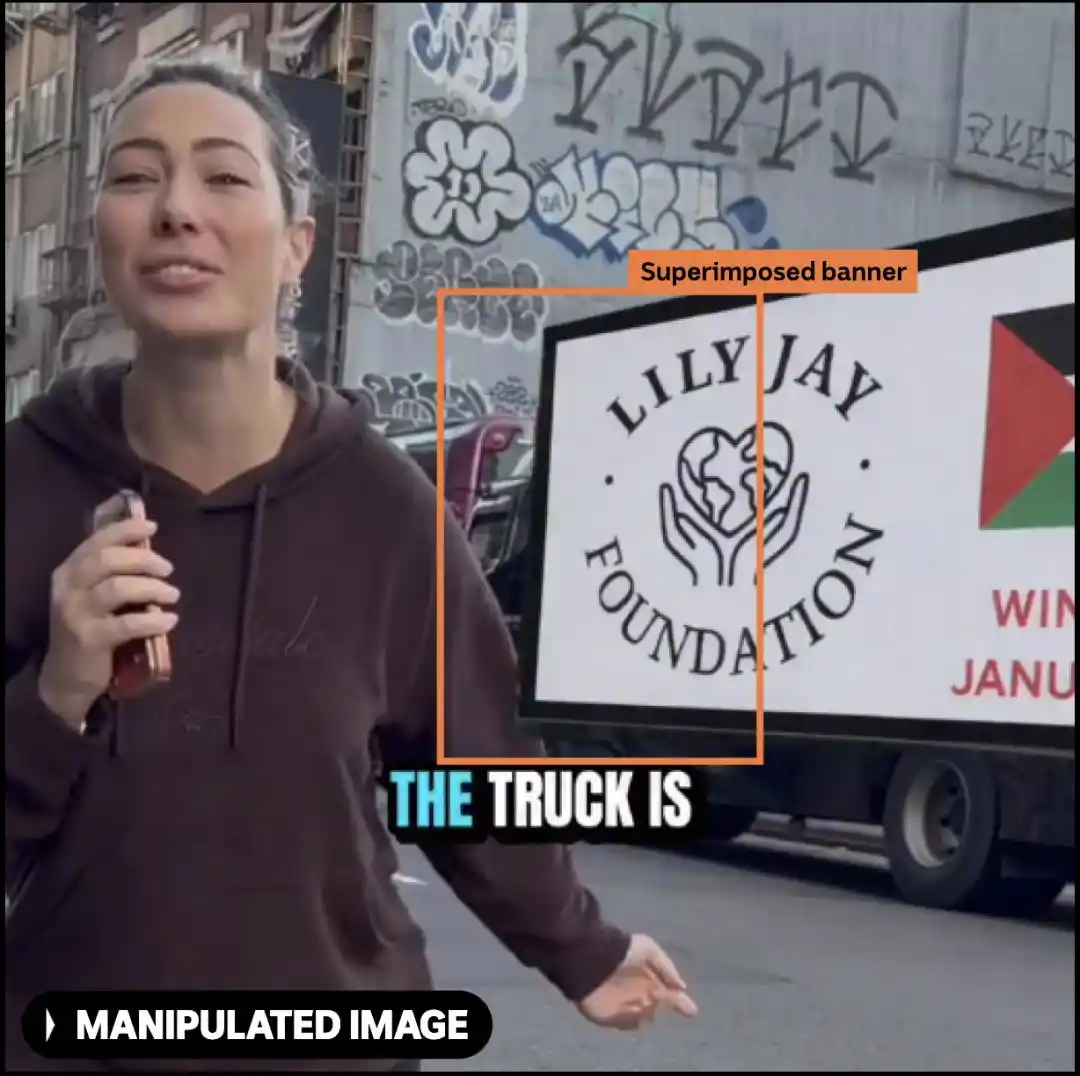
She has built mosques, delivered bread to Gaza refugees, built new homes for orphans in Uganda—the "Lily Jay Foundation" logo on the banner behind her is particularly eye-catching.

Millions of Muslims regarded her as an idol, offering real money to support her "worldwide charity".

And then?

The woman announcing the orphanage opening was not the real Lily Jay. Those children holding lollipops were fake. The foundation banner behind her was also fake.

Every single frame was AI-generated.

Recently, ABC's verification program ABC NEWS Verify peeled back the layers of this "Charity Goddess" to reveal a complete AI forgery production line.
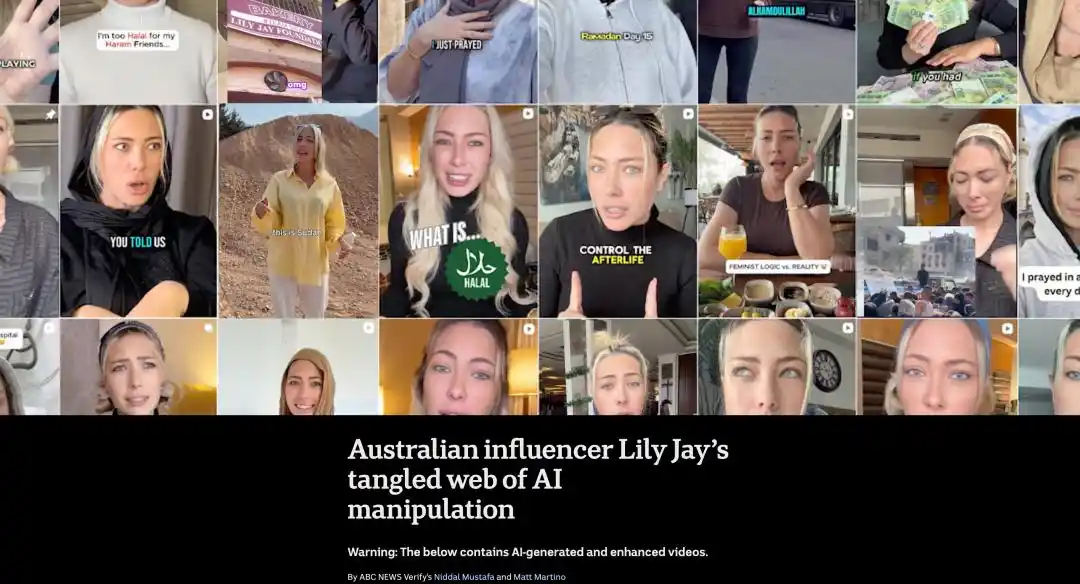
Charity Goddess, Amassing 3 Million Followers

Lily Jay, an Australian influencer.

On social media, she prominently documented her conversion to Islam.

Her blonde hair often tucked under a headscarf, paired with enthusiastic videos about faith, garnered her nearly 3 million loyal followers among Muslims worldwide.

Subsequently, she established the "Lily Jay Foundation", which also received overwhelming support.

The foundation claimed that since last September, it had been doing good in four locations: Nepal, Gaza, Uganda, and Sudan: building mosques, distributing food, and providing education.

At the end of each video, she solicited public donations.

Thus, a perfect persona—loving faith, loving charity, and personally on the front lines—was established.

Charity Scenes, Full of Flaws

But a lie cannot be hidden forever.

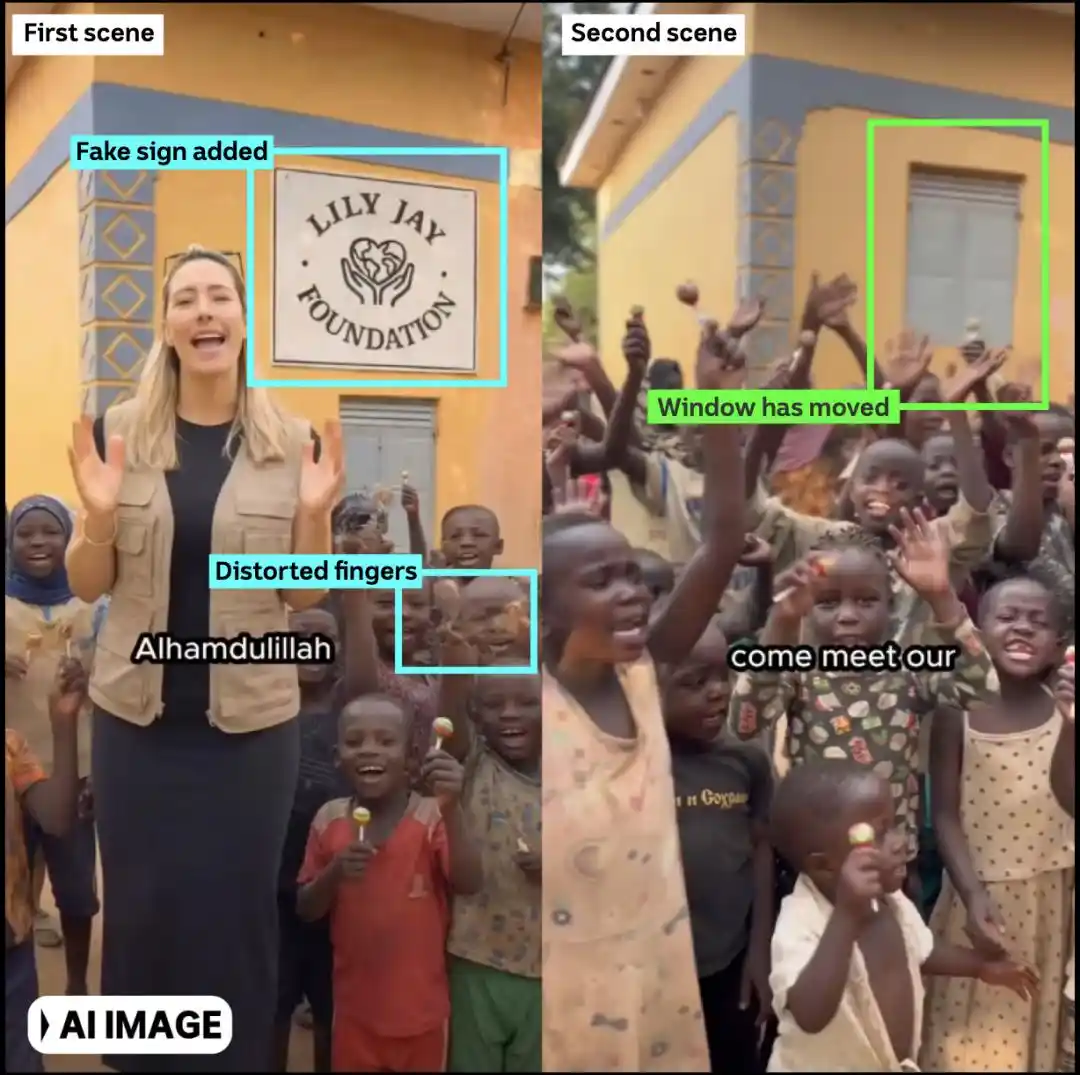
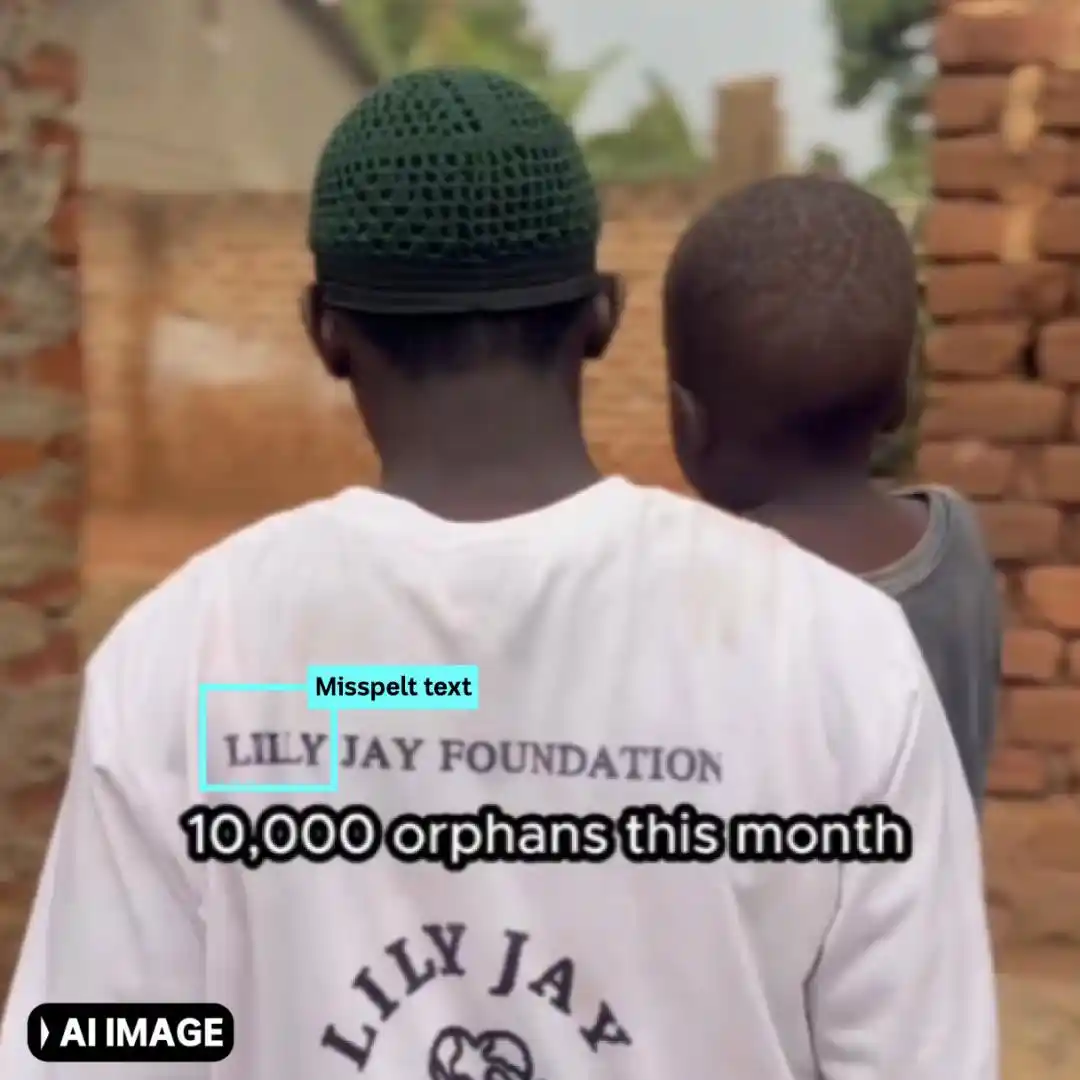
In that Uganda orphanage video, the cheering woman, the children with lollipops, and the banner behind them were all fabricated by AI from nothing.

What's more damning, a letter L inexplicably appeared on the back of a t-shirt worn by a "foundation staff member". This is the most typical spelling error of AI-generated images.

Following the leads, more and more flaws emerged.
In Uganda, opening an orphanage without registration is illegal.

The local registration agency initially explicitly told ABC: No such orphanage exists, whether under the foundation's name or the orphanage name "Ada Nur" listed on the official website.

Days after ABC sent inquiries, a registration for "Lilly Foundation Limited" suddenly appeared, but its status was—"non-compliant".
Then there was that glossy trophy.

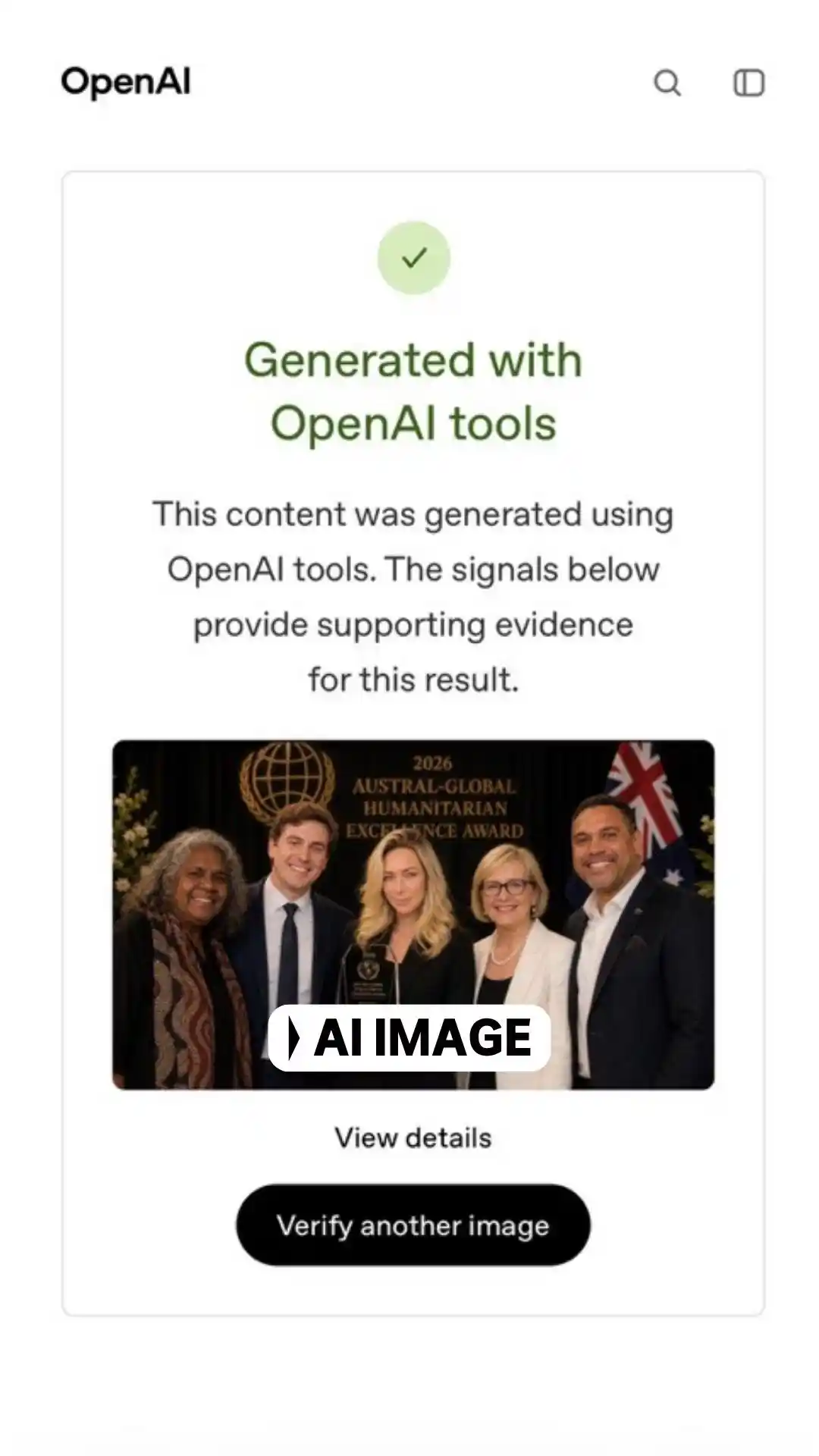
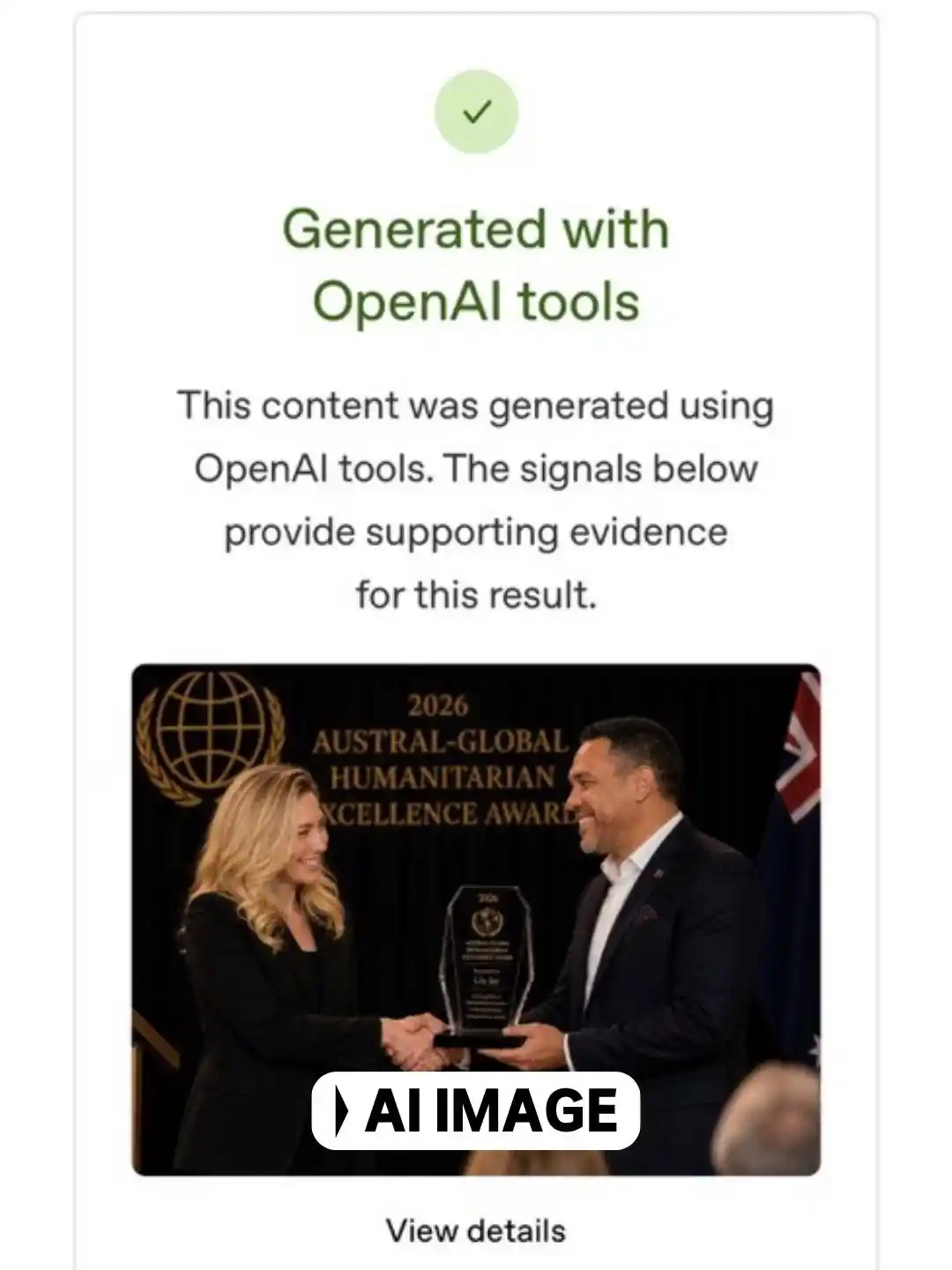
In May this year, a press release announced Lily Jay had won the "2026 Austral-Global Humanitarian Excellence Award", accompanied by two photos of her receiving the award.

Analysis found both images carried ChatGPT's SynthID invisible watermark—entirely AI-generated.
The PR company Real Media Group, which issued this press release, referred to her as a "client" on one hand, while listing her as a "co-founder" on their team page.

As for that "bakery" supposedly operating in Gaza, dedicated to delivering humanitarian supplies, ABC could neither locate it nor find any corroborating evidence.

Humanitarian agencies that have worked in Gaza for years had never heard of it.

A Carefully Crafted Scam

If you think this was just a few staged videos, you're being naive.

Hidden in the most inconspicuous corner of the foundation's website is a confession: it is not a charity organization at all.

And the real Lily Jay—born Lily Jay Hinson, 31, from Australia.

She worked in music and dance earlier before transitioning into an Islamic influencer. Her personal social accounts flaunt a life of luxury: business class flights, luxury cars, and expensive jewelry.

More suspiciously, her personal account operates from Cyprus, while the foundation account is registered in Kosovo.

Scouring company records, she isn't even a director of the foundation.

Three other individuals are the directors, one of whom has ties to that PR company Real Media Group. When ABC called, he acknowledged being a director, then hung up. The company's website soon went offline.

Most telling were the operations after ABC's inquiry: Australian visitors were redirected to a local page where the donation button and the disclaimer "This entity is not a charity" both vanished.

However, accessing from overseas, the donation channel remained open. The orphanage video and fake award pages were quietly erased.

Tim Costello, former CEO of World Vision Australia, put it bluntly: Photos of children in orphanages are most effective at prying open donors' hearts.

Why is an unregistered charity identity dangerous? Because by law, legitimate charities must disclose every income and expense, reassuring the public to entrust their kindness to them.

These very rules are what scammers most want to bypass.

This is the most terrifying part. Today, AI is only used to fabricate an orphanage and defraud a donation.

But when deepfake techniques spread to the softest areas like charity and trust—real footage, fake inserts, real backgrounds packaged in the same video—even platforms struggle to discern truth from falsehood.

Your Kindness, Being Priced by AI

The most dangerous aspect of the Lily Jay Foundation is how willing millions of people were to believe it was real.

AI didn't deceive anyone.

AI merely created an illusion that perfectly fit people's "desire to believe in kindness"—a devout believer, a group of children awaiting rescue, a cross-border relief effort.

All of it "feels too good", so rational judgment collectively shuts down.

Costello said something heavy: People donate voluntarily to express love. So, you should never betray it, never.

The next "Lily Jay" might already be on the way.

She might not go by that name, not wear a headscarf, not talk about faith.

But she will surely appear precisely where you most want to believe in kindness, using the story you most want to hear, in exchange for your most precious thing—your trust.

In an era where AI can mass-produce "reality", the only defense is to ask one more question: Is this real?

Reference: https://www.abc.net.au/news/2026-07-05/lily-jay-foundation-posts-ai-generated-misleading-videos/106866422

This article is from the WeChat public account "New Zhiyuan", author: ASI Apocalypse; Editor: Taozi


Пов'язані питання

QWho is Lily Jay, and what is the main scandal involving her foundation?

ALily Jay is a 31-year-old Australian influencer, originally named Lily Jay Hinson, who converted to Islam and gained nearly 3 million followers on Instagram. The scandal involves her 'Lily Jay Foundation,' which allegedly used AI-generated content—including images of an orphanage in Uganda, non-existent humanitarian projects, and a fake award—to mislead followers and solicit donations for charitable causes that did not exist.

QWhat evidence did ABC News Verify uncover that exposed the AI-generated content in the Lily Jay Foundation's posts?

AABC News Verify uncovered multiple pieces of evidence: AI-generated images of a woman (not Lily Jay) and children at a fake Ugandan orphanage, complete with a misspelled letter 'L' on a T-shirt—a classic AI error. The award photos for the '2026 Austral-Global Humanitarian Excellence Award' contained ChatGPT's SynthID watermark, confirming they were AI-generated. The foundation's claimed bakery in Gaza could not be verified by local humanitarian organizations.

QHow did the Lily Jay Foundation manipulate its website and social media content after ABC's investigation?

AAfter ABC's investigation, the foundation manipulated its website by geo-targeting content: Australian visitors were redirected to a local page where the donation button and disclaimer stating 'it is not a charity' were removed. Meanwhile, international visitors could still access the donation portal. The foundation also deleted the orphanage video and the fake award announcement from its pages.

QWhat are the legal and ethical implications of using AI to create fake charitable content, as highlighted by the article?

AThe article highlights that using AI to fabricate charitable content is both illegal and unethical. Operating an unregistered orphanage in Uganda is illegal. Ethically, it exploits public trust and generosity, as donations are given out of compassion. Tim Costello, former CEO of World Vision Australia, emphasized that charitable donations are an act of love and should never be betrayed. The case shows how AI can erode trust in sensitive areas like humanitarian work.

QWhat warning does the article give about the future of AI and online trust in the context of charity scams?

AThe article warns that future scams may use increasingly sophisticated AI deepfakes to create compelling, emotionally resonant narratives that exploit people's desire to believe in goodwill. Scammers might target different themes or identities but will always aim to bypass scrutiny by appealing to emotions. The only defense is increased public vigilance: critically questioning the authenticity of online content, especially when it solicits donations or trust based on emotional appeals.

Пов'язані матеріали

In Conversation with Ray Dalio: We Are Currently in an AI Bubble, with 1% of My Portfolio in Bitcoin

Ray Dalio, founder of Bridgewater Associates, warns in an interview that the current AI boom shows classic bubble characteristics, which could lead to significant economic downturns as seen in past cycles like 1929 or 2000. He explains that speculative enthusiasm, fueled by debt and overvaluation, often precedes a crash when rising rates or taxation force asset sales, causing widespread losses and recession. Dalio also outlines his "Big Cycle" theory, describing an approximate 80-year pattern where widening wealth gaps, massive government deficits, and shifting geopolitical power (like China's rise) create internal conflict and global instability. He emphasizes that we are in a late-cycle, transitional phase where traditional powers like the US and UK face decline. For personal wealth protection, Dalio advises diversification beyond cash into assets like stocks, bonds, real estate, and particularly gold, which he prefers over Bitcoin. While he holds about 1% of his portfolio in Bitcoin as a non-printable hard asset, he views gold as more secure from technological or governmental threats. Regarding AI's impact, Dalio believes it will disproportionately benefit capital owners, worsening inequality by replacing both physical and cognitive labor. He suggests that human intuition and emotional intelligence, combined with AI, will be key for future workers. On taxation, Dalio argues that wealth taxes are impractical and risk triggering asset sell-offs, reducing productive investment. He points to the UK as a cautionary example of debt, low productivity, and political strife. Geopolitically, Dalio foresees a more regionalized world, with the US showing weakness in prolonged conflicts like with Iran, akin to past imperial declines. The ideal outcome, he suggests, is coexisting powerful blocs (e.g., Americas, China-Asia Pacific) without major war.

marsbit3 год тому

In Conversation with Ray Dalio: We Are Currently in an AI Bubble, with 1% of My Portfolio in Bitcoin

marsbit3 год тому

Daily 7.2 Trillion KRW: Foreign Capital's Record Net Buying on Friday! Wall Street Says Headwinds for Korean Stock Fund Flows Have Subsided

South Korean stock market sees a dramatic shift in fund flows. On July 31, foreign investors made a record net purchase of approximately KRW 7.2 trillion in KOSPI stocks, marking a fundamental reversal from the persistent large-scale net outflows seen in previous months. This contributed to a significant narrowing of foreign net selling in July to KRW 9.8 trillion, down sharply from KRW 48.4 trillion in June and KRW 44.5 trillion in May. Simultaneously, domestic institutional pressure eased. South Korean pension funds and asset managers turned to a net buying position in July, purchasing KRW 1.0 trillion worth of KOSPI shares, contrasting with net sales in May and June. Market volatility is expected to be dampened by new financial regulations. Effective July 31, the Financial Services Commission tightened access for retail investors to single-stock leveraged ETFs by raising the minimum cash deposit requirement. Trading volumes for these products subsequently dropped to about 50% of their monthly average. Citigroup Research maintains its year-end KOSPI target of 10,000 points. The firm cites several supportive factors: the substantial easing of headwinds from capital outflows, a robust fundamental outlook for the semiconductor sector, historically low market valuations, strong economic fundamentals, and the potential for policy support from financial authorities if needed.

marsbit3 год тому

Daily 7.2 Trillion KRW: Foreign Capital's Record Net Buying on Friday! Wall Street Says Headwinds for Korean Stock Fund Flows Have Subsided

marsbit3 год тому

Thanks to Dice Rolls, Bitcoin Keys Are Stored Offline, But Not Everyone Will Do It

The article discusses using dice rolls to generate secure Bitcoin wallet seeds, providing entropy independent of potentially flawed hardware random number generators. It explains that each fair dice roll offers about 2.585 bits of entropy, with around 50 rolls needed for a standard 12-word seed phrase and 99+ recommended for higher security. This method gained attention after a vulnerability was revealed in some Coldcard hardware wallets, where a faulty firmware RNG (dating back to 2021) compromised generated keys. The analysis notes that while a dice-generated main seed was safe from this specific flaw, other Coldcard functions (like creating paper wallets, backup keys, or passwords) could still be vulnerable if they used the defective RNG. The piece argues that while dice-based entropy is technically robust, the manual process is error-prone, tedious, and unrealistic for most new users, who might make mistakes in recording or inputting rolls. It concludes that while manual entropy generation should remain an option for advanced users, the long-term goal is to develop reliable, user-friendly hardware and software that securely generates randomness without requiring specialized knowledge. Coldcard users are advised to check their firmware version and replace any secondary secrets (like paper wallet keys) created with vulnerable devices, while also considering multi-signature setups with devices from different manufacturers for added security.

cryptonews.ru8 год тому

Thanks to Dice Rolls, Bitcoin Keys Are Stored Offline, But Not Everyone Will Do It

cryptonews.ru8 год тому

Торгівля

Спот
活动图片