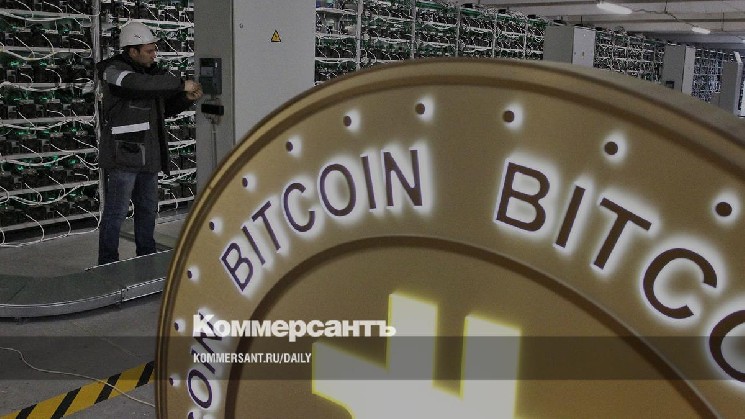
Биткоин достиг максимума. Рост закончен? Что будет с биткоином осенью 2025-го?

cryptonews.ruОпубліковано о 2025-05-10Востаннє оновлено о 2025-08-11

Станет ли осень 2025 года новой отправной точкой для крипторынка? Биткоин штурмует исторические максимумы, институционалы возвращаются, а стабильные монеты приобретают слишком большое влияние. Что это значит для нас, обычных инвесторов? Давайте разбираться.

  1. Биткоин: продолжение банкета или пора фиксировать?
  2. Что говорят эксперты
  3. USDT: больше, чем кажется
  4. Что все это значит для инвестора
  5. Прогноз: три сценария на осень 2025-го
  6. Вывод

Биткоин: продолжение банкета или пора фиксировать?

На момент написания этой статьи биткоин торгуется в районе $115-118 тысяч. За плечами весеннее ралли, спровоцированное притоком денег из ETF, мягкой политикой ФРС и ростом интереса со стороны крупных компаний. Но что дальше? Аналитики сходятся во мнении: вторая половина 2025 года — это не конец, а, возможно, только середина бычьего цикла.

Что говорят эксперты

Coinbase прогнозирует благоприятную макроэкономическую среду. Инфляция под контролем, процентные ставки снижаются, а это увеличивает риск.

Phemex и Scott Melker прогнозируют $200-250тыс. за BTC до конца года. Довольно, смело, но и аргументы звучат убедительно: институциональные кошельки толстеют, волатильность снижается, принятие растет.

Investopedia отмечает: корпоративный сегмент перешел от «если» к «когда». То есть вопрос заключается не в том, будут ли компании держать биткоин, а в том, сколько и когда.

Однако не все так радужно. Есть и более сдержанные оценки. По техническим индикаторам возможен откат: рынок слишком перегрет. Консервативные модели закладывают осенний диапазон $110-130 тыс., а часть аналитиков не исключают коррекцию до $100-105 тыс.

Главные факторы риска — неожиданности от регуляторов и геополитика. Один скандал с крупным стейблкоином или запрет в США — и рынки начнут нервничать.

Павел Солодков, эксперт по майнингу, автор YouTube-каналов Cryptans и MiningHub, отметил: «С биткоином все будет хорошо. Я все также жду пик бычьего цикла в ноябре-январе в диапазоне $200-250 тыс. Почему именно эти уровни? Я уже объяснял в своих подкастах. Что будет с курсом доллара (USDT), точно сказать нельзя, так как очень многое зависит от политики и международных отношений».

USDT: больше, чем кажется

Пока биткоин находится на первых полосах СМИ, Tether (USDT) ведет тихую, но масштабную игру. В 2025 году портфель компании включает в себя более $98 миллиардов в краткосрочных казначейских облигациях США. По сути, Tether стал одним из крупнейших частных держателей госдолга США, наряду с Китаем и Японией.

Это означает, что Tether влияет на доходности по облигациям. По данным исследований, их покупки сильно влияют на рынок: при каждом проценте доли USDT доходность снижается на 14-24 б.п. Это делает USDT не просто стейблкоином, а полноценным финансовым участником сегмента, влияющим на ликвидность и стоимость денег.

Стоит представить такую ситуацию: если с Tether что-то случится, это затронет не только криптовалюту, но и традиционные рынки. Поэтому не стоит удивляться, что регуляторы США взялись за эту тему всерьез. Летом был принят закон GENIUS Act, создающий ограничения для работы стейблкоинов и их отчетности.

Руслан Усманов, CEO TX Legal, отметил: «Сейчас ключевым драйвером роста криптовалютного рынка в средне- и долгосрочной перспективах могут стать стейблкоины. В США уже выстраивается жесткая регуляторная модель. Допуск к выпуску стейблкоинов получают лишь участники рынка, встроенные в американскую банковскую систему. На сегодняшний день их совокупная ликвидность превышает $255 млрд, и этот объем, по прогнозам, может кратно вырасти в ближайшие 5-10 лет. Такой рост способен привести к десятикратному увеличению капитализации криптовалютного рынка. Контроль над стейблкоинами фактически означает контроль над всей индустрией».

Что все это значит для инвестора

Биткоин пока держится уверенно. Тем, кто в позиции, есть смысл держать, но стоит ставить цели и фиксировать частями.

Новые покупки? Необходимо понимать: рынок может еще вырасти, однако сейчас наблюдается не начало цикла. Лучшее время было весной.

USDT и другие стейблкоины — надежные инструменты, однако стоит учитывать их растущее влияние и потенциальные регуляторные риски. Хранить в USDT $1000 вполне допустимо, $100000 — другой разговор.

Диверсификация крайне важна. Сейчас очевидно не тот момент, чтобы иметь сбережения в одном активе.

Прогноз: три сценария на осень 2025-го

Вывод

Осенью 2025-го криптосегмент будет напоминать финансовый рынок нового типа. В его рамках BTC становится корпоративным активом, а стейблкоины — полноценными участниками глобальной экономики. И крупные финансовые учреждения это уже учли.

Необходимо следить за макроэкономическим фоном, действовать взвешенно и не забывать: даже в самые оптимистичные времена могут происходить падения. Но именно те, кто понимает механику рынка, остаются в плюсе на долгой дистанции.

Пов'язані матеріали

STRC Unpegged by 11%, Can Strategy's Perpetual Motion Machine Keep Turning?

STRC, the perpetual preferred stock of MicroStrategy, is experiencing a persistent de-pegging from its target par value of $100, with the discount recently widening to over 11%. This de-anchoring challenges the core design of STRC, which was intended as a stable, income-oriented security operating near $100. As a crucial funding engine for MicroStrategy's Bitcoin acquisition strategy, STRC's price reflects market confidence in the company's entire capital model. The company's "capital flywheel" relies on issuing STRC at or above $100 via an At-the-Market (ATM) program to raise cash for buying Bitcoin, thereby boosting company equity and theoretically supporting STRC's value. A monthly adjustable dividend mechanism was designed to maintain this peg. Despite raising the dividend to 11.5% and increasing payment frequency, the de-pegging persists. Market concerns extend beyond technical factors like leveraged arbitrage unwinding. Analysts point to MicroStrategy's limited cash reserves relative to its ~$1.7 billion annual dividend obligation for preferred shares. While the company counters that its vast Bitcoin holdings could cover decades of payments, this argument hinges on the potential need to sell Bitcoin—a shift from its longstanding "hodl" narrative. The company's recent sale of a small amount of BTC, framed as a test, amplified these liquidity and strategy concerns. If STRC remains discounted, impairing MicroStrategy's ability to raise cheap capital, fears may grow that the company could sell more Bitcoin to meet obligations. This scenario could transform MicroStrategy from a major market buyer into a potential seller, posing significant downside risk for Bitcoin. The re-pegging of STRC is thus a key indicator for the health of MicroStrategy's capital structure and its market impact.

Odaily星球日报11 хв тому

STRC Unpegged by 11%, Can Strategy's Perpetual Motion Machine Keep Turning?

Odaily星球日报11 хв тому

Silicon Valley's Most Sought-After New Role Has Emerged

Silicon Valley's New Most Wanted Job: The Rise of the Forward Deployment Engineer The AI industry is witnessing a significant shift. The focus has moved from developing cutting-edge models to deploying them effectively within enterprises. This has made the "Forward Deployment Engineer" (FDE) a critical and highly sought-after role at major firms like OpenAI, Anthropic, and Google. For the past three years, the industry prioritized model scientists. However, companies are now facing a harsh reality: purchasing powerful AI tools does not guarantee productivity gains or organizational change. The biggest hurdle is not the technology itself, but integrating it into complex legacy systems, workflows, and corporate cultures. This includes challenges like data silos, compliance requirements, and internal resistance. The FDE role, pioneered by Palantir Technologies, addresses this "last-mile" problem. FDEs are deployed on-site with clients for extended periods. Their job is to deeply understand the client's specific organizational structure, processes, and pain points, then tailor and implement the AI solution accordingly. They combine skills in technology, project management, and organizational change. A clear signal of this trend emerged in May 2026 when three AI giants made major moves. Anthropic launched a $1.5B joint venture for enterprise deployment. OpenAI formed an independent deployment subsidiary, DeployCo, with over $4B in commitments and acquired a deployment consultancy. Google Cloud's CEO publicly announced a large-scale recruitment drive for FDEs. This shift represents a fundamental change in the software business model: from selling tools to selling guaranteed outcomes. FDEs are the agents of this change, responsible for delivering a working system within the production environment, not just a demo. Real-world cases, such as challenges at Goldman Sachs (compliance barriers) and Target (internal cultural resistance), illustrate that the primary obstacles to AI adoption are organizational, not technical. An FDE's value lies in navigating these human and procedural complexities to facilitate a successful "AI migration." In essence, as core AI technology becomes more accessible and affordable, the true premium is shifting to the human expertise required to understand organizations and drive change—making the FDE role pivotal for the next phase of the AI revolution.

marsbit11 хв тому

Silicon Valley's Most Sought-After New Role Has Emerged

marsbit11 хв тому

When the World Cup Collides with Agents: From Web2 to Web3, How Are Wallets Evolving into Agentic Wallets?

World Cup as a Catalyst for Agentic Wallets: From Web2 to Web3 This article explores how the World Cup provides a real-world scenario for observing the evolution of digital wallets from simple asset managers towards "Agentic Wallets"—intelligent, AI-powered interfaces. Using the example of prediction markets like Polymarket, it illustrates how AI Agents can lower the barrier to Web3 interaction. Instead of navigating complex DApps, users can express intent in natural language (e.g., "I think Portugal will win") within platforms like Discord or web pages. The Agent then interprets this intent, finds the relevant market, and seamlessly guides the user through the on-chain transaction via their wallet. The core shift is from wallets as mere "function menus" for signing transactions to "intent interpreters" that understand user goals. The article highlights parallel developments in traditional finance, such as Mastercard's "Agent Pay" and WeChat Pay's AI tests, which focus on granting AI controlled, authorized, and auditable payment capabilities. This underscores a broader trend of AI entering the financial layer. However, the article emphasizes that the primary challenge for Agentic Wallets in Web3 is not automation but establishing clear security boundaries. Unlike traditional systems with chargebacks, on-chain transactions are often irreversible. Therefore, future wallets must ensure users retain ultimate control and comprehension. They need to transparently communicate an Agent's permissions, spending limits, authorized durations, and provide easy ways to pause or revoke access. The World Cup experiments represent early steps toward wallets that are not just applications but ubiquitous, intelligent interfaces that simplify Web3 while keeping users securely in control.

marsbit1 год тому

When the World Cup Collides with Agents: From Web2 to Web3, How Are Wallets Evolving into Agentic Wallets?

marsbit1 год тому

Options Don't Work in DeFi? Vitalik Might Not Agree

For years, the prevailing view has been that options struggle to gain traction in DeFi due to complexity, fragmented liquidity, and lack of natural demand compared to products like perpetual futures. However, a recent algorithmic stablecoin design proposed by Vitalik Buterin presents a different perspective, using options not as a standalone trading product, but as foundational infrastructure for other financial instruments. In this design, one unit of ETH is split into two components: a "stable" side (P) that retains value up to a specified strike price, and an "upside" side (N) that captures all appreciation above that strike. Combined, they always equal one ETH, eliminating debt, margin, and liquidation risks inherent in typical collateralized debt position (CDP) stablecoins. The stable component essentially mimics the payoff of a covered call option. To function as a stablecoin, this structure requires continuously rolling deep in-the-money calls, which introduces challenges like rollover slippage, predictable transaction flow vulnerable to front-running, and persistent liquidity needs. A core hurdle is finding consistent buyers for the leveraged ETH upside exposure (N). While it offers leverage without funding rates or liquidation, it must compete with simpler alternatives like direct call options or perpetuals. The system's scalability depends on a sustained demand for this specific form of leverage. The author draws parallels to their experience with Rysk, where earlier versions of DeFi options protocols struggled. The breakthrough came with Rysk V12, which aligns incentives: asset holders generate yield by selling covered calls against their holdings, while market makers efficiently acquire the desired option exposure. This demonstrates that options can find product-market fit when embedded as a risk distribution and pricing engine within structured products, stablecoins, or yield-generating assets, rather than marketed as a complex direct trading instrument. Vitalik's proposal reinforces this architectural approach—using fully collateralized, non-custodial, and physically settled options as a fundamental building block. The real opportunity for options in DeFi may lie not in becoming the next perpetual swap, but in powering the next generation of on-chain financial products.

marsbit2 год тому

Options Don't Work in DeFi? Vitalik Might Not Agree

marsbit2 год тому

Торгівля

Спот
Ф'ючерси
活动图片