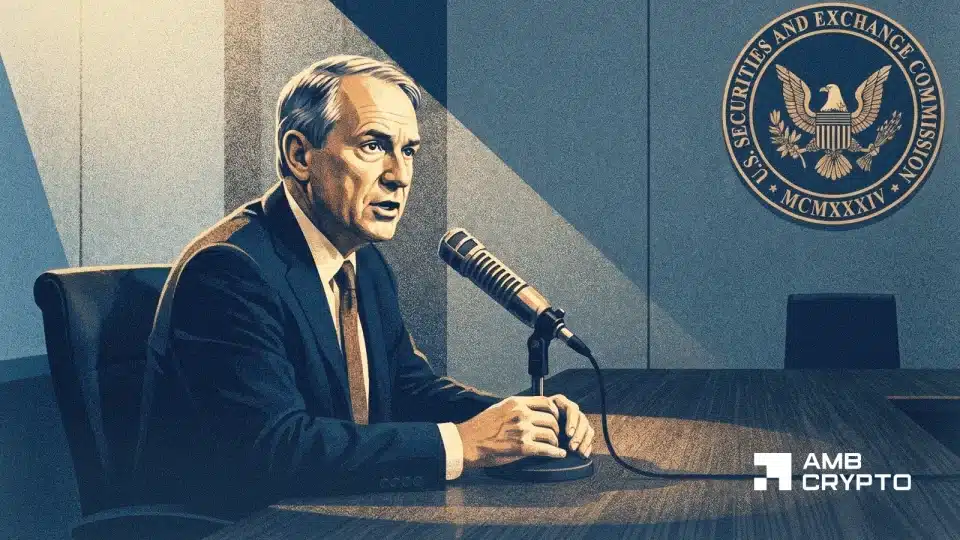
South Korea banks file 80+ stablecoin trademarks – Here’s what’s going on!

ambcryptoОпубліковано о 2025-08-04Востаннє оновлено о 2025-08-05

Key Takeaways

South Korean banks are ramping up crypto and stablecoin initiatives ahead of new legislation, signaling a major shift in regulatory stance. 


As the U.S. moves forward with the GENIUS Act to regulate payment stablecoins, other nations are quickly following suit, and South Korea is among the most proactive.

Major South Korean banks are now accelerating their crypto strategies, forming dedicated teams and drafting plans to issue and manage stablecoins, as per the Maeil Kyungjae newspaper.

“As discussions on legalizing stablecoins heat up rapidly, the banking sector is now taking proactive measures.”

This flurry of activity comes in anticipation of new legislation that could officially greenlight such operations, signaling the country’s growing readiness to embrace the digital asset economy.

Which banks have shown interest?

According to Maeil Newspaper, Woori Bank has launched a full-fledged “Digital Asset Team” under its New Business Partnership Platform.

This group, staffed by digital specialists, is reviving dormant projects like crypto custody and exploring fresh alliances with blockchain firms.

Meanwhile, KB Kookmin Bank is running a virtual asset consultative body across its affiliates.

The unit is tasked with building digital asset strategies, adjusting to policy shifts and coordinating initiatives across insurance, securities, and asset management arms.

Hana Bank is also exploring issuance infrastructure for Korean-won stablecoins. Shinhan Bank has deployed a 20-person task force to prototype services and secure trademarks in advance.

Even local players like Busan Bank and K-Bank are entering the fray.

Trademarks, tech pilots, and market timing

Beyond internal prep, South Korean lenders are making bold external moves. KB Kookmin has filed 81 stablecoin-related trademarks. 32 for won and 49 for foreign currency pairs.

Shinhan is running proof-of-concept tests, reviewing regulation scenarios, and designing integration plans for stablecoin products.

Woori plans to jointly launch “Vitgo Korea,” a stablecoin-focused custodian venture with foreign partners, and has already signed new agreements in the space.

Clearer rules, faster action

South Korea is reviewing new bills to define stablecoin issuance, crypto custody, and digital asset exchange guidelines.

This reflects a sharp divergence from the U.S., where regulation remains fragmented, and agency oversight is split.

The GENIUS Act covers only payment stablecoins, while SEC and CFTC roles continue to overlap.

In contrast, South Korea’s Digital Asset Basic Act (DABA) offers one unified legal framework, including tokens, NFTs, and custody rules.

Will this, in turn, lead to a crypto boost?

Commenting on this shift, Sangmin Seo, head of the Kaia DLT Foundation, emphasized that South Korea’s regulatory clarity could soon become a model for other countries. 

Seo put it best when he said,

“This election, Korean politics sees crypto as a narrative to gain voters’ favors, positioning it as another national growth engine besides AI and semiconductors.”

Share

Пов'язані матеріали

77 Bloody Codes: When the '$5 Wrench' Shatters the Privacy Myth of France's Crypto Elite

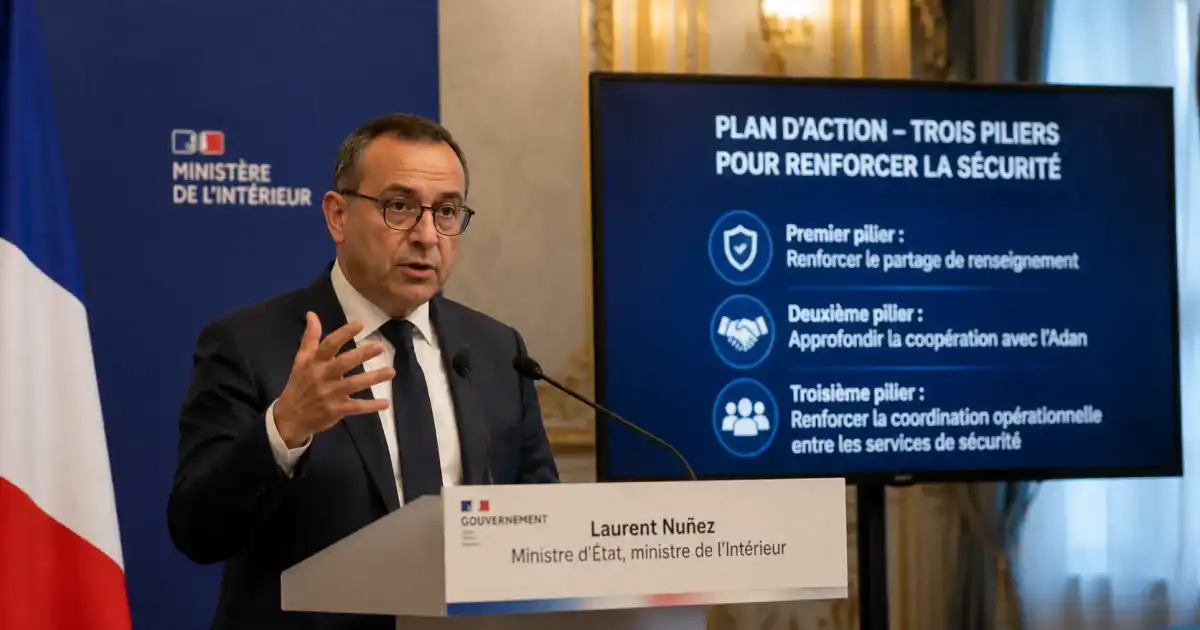
**Summary** In the first half of 2026, France recorded 77 violent crimes—including kidnappings, illegal confinement, and extortion—targeting cryptocurrency holders, a 71% increase over the 45 cases in all of 2025. This equates to an attack every 2.3 days, making France a global hotspot for so-called "wrench attacks," where criminals use physical violence to coerce victims into surrendering crypto assets. High-profile cases include the 2025 kidnapping of Ledger co-founder David Balland, who was shown with a severed finger in a ransom video, and an attempted kidnapping of the family of Paymium's CEO in Paris. Prosecutors note these are not isolated incidents but part of structured criminal networks, sometimes involving minors. Several factors contribute to France's vulnerability: a large holder base (approx. 7.3 million people), the presence of major crypto firms and executives, a culture of public disclosure among enthusiasts, and potential data leaks. The trend is spreading across Europe, which now accounts for over 40% of such global attacks. Research indicates a correlation between Bitcoin price surges and increased wrench attacks. In response, French Interior Minister Laurent Nuñez announced a three-pillar action plan focusing on enhanced intelligence sharing, deeper cooperation with the industry association Adan, and improved operational and cross-border coordination. Authorities have made over 200 arrests in the past year. Security experts warn that digital asset safety now extends to the physical world. They advise holders to use hardware wallets, avoid disclosing holdings on social media, enable multi-factor authentication, and report suspicious activity. The situation underscores the urgent need for the crypto community to shift from a "show-off" culture to one of discretion as physical security becomes paramount.

marsbit54 хв тому

77 Bloody Codes: When the '$5 Wrench' Shatters the Privacy Myth of France's Crypto Elite

marsbit54 хв тому

Both OpenAI and Anthropic are 'Developing Their Own Chips' — Beyond Cost, the Control Over Computing Power is Paramount

OpenAI and Anthropic are both advancing plans to develop custom AI chips, driven by the need to control computing power and reduce costs. According to reports, Anthropic is in early-stage development of its own chips and in talks with Samsung for manufacturing, while OpenAI is collaborating with Broadcom and TSMC, aiming to deploy its first inference chip by late 2026. The primary motivation extends beyond just lowering expenses. For these large model companies, chips are core production assets. By designing specialized hardware (ASICs) tailored to their specific model architectures—OpenAI's being more sparse and Anthropic's more dense—they aim to achieve deeper software-hardware co-design. This synergy can significantly improve inference speed, energy efficiency, and overall unit economics, offering advantages that off-the-shelf GPUs cannot. This move does not signify an immediate replacement for suppliers like Nvidia. The process from design to deployment takes 18-24 months, and Nvidia's GPU ecosystem remains deeply entrenched. Instead, custom chips provide a strategic alternative and negotiating leverage, allowing companies to use them for specific, high-volume workloads like inference while still relying on external GPUs and TPUs for other tasks. The trend reflects a broader industry shift where AI competition is evolving from pure algorithmic prowess to integrated control over the entire software-hardware stack. Companies like Google, Amazon, Meta, and Microsoft are already on this path. For foundries like Samsung, securing orders from AI leaders like Anthropic represents a significant opportunity to expand its footprint in the advanced semiconductor market for AI. Ultimately, the race for "computing sovereignty" is now a central battleground for major AI players.

marsbit1 год тому

Both OpenAI and Anthropic are 'Developing Their Own Chips' — Beyond Cost, the Control Over Computing Power is Paramount

marsbit1 год тому

Торгівля

Спот
活动图片