孙宇晨上太空?币圈营销鬼才再下一盘大棋

比推Опубліковано о 2025-08-04Востаннє оновлено о 2025-08-04

“还我血汗钱!”——在孙宇晨晒出飞行前最后一条社交媒体时,这句评论被顶到了前列。而他,正带着“全网的讨论”,升空了。
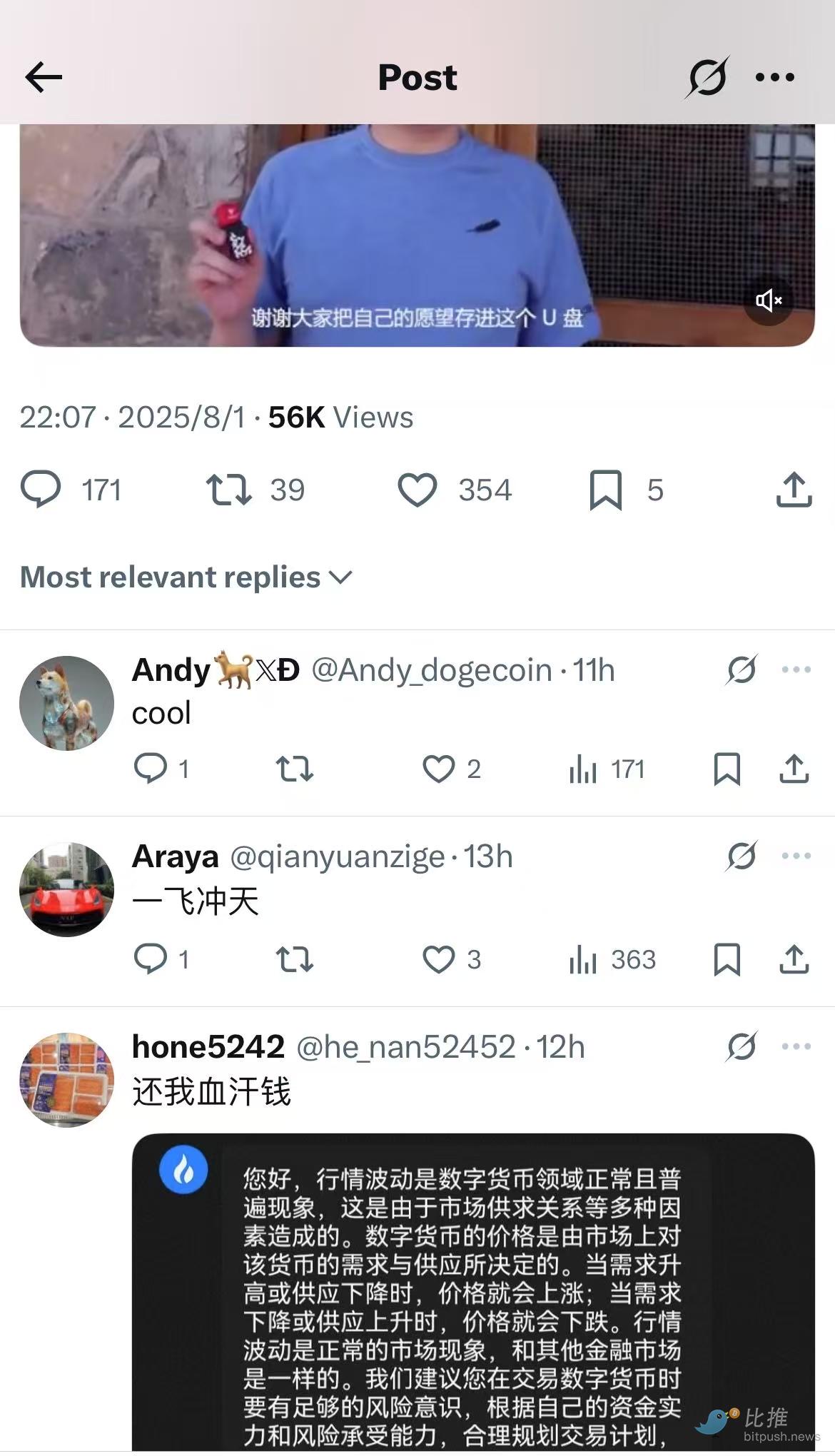
image.png

2025年8月3日,孙宇晨搭乘蓝色起源(Blue Origin)NS-34任务,完成其人生首次太空之旅。伴随此次飞行,他成为“最年轻的华人商业宇航员”之一,并宣称将一枚装满网友愿望的U盘带入近地轨道。

对许多人来说,这是梦想的彼岸;对孙宇晨而言,却更像是一场华丽的“叙事闭环”。

从链上帝国到纳斯达克:一个币圈玩家的现实剧本

在加密行业,孙宇晨的名字从来不是中性词。他是 TRON 波场的创始人,是稳定币 USDT 最重要的基础设施建设者之一,也是早期最擅长“做局”的人之一。

2017年,他以“去中心化的以太坊替代方案”之名推出 TRON。项目早期一度因白皮书涉嫌抄袭、技术空转等问题饱受诟病,但几年后却悄然建成完整生态。截至目前:

• TRON 链上地址数突破 3.2 亿;

• 超过 816 亿枚 USDT 运行在 TRON 网络上,占据全球稳定币流通的 60% 以上;

• DeFi 总锁仓量超过 246 亿美元;

• 与以太坊、BNB Chain、Solana 共同组成全球稳定币清算核心网络。

加密货币企业家孙宇晨因涉嫌非法销售证券被美国SEC起诉

2025年初,他更通过旗下资本平台 Dominari 完成反向并购,在纳斯达克敲钟上市,并将 TRX 纳入上市公司战略储备资产。这套操作,堪称复制了 MicroStrategy 之于比特币的路径,进一步巩固了 TRON 在全球加密金融中的地位。

但也正是这些操作,让他始终站在质疑与崇拜的边界之间。

“争议制造机”如何炼成?

孙宇晨之所以成为币圈现象级人物,不只是因为技术或资本实力,而在于他对流量机制的精准掌握。

• 2019 年,他以 457 万美元拍下“巴菲特午餐”,随后“放鸽子”;

• 2024 年,他以 620 万美元拍下“墙上的香蕉”艺术品并当众吃掉,只说了句:“比普通香蕉甜”;

• 同年,他花 1790 万美元购买“特朗普币”,作为持仓第一名参加晚宴并获特朗普赠送大金表;

• 多次发起“空投”与模因币计划,用争议与叙事建立庞大的社群外壳。

在他这里,资本是一种手段,事件是一种资产,争议则是一种可持续运营的资源。

就像他自己曾说的:“我不怕被误解,被误解才有传播力。”

——监管转向:不是逃离,而是上场

在NFT退潮、投资者信心疲软的背景下,美国监管也经历了戏剧性转向。2023年,孙宇晨曾因涉嫌欺诈与市场操纵被 SEC 起诉,一度面临高达 25 年刑期的讨论。

但2025年2月,随着特朗普政府重新上台,SEC 暂停了对其所有诉讼,并对 Coinbase、Kraken、Ripple 等公司的案件陆续“放水”或撤销,正式宣告监管路径进入宽松阶段。

孙宇晨也正是在这场“从高压到纵容”的转折节点,推进了上市、重启公关、参与特朗普政治资本网络的连环操作。他不是在逃离监管,而是在精准利用监管变化重新登上主舞台。
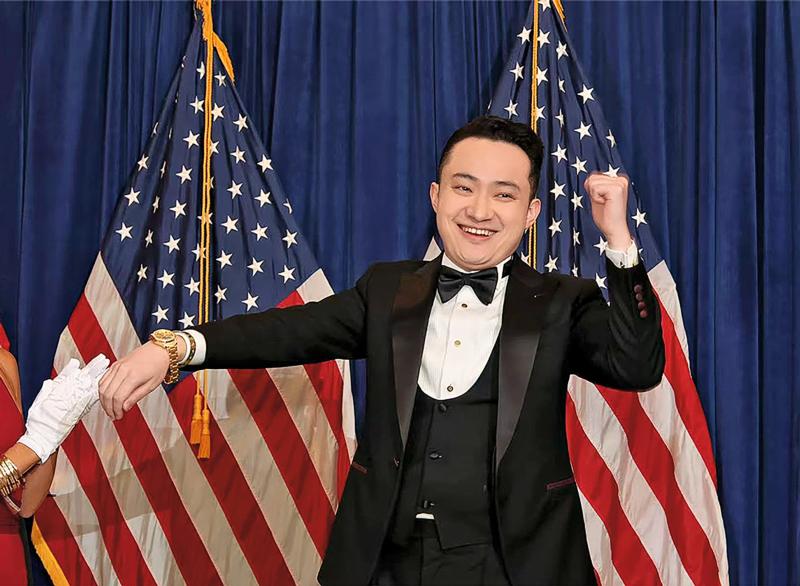
獨家專訪Tron創始人孫宇晨香港要大膽創新破除成規- 亞洲週刊

他的“飞行”行为,某种程度上,更像是在一场逐渐松动的制度中,抢占未来话语权的“物理升空”。

王纯:另一种太空叙事的对照组

今年早些时候,另一位中国加密创业者、前 F2Pool 联合创始人王纯(Wang Chun)也完成了太空飞行。他曾是Stake.Fish的创始人。2025 年初,他悄然参加了一次由 SpaceX 承载的平民轨道任务,完成全程但几乎未对外宣传。这趟飞行就像他的技术风格一样——克制、极简、避开焦点。

那个叫王纯的男人上太空了- 深潮TechFlow

孙宇晨与王纯,同为华人、同为加密创业者、同年进入太空,却展现了完全不同的风格与策略。一个像是在导演剧集,一个更像是在完成某种内在旅程。

这并不是关于谁更优秀的问题,而是两种“时代语法”的对照:一个以表演撬动话语权,另一个选择退出喧哗。

是梦想家,还是表演者?

孙宇晨的太空飞行,也许真的完成了他个人的一个梦想。但对旁观者而言,它更像一场完美策划的“现实剧集”。

他用一次升空,把自己重新置于聚光灯下。这不仅是对技术或信仰的回应,更是一次精妙的“叙事再锚定”操作。

评论区不会升空,质疑不会消失,那句“还我血汗钱”的留言依旧钉在他每一次高光的下面,像一面镜子,反射出他光环背后难以忽视的社会情绪。

或许我们该问的不是他“值不值得”,而是——

Don’t blame the player, hate the game.

不要责怪玩家,而要看清游戏。

如果没有孙宇晨,也许还会有“××晨”……继续利用规则的空隙、博取关注与资本、在聚光灯与争议中重塑自己的人生轨道。他们并不是系统的异类,而是系统逻辑的产物。

写在最后

今天,孙宇晨飞上了太空。

他再次证明了:在这个时代,流量、符号和故事,可以比技术本身更有穿透力。他究竟是一个梦想家、话术家,还是叙事炼金术士?答案可能无关紧要。

更重要的问题或许是:我们为何如此容易为这样的故事买单?


说明: 比推所有文章只代表作者观点,不构成投资建议

Пов'язані матеріали

SpaceX, OpenAI, Anthropic: The Three AI Giants Racing for IPO, Which One Is Worth Betting On?

SpaceX, OpenAI, and Anthropic are poised for historic IPOs within weeks, potentially raising a combined $180 billion—a sum exceeding the entire internet bubble's fundraising. The hosts of the Limitless Podcast argue this isn't just individual company financing but an unprecedented capital concentration for AI infrastructure, driven by an insatiable need for compute, data centers, power, and chips. SpaceX's IPO is notable for reportedly changing market index rules to allow faster inclusion, potentially funneling trillions in passive retirement funds into its stock, despite its unproven space-based data center business model. In contrast, Anthropic demonstrates explosive growth, with ARR reportedly hitting $45 billion and approaching profitability, fueled by strong enterprise adoption of products like Claude Code. Google's separate $80 billion raise highlights the immense capital pressure, even for giants. The discussion acknowledges bubble risks but leans optimistic. The hosts contend the massive spending is building essential physical infrastructure for the next technological era. A key bottleneck isn't capital but the real-world limits of chip manufacturing and construction speed. As long as demand for AI compute outstrips supply, this investment cycle represents a foundational build-out rather than a purely financial bubble. All three companies are seen as foundational bets on the future, with Anthropic often cited as the most immediately compelling due to its proven revenue trajectory.

marsbit2 год тому

SpaceX, OpenAI, Anthropic: The Three AI Giants Racing for IPO, Which One Is Worth Betting On?

marsbit2 год тому

From 'Old Guys' to 'New Favorites': How AI Is Revaluing Old Infrastructure from Dell to Nokia?

From "Vintage Tech" to "New AI Darlings": How AI Revalues Old Infrastructure One year ago, tech giants like Dell, Nokia, Cisco, and Western Data were seen as slow-growth, low-valuation stories, far from the AI spotlight dominated by players like Nvidia. Now, these legacy tech stocks are gaining market attention, sparking debate on whether this is genuine industry revaluation or a temporary narrative. As AI moves from model parameters to real-world data centers, the market is recognizing companies with proven delivery and infrastructure capabilities. This shift marks a change in the AI investment thesis: from pure model and GPU focus to the complex systems engineering required for deployment. Companies like Dell, HPE, and Corning are being revalued not for being "sexy" AI innovators, but for their decades of accumulated expertise in supply chains, enterprise delivery, and infrastructure—assets that have become critical in the AI buildout phase. The revaluation is unfolding across three key infrastructure lines: 1. **Servers & System Integration:** Dell and HPE are emerging as crucial system integrators or "general contractors" for AI data centers, translating GPU orders into complete, deployable server racks integrated with power, cooling, and networking. 2. **Networking & Connectivity:** AI's scale demands robust high-speed connections. Corning (fiber optics), Nokia (AI-RAN, 6G), and Cisco (data center switches) are gaining importance for enabling efficient data transfer within and between AI clusters. 3. **Storage:** Beyond high-speed memory (HBM/DRAM), the AI data explosion is driving demand for high-capacity hard drives (HDDs) from companies like Western Digital and Seagate to handle training data, logs, and cold storage cost-effectively. For this revaluation to be substantive and not just a narrative, three criteria are key: 1) Concrete AI-related order and revenue growth (e.g., Dell's AI server sales), 2) Upward revisions to company financial guidance, and 3) Sustainable improvements in profit quality, not just top-line revenue spikes. In essence, AI's transition to a real construction phase is re-pricing "old assets" against "new demand." The opportunity, however, is selective. Only those legacy firms that are demonstrably integrated into the capital expenditure chains of data center and enterprise AI deployment are likely to experience a true "logic re-rating" rather than just a temporary valuation bounce.

marsbit2 год тому

From 'Old Guys' to 'New Favorites': How AI Is Revaluing Old Infrastructure from Dell to Nokia?

marsbit2 год тому

The Merger of Codex and ChatGPT Marks the Beginning of a Major Reshuffle in Programming Tools

OpenAI is shifting its strategic focus from ChatGPT to Codex, merging them along with the browser tool Atlas into a unified desktop super-app. This move signals an internal belief that Codex, originally a programming tool, represents the next evolution of AI more than conversational models like ChatGPT. Over the past year, Codex's weekly active users have surged past 5 million. The key distinction is that while ChatGPT answers questions, Codex executes tasks. Enterprises increasingly value this ability to get work done over simply receiving advice. Consequently, Codex is attracting professionals beyond developers, including analysts, bankers, marketers, and product managers. OpenAI's reorganization and increased investment in Codex stem from recognizing that the future of AI competition lies in execution capabilities, not just conversation. The company is launching role-specific plugins (e.g., for data analysis, sales, design) to transform Codex into a broad knowledge work platform that automates and redefines white-collar workflows. Beyond being a tool, Codex reflects OpenAI's ambition to redefine software. New features like "Sites"—which generates interactive websites from documents—and collaborative "Annotations" aim to create a paradigm where the AI understands the goal and handles the tools and steps, functioning more like a digital colleague than traditional software. The ultimate goal is a unified experience where the user cares only about the completed task.

marsbit2 год тому

The Merger of Codex and ChatGPT Marks the Beginning of a Major Reshuffle in Programming Tools

marsbit2 год тому

Торгівля

Спот
Ф'ючерси
活动图片




