TRM Labs: попытка Telegram заблокировать Huione оказалась неэффективной

cryptonews.ruОпубліковано о 2025-09-29Востаннє оновлено о 2025-09-29

В мае мессенджер Telegram заблокировал каналы Huione Guarantee и Xinbi Guarantee, через которые отмыли $35 млрд в USDT. Однако это не снизило общую активность масштабной сети китайских даркнет-площадок, сообщают аналитики TRM Labs.

По данным экспертов, в 2024 году пиковый дневной объем входящих транзакций Huione достигал $60 млн. Платформе не удалось восстановить аккаунты в Telegram, но она продолжает работать «в усеченном режиме». После ограничений активность стабилизировалась на уровне $30 млн.

Свыше 30 даркнет-маркетплейсов заняли нишу закрытого Huione Guarantee в Telegram

Тем временем Xinbi вернулась к работе под прежним идентификатором. С 11 мая активность на этой площадке подскочила на 90%.

Одновременно дневной приток средств на Tudou — платформу, связанную с китайской сетью даркнет-маркетплейсов — увеличился в 70 раз. Аналитики предположили, что через этот сервис теперь тайно работает Huione во избежание новых блокировок.

«25 мая 2025 года Huione Group создала новый аккаунт в Telegram. Канал получил другое название на китайском языке, но в нем сохранились старые инициалы „hw“ от предыдущего бренда HaoWang, а автоматизированный бот по-прежнему использует это название. Похоже, они намеренно сохранили часть старого бренда — так проще удержать клиентов, которые могли растеряться после блокировок», — говорится в отчете TRM.
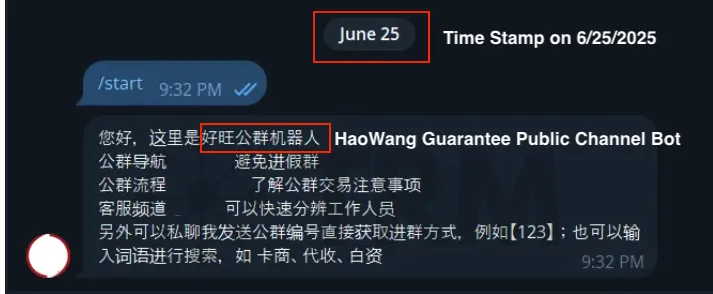
Бот Huione Guarantee в Telegram, который до сих пор использует название HaoWang. Источник: TRM Labs.

В закрытых Telegram-чатах Huione оставила только VIP-продавцов. Остальных пользователей перенаправляют на Tudou.

«Анализ блокчейн-транзакций показывает, что продавцы, которые раньше работали через Huione, перешли на Tudou, используя те же криптокошельки Huione Pay», — заявили эксперты.

Как связаны Huione Pay и Huione Guarantee

Huione Pay позиционируется как отдельный сервис, но он неразрывно связан с Huione Guarantee, подчеркнули в TRM. С 2021 года «горячие» кошельки Huione Pay переводят средства напрямую на четыре депозитных счета платформы.

Продавцы на Huione обязаны внести криптовалютный залог перед началом работы. Эти средства выступают гарантией: в случае нарушения правил платформа удерживает депозит.

В сентябре 2024 года Huione усложнила схему — появилось шесть новых кошельков. Каждый из них предназначался для определенной категории услуг:

  • за киберпреступления вроде фишинга или вредоносного ПО клиенту нужно заплатить от 1000 до 5000 USDT;
  • за крупное отмывание денег площадка берет от 20 000 до 70 000 USDT.
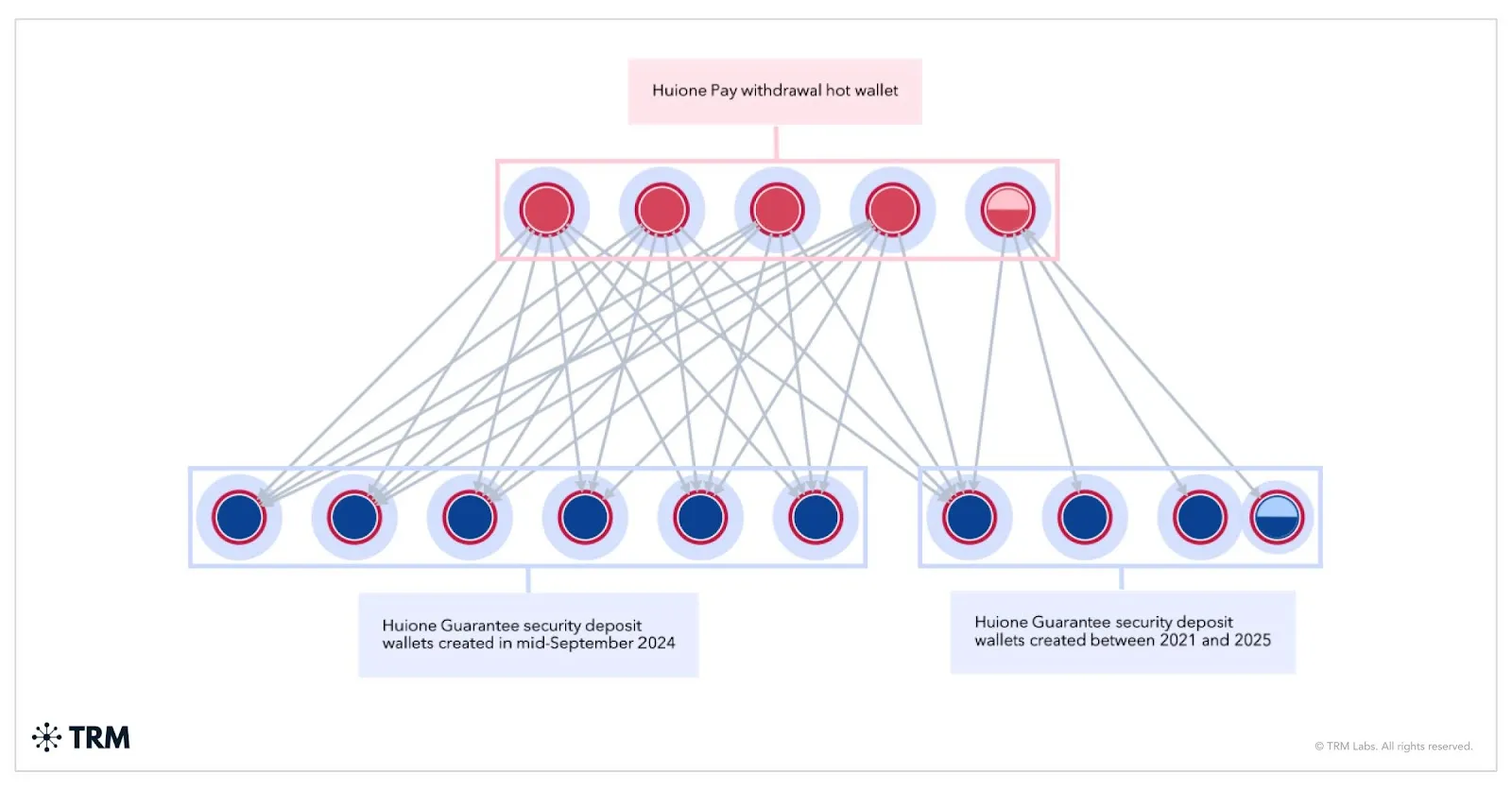
Как горячий кошелек Huione Pay (вверху) переводит деньги на оба набора депозитных кошельков Huione Guarantee. Источник: TRM Labs.

«Такая градация депозитов, скорее всего, отражает предполагаемые риски и объемы транзакций для разных услуг. Более высокие залоги служат не только гарантией, но и демонстрируют надежность продавца в этой теневой экосистеме, где доверие сведено к минимуму», — подчеркнули аналитики.

Напомним, в начале мая FinCEN со ссылкой на исследование Elliptic назвала Huione Group «финансовым учреждением, представляющим основную опасность для отмывания денег», и предложила лишить его доступа к финансовой системе США. Ведомство обвинило компанию в помощи северокорейской хакерской группировке Lazarus Group в отмывании криптовалют.

Пов'язані матеріали

Dialogue with Multicoin Partner: The Crypto Market Has Bottomed Out, Favoring Three Cryptocurrencies in This Cycle

In a recent interview, Multicoin Capital managing partner Tushar Jain shared his views on the crypto market. He believes the market has bottomed and is at an inflection point, citing that negative news no longer causes significant price declines and application adoption continues to grow. Jain remains highly bullish on Solana, viewing it as the correct architectural choice for internet capital markets, particularly for spot and tokenized security trading. He is also positive on Hyperliquid, noting its leadership in decentralized derivatives trading. His investment approach focuses on concentrating capital in top convictions rather than equal allocation. A distinct opportunity he highlights is Zcash (ZEC), which he sees as a return to the industry's cypherpunk ethos and a potential top-five asset by market cap. For assets like Zcash without cash flows, his valuation framework is based on relative market cap ranking. Regarding investment strategy, Jain employs a "three-part" entry method to avoid timing pitfalls and emphasizes long-term "active management" over "active trading." He outlines four sources of investment edge: informational, analytical, behavioral/psychological, and structural. On portfolio management, the fund uses Bitcoin as its "cash," selling assets into Bitcoin during market euphoria to reduce beta risk and using Bitcoin to buy dips. Sales occur only if a better opportunity arises, the investment thesis breaks, or valuations become excessively overheated. While respectful of Ethereum's resilience, he questions its unclear scaling roadmap. Finally, Jain reaffirms his commitment to the thesis that blockchains will form the foundational architecture for future capital markets.

marsbit3 хв тому

Dialogue with Multicoin Partner: The Crypto Market Has Bottomed Out, Favoring Three Cryptocurrencies in This Cycle

marsbit3 хв тому

Behind Robinhood's Chain Launch and Tokenized Stocks: No Equity Rights, How Far Can This Packaging Game Go?

Robinhood is launching its own Layer 2 blockchain (Robinhood Chain) and "tokenized stocks," but these are not actual equity shares. The tokens are legally structured as debt securities or derivatives, offering economic exposure to a reference stock without granting voting rights or direct ownership. This move represents Robinhood's strategy to expand from a traditional brokerage into a "financial super app," building a user-friendly, programmable financial interface on top of complex, legally compliant, and jurisdiction-specific backend structures. The company's existing business remains strong, driven by options, event contracts, and stock trading. The new blockchain and tokenization efforts are an ambitious layer of infrastructure built atop this core, aiming to make financial products more portable and globally accessible via crypto rails. Key components include the Robinhood Wallet, Bitstamp acquisition (for institutional reach), the Lighter perpetual contracts platform, and Robinhood Earn (DeFi yield). The central challenge is the "brokerage chain paradox": maintaining a simple, intuitive user experience while the underlying assets are highly structured, regulated, and legally distinct from direct ownership. The success of this strategy depends on users, developers, and regulators accepting this model. If the complexity is misunderstood or deemed misleading, it could create product liability issues and stall expansion. The initiative is a significant infrastructure play, but its long-term viability hinges on navigating this fundamental tension between simplicity and legal reality.

marsbit1 год тому

Behind Robinhood's Chain Launch and Tokenized Stocks: No Equity Rights, How Far Can This Packaging Game Go?

marsbit1 год тому

Zhipu, Afraid of Becoming the Next MiniMax

Title: Zhipu, Fearing to Become the Next MiniMax In July 2026, amid the success of its coding-focused AI, Zhipu's founder, Tang Jie, issued an internal letter titled "The Giant Wave Has Come." It notably avoided celebrating recent triumphs, such as Zhipu's trillion-HKD market cap and booming MaaS revenue driven by its GLM-5.2 model in coding applications. Instead, the letter pivoted the narrative to future-oriented concepts like Long Horizon Task, Autonomous Agents, Self-Evolving systems, and AGI. This strategic shift in messaging followed the sharp devaluation of its competitor, MiniMax. After its lock-up period expired, MiniMax's stock plummeted as the market began evaluating it with traditional SaaS metrics like ARR and user growth, rather than as a frontier AI pioneer. Seeing this, Tang Jie aimed to preempt a similar revaluation of Zhipu. He fears that if the market starts viewing Zhipu primarily as a profitable "AI coding company," its valuation would become anchored to conventional financial metrics, losing the premium associated with AGI potential. Therefore, the letter reframed Zhipu's mission. While acknowledging that coding was the current commercial driver, Tang positioned Zhipu on the "infrastructure path," akin to OpenAI and Anthropic. The new focus is on developing agents capable of complex, long-term planning and autonomous operation—moving from assisting individuals (OPC: One Person Company) to automating entire organizations (NPC: No People Company). This "Touch High" plan explicitly prioritizes long-term AGI research over short-term monetization. The article frames this as a critical divergence in China's AI landscape: the "commercialization path" (exemplified by MiniMax) versus the "infrastructure path" (chosen by Zhipu). The former risks being judged harshly by internet-era metrics once growth slows, while the latter risks failing if technological breakthroughs stall. Tang Jie's letter is thus a calculated move to secure Zhipu's identity as an AGI contender, buying time before the inevitable market demand for commercial proof. The core question remains: can Zhipu's "mo gao" (reach high) plan achieve genuine technological leaps fast enough to outpace the market's diminishing patience for stories over substance?

marsbit1 год тому

Zhipu, Afraid of Becoming the Next MiniMax

marsbit1 год тому

Торгівля

Спот
活动图片