牛市重启比特币狂飙本周新高以太坊剑指4000美哪些山寨币即将起飞ASR、OP、CFX和C赚麻了

金色财经Опубліковано о 2025-07-29Востаннє оновлено о 2025-07-29

文章来源:公众号佩佩梭哈

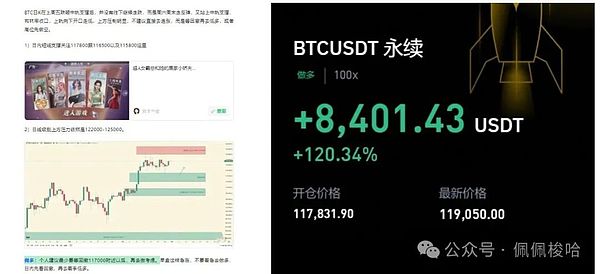
比特币如期回撤后反弹,完美符合佩佩的预期!昨日佩佩在文章《绝了!比特币暴涨新高?以太坊开启狂暴模式!跟上的兄弟赚的盆满钵满!下一个爆拉币竟是它,提前埋伏等翻倍》中提示日内短线支撑关注117800跟116500以及115800这里,做多:个人建议最少要等回撤117000附近以后,再去做考虑。佩佩在117800做多,暴涨1200点,怒赚8000多刀
图片

如果你昨天有看佩佩公众号或者问佩佩每日的开单策略,你应该和佩佩一样是吃到肉的,胜率大家可以明显看到!币圈现在机会很多,需要及时把握!近期社区会推荐几个暴涨币,我会带着大家一起瞄准山寨的暴富机会,预期空间10倍以上是没有问题的。

BTC

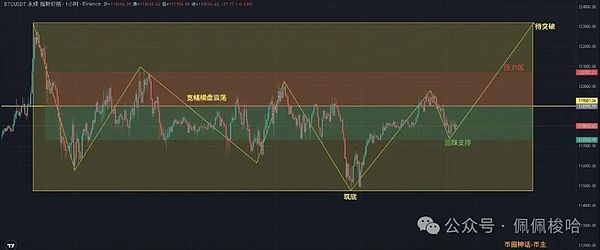
比特币前期跌幅几乎全部收复当前围绕 119000 展开激烈多空博弈,需要注意的是,上方 120000 整数关口压力依旧较重,结合当前多头动能释放节奏,短期内突破概率不高。 

四小时级别看,整体结构仍是浪形下行,高点逐步下移,支撑位持续被击穿。尽管出现三连阳反弹,但成交量并未有效放大,上涨持续性仍需观察。 

小时图层面,行情处于区间震荡阶段,预计晚间美股开盘后才可能迎来方向选择。白盘大概率维持千点内的震荡格局。  

操作思路:维持高空低多策略。 压力区间:119800-119300 支撑目标:117500。
图片

ETH

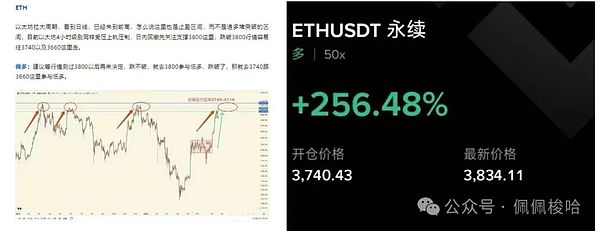
今早以太坊跌破3800快速扎针3734一线,佩佩昨日在文章中提到跌破3800后,以太坊去3740跟3660这里参与低多。佩佩完美预测点位,暴赚246%
图片

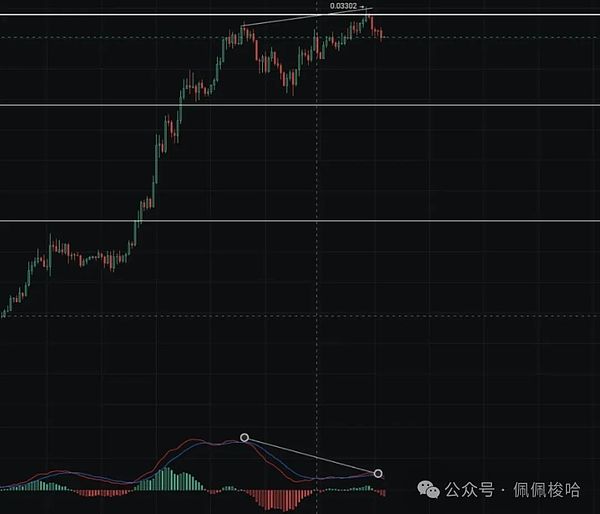
以太坊在一小时级别内缺乏持续上涨的结构支撑,近期上涨未伴随回调后的持续上行,显示顶部结构可能形成。若以太坊突破3,940美元甚至4,000美元,MACD指标可能出现顶背离,预示短期见顶风险。ETH/BTC汇率,四小时级别已经出现顶背离。
图片

上方压制3840跟3900以及3950这里,高空可以去这些位置参与入场。

下方支撑关注3700跟3650以及3600,低多在这些位置守候等待,支撑发力未被有效跌破,多单可以尝试去入场。

山寨

(1)ASR

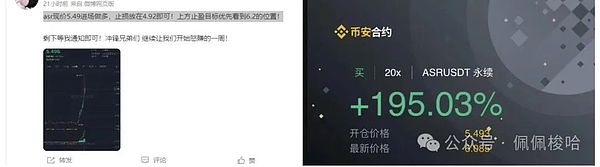
ASR现价5.49进场做多,止损放在4.92即可!目前价格6.147,上方止盈目标优先看到6.2的位置!拿捏两倍的收益!不想格局的可以全部止盈了!
图片

(2)OP

OP多单,小级别涨幅差不多5个点,还在持续反弹中,已经设置保本损并且止盈了一半,还剩一部分仓位继续持有,甜梦小赚一千多刀,美滋滋!

图片

(3)CFX、C

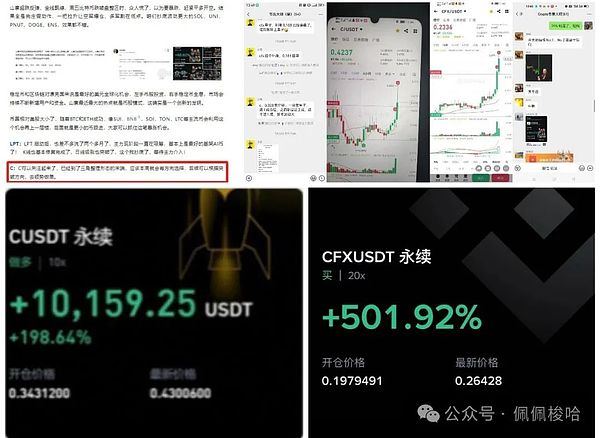
CFX、C今日强势霸占涨幅榜No.1、No.2双双达到出场点位,其中C佩佩在公众号公开推荐。
图片

C:这个币首发币安alpha,两天上币安合约,五天上币安现货,现在又上了韩二所,背后的能量绝对很惊人,现货可以拿一下。

CFX:五倍收益!目前我已经全部止盈到位咯!  剩下的让有缘人去吃吧!鱼头鱼肉已经吃到了!舒服了!一单不比自己瞎玩一周的操作要好?

接下来两个月的行情尤为关键,山寨币时代的大门已经开启,机会稍纵即逝!别让犹豫拖住你的财富梦想,也别让空气币的陷阱吞噬你的本金!佩佩这两天会推荐3-5个山寨币单子关注佩佩

Пов'язані матеріали

U.S. Government Bans Foreign Nationals from Using Fable 5, Anthropic Issues Rebuttal

U.S. Government Bans Foreign Access to Fable 5, Anthropic Issues Rebuttal On June 12th, the U.S. government ordered AI company Anthropic to immediately suspend all foreign access—including foreign nationals within the U.S. and Anthropic's own foreign employees—to its newly released Fable 5 and Mythos 5 AI models, citing national security concerns. This forced Anthropic to temporarily disable access to both models for all users globally, as it cannot technically differentiate user nationality at scale. The models, released just three days prior, represent Anthropic's highest public capability tier. Fable 5 is the first publicly available model from the advanced "Mythos" family, while Mythos 5 is a less-restricted version for approved cybersecurity and critical infrastructure partners. The government's directive was reportedly triggered by claims from another company that it could "jailbreak" Mythos 5, raising alarm within the Trump administration. Anthropic, in a detailed public statement, strongly challenged this rationale. The company argues the demonstrated "jailbreak" is a narrow, non-generalized technique that merely involves identifying minor, known software vulnerabilities—a capability common to other publicly available models like OpenAI's GPT-5.5 and routinely used by cybersecurity defenders. Anthropic stated it has complied with the order but disagrees with the government's standard, warning that applying it industry-wide would halt all new frontier model deployments. The company criticized the lack of a transparent, fact-based legal process and expressed confidence the situation stems from a misunderstanding. It is working to restore access and will release more technical details within 24 hours. Other Anthropic models remain unaffected.

链捕手10 хв тому

U.S. Government Bans Foreign Nationals from Using Fable 5, Anthropic Issues Rebuttal

链捕手10 хв тому

The Revelation from the Raydium Theft Incident: New DeFi Vulnerabilities Lurking in Forgotten Old Contracts

**Raydium Exploit Reveals DeFi's Hidden Risk: Forgotten "Zombie" Contracts** A recent attack on Raydium's deprecated V3 AMM pools resulted in a loss of approximately $1.34 million. The hacker exploited pools that were no longer supported by Raydium's current UI or SDK but remained fully functional and accessible on-chain. This incident highlights a critical, often overlooked category of risk in DeFi: inactive or legacy smart contracts that projects fail to properly decommission. Since March 2025, there have been at least 8 publicly reported attacks targeting such abandoned contracts, with total losses around $10.8 million. Including older pools and deprecated features, the count rises to 10 incidents with roughly $22.5 million in losses. These "zombie contracts" represent a lifecycle management failure rather than a code vulnerability, yet they are typically misclassified under general "code bug" categories in security reports, masking the true scale of the problem. The root cause is that projects often merely document a contract as "deprecated" without taking essential technical steps to secure it: withdrawing remaining assets, disabling external call functions, and implementing ongoing monitoring. These forgotten, under-monitored components become prime targets for attackers. To address this, the industry needs to recognize "zombie contracts" as a distinct risk category and establish standardized decommissioning protocols. Essential steps should include: 1) a formal retirement announcement, 2) removal of all front-end integrations, 3) withdrawal of locked assets, 4) disabling key contract functions, 5) ongoing security monitoring, 6) clear user communication, and 7) a post-mortem analysis. The value of a DeFi project lies not only in its current TVL but also in the security of its historical codebase, which has now become a new attack surface.

Foresight News1 год тому

The Revelation from the Raydium Theft Incident: New DeFi Vulnerabilities Lurking in Forgotten Old Contracts

Foresight News1 год тому

Robots Begin to 'Consume Data': The Hidden Production Chain from Indian Data Factories to Billion-Dollar Humanoid Robots

Robots have started to 'consume data,' driving the formation of a new industrial supply chain focused on producing training data for embodied AI. Unlike large language models, which are trained on vast internet text corpora, embodied AI models face a 'data desert' in the physical world. This has created a massive demand for first-person perspective video data (Ego Data), captured by workers wearing cameras in places like Indian garment factories. Companies like Neocambrian AI are establishing 'data factories' where workers perform standardized tasks (e.g., sorting clothes, kitchen organization) to generate thousands of hours of video. Research, such as NVIDIA's EgoScale, demonstrates that scaling this human demonstration data predictably improves robot performance, particularly for dexterous manipulation. This has validated a training path combining large-scale human data for pre-training with smaller amounts of robot-specific data for fine-tuning. The value of different data types varies significantly, forming a 'data pyramid.' The base consists of low-cost, large-scale internet and Ego Data. Higher layers include more expensive motion-capture data (e.g., from data gloves), simulation/synthetic data, and the most costly and scarce layer: real robot teleoperation data. This demand has spawned a layered ecosystem of data suppliers: low-cost data factories, motion capture and alignment specialists, robot-native teleoperation service providers, simulation data companies, and platforms aiming for data standardization. Robot companies themselves are adopting a 'layered procurement' strategy: outsourcing generic Ego Data while building in-house capabilities for robot-specific adaptation data and the critical deployment/failure data generated in real-world applications. The industry is shifting focus from hardware and basic mobility to the data pipelines required for general-purpose capability. While parallels exist to data labeling companies like Scale AI in the LLM boom, the physical complexity of robot data—involving action success ambiguity and sim-to-real gaps—requires more integrated solutions for data collection, annotation, and a continuous feedback loop. The race is on to build the data engines that will teach robots to operate reliably in the unstructured real world.

marsbit4 год тому

Robots Begin to 'Consume Data': The Hidden Production Chain from Indian Data Factories to Billion-Dollar Humanoid Robots

marsbit4 год тому

Торгівля

Спот
Ф'ючерси

Популярні статті

Як купити OP

Ласкаво просимо до HTX.com! Ми зробили покупку Optimism (OP) простою та зручною. Дотримуйтесь нашої покрокової інструкції, щоб розпочати свою криптовалютну подорож.Крок 1: Створіть обліковий запис на HTXВикористовуйте свою електронну пошту або номер телефону, щоб зареєструвати обліковий запис на HTX безплатно. Пройдіть безпроблемну реєстрацію й отримайте доступ до всіх функцій.ЗареєструватисьКрок 2: Перейдіть до розділу Купити крипту і виберіть спосіб оплатиКредитна/дебетова картка: використовуйте вашу картку Visa або Mastercard, щоб миттєво купити Optimism (OP).Баланс: використовуйте кошти з балансу вашого рахунку HTX для безперешкодної торгівлі.Треті особи: ми додали популярні способи оплати, такі як Google Pay та Apple Pay, щоб підвищити зручність.P2P: Торгуйте безпосередньо з іншими користувачами на HTX.Позабіржова торгівля (OTC): ми пропонуємо індивідуальні послуги та конкурентні обмінні курси для трейдерів.Крок 3: Зберігайте свої Optimism (OP)Після придбання Optimism (OP) збережіть його у своєму обліковому записі на HTX. Крім того, ви можете відправити його в інше місце за допомогою блокчейн-переказу або використовувати його для торгівлі іншими криптовалютами.Крок 4: Торгівля Optimism (OP)Легко торгуйте Optimism (OP) на спотовому ринку HTX. Просто увійдіть до свого облікового запису, виберіть торгову пару, укладайте угоди та спостерігайте за ними в режимі реального часу. Ми пропонуємо зручний досвід як для початківців, так і для досвідчених трейдерів.

453 переглядів усьогоОпубліковано 2024.12.12Оновлено 2026.06.02

Як купити OP

Обговорення

Ласкаво просимо до спільноти HTX. Тут ви можете бути в курсі останніх подій розвитку платформи та отримати доступ до професійної ринкової інформації. Нижче представлені думки користувачів щодо ціни OP (OP).

活动图片