Bittensor 开加油站 了?从 TAO 机制看 xTAO 的上市逻辑

marsbitОпубліковано о 2025-07-27Востаннє оновлено о 2025-07-28

Bittensor 生态中的重要项目公司xTAO Technologies Inc.近日已获得最终批准,其普通股以于2025 年 7 月 23 日在 加拿大多伦多创业交易所(TSX Venture Exchange)正式上市,股票代码为$XTAO.U

在近期一系列 Web3 项目启动上市计划的背景下,xTAO 的上市也引发市场关注:这一项目究竟是又一次概念营销,还是构建于“去中心化 AI 网络”底层逻辑之上的基础设施创新?本报告将从技术架构与网络定位出发,简要回顾其背后的Bittensor 网络及核心代币TAO的机制与定位,并尝试找出xTAO上市背后的逻辑。

一、Bittensor 是什么?

Bittensor 是一个完整的 Layer 1 区块链网络,致力于构建去中心化的 AI 服务网络。简而言之,它并不是类似 ChatGPT 或 Midjourney 那样的具体 AI 应用,而是一个更底层的系统平台,类似 “操作系统” ,专门服务于整个 AI 生态。

打个比方:如果目标不是只为某一辆超级跑车提供道路,而是让所有车辆都能顺利通行,那么首先需要建设一条功能完备的高速公路。Bittensor 所做的,正是为所有 AI 任务和开发者修建这样一套“高速公路系统”—— 一个全球任何人都可以上传模型、获取任务、接收奖励,同时自由组合 AI 服务的去中心化平台。

而在这一体系中,Bittensor 网络本身则扮演着高速公路的“建造者与维护者”的角色:它负责制定运行规则、搭建通行路径、设计出入口与经济激励系统,从而确保所有参与者能够有序通行,最终形成一个高效协作的“AI 交通系统”。

二、Bittensor 网络中的参与者角色

在这条“AI 高速公路”上,各类参与者共同构建起一个去中心化的协作网络:

1.矿工节点(Miners)就像是各种“司机”或“货车司机”:他们驾驶自己的 AI 模型上路,处理系统分配的任务,并通过高质量的输出结果争取验证者的好评和 TAO 奖励质检员(验证者

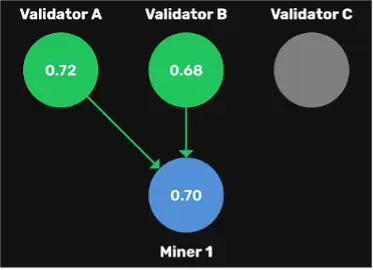
2.验证者节点(Validators)则类似“交警”或“质检员”:他们对模型的服务质量进行评分(0-1),确保网络中流通的“AI 服务”具备稳定性和可信度,并决定矿工节点的奖励分配。

3.子网创建者(Subnet Owners)相当于“高速路段承包商”或“道路规划者”:他们设计某一特定 AI 服务场景下的规则,引导模型资源聚集,并构建独立的经济与治理系统。

4.质押者(Delegators)则可类比为“出资修路的投资人”:他们通过质押 TAO 代币支持某些节点的运行,并以此获得回报,虽然不直接参与模型运行,但在网络激励机制中承担着风险共担与收益共享的作用。

5.最终用户(Users)如同在高速路上通行的“乘客”或“货主”:他们调用网络中模型所提供的 AI 服务(如文本生成、图像识别等),并为此支付费用。

6.燃料卡和门票(TAO Token):用于给司机交警发工资,为新路线提供资金支撑,以及提供投票治理权等相关支持。

三、回顾Bittensor内有趣新奇的技术

1.去中心化的专家混合(MOE)机制

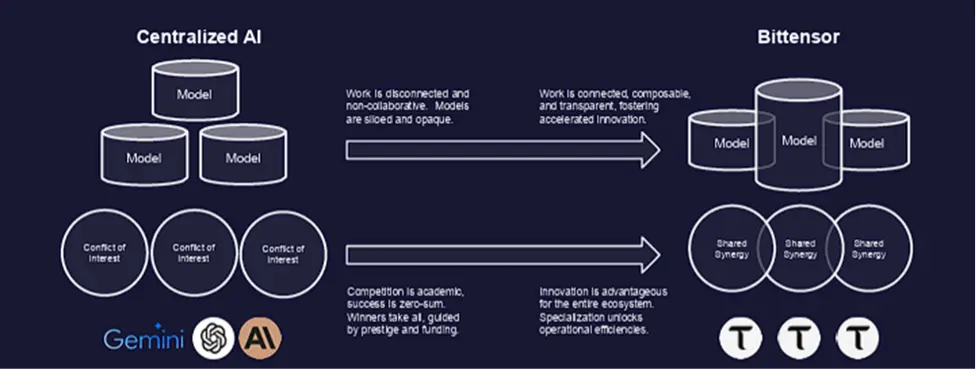
Bittensor 并不依赖传统平台那种 “集中式训练 + 单模型服务” 的架构模式,而是采用了一种去中心化的专家混合(MOE)机制:将全球各地已有的、训练完毕的 AI 模型接入网络,按任务需求动态调用最适合的模型组合,共同输出高质量内容,从而快速响应各类智能需求。

这一机制可理解为:将 AI 服务由“集中培养”转变为“全球调度”。模型不必由单一机构集中训练,而是通过网络路由将多个“专家模型”协同组织,从而生成更精准、更适应性强的答案。
xTAO Technologies Inc.

打个比方:你去医院就诊时,不再需要随机挂一个不熟悉的专家号,而是可以即时获得全世界最符合你需求的专家团队的联合会诊。你无需训练这些专家、也无需拥有他们,只需在需要的瞬间找到他们、调用他们,从而获取符合你个人化需求的答案。

更进一步,这些模型“专家”在不断处理新任务的过程中,也能从新的样本与反馈中持续学习,提升表现,最终形成一个可自我强化的正向循环网络

2.由马共识Yuma Consensus (POI:Proof of Intelligence)

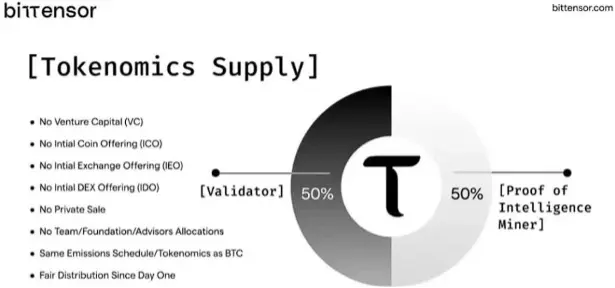
Bittensor 所采用的共识机制被称为Yuma Consensus,其核心理念可归纳为 “智能工作量证明(Proof of Intelligence,POI)” ,是一种融合了 PoW(工作量证明)与 PoS(权益证明)机制的复合式设计,旨在对 AI 模型的表现进行去中心化的质量评估与激励分配。

该机制由四个核心维度构成:stake + weight + trust + clipping,具体运作逻辑如下:

(1)PoW 思路延续:矿工仍需算力支撑,但核心竞争不在显卡性能,而在于模型表现与策略调优

即模型是否稳定、响应是否准确、调用是否快速,将直接影响其得分与奖励分配。

(2)Weights(评分权重):验证者需对每个矿工模型的输出进行 0 到 1 的评分

该评分代表验证者对模型输出质量的评价,是系统分发激励的核心参考维度之一。

(3)Stake(权益加权):验证者的评分权重将根据其质押的 TAO 数量动态调整

换言之,持有越多 TAO 的验证者,其评分所产生的影响越大。这一机制确保网络治理与奖励分配更加去中心化与抗操控

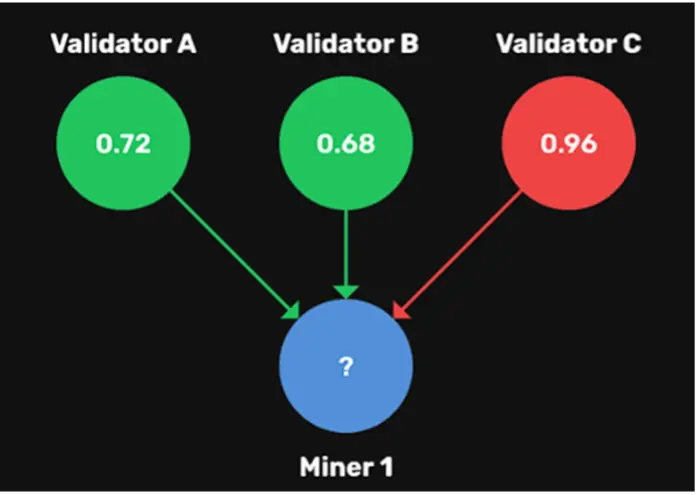
(4)Clipping(剪裁机制):极端偏离多数评分的验证者打分将被系统自动裁剪,不计入最终共识

该机制旨在避免评分作恶或操控,提升整个评分系统的鲁棒性与客观性
xTAO Technologies Inc.xTAO Technologies Inc.

(5)Trust(信任机制):验证者的长期评分行为若与其他验证者的评估结果较为一致,其信任分(Trust Score)将逐步提升。信任分越高,验证者在网络中的评分影响力越强,也更容易获得系统分发的推荐奖励,从而激励其持续进行公正、合理的打分行为。

最终,系统将在每个出块周期中,基于矿工得分与验证者评分权重的混合计算结果,完成 TAO 奖励的分配。这一过程确保了奖励分配与实际表现之间的强关联性,鼓励生态中的各类节点持续优化模型与评估行为。
xTAO Technologies Inc.

3.数字蜂巢思维Digital Hivemind

Bittensor 提出的 “数字蜂巢思维(Digital Hivemind)” ,指的是通过全球成千上万的 AI 模型协作,构建一个去中心化的大脑系统。与依赖单一强模型的传统方式不同,Bittensor 通过模型之间的竞争与评分,实现动态进化与智能聚合。

许多人会将这一机制与专家混合模型(MoE)混淆,但两者本质不同。MoE 更像是一个医院内部安排的专家组协作看诊,由中心系统统一调度;而数字蜂巢思维更像是全球所有顶级医院自动参与联合会诊,谁来接诊、如何分工,不由中心决定,而是由验证者评分与 Yuma 共识动态选择最合适的“专家”。

在这一机制下,模型无需集中训练,由网络根据实际表现分配任务与奖励,逐步形成一个自我优化、去中心化的智能生态。

四、xTAO 与TAO的关系

xTAO 是全球首家专注于 Bittensor 网络商业化的公司,由 WonderFi 前高管 Karia Samaroo 创立,团队背景融合了 Web2 上市经验(WonderFi)、金融资源(CapitalG、Arche)与链原生技术力量(Ala Shaabana),具备较强的跨界整合能力。

据Private Capital报道:xTAO 上市时,恰逢其完成 2278 万美元认购收据融资,投资阵容包括 Animoca Brands、Arca、Arche Capital、Borderless Capital、DCG、FalconX、Hypersphere Ventures、Off the Chain Capital、Republic 及 Stratos 等多个 Web3 头部机构。

其核心业务:包括运营 Bittensor 网络中的 Validator 验证节点,负责对矿工模型进行打分,并为企业客户提供模型接入服务,亦协助第三方部署矿工节点,承担 Bittensor 与外部用户之间的接口角色。

简而言之,TAO 是网络中的“燃料”,而 xTAO 则是一家专营加油站的公司,通过节点运营与服务输出,将链上算力价值转化为链下的商业收入模型。

五、xTAO上市意味着什么?

xTAO 的上市与当前多家加密公司寻求 IPO 的趋势类似,其核心意图在于通过公开募股连接现实资产市场,吸引传统资金入场。对于普通投资者而言,xTAO 提供了一个可通过二级市场投资间接参与 TAO 生态的渠道;而对于机构投资者来说,虽然 TAO 属于加密资产,存在合规持有障碍,但 xTAO 股票(XTAO.U)作为监管合规的金融产品,则成为 Web2 投资人接触 Bittensor 的 “影子资产” 。

同时,xTAO 也有望成为传统企业对接 Bittensor 模型服务的重要接口入口,在未来 AI 服务商业化过程中承担桥梁角色。公司未来若定期披露财务数据,也将为市场提供一套关于 TAO 商业价值的间接观测指标,为专业投资者评估生态成长空间提供辅助信息。

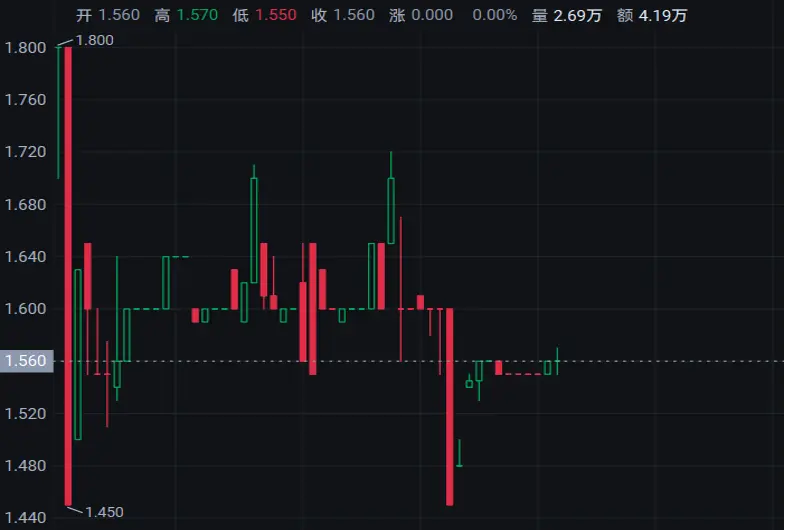
尽管具备一定叙事逻辑与资本背景支撑,xTAO 的首日交易表现相对理性。开盘当天股价在 CAD 1.45–1.80 区间波动,最终收盘价基本持平,未出现大幅波动。这一走势被部分观点视为 “健康开盘” ,避免了非理性炒作;但也有声音认为市场热度不足,反映出当前投资者对新型 Web3 AI 基础设施仍持观望态度,需进一步观察其业绩兑现与生态落地节奏。而第二日的价格走势成下降趋势,也恰恰说明了其盘面较弱。
xTAO Technologies Inc.

六、小结 (注:本文不构成投资建议)

总体而言,Bittensor 网络及其原生代币 TAO 依然展现出较为完整的技术设计框架、前沿的共识机制与去中心化模型架构,具备长期发展的技术潜力与生态扩展性。其在模型调度、奖励机制、系统治理等层面均具备一定创新性,也形成了较为清晰的应用落地路径。

xTAO 作为 Bittensor 商业化路径上的关键参与者,无论在叙事构建、资本阵容还是团队背景上,均展现出较强执行力与资源整合能力。然而,从目前的发展阶段来看,其上市动作仍难完全摆脱当前加密项目普遍 “借助 IPO 叙事窗口,承接时代红利” 的策略特征。虽然其业务定位具备一定实质性,但如何在实际运营中持续兑现技术价值与商业收入,仍需时间验证。

在这一前提下,xTAO 上市更多代表的是 TAO 生态走向资本市场的第一步,其长期价值有赖于 Bittensor 网络在 AI 基础设施层持续扩张的广度与深度,以及 TAO 在链上经济系统中能否真正承担起跨模型、跨服务的价值中枢角色。

Пов'язані матеріали

Report Interpretation: J.P. Morgan Details Micron's Pre-Earnings Sentiment, Current Hardware Sector Dynamics

Morgan Stanley analyst Joshua Meyers' report (June 21, 2026) highlights key trends in the hardware and semiconductor sector ahead of Micron's earnings. The core takeaways are: 1. **Micron & Memory:** Memory remains a high-conviction long theme, driven by strong AI demand and rising ASPs. However, investor focus is shifting to the sustainability of Micron's >80% gross margins and the specifics of potential new long-term supply agreements (SCAs). 2. **Hardware Supply Chain:** AI-related demand for servers, networking, and storage remains robust, but company performance is diverging. Celestica (CLS) shows improved margin confidence, Western Digital and Seagate benefit from pricing, Fabrinet (FN) sees predictable AI optics growth, and Teradyne (TER) anticipates a new Google customer. 3. **AI Capex & WFE Forecasts:** JPMorgan increased its Wafer Fab Equipment (WFE) market growth forecasts to 28% in 2026 and 29% in 2027. AI infrastructure financing is evolving, with higher project-level debt reducing constraints on capex expansion. The report signals that while the AI-driven hardware cycle is strong, the market is entering a phase focused on execution verification (e.g., Micron's SCA details, Fabrinet's ramp with Amazon) and valuation sustainability. Key near-term signals include Micron's guidance, Arista Networks' outlook, and the pace of demand normalization post potential tariff-related pull-ins.

marsbit5 год тому

Report Interpretation: J.P. Morgan Details Micron's Pre-Earnings Sentiment, Current Hardware Sector Dynamics

marsbit5 год тому

Research Report Analysis: The Fed's New Chair's Debut – New Leader, But Same Script?

Report Analysis: Federal Reserve's New Chair Debut – A New Captain, But the Same Script? Morgan Stanley's chief global economist Seth B. Carpenter analyzes the first FOMC meeting under new Fed Chair Kevin Warsh in a June 21 report. Warsh deliberately avoided providing forward guidance on interest rates, aligning with his philosophy. However, market expectations for a rate hike this year were reinforced. Key signals lie elsewhere: inflation may fall more than expected, and quantitative tightening (QT) could be more aggressive than anticipated. The FOMC's "dot plot" suggests only one rate hike in 2026. Carpenter argues that if inflation undershoots forecasts, the logic for even a single hike weakens, especially as projections indicate potential rate cuts in 2027. On QT, Warsh's stance is clear. Carpenter notes that measures like halving the Treasury's account balance could shrink the Fed's balance sheet by around $500 billion with minimal market impact. Combined with adjustments to reserve interest and liquidity rules, the ultimate QT scale may exceed expectations, though its market effect might be less disruptive unless the Fed actively sells Mortgage-Backed Securities (MBS). While Warsh initiated a review of the Fed's policy framework, the 2% inflation target remains intact for now. The report concludes that the market may be overestimating the significance of reduced forward guidance and the near-term rate hike risk, while potentially underestimating the scope and manageable nature of the coming balance sheet reduction. The key debates will hinge on upcoming core PCE data, the specifics of the QT path, and the framework review's findings.

marsbit5 год тому

Research Report Analysis: The Fed's New Chair's Debut – New Leader, But Same Script?

marsbit5 год тому

Critical Game Week: BTC Retracement Confirmation vs. HYPE Support Battle | Guest Analysis

This weekly analysis outlines a critical juncture for BTC and HYPE markets, focusing on key price level confirmations. **BTC Analysis:** BTC is at a pivotal point after a five-wave rally from the June 5th low of $59,100. The price has broken below a short-term rising channel's lower boundary, with the current move seen as a pullback to test this breakdown. Failure to reclaim this level could lead to a retest of the $59,000-$60,000 support zone. The core scenario hinges on this channel retest outcome. * **Key Levels:** Resistance at $64,500-$65,000 (channel boundary) and $69,500-$70,500. Support at $59,000-$60,000 and $55,000. * **Strategy:** A core bearish stance is maintained (20% short from last week), with short-term plans for tactical trades. Three detailed contingency plans (A/B/C) are provided for short positions on resistance tests or breakdowns, emphasizing strict stop-loss discipline. **HYPE Analysis:** HYPE shows strong momentum but is currently in a corrective phase after hitting a new high of $76.94. The price is retesting the crucial $64-$66 support area. * **Key Levels:** Resistance near $77 and $80-$82. Support at $64-$66 and $52-$54. * **Strategy:** The short-term approach is "buy on dips, avoid chasing rallies." A long position is considered only if clear stabilization signals appear at the $64-$66 or deeper $52-$54 support zones, with tight risk controls. **General Risk Management:** A standardized trailing stop-loss protocol is emphasized: set initial stop, breakeven at +1% profit, then trail stops upward to lock in gains. *Disclaimer: All analysis is presented as a personal trading framework, not investment advice. Market conditions are complex and require dynamic adjustment.*

marsbit5 год тому

Critical Game Week: BTC Retracement Confirmation vs. HYPE Support Battle | Guest Analysis

marsbit5 год тому

Торгівля

Спот
Ф'ючерси
活动图片