Chinese E-Commerce Giants JD, Alibaba Push CBOC for Yuan-Backed Stablecoins

ccn.comОпубліковано о 2025-07-04Востаннє оновлено о 2025-07-04

Key Takeaways
  • JD.com and Ant Group are lobbying China’s central bank to authorize yuan-based stablecoins in Hong Kong.
  • Chinese tech firms are engaging with regulators to shape the country’s role in the fast-evolving digital currency landscape.
  • New global regulations are accelerating stablecoin adoption, with China under pressure to respond.

As global interest in stablecoins heats up, Chinese tech giants JD.com and Ant Group are stepping up pressure on the People’s Bank of China (PBOC) to greenlight yuan-backed stablecoins for use in Hong Kong.

According to sources familiar with the talks, the companies are pushing for the approval of offshore yuan-pegged tokens as a strategic step toward internationalizing the currency and countering the dominance of dollar-linked stablecoins like USDT and USDC.

JD.com, Ant Group Push for Yuan-Pegged Stablecoins

While both firms plan to issue Hong Kong dollar-backed stablecoins once the region’s new regulations kick in on Aug. 1, they argue that an offshore yuan token is essential for long-term financial influence in global markets.

JD.com has reportedly emphasized this urgency in its discussions with the PBOC, calling the initiative critical for advancing the yuan’s global adoption.

Meanwhile, Ant Group is preparing license applications for stablecoin issuance in both Hong Kong and Singapore.

The push comes amid growing concern that China is falling behind in the digital currency race.

Former Bank of China vice president Wang Yongli warned that overreliance on dollar stablecoins could pose a long-term strategic risk if the yuan fails to gain ground in cross-border finance.

JD Coinlink Reaches Testing Milestone

JD.com is already making headway via JD Coinlink, its fintech division focused on blockchain-based payments.

The company has completed the second phase of testing for a Hong Kong dollar-backed stablecoin through the HKMA regulatory sandbox.

The stablecoin is designed for cross-border payments, retail settlement, and investment use cases.

CEO Liu Peng said the token is expected to launch in early Q4, issued on a public blockchain and integrated across JD’s ecosystem in Hong Kong and Macau.

This would make JD.com one of the first major Asian firms to launch a large-scale, retail-facing stablecoin.

China Rethinks Stablecoin Strategy

Although China banned cryptocurrencies in 2021, its stance on stablecoins is evolving.

Officials, including PBOC Governor Pan Gongsheng and advisor Huang Yiping, have publicly acknowledged the need to address stablecoin regulation.

The urgency is clear. While the global stablecoin market currently stands at $247 billion, it’s projected to hit $2 trillion by 2028.

According to the Bank for International Settlements, more than 99% of existing stablecoins are pegged to the U.S. dollar.

Meanwhile, the yuan’s share of global payments dropped to just 2.9% in May, compared to the dollar’s 48%.

In Hong Kong, crypto firms report growing demand from Chinese exporters using USDT for trade settlement, driven by capital controls, currency volatility, and rising geopolitical risk.

Adding to the pressure, the U.S. is moving fast. Following President Trump’s endorsement of stablecoins earlier this year, U.S. regulators are advancing frameworks to accommodate corporate stablecoin issuers like JPMorgan, PayPal, and Stripe.

Now, China’s biggest tech players are signaling that they don’t want to be left behind.

Was this Article helpful? Yes No

Трендові криптовалюти

Пов'язані матеріали

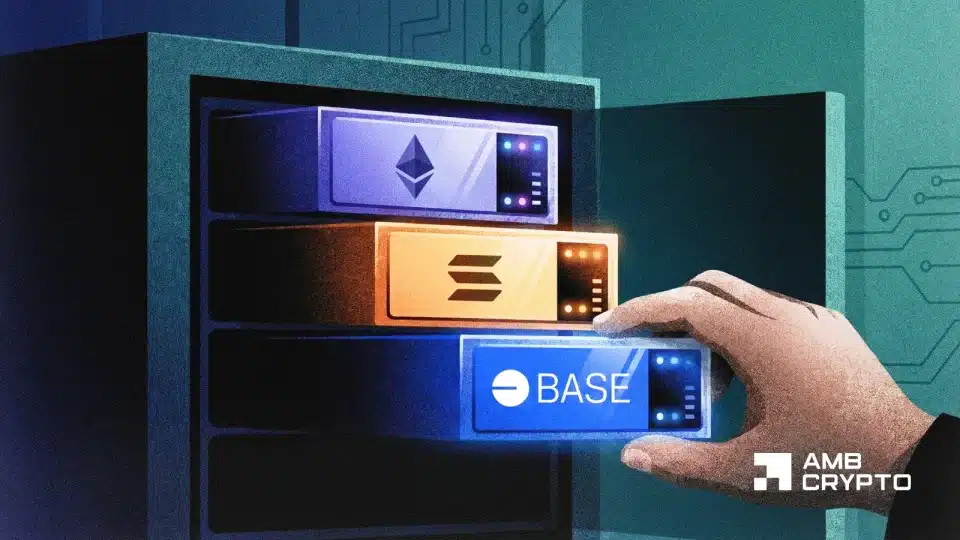
Why 2026 could redefine Ethereum, Solana, Base and Avalanche

Blockchain infrastructure is undergoing a major coordinated transformation, driven by institutional demand for reliability, compliance, and predictable settlement. Over $30 billion in Real-World Assets (RWA) on-chain has exposed network weaknesses. Major blockchains are responding with foundational upgrades, moving beyond incremental speed improvements. Ethereum's "Glamsterdam" upgrade, planned for H1 2026, will significantly increase gas limits and introduce features like PBS (pre-blocked state) for enhanced settlement and parallel execution. Solana's "Alpenglow," targeting a mainnet launch in H2 2026, focuses on reducing finality time dramatically and freeing network resources to improve reliability. Beyond speed, compliance is critical. Base's "Beryl" upgrade in Q3 2026 will introduce a standardized, regulatory-compliant token framework (B20). Avalanche's "Octane" upgrade aims to boost transaction processing and reduce costs for enterprise applications. Even Bitcoin is evolving with the potential activation of OP_CAT by late 2026/early 2027. The competition is shifting. While technical upgrades are widespread, institutions will ultimately allocate capital based on proven execution, operational resilience, and regulatory compatibility during market stress. Ethereum currently leads in tokenized assets, while networks like Base and Solana are strengthening their institutional offerings. The blockchain that best delivers reliable, compliant, and uninterrupted service is poised to attract the greatest share of future institutional capital.

ambcrypto18 хв тому

Why 2026 could redefine Ethereum, Solana, Base and Avalanche

ambcrypto18 хв тому

Tiger Research: Take RWA Tokenization Overseas First

This article discusses the strategic choices facing financial institutions in jurisdictions lacking mature regulatory frameworks for Real-World Asset (RWA) tokenization. With the market growing rapidly, institutions must choose between waiting for local legislation, using regulatory sandboxes, or—the recommended priority—expanding into overseas markets to gain early experience. Successfully launching cross-border RWA tokenization requires meticulous preparation across six key areas: establishing an overseas base (e.g., Hong Kong, Singapore, the U.S.), securing necessary licenses, defining the tokenized asset (with bonds being simpler than non-standard assets), defining the target investor scope, deciding on settlement currencies/payment flows, and designing operational requirements like custody and on-chain governance. The article outlines two primary strategic paths: a direct "onshore" path and a "native on-chain" path. The direct path involves setting up a legal entity and obtaining licenses in a mature jurisdiction like Hong Kong, Singapore, or the U.S., leveraging existing platforms (e.g., DigiFT, Securitize) for efficiency. The alternative native on-chain path involves partnering with compliant, decentralized platforms (e.g., Ondo, Plume Nest) that use structures like offshore SPVs to facilitate tokenization and access DeFi liquidity, offering speed and broader reach but with greater structural complexity. The core argument is that institutions should not wait for perfect domestic regulation. A detailed hypothetical case study illustrates the multi-step, 6-12 month process of launching an overseas tokenized bond. The key takeaway is that the essence of a tokenization business lies not in the technology but in successfully executing the entire sales and operational process. The market is moving forward, and the time to act is now.

marsbit29 хв тому

Tiger Research: Take RWA Tokenization Overseas First

marsbit29 хв тому

Торгівля

Спот

Популярні статті

Як купити PUSH

Ласкаво просимо до HTX.com! Ми зробили покупку Push Protocol (PUSH) простою та зручною. Дотримуйтесь нашої покрокової інструкції, щоб розпочати свою криптовалютну подорож.Крок 1: Створіть обліковий запис на HTXВикористовуйте свою електронну пошту або номер телефону, щоб зареєструвати обліковий запис на HTX безплатно. Пройдіть безпроблемну реєстрацію й отримайте доступ до всіх функцій.ЗареєструватисьКрок 2: Перейдіть до розділу Купити крипту і виберіть спосіб оплатиКредитна/дебетова картка: використовуйте вашу картку Visa або Mastercard, щоб миттєво купити Push Protocol (PUSH).Баланс: використовуйте кошти з балансу вашого рахунку HTX для безперешкодної торгівлі.Треті особи: ми додали популярні способи оплати, такі як Google Pay та Apple Pay, щоб підвищити зручність.P2P: Торгуйте безпосередньо з іншими користувачами на HTX.Позабіржова торгівля (OTC): ми пропонуємо індивідуальні послуги та конкурентні обмінні курси для трейдерів.Крок 3: Зберігайте свої Push Protocol (PUSH)Після придбання Push Protocol (PUSH) збережіть його у своєму обліковому записі на HTX. Крім того, ви можете відправити його в інше місце за допомогою блокчейн-переказу або використовувати його для торгівлі іншими криптовалютами.Крок 4: Торгівля Push Protocol (PUSH)Легко торгуйте Push Protocol (PUSH) на спотовому ринку HTX. Просто увійдіть до свого облікового запису, виберіть торгову пару, укладайте угоди та спостерігайте за ними в режимі реального часу. Ми пропонуємо зручний досвід як для початківців, так і для досвідчених трейдерів.

592 переглядів усьогоОпубліковано 2024.12.13Оновлено 2026.06.02

Як купити PUSH

Обговорення

Ласкаво просимо до спільноти HTX. Тут ви можете бути в курсі останніх подій розвитку платформи та отримати доступ до професійної ринкової інформації. Нижче представлені думки користувачів щодо ціни PUSH (PUSH).

活动图片