币圈正在美股化:聊聊需要关注的几类币股资产

深潮Опубліковано о 2025-06-24Востаннє оновлено о 2025-06-24

币股正在融合,一面是股票资产上链,一面是币圈资产上市,两个市场的流动性正在双向打通。

撰文:岳小鱼

币圈逐渐在美股化,现在玩币圈也需要懂美股了。

由于比特币有 ETF,原来只有比特币和美股非常接近,但是现在加密货币行业的人都开始去美股搞事情。

我们就来看下目前到底有哪些值得关注的「币股」?

整个币股市场,主要分为 4 类:

第一类稳定币概念股,标杆就是 Circle。

但是 Circle 目前溢价非常高了,币圈的人都看不懂了,但是传统金融的人都还在猛猛冲。

除了 Circle 之外,还值得关注的公司有 Tether(非上市公司,但 USDT 主导市场)、Paxos(发行 Pax Dollar、PayPal USD)。

第二类是交易平台,标杆是 Coinbase。

但是 Coinbase 资产已经定价太高了,估值稳定,增长空间有限。

除了 Coinbase 之外, 还值得关注的有 Robinhood、Kraken。

Robinhood 本身是一个传统的股票交易平台,但是正在积极向加密货币扩展,刚收购了 Bitstamp。

Kraken 也是一个美国合规交易所,还没有上市,正计划 IPO,如果 IPO 成功,算是 Coinbase 的一个有力挑战者。

第三类是矿股,搞比特币挖矿产业的。

典型的代表是 Riot Platforms(RIOT)、Marathon Digital Holdings(MARA)、CleanSpark(CLSK)。

矿股是周期股,加密货币熊市亏损大、牛市收益高。

由于依赖算力和能源成本,会受到环保政策压力。

长远看,比特币储备资产地位提升还是利好矿股的。

第四类是加密货币金库,以 MicroStrategy(微策略)为代表。

微策略开创了「融资 - 购币 - 拉盘」模式,向市场募资,加杠杆买 BTC。

目前还有以太坊微策略、Solana 微策略、TRON 微策略等等。

很多龙头加密货币公司正在买一些美股的壳公司,然后从美股市场融资,反向购买加密货币。

这非常考验加密货币公司的融资能力,需要本身就有钱,比如微策略。

比如以太坊核心圈买的 SharpLink、波场孙宇晨买的 SRM Entertainment。

但是这两个还不一样,前者是从市场募资买以太坊,后者是把他手上的稳定币跟 TRX 注入到这家美股公司里面来,然后出金成美元。

所以 SRM 这种资产类型可能会存在潜在的合规风险。
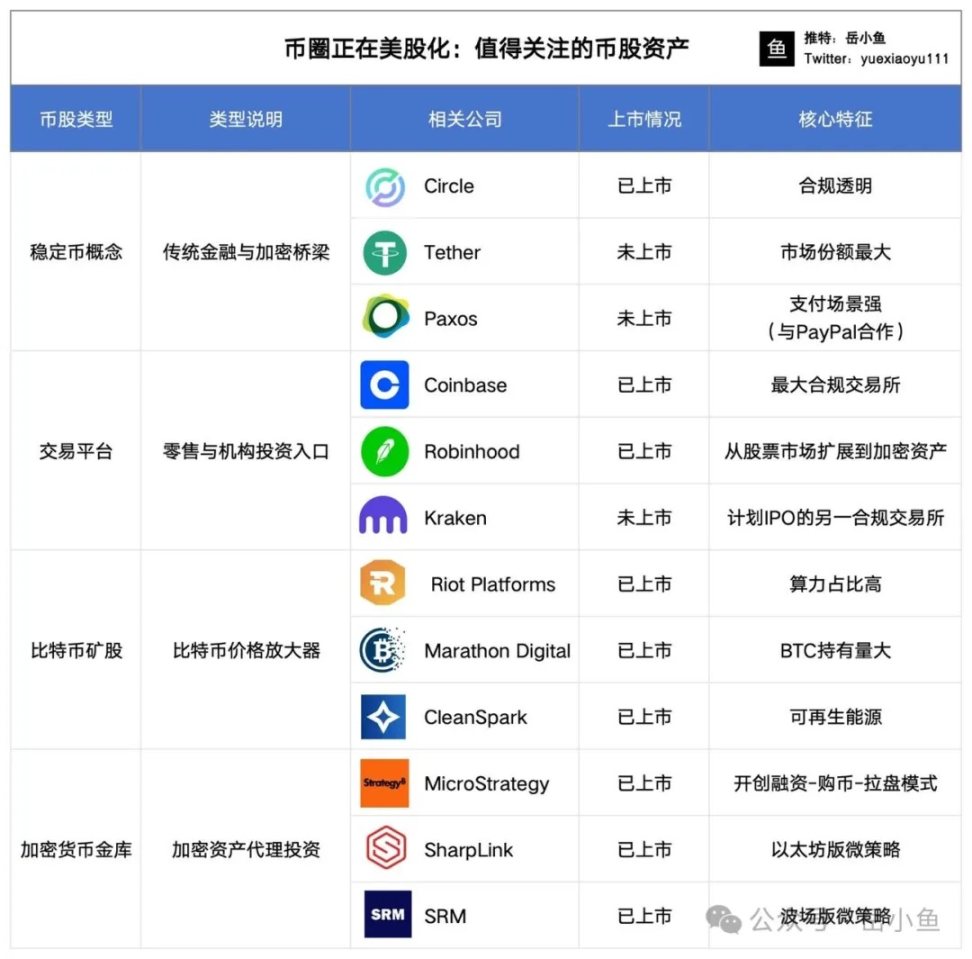
总结一下

稳定币和交易平台代表「基础设施」投资,矿股和加密货币金库则更像「高风险高回报」的投机资产。

这 4 类币股的风险是不一样的:

(1)稳定币概念风险最低,但增长天花板有限,适合追求稳健收益的机构投资者。

(2)交易平台估值高,需关注生态扩张能力,适合看好加密市场长期增长的投资者。

(3)矿股周期性强,需关注能源和监管压力,适合周期性交易者,但是要结合比特币价格和能源成本动态调整仓位。

(4)加密货币金库爆发力最强,但杠杆和监管风险也最高,适合高风险偏好的投机者,需要深入研究公司的融资能力。

币股正在融合,一面是股票资产上链,一面是币圈资产上市,两个市场的流动性正在双向打通。

我们普通散户也要调整思路,相关知识学习起来!
Пов'язані матеріали

Zcash ETF Moves One Step Closer: Wall Street to Pack Privacy Coin into Securities Accounts for the First Time

The Grayscale Zcash Trust has filed its fifth amended registration statement with the SEC, aiming to convert into the first U.S. spot ETF directly holding a privacy coin (ticker ZCSH). Key terms include a 2.5% annual fee, Bank of NY Mellon as administrator, and Coinbase for custody and brokerage. The trust held ~388,700 ZEC (~$155M) as of June 30; its AUM surged to ~$260M by August 21, driven by ZEC's price rally from $250 to over $800. The ETF represents a major identity shift for Zcash, a coin previously delisted by many exchanges and flagged by regulators for its anonymity. However, the ETF strips away Zcash's core privacy feature. To ensure compliance, all trust-held ZEC will be stored in transparent addresses, making transactions auditable and traceable. Zcash's optional privacy—unlike Monero's mandatory privacy—is the key compromise enabling this Wall Street entry. Market pricing reflects aggressive optimism for institutional access, but challenges remain. Only ~22% of circulating ZEC is in shielded pools; if ETF demand siphons transparent coins, Zcash's privacy narrative weakens. Competition from programmable privacy on Ethereum L2s could also dilute its value proposition. With prices already up over 200% in four months, the rally may have prematurely priced in the ETF approval, leaving limited safety margin. Grayscale's move highlights traditional finance's capacity to repackage regulatory-edge assets into compliant products, raising questions about the future boundaries of crypto ETF adoption.

marsbit7 хв тому

Zcash ETF Moves One Step Closer: Wall Street to Pack Privacy Coin into Securities Accounts for the First Time

marsbit7 хв тому

Fed Research: Crypto Investors Driven by Beliefs, Returns Change Their Decisions

A new working paper from the Federal Reserve Bank of Cleveland provides a novel explanation for cryptocurrency's divergence from traditional financial assets. It finds that American crypto investors are distinguished not by demographics or risk tolerance alone, but by their radically different beliefs about future returns. This divergence in expectations better explains who owns crypto than factors like age or income, a reversal of the pattern seen with stocks or bonds. The research, based on surveys of up to 25,000 US households, shows crypto owners expected an average 22% annual return, compared to just 7% for non-owners. A one-percentage-point increase in an individual's expected return was linked to a 0.8-point rise in ownership likelihood. A randomized experiment revealed that simply showing information about Bitcoin's past 12-month performance increased respondents' desired crypto portfolio share by about 47% and spurred subsequent purchases, primarily among those who previously felt uninformed. The study suggests this dynamic—where past gains attract new buyers, pushing prices higher and reinforcing bullish beliefs—could fuel speculative bubbles. It also indicates crypto wealth gains are treated more like "gambling winnings" than permanent income, boosting purchases of durable goods but not everyday spending. The broader conclusion is that crypto volatility stems partly from investor disagreement and learning, not just market fundamentals. With widespread misunderstanding and shifting expectations driven by performance data, price swings are likely to remain a defining feature of the asset class. Future retail demand may depend not just on Bitcoin's price, but on what information investors receive about its past performance.

cryptonews.ru5 год тому

Fed Research: Crypto Investors Driven by Beliefs, Returns Change Their Decisions

cryptonews.ru5 год тому

Торгівля

Спот
活动图片