融资1150万美元,TAC想要带领Telegram十亿用户生态拥抱DeFi

Odaily星球日报Опубліковано о 2025-06-19Востаннє оновлено о 2025-06-19

Анотація

Hack VC领投战略轮融资,Curve、Morpho、Euler等协议已接入。

融资1150万美元,TAC想要带领Telegram十亿用户生态拥抱DeFi

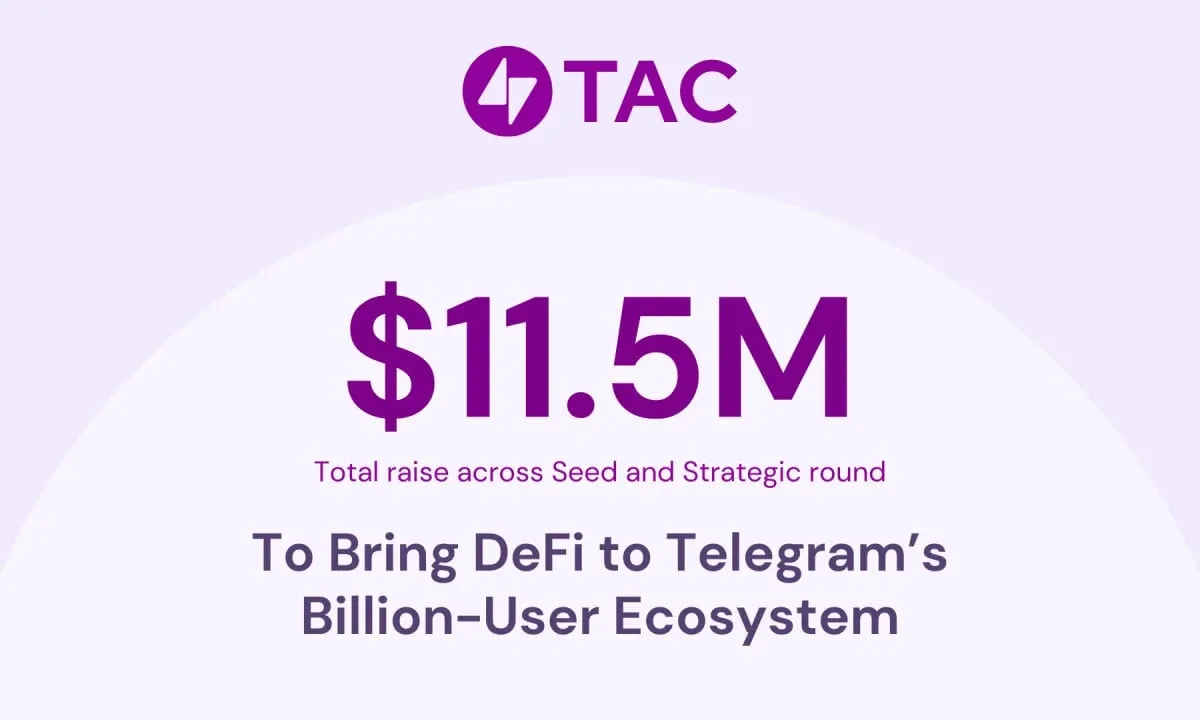
作为专为 EVM dApp 接入 TON 与 Telegram 生态打造的区块链网络,TAC 近日宣布已完成总计 1150 万美元的种子及战略轮融资。最新一轮 500 万美元战略融资由 Hack VC 领投,进一步彰显投资机构对 TAC 愿景的高度认可——在加密领域用户最为集中的 Telegram 内提升区块链功能性。

Hack VC 管理合伙人 Ed Roman 表示:“我们专注于投资那些构建互联网未来的团队。TAC 团队在基础设施和增长方面有着深厚的积淀,拥有多年行业经验。本轮融资的领投体现了我们对 TAC 团队能力的坚定信心——相信其能够塑造以太坊 dApps 通过 Telegram 和 TON 触达全球用户的多样化方式。”

据了解,TAC 主网即将上线,目前正分阶段推进当中。现阶段的开发者主网阶段已吸引了 CurveMorphoEuler 等蓝筹 DeFi 协议部署,另有 20 余个头部应用正在筹备主网集成工作。这些前期进展将为 TAC 主网上线时生态的深度流动性、DeFi 底层模块的成熟性以及 Telegram 用户实际价值获得的即时性提供保障。

TAC 联合创始人兼 CEO Pavel Altukhov 表示:“TAC 致力于为 EVM 开发者提供工具与渠道,方便他们将应用部署到 Telegram 的十亿用户生态之中。此次战略轮融资将加速我们让以太坊应用走入寻常用户生活的步伐,并为下一波 TON 生态原生消费级应用奠定坚实的基础。”

值得一提的是,TAC 主网上线前的流动性激励活动 “The Summoning” 吸引了众多头部基金、LP 及基础设施项目的热情参与,主网公开上线前,TAC TVL 已突破 7 亿美元,来自机构的大力支持彰显了 TAC 作为 TON 生态 DeFi 底层基建的信心。尤为重要的是,这些流动性将为核心 DeFi 应用提供发展动力,确保主网上线即有真实收益和市场功能。

Curve 创始人 Michael Egorov 表示:“通过 TAC 上线 Telegram 和 TON,Curve 有机会触达无数尚未进入 DeFi 世界的新用户。TAC 选择了将经过实战考验的 EVM 应用引入这一生态的优质路径,我们很高兴成为首批部署并服务新用户的项目之一。”

目前,Curve, Morpho 和 Euler 等协议已开发了专属的 Telegram 生态小程序(TMA),方便其原生产品接入 Telegram。同时,越来越多的消费级小程序应用也将在后端集成 DeFi 功能,让众多非加密用户享受收益及金融功能。

TAC 团队认为,这种在超级应用 Telegram 内的深度融合,是未来推动加密大规模采用的关键路径。

关于 TAC

TAC 是一条专为 EVM dApp 接入 TON 与 Telegram 十亿级用户生态而打造的区块链。TAC 方便以太坊 dApp 无缝部署到 TON 生态,将 EVM 功能与流动性桥截止 TON 生态,助力开发者专注于消费级场景创新。

官网 | X | Discord | Telegram | Linkedin

Пов'язані матеріали

The Creators of ChatGPT No Longer Use ChatGPT for Work

The creators of ChatGPT are increasingly moving away from using it themselves, shifting their primary AI tool to AI agents like Codex. As of June 2026, Codex handles 99.8% of OpenAI's weekly output tokens—a dramatic rise from less than 10% just ten months prior. This transition, which accelerated around September, marks a fundamental change: from single-turn chatbot queries to delegating entire, long-running tasks to autonomous agents. The shift began with engineers but quickly spread company-wide. By April 2026, non-technical departments like legal, finance, and HR had adopted Codex as their primary tool, with personnel in these roles now generating over 85% of their output tokens through it. Notably, growth among non-developer users has far outpaced that of developers. Codex has evolved from a coding assistant into a general workflow agent. It can autonomously manage complex, multi-step processes—from implementation and debugging to testing—running for hours without human intervention. Heavy users at OpenAI can now delegate over 60 hours of agent runtime per day. The model underpinning Codex, GPT-5.5, not only executes tasks but also optimizes its own infrastructure, demonstrating improved efficiency. This report signals a broader shift in knowledge work: the key differentiator is becoming the scale and complexity of tasks users are willing to fully delegate to AI agents.

marsbit20 хв тому

The Creators of ChatGPT No Longer Use ChatGPT for Work

marsbit20 хв тому

The Rise of Stablecoins in Latin America Is Not, in Essence, a 'Victory for Crypto Technology'

The Rise of Stablecoins in Latin America: Not a Victory for Crypto, But for Remittance Infrastructure Stablecoin adoption in Latin America isn't primarily driven by belief in crypto technology. It's a pragmatic solution to a centuries-old problem: getting money home. The article draws parallels to the traditional "silver letters" (银信) system used by Chinese diaspora, where trust and execution relied on tight-knit community networks. The core pain point is remittances—the lifeblood for millions of families. Existing systems are often slow, expensive, and opaque. Stablecoins like USDT and USDC are not seen as speculative crypto assets but as "digital dollars in your phone." They address critical local needs: Argentinians use them as a hedge against hyperinflation, Venezuelans as a lifeline for essential goods, while in Brazil and Mexico, they facilitate cross-border payments and freelance payouts. The real challenge isn't the blockchain transfer itself, but the "on-ramps" and "off-ramps"—how to convert local currency into stablecoins and, crucially, how recipients can access the funds as spendable local currency via systems like Pix (Brazil) or SPEI (Mexico). The battlefield is building the infrastructure that seamlessly connects these ends. Regulators are less focused on "crypto adoption" and more on controlling what becomes a parallel foreign exchange system, concerned with AML, consumer protection, and capital flows. The future lies in stablecoins becoming an invisible, efficient middle layer in a new remittance stack, where the user only cares about one thing: the money arrived.

marsbit1 год тому

The Rise of Stablecoins in Latin America Is Not, in Essence, a 'Victory for Crypto Technology'

marsbit1 год тому

Торгівля

Спот
活动图片