World Liberty Financial приобретет крупную долю в мем-монете TRUMP

cryptonews.ruОпубліковано о 2023-04-07Востаннє оновлено о 2025-06-07

Эрик Трамп объявил, что World Liberty Financial (WLFI) приобретет существенную долю в мем-монете TRUMP в рамках своей долгосрочной казначейской стратегии. Это решение последовало за недавним конфликтом по поводу разработки криптокошелька под брендом Трампа, который теперь прекращен

Стратегический шаг World Liberty Financial в монете-меме TRUMP

В посте на X Эрик Трамп подтвердил стратегическое партнерство между WLFI и токеном TRUMP. WLFI, децентрализованная финансовая платформа, связанная с семьей Трампа, займет значительную позицию в мем-монете в рамках своих более широких инвестиционных планов.

«Мы верим в светлое криптобудущее, патриотизм и идею долгосрочного успеха», — сказал Эрик Трамп. Хотя запланированный мем-кошелек WLFI больше не будет продвигаться, он подчеркнул, что его внимание будет сосредоточено на создании и продвижении монеты $TRUMP. Эта приверженность цифровым активам появилась после того, как семья Трампа запустила свою коллекцию NFT в 2022 году.

Ожидается, что казначейские инвестиции WLFI в $TRUMP также укрепят позиции платформы в пространстве цифровых активов. Приобретение представляет собой долгосрочный интерес к криптовалюте, связанной с брендом президента Дональда Трампа, и является частью расширяющейся экосистемы криптовалют, связанной с его семьей.

Спор по поводу кошелька с брендом Трампа привел к прекращению противоправных действий

Этот шаг последовал за спором о запуске криптокошелька под брендом Трампа, который с тех пор был отложен. Проект кошелька, спонсируемый Fight Fight Fight LLC и платформой NFT Magic Eden, был описан как официальный продукт, связанный с именем Трампа.

Однако семья Трампа быстро отмежевалась от проекта. Эрик Трамп, Дональд Трамп-младший и Баррон Трамп выступили и заявили, что никто из них не был связан с кошельком. В ответ компании, стоящие за кошельком, отправили письмо о прекращении и воздержании в ответ на опровержение Trump Organization, которая затем немедленно ответила юридическим прекращением и воздержанием.

Кошелек в конечном итоге был закрыт после того, как члены семьи Трампа подали иск к создателям кошелька. В своем иске WLFI утверждала, что ее действия были необходимы для защиты целостности бренда Трампа и для того, чтобы убедиться, что он не связан с несанкционированными продуктами.

Влияние семьи Трампа на рынок криптовалют

Этот шаг закрепляет растущее влияние семьи Трампа в криптовалютном пространстве. В отличие от многих других в мире криптовалют и NFT, семья Трампа начала входить в парадигму цифровых активов только в 2022 году со своей коллекцией NFT, но все быстро развивается. Еще одной вехой в этом расширении стал запуск мем-монеты $TRUMP в январе 2025 года.

Кроме того, World Liberty Financial, еще одна компания, поддерживаемая семьей Трампа, продолжает развивать свою децентрализованную финансовую платформу. Помимо содействия участию семьи в технологиях Web3, стейблкоин WLFI USD1 призван стать одной из основных частей ее финансовой экосистемы.

До сих пор участие семьи Трампа в криптовалюте вызывало вопросы о том, как переплетаются политика, бизнес и цифровые активы. Хотя некоторые критики утверждали, что это были предприятия, призванные использовать политическое влияние имени Трампа, семья настаивала на том, что это были инновационные попытки войти в мир криптовалют.
Пов'язані матеріали

Just now, DeepSeek V4 updates with DSpark, improving inference speed by 80%

DeepSeek has updated its DeepSeek V4 model with the DSpark speculative decoding framework, achieving a significant 60-85% speedup in generation for Flash models and 57-78% for Pro models while maintaining the same overall throughput. This engineering-focused update, rather than a core architectural change, introduces DSpark to address latency and throughput bottlenecks in high-concurrency production environments. DSpark combines high-throughput parallel generation with adaptive load-aware verification. Its key innovations include a semi-autoregressive generation architecture to model dependencies within token blocks and a hardware-aware confidence-scheduled verification system. This system uses a confidence head to predict token acceptance probabilities, allowing it to dynamically optimize verification length per request and allocate compute only to tokens with the highest expected payoff. The asynchronous scheduler is designed for real-world deployment, ensuring zero-overhead scheduling and continuous CUDA graph replay while preserving the target model's output distribution. In tests across mathematical reasoning, code generation, and daily dialogue, DSpark outperformed state-of-the-art models like Eagle3 and DFlash, increasing average acceptance length by 26.7%-30.9% and 16.3%-18.4% respectively on Qwen3 target models. DeepSeek also open-sourced DeepSpec, a full-stack codebase for training and evaluating speculative decoding draft models, providing a standardized toolkit that includes data preparation tools, model implementations, training code, and evaluation scripts.

marsbit3 год тому

Just now, DeepSeek V4 updates with DSpark, improving inference speed by 80%

marsbit3 год тому

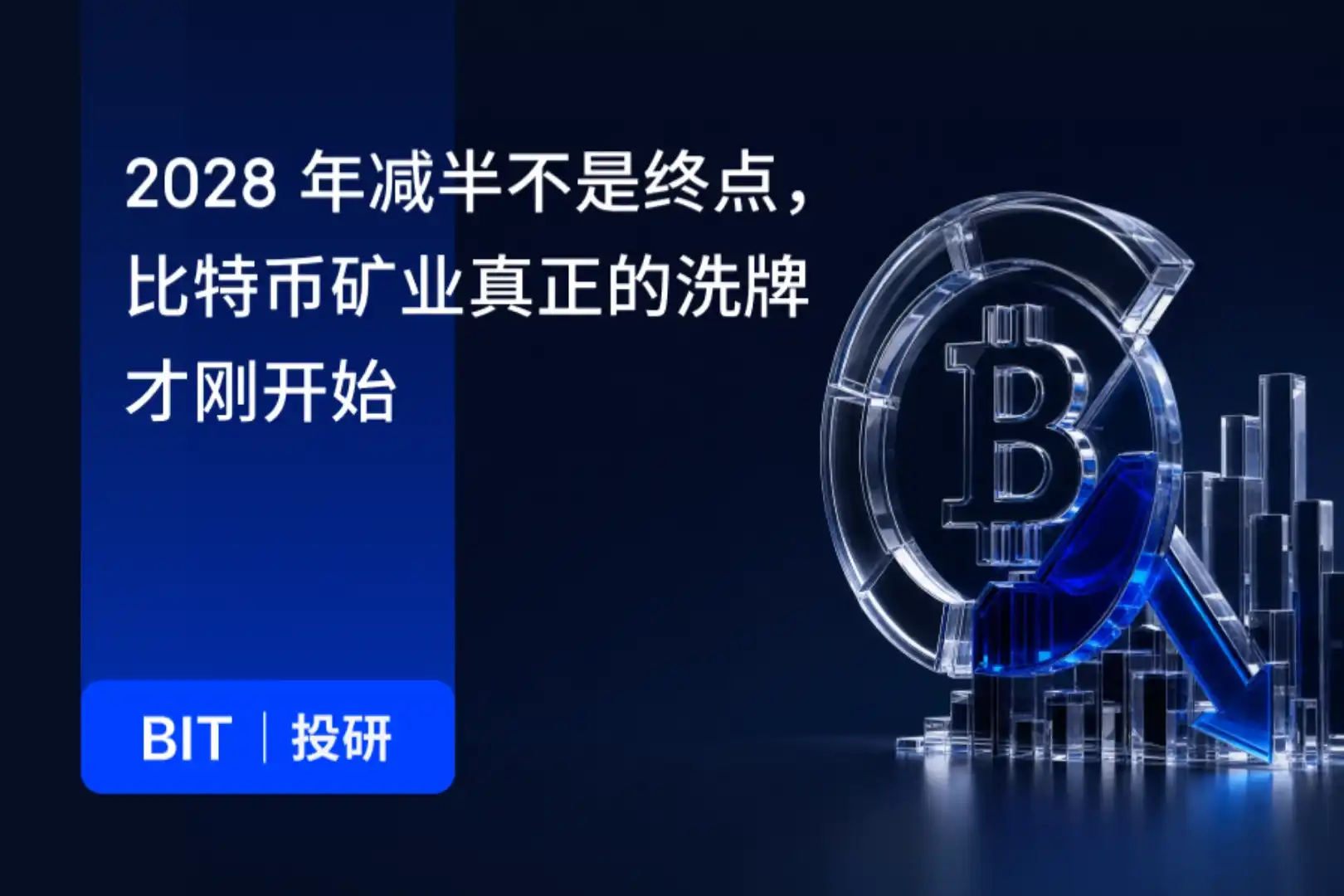
BIT Research: The 2028 Halving Is Not the End, the Real Shake-Up of the Bitcoin Mining Industry Is Just Beginning

The Bitcoin mining industry is undergoing its most complex structural adjustment since inception. Despite Bitcoin's price holding near $61,000 and the network hash rate approaching a record 1 ZH/s, miner profitability is deteriorating. The industry is operating close to its breakeven point, with the 2028 halving expected to accelerate consolidation. The challenges extend beyond the halving's subsidy reduction; the industry's revenue model has yet to successfully transition towards a fee-driven structure. Increasingly, mining companies are evolving from simple Bitcoin producers into infrastructure and energy operators, including providers of AI/HPC computing power. Competition is shifting from pure hash rate expansion to business model upgrades. Economic pressure is evident. The theoretical daily mining revenue at current prices is around $78 million, yet the actual figure is only about $33 million—a 136% gap. Transaction fees remain low at roughly $220k daily, far below historical implied levels. With a current estimated industry-wide breakeven price near $65,000, mining alone is struggling to generate ideal profits. The 2028 halving is projected to push the fundamental production cost floor to approximately $93,289. This will likely accelerate a shift towards consolidation among larger, well-capitalized miners with diversified revenue streams. Competitive advantage will belong to institutionalized players with access to low-cost energy, AI/HPC hosting operations, and stronger balance sheets. In essence, Bitcoin mining is transitioning from a "mining business" to an "infrastructure business." Future profitability and resilience will depend less on block rewards and more on diversified income sources like energy management and computational infrastructure services. For investors, the key question is not the halving itself, but which miners can successfully navigate this business model transformation.

marsbit4 год тому

BIT Research: The 2028 Halving Is Not the End, the Real Shake-Up of the Bitcoin Mining Industry Is Just Beginning

marsbit4 год тому

This is How God Karpathy Uses Claude?

Andrej Karpathy, a prominent figure in AI, has reportedly joined Anthropic, leading to a noticeable decrease in his open-source contributions and social media activity. A document claiming to be his personal "CLAUDE.md" file—a set of instructions for the Claude AI to follow within a specific codebase—has been circulating online. While its authenticity is unverified, the content aligns closely with Karpathy's publicly shared principles on effective AI-assisted programming. The document outlines key rules for AI coding assistants, emphasizing the importance of reading existing code thoroughly before writing new code to maintain consistency. It advises against over-engineering, advocating for simple, surgical modifications that match the project's existing style. Other guidelines include clarifying assumptions upfront, writing meaningful tests, thoughtful debugging, and carefully considering dependencies. The core message is that these principles help prevent common AI coding failures, such as introducing unnecessary abstractions, style drift, or making invisible architectural decisions. The community has noted that even experts like Karpathy require detailed instructions to guide AI effectively, akin to managing a junior developer. A related GitHub repository, "andrej-karpathy-skills," which encapsulates these ideas, is reported to significantly reduce Claude's code error rate. Ultimately, the advice stresses that the best CLAUDE.md is tailored to one's own tech stack and coding practices.

marsbit4 год тому

This is How God Karpathy Uses Claude?

marsbit4 год тому

Торгівля

Спот
活动图片