进击的 Pump.fun 40 亿估值发币,枯竭的市场却在等待救星

深潮Опубліковано о 2025-06-04Востаннє оновлено о 2025-06-04

最后的一哥,还是最后的一割?

撰文:深潮 TechFlow

Meme 还在继续,但市场的热情似乎已到强弩之末。

虽然每天也有 Meme 在发射,但与去年相比,你有多久没有看到一个新的现象级金狗了?

Meme 不行,但这似乎不影响 Meme 发射平台的一路进击。

6月4日,据 Blockworks报道,Pump.fun 计划发币,以40亿美元的完全稀释估值(FDV)筹集10亿美元,出售约25%的代币。

此次发币,面向公众和私人投资者,传闻可能伴随空投,代币或名为“$PUMP”,但具体细节仍未浮出水面。
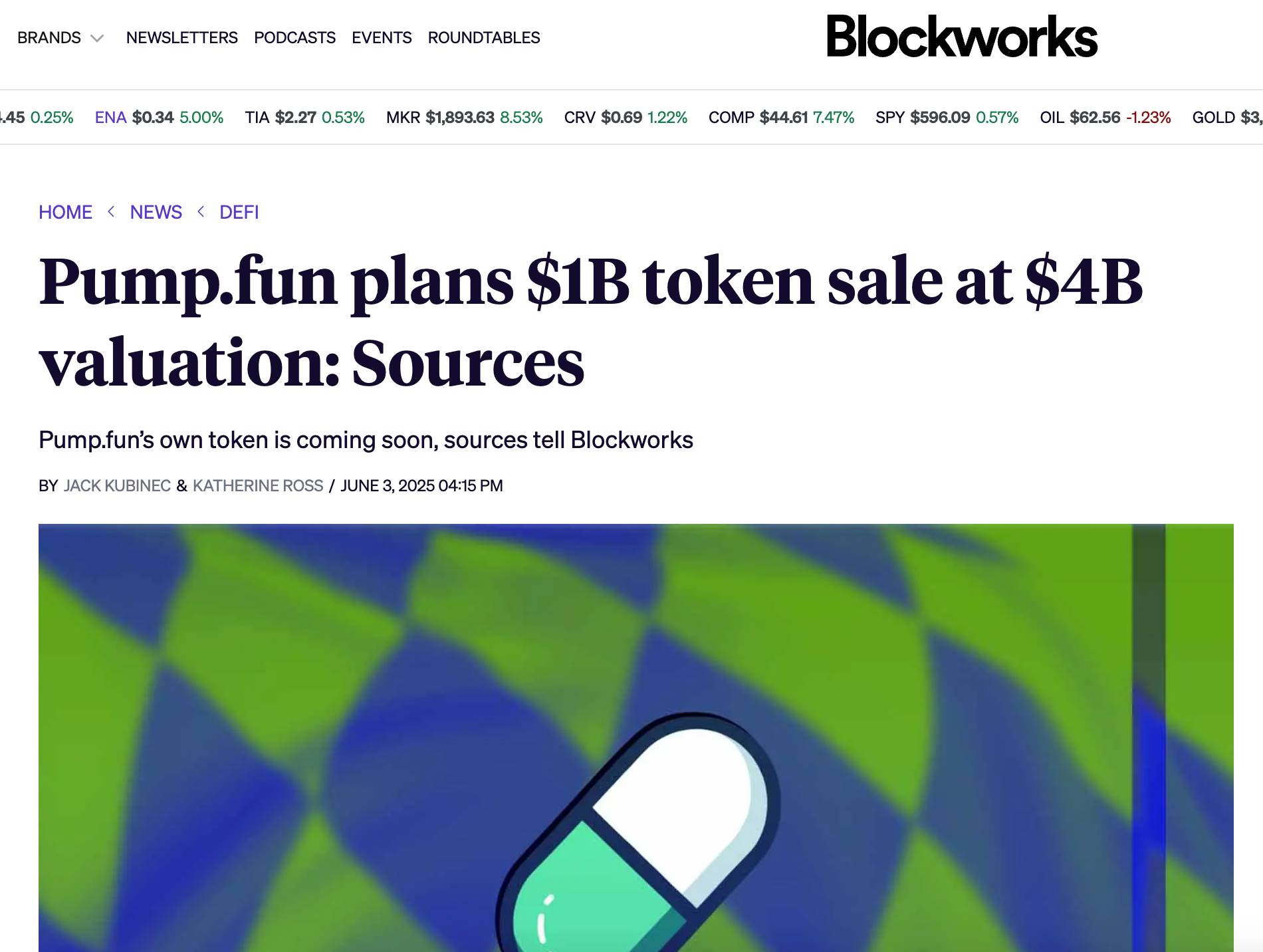
虽然目前 Pump.fun 官方并没有回应确认这个发币计划的真实性,但作为对比,稳定币 USDC 背后的发行商 Circle 在美股上市寻求 IPO,公开的估值也不过72亿美金。

目前,市场对这则消息的反应开始分化。

消息一出,Pump.fun 上的 ALON(与Pump创始人@a1lon_9同名) 代币一度拉涨102%,纯赌的逻辑还在继续。

一部分人看好Pump.fun的吸金能力,期待代币带来分红或治理红利;另一部分人却嗤之以鼻,认为40亿美元估值离谱,难掩“割韭菜”的意图。

狂热与疲惫并存,机会与风险交织。

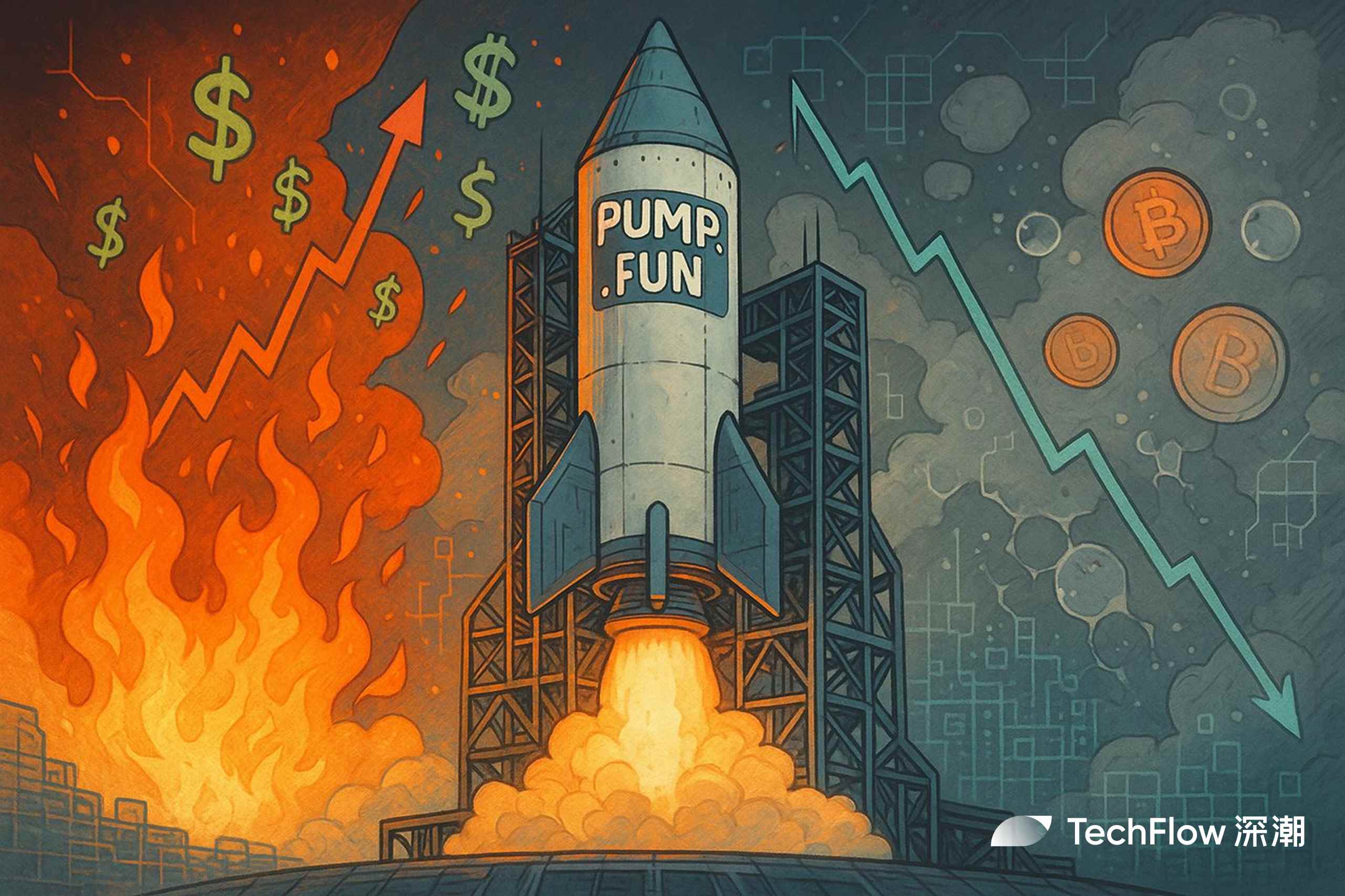
这个离交易最近、离赌性最近、离波动最近的 Meme 发射台如果真的发币,究竟是枯竭市场的救星,还是头也不回的最后一割?

答案或许藏在它的估值逻辑和市场脉动中。

进击的Pump.fun ,值40亿吗?

如果真按照 Blockworks 披露的发币计划,PUMP 的 FDV 在40亿美金左右,值这个价吗?

我们或许可以用一些数据去探究一下估值逻辑。

公开数据显示,截止今年5月,Pump.fun 的年收入总计2.96亿。如果按照相同条件估算,折合年化收入约7.1亿左右(2.961亿 ÷ 5 × 12)。

按照这个收入情况,从传统估值方法来看,市销率(P/S,估值40亿除以年收入)为 5.63,意味着市场为每美元收入付出5.63美元,传统市场常以此衡量成长性,Uniswap 等 DeFi 项目的数值也相近。

如果 PUMP 代币具有收入分红权,假设代币能分走一半收入(3.5亿),市盈率(P/E,估值除以利润)约 11.4,低于美国科技股平均水平。
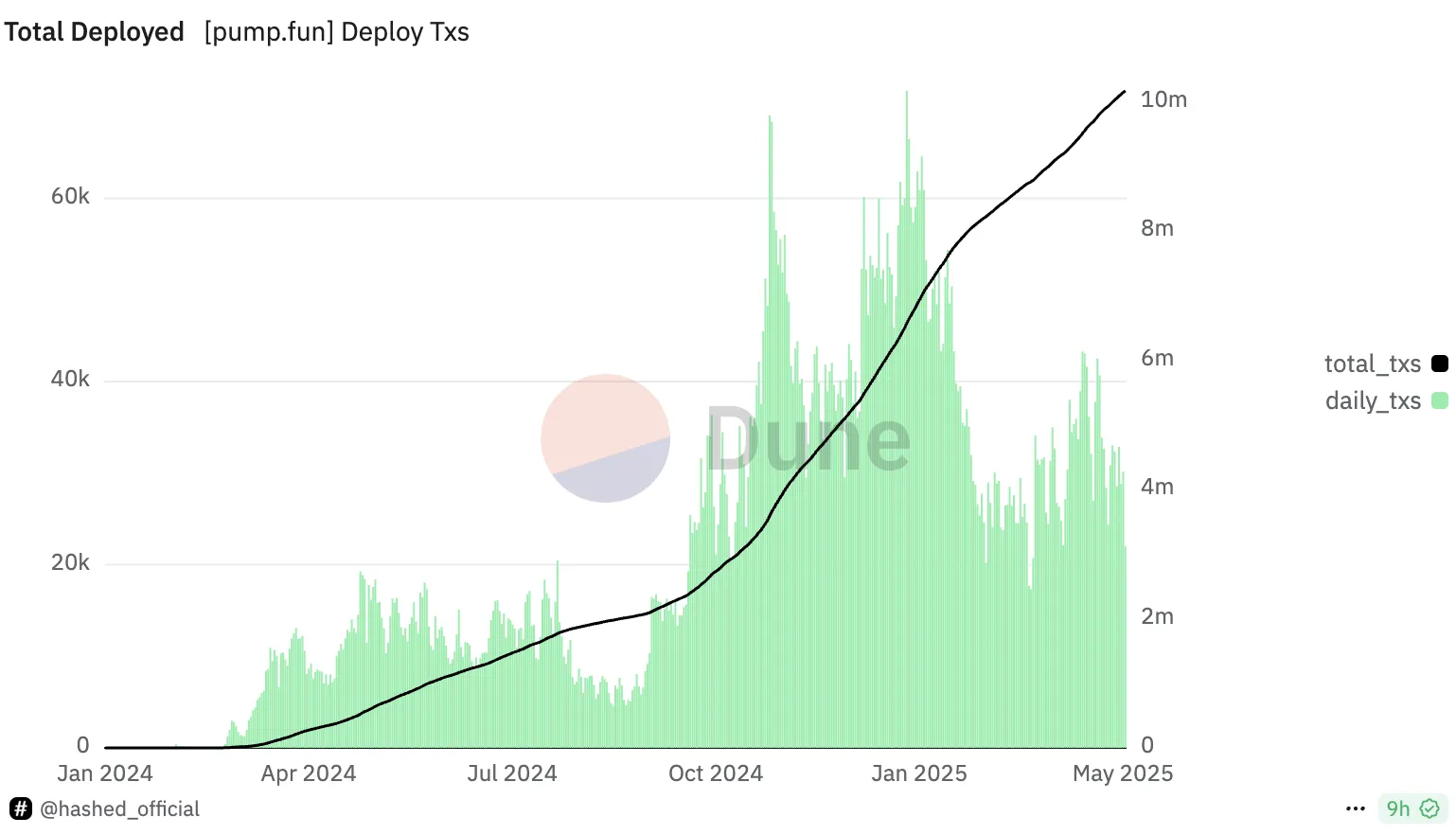
但问题在于,Meme 相关的业务其实不太吃传统估值这套,Meme 发射台的估值固然跟收入有关,但 FOMO 和市场情绪变化更是大头。

Circle 有稳定且走向合规的 USDC 业务, IPO 估值72亿美金;但 Pump.fun 40亿估值对应圈内第一的 Meme 发射台,估值超过了 Cicle 的一半,这么看确实有点不太合理。

而且,Pump.fun 的收入并不太稳定。最差的时候,单日收入仅11万美金左右。
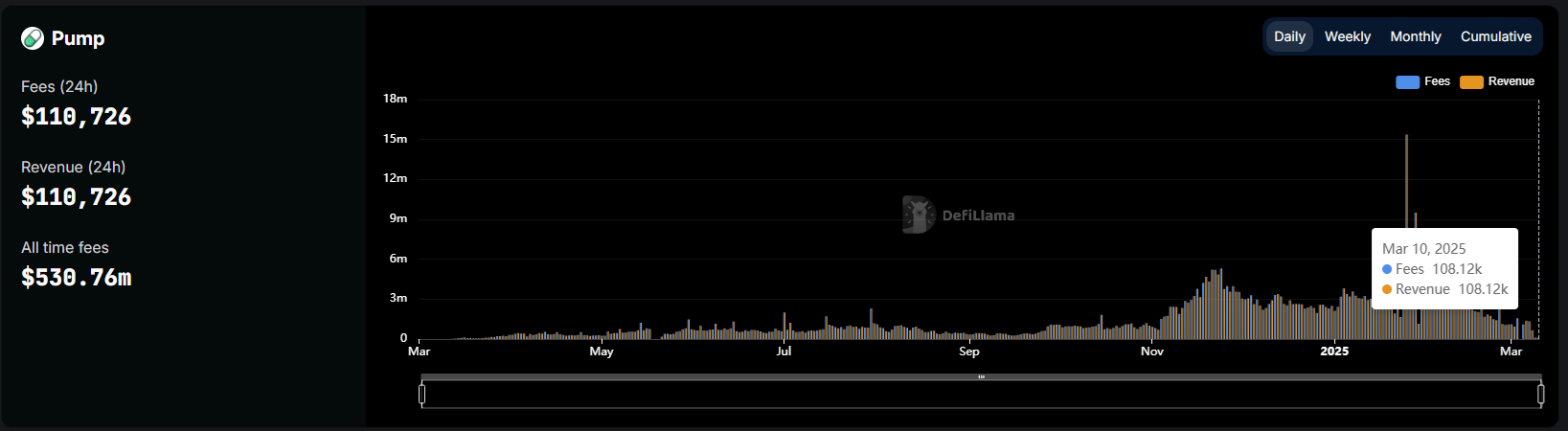
从2024年11日月收入破亿,到2025年1月2日日收入1400万的高光时刻,再到今年3月9日日收入低至11.07万...这个平台的收入上下起伏近百倍,凸显Meme市场的周期性。
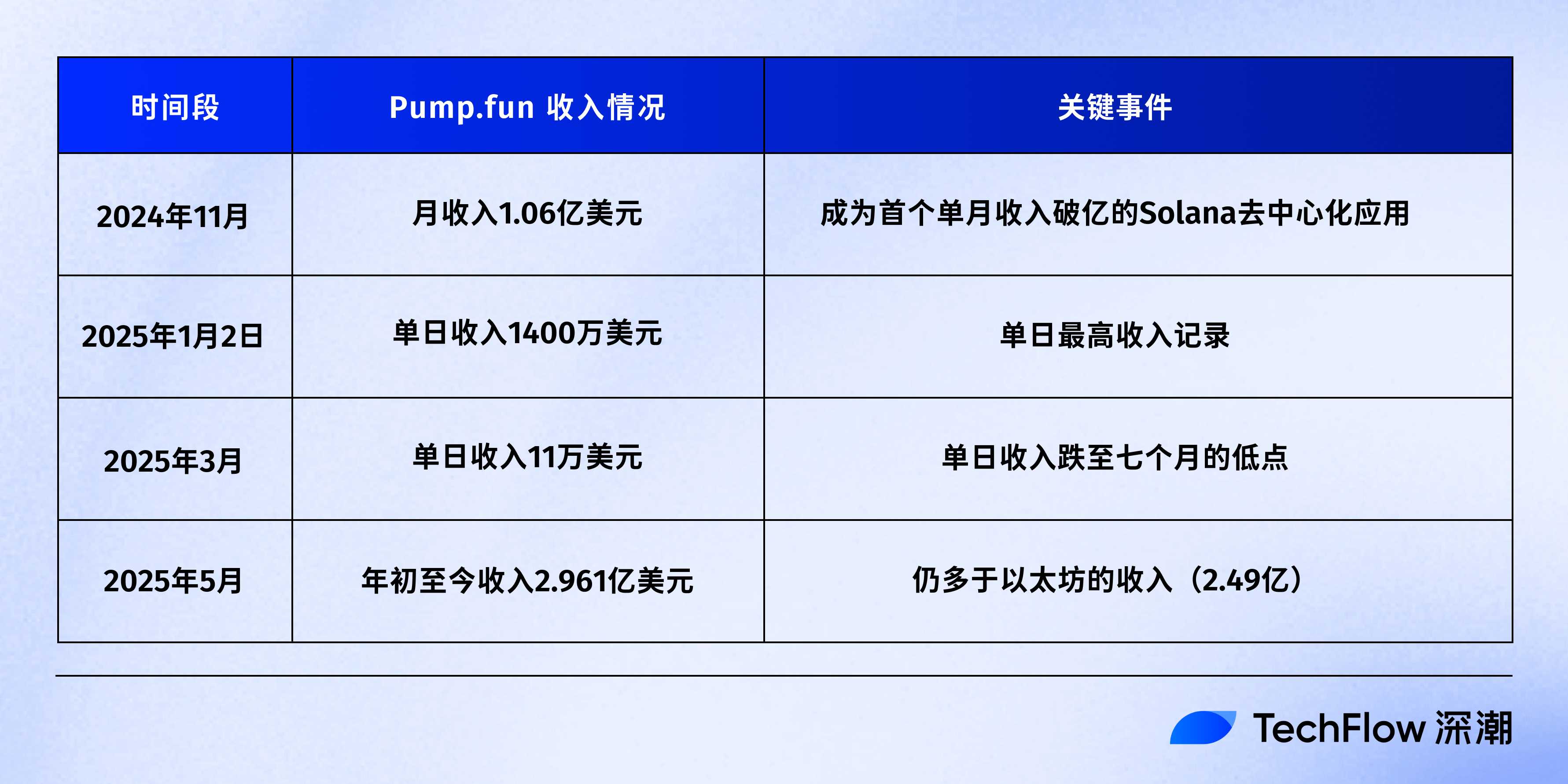
2025年3月的收入低点,实际上是 Meme 市场市值蒸发和热情退去的缩影,情绪驱动的业务,收入是脆弱的。

不过即便如此,平台永远不缺供应。Pump.fun 日均3万个新代币喷涌,交易量占Solana DEX半壁江山。

这种代币发射的源源不断和市场情绪的时好时坏对比强烈,你很难为它的估值找到一个稳定的锚。

枯竭的市场,最后一割?

Pump.fun 还在进击,无论是传闻发币,还是之前尝试做自己的AMM和革新直播功能等,都看得出平台本身并没有停滞不前。

(详见:Meme 退潮,Pump.fun 自救: PumpSwap 能否撑起未来业务?

但整个市场,尤其 Meme 市场,似乎已经有点力不从心了。

市场“枯竭”已显端倪。2024年12月,Meme 整体市值从1370亿跌至960亿,400亿蒸发。

2025年,Solana DEX 交易量较去年萎缩20%,大部分新代币快速归零,生命周期进一步缩短,PVP 已是地狱难度。

偶有金狗撑场,却难复当年盛况。

散户从狂热追涨转向观望,社区讨论充满疲态。市场都在渴求新叙事——AI 下一波、稳定币、上市公司加密资产储备... 而非老平台的高估值豪赌。

同时,Pump.fun 的过往也让人皱眉。2024年,平台多次抛售赚来的SOL换USDC; 而1月份的数据也显示,Pump.fun 自今年1月以来已经抛售了约1.82亿美元的SOL代币。

赚 SOL,吸走流动性;卖 SOL,多少影响价格和信心。

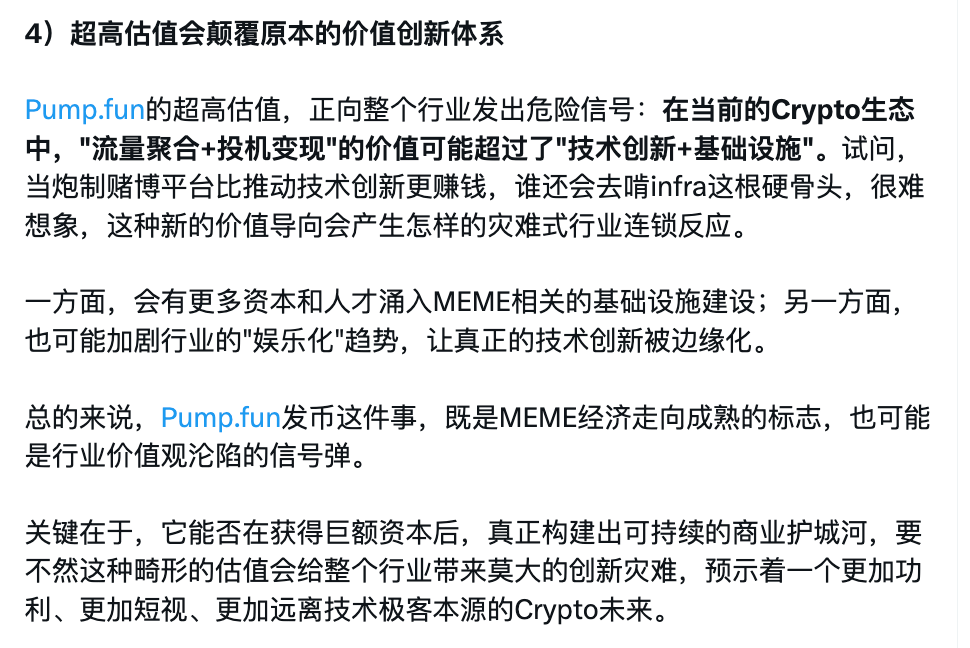
社区当前对 Pump 发币普遍持怀疑态度,例如研究员 Haotian 认为: “很难想象,一个MEME发射平台,估值竟然超越了大部分DeFi蓝筹协议。这或许既是MEME经济走向成熟的标志,也可能是行业价值观沦陷的信号弹。”
发币融资,拿到钱后 Pump.fun 究竟会做些什么,能给 Meme 市场带来本质性的玩法升级吗?

从目前的信息综合来看,答案似乎是否定的;更不用说上个月其实已经涌现了多种发射台,都在用自己的方式去挑战这个曾经的发射台一哥的地位。

最后的一哥,还是最后的一割?

在答案揭晓之前,谨慎一点准没错。
Пов'язані матеріали

Apple and the Power Rebalancing with 'The Microns': Dissecting the Profit Ledger Behind the iPhone

The article analyzes the shifting profit dynamics and power balance between Apple and memory suppliers like Micron within the iPhone supply chain. It highlights a social media post criticizing Apple for raising iPhone prices while blaming memory chip cost increases, despite historically paying suppliers like Micron very little. An estimated iPhone 18 cost breakdown is referenced. Historically, memory was a minor cost component. In 2017's iPhone X, memory accounted for only about 1.6-2.3% of the price, with Apple capturing nearly 50% net profit. Over time, memory's share of the Bill-of-Materials (BOM) cost has grown significantly, reaching an estimated 12-15% for the iPhone 17 series. The core driver of this change is soaring demand for memory from the AI industry, particularly for High Bandwidth Memory (HBM) and AI servers, which is diverting production capacity and squeezing supply for consumer electronics. Memory manufacturers, after enduring periods of low profits, now hold greater pricing power. This is reflected in their recent strong financials, like Micron's 84.6% gross margin. Apple CEO Tim Cook initially described the memory price pressure as unprecedented in his 40-year career, later calling it a "once-in-a-century flood," before Apple announced price hikes across several product lines, causing a significant stock drop. Elon Musk echoed Cook's sentiment about the dramatic cost surge. The article concludes that the era of memory suppliers being at the mercy of Apple's pricing power has temporarily reversed, thanks to AI-driven demand. It notes Apple is reportedly seeking to diversify its supply chain, including exploring chips from China's CXMT.

Odaily星球日报9 хв тому

Apple and the Power Rebalancing with 'The Microns': Dissecting the Profit Ledger Behind the iPhone

Odaily星球日报9 хв тому

Conversation with the Founder of 42 Macro: The Fed's 'Boiling the Frog Slowly' and the K-Shaped Economy

In a conversation with Anthony Pompliano, Darius Dale, founder of 42 Macro, discusses the Federal Reserve's monetary policy and the K-shaped U.S. economy. Dale characterizes new Fed Chair Kevin Warsh as a "dove in hawk's clothing," expecting the Fed to signal or enact policy tightening in the coming quarters to create room for later easing. He argues current economic signals, including high deficit spending, debt monetization, and credit growth, strongly indicate inflation is not on a credible path back to 2%, forcing the Fed to act. The discussion highlights the stark "K-shaped" economic reality. While top earners, buoyed by massive cash savings (up ~$8 trillion since pre-pandemic), continue robust spending, those at the bottom face severe financial strain, with delinquency rates on consumer loans reaching crisis-era highs. Dale attributes much of the current social and political anxiety to this divergence, driven by the "Cantillon effects" of monetary expansion, which disproportionately benefits asset owners. He emphasizes that in this environment of "financial repression," individuals must participate in asset markets to avoid being left behind. On equities, Dale notes a rotation from the "Magnificent Seven" tech giants into broader AI-exposed companies, while warning that the tech giants' massive capital expenditure cycles could eventually puncture over-optimistic cash flow projections. Dale concludes by stressing that the core desire across all economic strata is simply the dignity to provide for one's family, a goal currently undermined by systemic policies that act as a "wealth siphon" from the bottom to the top.

marsbit38 хв тому

Conversation with the Founder of 42 Macro: The Fed's 'Boiling the Frog Slowly' and the K-Shaped Economy

marsbit38 хв тому

The Eight Fathers of Transformer: Where Are They Now?

The founding authors of the seminal 2017 paper "Attention Is All You Need," which introduced the Transformer architecture, have all departed from Google and are now pioneering diverse ventures across the AI landscape. Their current paths highlight the field's evolution and fragmentation. Ashish Vaswani co-founded Essential AI after a stint at Adept, but recent reports suggest he and his team are being recruited by Nvidia. Noam Shazeer left Google twice, first to found Character.AI—later acquired by Google—before recently joining OpenAI. Niki Parmar, after co-founding both Adept and Essential AI with Vaswani, is now at Anthropic. Jakob Uszkoreit is the CEO of Inceptive, applying AI to RNA and drug design. Llion Jones co-founded Sakana AI in Tokyo, exploring collective intelligence from smaller models. Aidan N. Gomez is the CEO of Cohere, focusing on enterprise AI solutions. Łukasz Kaiser remains in research at OpenAI, contributing to models like GPT-4 and o1. Illia Polosukhin co-founded the NEAR Protocol blockchain, positioning it for an AI-agent economy. Despite their divergent paths—spanning biotech, enterprise software, blockchain, and foundational research—a shared sentiment persists: the Transformer is not the final answer. Each founder continues to seek the next significant architectural breakthrough, driven by the same innovative spirit that created the modern AI era.

marsbit43 хв тому

The Eight Fathers of Transformer: Where Are They Now?

marsbit43 хв тому

The Domestic Answer to Space Computing Power: Photonics Are More Efficient, Musk and Huang's Approaches Are Too Roundabout

The Space Computing Race: A Photonic Advantage The competition for space-based computing has intensified, with figures like Elon Musk and NVIDIA's Jensen Huang highlighting its potential. Musk predicts solar-powered AI satellites could offer the most cost-effective computing by 2032. However, space presents extreme challenges for traditional electronic chips: radiation from cosmic particles can cause errors, the vacuum environment hinders heat dissipation, and limited solar power constrains energy-hungry systems. Photonic computing, using light instead of electrons, offers a promising solution. Its core advantages for space are threefold: 1) **Radiation Resistance**: Photons are charge-neutral, making them inherently immune to particle interference. 2) **Low Heat Generation**: Light propagation in waveguides generates minimal heat, bypassing critical thermal management issues. 3) **Low Power Consumption**: Photonic chips have near-zero static power draw, aligning perfectly with the energy constraints of satellites. Furthermore, for a given payload weight and volume, photonic systems can potentially deliver higher total compute density. Since they require less bulky cooling and power infrastructure, more space can be allocated to the compute units themselves. While photonic computing holds great promise, current industry approaches face hurdles like the memory-compute bottleneck (separate storage and processing) and challenges in large-scale integration. Engineering for space—withstanding launch vibrations and validating full system operation in orbit—remains a critical step. The path forward resembles the evolution from single GPUs to computing clusters, but via a photonic route. As electronic chips approach physical limits in miniaturization, photonic computing and optical interconnects (光算光联) may provide a key alternative to bypass these constraints and define the next generation of space-based computing capabilities.

marsbit1 год тому

The Domestic Answer to Space Computing Power: Photonics Are More Efficient, Musk and Huang's Approaches Are Too Roundabout

marsbit1 год тому

Торгівля

Спот
活动图片