孙宇晨 × James Wynn:共话去中心化未来与 Meme 生态革新

深潮TechFlowОпубліковано о 2025-06-03Востаннє оновлено о 2025-06-03

Анотація

社区是Meme项目的灵魂,巨鲸不是。

北京时间6月1日晚,火币HTX全球顾问、波场TRON创始人孙宇晨与知名合约交易员James Wynn通过火币直播,进行了一场关于Meme生态与交易平台未来的深度对话。


讨论不仅聚焦加密交易的痛点与机会,更揭示了下一轮行业变革的核心趋势:去中心化、社区驱动、用户自由。


前职业泰拳选手和商人Andrew Tate,以及Meme项目Moonpig团队也参加了本场直播。


社区是Meme项目的灵魂,巨鲸不是


James Wynn以他的巨额合约仓位和对Meme生态的投入和支持闻名。谈及当前的Meme生态,他指出,绝大多数Meme项目已被“中心化利益集团操控”,沦为高频炒作的工具,失去了原本的文化内核。“很多Meme币团队故意让流动性池很浅,并在高交易量的时候出货,接着再轻松拉升价格,制造假象。”James Wynn说道。也正因此,那些真正有诚意的、完全由社区驱动的项目更加可贵。在他看来,PEPE,以及近期上线火币HTX的MOONPIG,都属于有社区精神和信仰、能够引起共鸣的Meme项目。


在项目选择方面,孙宇晨与James Wynn持相似的看法。“我更看重激情、共鸣,以及背后有叙事、有灵魂的社区,尤其是那些真正去中心化、由用户主导的项目。火币HTX致力于打造支持优质Meme项目的平台,我们会尽最大努力帮助上线火币HTX的项目成长。”


1亿美元亏损:与操盘者的对抗


近期,James Wynn的高杠杆合约仓位一直是市场的焦点,在直播中,他也分享了被清算1亿美元的心路历程,表示巨额亏损是因为遭遇了大型做市商的“猎杀”。“他们不喜欢看到平民赚钱,你仓位越大,就越会被盯上。”James Wynn说道。“当我被围剿时,我不会认输,而是会反击。等时机成熟,我会带着40倍杠杆、几亿美元的多单重返市场。”
“事实上我享受这个过程。即使我赚到10亿美元,也不会花在自己身上。我追求的不是财富本身,而是享受这场博弈的刺激。”


交易所的未来是去中心化


作为加密行业中最资深的建设者之一,孙宇晨与James Wynn探讨了交易所的发展方向问题。“我的目标一直很明确:让用户能更快捷、更简单地完成交易,降低使用门槛,改善现有交易平台存在的各种痛点。我希望构建的是一种更人性化、更公平、更自由的交易体验。”孙宇晨说道。


在这个话题上,被中心化机构“猎杀”过的James Wynn也支持去中心化的发展路径。他表示,“交易所要想提升,需要参考Hyperliquid。它的成功在于挑战了金融系统的审查和限制,拿掉了人们反对的那套规则,没有繁文缛节,人们可以自由交易。无论是CEX还是DEX,流动性始终是绕不开的问题,而解决这一切的关键就是社区化——真正去中心化的用户和社区,是我们对抗中心化集权的核心力量。”


孙宇晨则坦言,他正在研究Hyperliquid的机制。“我们正在尽最大努力去推动火币HTX的成长。我也在持续关注其他交易所的不同特征和优势,希望通过观察和学习,不断优化火币HTX的产品体验,让它变得更易用、更贴近用户。”


政策环境向好,加密行业正获主流接纳


直播中,刚刚结束美国之行的孙宇晨还分享了对于加密政策走势的看法,表示他对于行业的后续发展持乐观态度。“在我与特朗普总统见面的过程中,我们也专门讨论了加密货币相关的政策问题,彼此都表现出非常乐观的态度。当前的政策环境对加密行业,尤其是对比特币和以太坊来说,正变得越来越友好。未来我们会看到,越来越多的公司和投资人开始认识到这个行业。”


“事实上,现在已经有很多主流上市公司在购买加密资产,这种趋势正在加速。我们有理由相信,更多的大型企业和主流机构将在不久的将来拥抱加密货币。而在这一进程中,美国也将成为全球最重要的参与国家之一。”


结语:下一阶段,行业需要更真实的共建者


从社区文化到制度信号,从市场结构到交易自由,本次直播勾勒出加密行业正在经历的多维转型。孙宇晨与James Wynn虽来自不同的背景,但目标一致:构建一个更自由、更公平、更真实的加密生态。


正如James Wynn在直播中所言:“(建设项目)对我来说甚至不是为了钱,而是有我的自我意识在里面。” 对于行业,这份信念,比市场涨跌更有力量。


作为加密行业最早布局去中心化发展的主流交易平台之一,火币HTX始终秉持“用户优先、技术驱动”的核心理念,致力于构建更加自由、透明、公平的交易环境。从支持优质社区Meme项目,到推进DAO治理体系的建设,火币HTX正以前瞻性的战略眼光和实际行动,引领行业驶向更加开放的未来,为全球加密生态注入长期价值。


Трендові криптовалюти

Пов'язані матеріали

A Group of Suzhou Engineers Unexpectedly Attain Financial Freedom

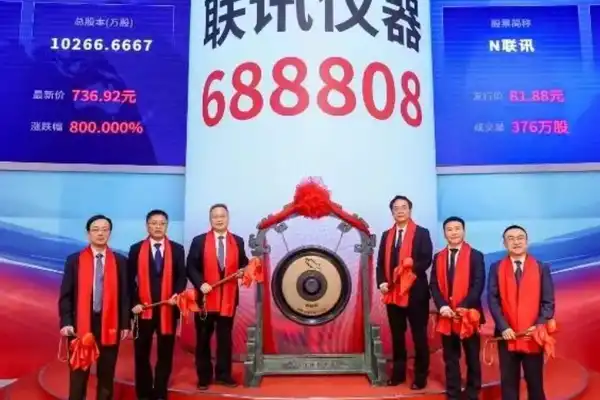
In Suzhou, a group of engineers from Lianxun Instruments, a leader in optical communication testing equipment, have achieved remarkable wealth after the company's IPO. Listed just two months ago on the STAR Market, the company's stock price surged approximately 30 times, making it the only A-share stock priced above 2,000 yuan. This surge created substantial fortunes for nearly 100 technical employees who held a collective 15.91% stake through employee stock ownership platforms, valued at over 36 billion yuan at the current market cap. Among them, nearly 40 became billionaires, while even the smallest holdings exceeded 5 million yuan in value. Founded in 2017 by Hu Haiyang, Yang Jian, and Huang Jianjun, Lianxun Instruments was established to address China's reliance on foreign high-end testing instruments. The company grew rapidly with a strong focus on R&D, where technical staff make up nearly 80% of its workforce. Early implementation of employee stock plans helped retain this core talent. The company's explosive growth is fueled by booming AI computing demand, with clients including major global optical module leaders. Its revenue skyrocketed from 276 million yuan in 2023 to 1.194 billion yuan in 2025, turning a profit in 2024. The IPO has also generated massive returns for early investors, including Suzhou's state-owned capital, which saw a hundredfold return. This story reflects a broader trend in China's markets, where technology firms in AI, semiconductors, and optics are creating new wealth, rewarding engineers and technical teams who are now central to modern capital-driven success stories, marking a shift from previous eras dominated by internet and real estate tycoons.

marsbit2 год тому

A Group of Suzhou Engineers Unexpectedly Attain Financial Freedom

marsbit2 год тому

NVIDIA's Annual 'Most Dangerous' Paper: AI Self-Replicating Code, Unlimited Leveling and Evolution

NVIDIA's "Red Queen Gödel Machine" (RQGM) paper proposes a potentially groundbreaking AI self-evolution framework. It breaks from the long-stalled concept of the "Gödel Machine," which required mathematically proven beneficial self-modifications, by adopting an evolutionary approach. The core, and most striking, innovation is that the AI does not just evolve its own code in a static environment. Instead, it co-evolves both the "student" (the task-performing agent) and the "examiner" (the evaluation system that judges it). This creates a dynamic, recursive self-improvement loop inspired by the biological "Red Queen Hypothesis"—where continuous adaptation is needed just to maintain relative fitness. The mechanism operates in epochs. Within an epoch, a fixed examiner evaluates all candidate code variants. At epoch boundaries, a new, potentially more rigorous examiner can replace the old one, but only if it proves statistically superior on a held-out "ground truth" dataset. This "controlled utility evolution" aims to ensure progress is measurable and grounded. The paper demonstrates RQGM's effectiveness across three domains: 1. **Code Generation:** It achieved a 71.7% test-set pass rate (improving over a 69.9% SOTA) while using 1.35-1.72x fewer computational tokens. 2. **Paper Writing:** In a subjective task, the co-evolved writer and reviewer achieved a 40.5% acceptance rate by a fixed human panel, up from 21.8%. 3. **Math Proofs:** It evolved more accurate graders (at 3x lower cost) and higher-scoring provers. Notably, RQGM also mitigated a known LLM bias where AI reviewers favor AI-generated content. By specifically rewarding reviewers that correctly rejected AI-written papers from a historical pool, the evolved system achieved impartiality while maintaining 80% accuracy. The research has sparked significant discussion about the acceleration of Recursive Self-Improvement (RSI). Some, like Anthropic's Jack Clark, have predicted a high probability of highly autonomous, self-evolving AI emerging by 2028. The paper suggests that when an AI begins to design its own evaluators and push itself toward ever-higher standards in a recursive loop, it may be taking a fundamental step toward redefining intelligence and autonomy.

marsbit2 год тому

NVIDIA's Annual 'Most Dangerous' Paper: AI Self-Replicating Code, Unlimited Leveling and Evolution

marsbit2 год тому

Apple and the Power Rebalancing with 'The Microns': Dissecting the Profit Ledger Behind the iPhone

The article analyzes the shifting profit dynamics and power balance between Apple and memory suppliers like Micron within the iPhone supply chain. It highlights a social media post criticizing Apple for raising iPhone prices while blaming memory chip cost increases, despite historically paying suppliers like Micron very little. An estimated iPhone 18 cost breakdown is referenced. Historically, memory was a minor cost component. In 2017's iPhone X, memory accounted for only about 1.6-2.3% of the price, with Apple capturing nearly 50% net profit. Over time, memory's share of the Bill-of-Materials (BOM) cost has grown significantly, reaching an estimated 12-15% for the iPhone 17 series. The core driver of this change is soaring demand for memory from the AI industry, particularly for High Bandwidth Memory (HBM) and AI servers, which is diverting production capacity and squeezing supply for consumer electronics. Memory manufacturers, after enduring periods of low profits, now hold greater pricing power. This is reflected in their recent strong financials, like Micron's 84.6% gross margin. Apple CEO Tim Cook initially described the memory price pressure as unprecedented in his 40-year career, later calling it a "once-in-a-century flood," before Apple announced price hikes across several product lines, causing a significant stock drop. Elon Musk echoed Cook's sentiment about the dramatic cost surge. The article concludes that the era of memory suppliers being at the mercy of Apple's pricing power has temporarily reversed, thanks to AI-driven demand. It notes Apple is reportedly seeking to diversify its supply chain, including exploring chips from China's CXMT.

Odaily星球日报4 год тому

Apple and the Power Rebalancing with 'The Microns': Dissecting the Profit Ledger Behind the iPhone

Odaily星球日报4 год тому

Торгівля

Спот

Популярні статті

Як купити HTX

Ласкаво просимо до HTX.com! Ми зробили покупку HTX DAO (HTX) простою та зручною. Дотримуйтесь нашої покрокової інструкції, щоб розпочати свою криптовалютну подорож.Крок 1: Створіть обліковий запис на HTXВикористовуйте свою електронну пошту або номер телефону, щоб зареєструвати обліковий запис на HTX безплатно. Пройдіть безпроблемну реєстрацію й отримайте доступ до всіх функцій.ЗареєструватисьКрок 2: Перейдіть до розділу Купити крипту і виберіть спосіб оплатиКредитна/дебетова картка: використовуйте вашу картку Visa або Mastercard, щоб миттєво купити HTX DAO (HTX).Баланс: використовуйте кошти з балансу вашого рахунку HTX для безперешкодної торгівлі.Треті особи: ми додали популярні способи оплати, такі як Google Pay та Apple Pay, щоб підвищити зручність.P2P: Торгуйте безпосередньо з іншими користувачами на HTX.Позабіржова торгівля (OTC): ми пропонуємо індивідуальні послуги та конкурентні обмінні курси для трейдерів.Крок 3: Зберігайте свої HTX DAO (HTX)Після придбання HTX DAO (HTX) збережіть його у своєму обліковому записі на HTX. Крім того, ви можете відправити його в інше місце за допомогою блокчейн-переказу або використовувати його для торгівлі іншими криптовалютами.Крок 4: Торгівля HTX DAO (HTX)Легко торгуйте HTX DAO (HTX) на спотовому ринку HTX. Просто увійдіть до свого облікового запису, виберіть торгову пару, укладайте угоди та спостерігайте за ними в режимі реального часу. Ми пропонуємо зручний досвід як для початківців, так і для досвідчених трейдерів.

2.7k переглядів усьогоОпубліковано 2024.12.12Оновлено 2026.06.02

Як купити HTX

Обговорення

Ласкаво просимо до спільноти HTX. Тут ви можете бути в курсі останніх подій розвитку платформи та отримати доступ до професійної ринкової інформації. Нижче представлені думки користувачів щодо ціни HTX (HTX).

活动图片