Три топовых альткоина по версии CoinGecko

cryptonews.ruОпубліковано о 2025-05-02Востаннє оновлено о 2025-06-02

Крипторынок начал июнь с небольшого роста интереса инвесторов, указывая на осторожное восстановление после падения прошлой недели. На этом фоне некоторые токены заметно укрепились

Редакция BeInCrypto проанализировала три альткоина, которые оказались крайне популярны на CoinGecko. Разбираемся, почему именно эти токены привлекли внимание инвесторов.

FLOCK (FLOCK)

FLock.io — это первая децентрализованная платформа для обучения ИИ, использующая блокчейн для безопасной разработки ИИ-моделей без централизации данных. Ее токен FLOCK стал сегодня одним из лидеров роста на CoinGecko, поднявшись на 80%. На момент написания статьи альткоин торгуется на шестимесячном максимуме $0,26. Это отражает возобновившийся интерес инвесторов к децентрализованной ИИ-инфраструктуре проекта.

На дневном графике FLOCK торгуется значительно выше 20-дневной экспоненциальной скользящей средней (EMA). Она проходит сейчас на $0,12 и служит динамической поддержкой. Этот индикатор измеряет среднюю цену актива за последние 20 дней. Когда токен торгуется значительно выше 20-дневной EMA, это сигнал о сильном бычьем импульсе. Он означает, что покупатели продолжают поднимать цену выше ее базовой линии недавнего тренда. Если FLOCK сохранит восходящий тренд, он может подняться до $0,57. Если же продажи усилятся, токен рискует растерять недавние достижения и упасть до $0,03.
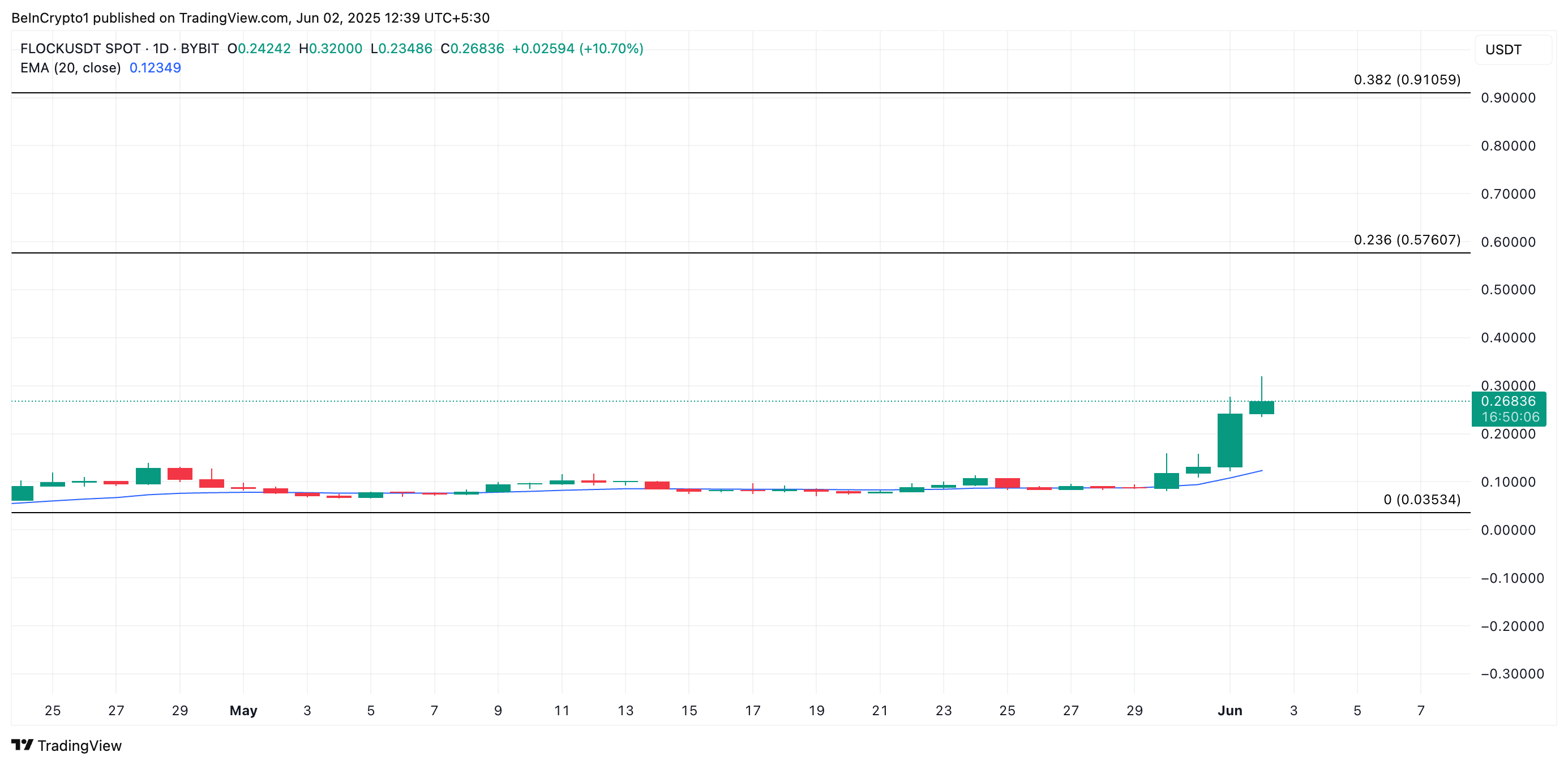
Анализ цены альткоина FLOCK. Источник: TradingView

Анализ альткоина Layer3 (L3)

Layer3 — это маркетинговая платформа Web3, объединяющая ончейн и офчейн-активности. Она помогает пользователям исследовать продукты Web3 и привлекать трафик к проектам. Платформа работает на токене L3, который за последний день подорожал на 38%. За этот же период объем торгов токеном увеличился на 157%, достигнув $14,06 млн.

Одновременный рост цены и объема торгов указывает на сильный бычий импульс и повышенный интерес инвесторов. Эта тенденция показывает, что рост цен поддерживается активностью рынка, а не скачками на фоне низкой ликвидности. Если это продолжится, L3 может преодолеть сопротивление на $0,06 и подняться до $0,08. С другой стороны, если начнется фиксация прибыли, стоимость альткоина может упасть до $0,04.
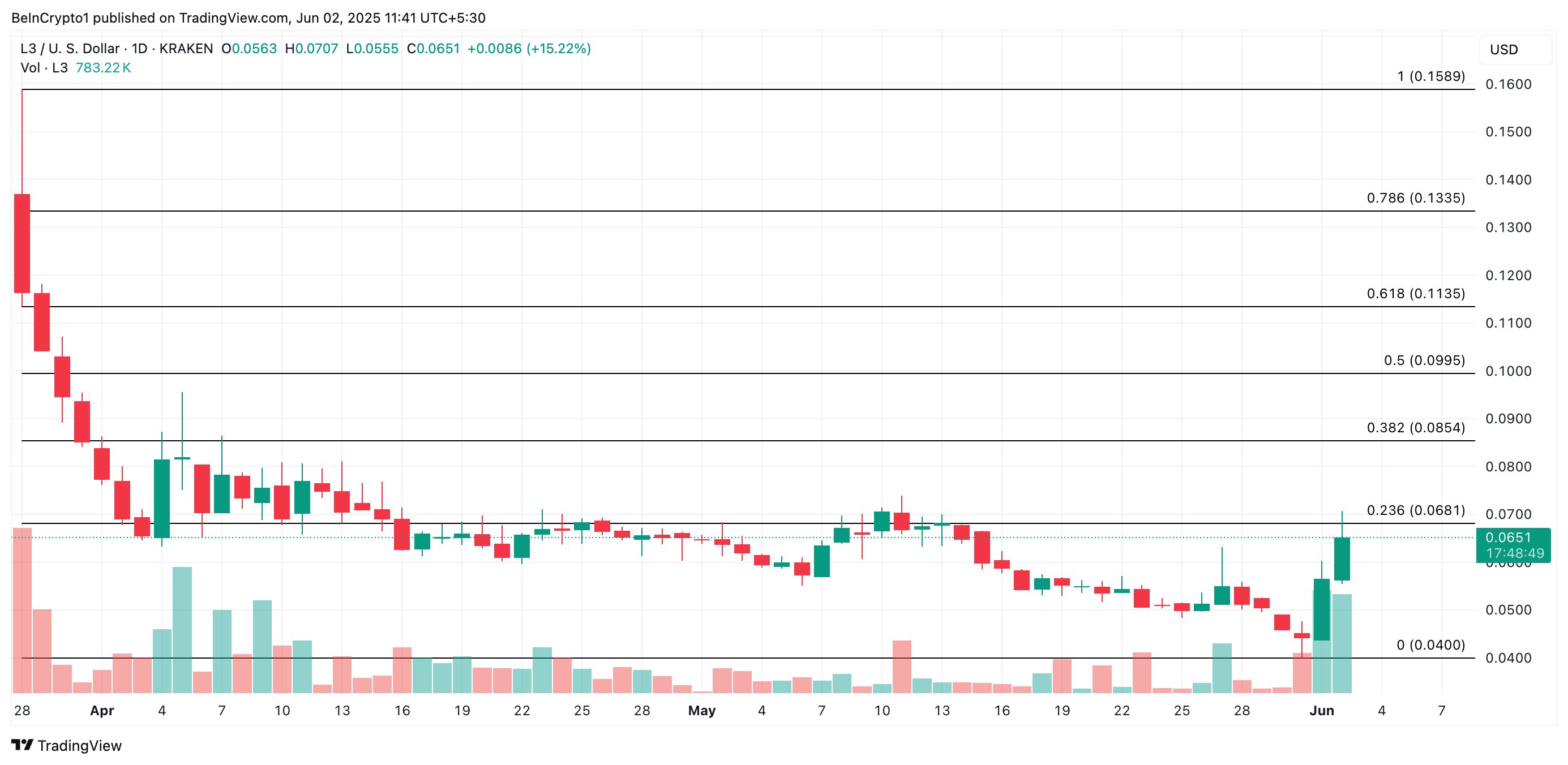
Анализ цены L3. Источник: TradingView

Cookies DAO (COOKIE)

Cookie DAO — децентрализованная площадка, которая сосредоточена на индексации и анализе данных, связанных с ИИ-агентами. COOKIE — это служебный токен Cookie DAO. Сегодня он вырос на 15%. Примечательно, что его индекс Elder-Ray впервые за три дня стал положительным. На момент написания индикатор составляет 0,03.

Индекс Elder-Ray оценивает силу быков и медведей на рынке, анализируя разницу между ценой актива и его экспоненциальной скользящей средней (EMA). Это сигнал о возобновлении покупательского давления, подтверждающий доминирование быков и рост спроса на альткоин. Это означает, что цена COOKIE может продолжить укрепляться в ближайшее время в направлении отметки $0,31. С другой стороны, если покупательская активность ослабнет, стоимость токена может упасть до $0,21.
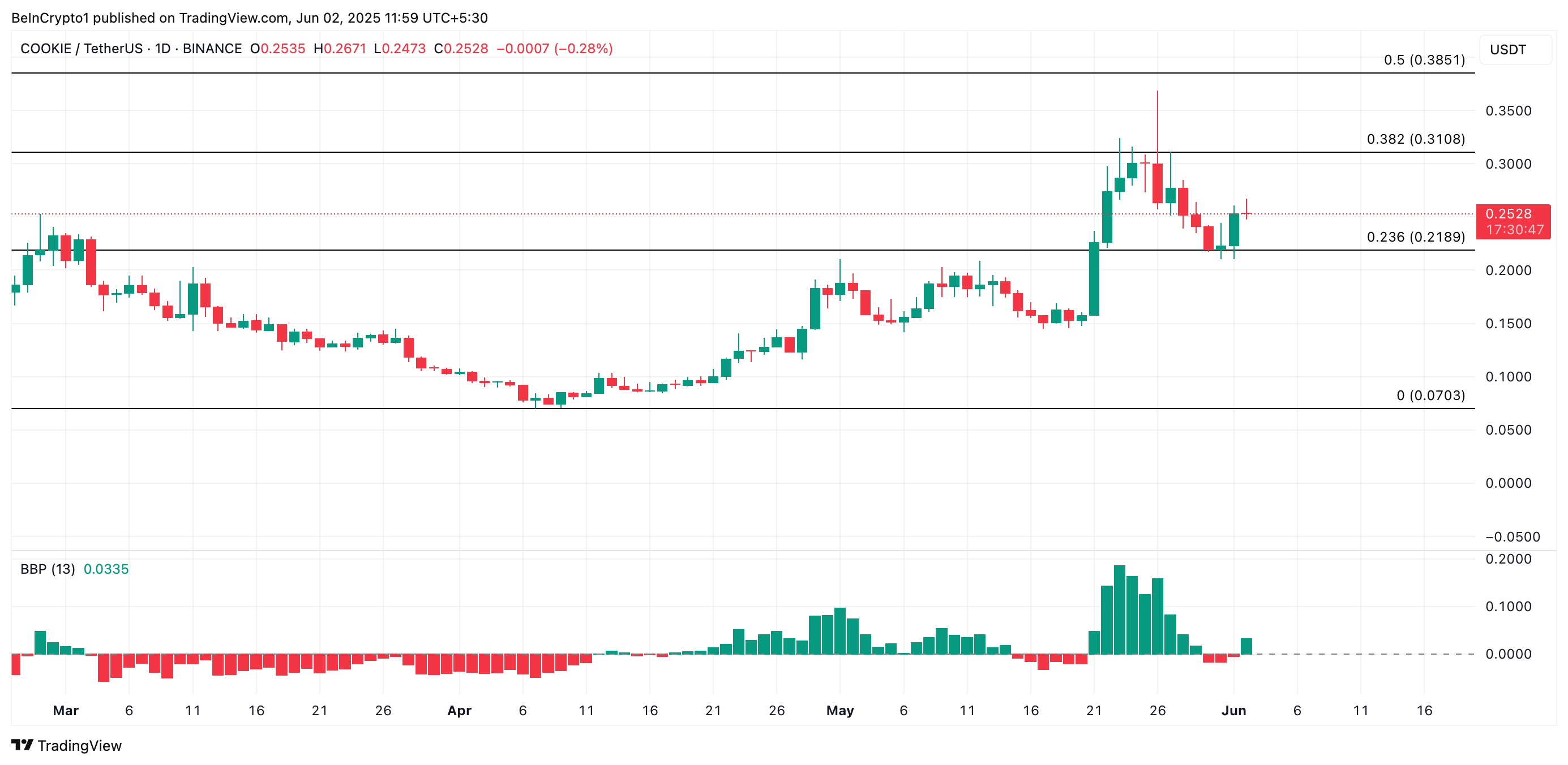

Анализ цены COOKIE. Источник: TradingView

Пов'язані матеріали

Latin America's Payments Landscape Is Not What You Think It Is

This report challenges common misconceptions about Latin America's payment landscape, based on over 500 hours of firsthand research. Key findings include: 1) Crypto card transaction volume primarily comes from high-net-worth individuals receiving USDT salaries, not retail spending. 2) QR code payments (e.g., Brazil's Pix, Argentina's Mercado Pago) are the dominant payment method across most emerging markets, not cards. 3) A major untapped opportunity lies in enabling cross-border interoperability between domestic instant payment systems. 4) Payment competition is shifting from customer acquisition to owning the settlement layer (e.g., acquiring banks). 5) Latin America is not a single market; Brazil, Mexico, Argentina, and smaller "forgotten five" countries (e.g., Guatemala, Honduras) have vastly different dynamics. 6) Stablecoin-to-fiat conversion margins are collapsing toward zero, pushing companies to build value-added services on top. 7) Future payment winners will be multi-country brands, not single-corridor specialists. 8) Marketing must target specific user segments (e.g., digital nomads, unbanked immigrants) with tailored messaging, not a generic "Brazilian" audience. 9) Contrary to perception, Latin American regulators are often ahead of the US in creating frameworks for digital assets and instant payments, with clear licensing deadlines. The core takeaway is that the region's payment rules are being rewritten, moving beyond cards and stablecoin arbitrage towards integrated, cross-border QR-based solutions.

链捕手4 хв тому

Latin America's Payments Landscape Is Not What You Think It Is

链捕手4 хв тому

Vitalik's Algorithmic Stablecoin Vision: Interpreting the Mechanism and Challenges from an Options Perspective

Vitalik Buterin's recent algorithmic stablecoin proposal envisions using an option-like mechanism to create a stablecoin without the liquidation risks inherent in traditional collateralized debt position (CDP) models. The design splits one unit of ETH into two components: a 'stable' leg (P) that maintains value up to a certain strike price, and an 'upside' leg (N) that captures any appreciation above that price. Together, they always sum to one ETH, eliminating the need for debt or liquidation mechanisms. From an options perspective, the stable leg essentially functions as a synthetic, covered call position. However, significant challenges exist. For the stable asset to maintain its peg, it must continuously roll deep in-the-money call options, leading to potential rollover slippage, predictable trading paths vulnerable to front-running, and liquidity issues. Crucially, the system's scalability depends on a constant demand for the upside leg—a form of leveraged ETH long position without funding rates or liquidation risk. It's unclear if such persistent, specific demand will materialize from speculators or market makers who have simpler alternatives like perpetual swaps. The author, drawing from experience with Rysk, argues that DeFi options have struggled as standalone trading products due to complexity and fragmented liquidity. Their potential lies instead as foundational infrastructure underpinning more complex financial primitives like stablecoins, structured yields, or index products—transforming from a direct product into a core pricing and risk distribution engine for the next generation of on-chain finance.

marsbit1 год тому

Vitalik's Algorithmic Stablecoin Vision: Interpreting the Mechanism and Challenges from an Options Perspective

marsbit1 год тому

GPT-5.6 Countdown: Abandon the Illusion of a Single API, Computational Iteration Can't Outpace a Single Page of Compliance

In mid-June, three seemingly independent industry events—the compliance-driven throttling of Fable 5, the open-sourcing of GLM-5.2, and the leaked release timeline for GPT-5.6—are pushing the global AI industry toward a watershed moment. These shifts signal a fundamental restructuring of the industry's underlying logic. First, **"usability" has substantially overtaken "advanced capabilities"** as the primary weight, pushing the global large language model (LLM) supply chain into a "dual-track" phase of controlled closed-source and local open-source coexistence. Second, **the competitive moats of closed-source giants are shifting**. Their technical focus is moving from "language intelligence" toward "spatial intelligence (world models)"—a domain heavily reliant on computing power. Third, faced with常态化 transnational compliance risks, **a "model-agnostic" decoupled design has become a survival necessity for application-layer developers to maintain business continuity.** The article details how Anthropic's Fable 5, despite its advanced engineering feats, was restricted for non-U.S. citizens within 72 hours of launch, highlighting how geopolitical compliance can instantly limit even the most advanced models. In response, the open-source camp, exemplified by Zhipu AI's MIT-licensed GLM-5.2, is gaining market share by offering stable performance improvements and significant cost advantages (up to 70% savings for enterprises), while achieving full adaptation with domestic semiconductor platforms. Meanwhile, closed-source leaders like OpenAI are pivoting. The anticipated GPT-5.6 reportedly shifts focus from language to spatial intelligence and world models, aiming to rebuild a generational gap in areas like 3D understanding, simulation, and industrial design that demand immense compute. The core conclusion is that the LLM supply chain's logic has changed. Enterprises must now evaluate infrastructure based on a composite of technical performance and policy compliance. For developers, complete reliance on a single closed-source API poses unacceptable risk. Implementing a truly model-agnostic architecture—enabling swift switches to compliant, locally deployable open-source alternatives—is no longer just good practice but a fundamental baseline for business continuity.

marsbit4 год тому

GPT-5.6 Countdown: Abandon the Illusion of a Single API, Computational Iteration Can't Outpace a Single Page of Compliance

marsbit4 год тому

Торгівля

Спот
Ф'ючерси
活动图片