Highlights
- Pi Network price is at risk of a big crash as exchange inflows rise.
- Investors moved a net 2 million Pi coins to exchanges in the last 24 hours.
- Pi coin has formed a bearish flag pattern, pointing to further downside.
Pi Network price remains under intense pressure today, May 26, even as Bitcoin moved back above $110,000. The token trades at $0.7752, down by over 53% from its highest level this month, making it one of the worst-performing major coins. Pi Coin price is at risk of a big drop as investors move 2 million tokens to exchanges.
Pi Network Price Technical Analysis Points to a Deeper Dive
The eight-hour chart shows that the value of Pi has suffered a big reversal after soaring to a two-month high of $1.6692 on May 12. It has dropped by over 53% to the current $0.7773 even as Bitcoin hovers near its all-time high.
Pi Coin has moved slightly below the 50-period Exponential Moving Average (EMA) at 0.7910. It has also formed a bearish flag chart pattern, which happens after an asset crashes and then consolidates or moves upwards in a channel formation.
It has already moved below the lower side of the flag section of this pattern. Therefore, there is a risk that the coin will drop to $0.6584, its lowest point on May 17. A drop below that level will point to more downside, potentially to this month’s low of $0.5545, down by 30% below the current level.
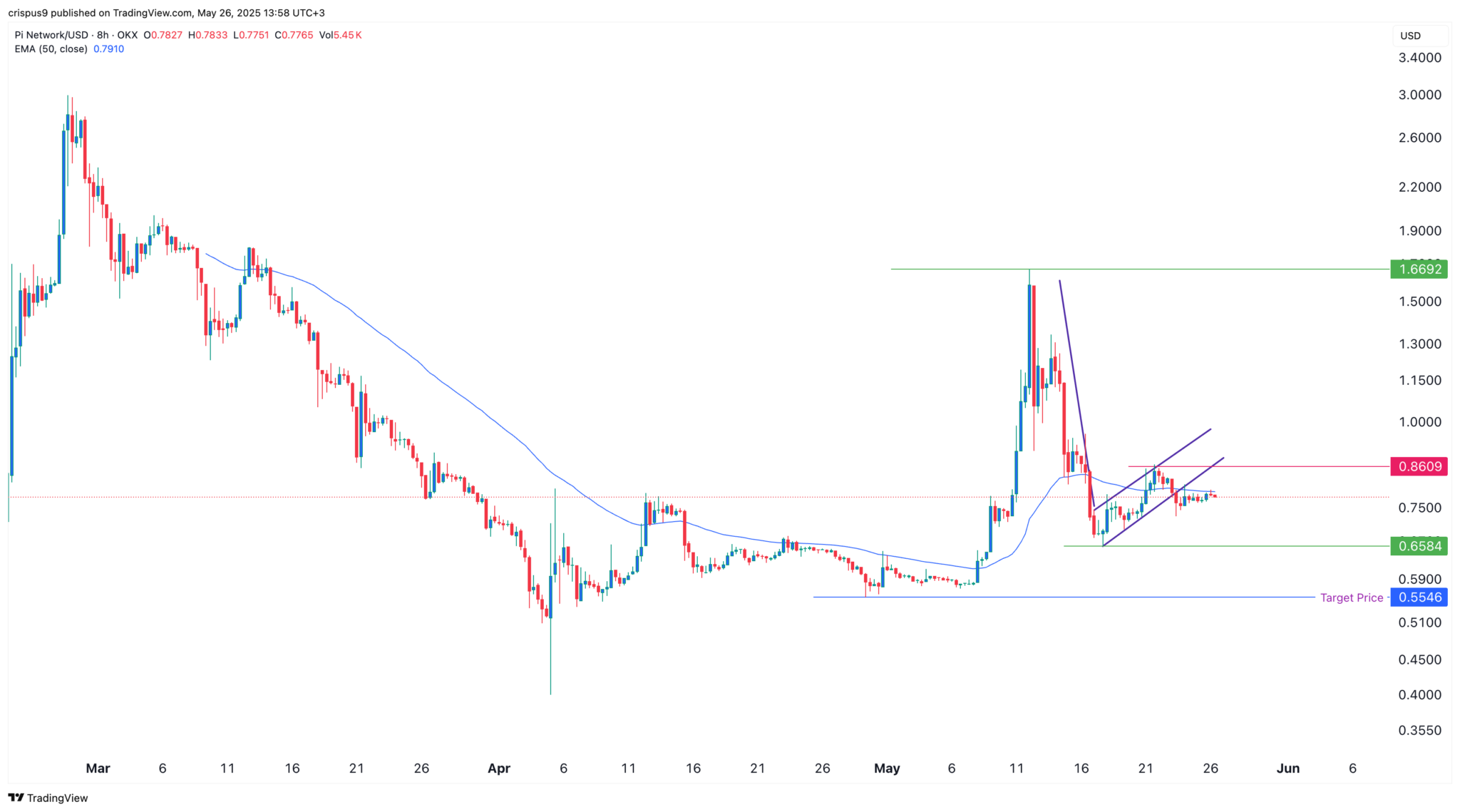
The bearish Pi Coin price forecast will become invalid if the coin rises above $0.8600, the highest point last week. A move above that level will point to more gains, potentially to the psychological point at $1.
Pi Coin Price Could Crash as Exchange Inflows Rise
PiScan data shows that Pi Network price may be at risk of a big crash as investors move tokens into exchanges. Investors moved 4.1 million coins into OKX in the last 24 hours, while withdrawals stood at 2.2 million, bringing the net flow to 1.88 million.
The netflow to Bitget was 712,097 coins, and on Pionex was 2,176. Only MEXC and Gate had net outflows in the past 24 hours. Altogether, the total inflows into exchanges stood at over 2.04 million.
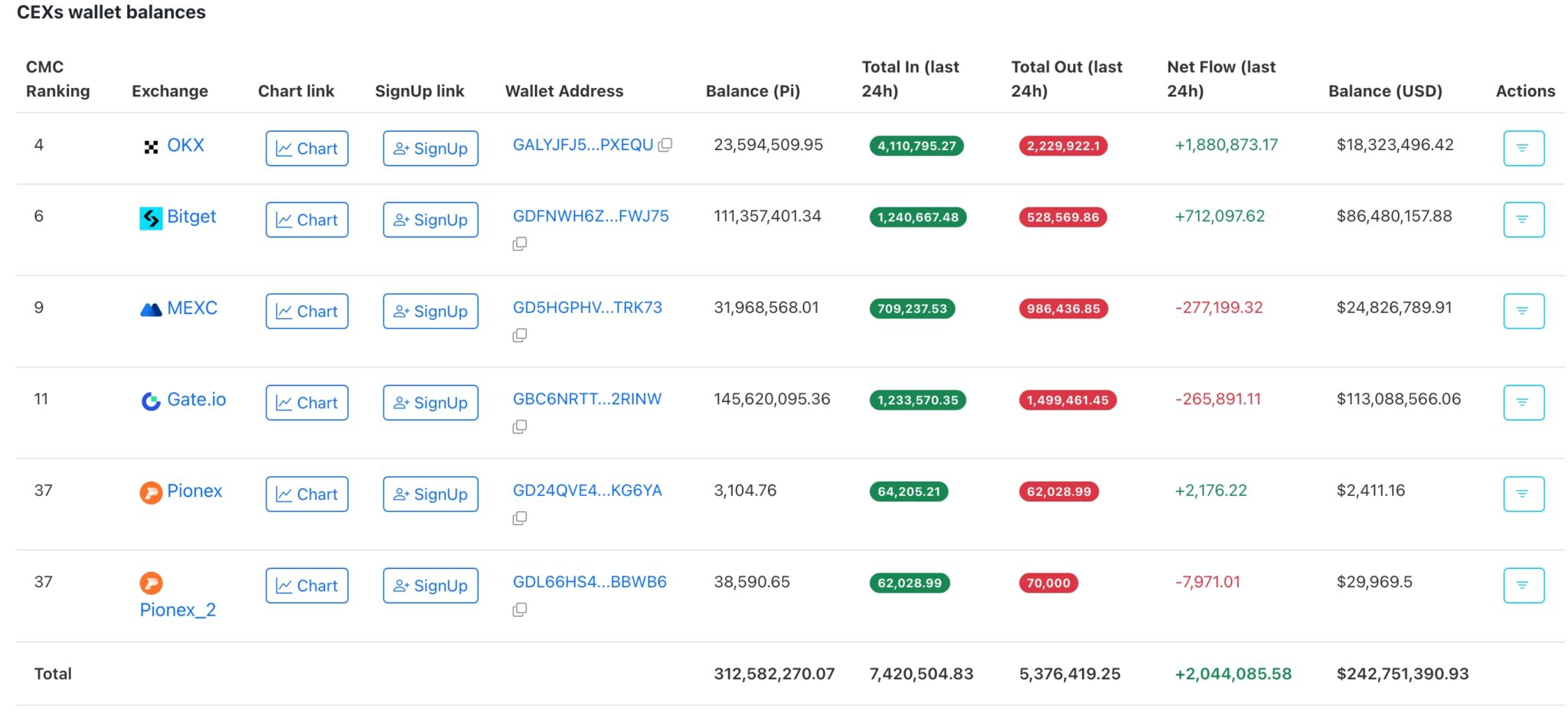
Exchange inflows are one of the top red flags in crypto analysis. That’s because they signal that investors are moving them from their self-custody wallets and selling them. This data is a sign that demand for the coin remains limited after its recent crash.
Pi Coin price crash could continue falling this week as more coins are set to be unlocked this week. 9.9 million coins will be unlocked today, while 12 million, 15.2 million, and 13.2 million will be unlocked in the next three days. Over 72 million coins valued at over $50 million will come online this week, and 280 million in the next 30 days.
This unlock trend will continue for a while since there are now 11.1 billion in circulation against a circulation cap of 100 billion. These unlocks may affect its price if there is no corresponding demand on the other side. For a detailed price prediction for Pi Coin 2025-2023 -