Суверенный фонд Абу-Даби инвестировал дополнительно почти $29 млн в IBIT в I квартале

cryptonews.ruОпубліковано о 2025-05-16Востаннє оновлено о 2025-05-17

  • Mubadala Investment Company увеличила портфель акций IBIT в I квартале.
  • Ранее эксперты Standard Chartered спрогнозировали рост спроса на биткоин-ETF среди суверенных фондов.

Государственная холдинговая компания Mubadala Investment Company инвестировала в спотовый биткоин-ETF IBIT дополнительно $28,8 млн. Это следует из отчета 13F, поданного организацией в Комиссию по ценным бумагам и биржам США (SEC).

Отметим, Mubadala Investment Company была запущена в январе 2017 года. Она полностью принадлежит и контролируется властями Абу-Даби, что позволяет отнести ее к числу суверенных фондов.

Согласно отчету организации, по состоянию на 31 марта 2025 года компания владеет 8,72 млн акций iShares Bitcoin Trust (IBIT) от поставщика BlackRock. С IV квартала 2024 года она увеличила свою долю на 491 439 ценных бумаг, около $28,8 млн.

Вместе с тем прослеживается падение стоимости акций IBIT в I квартале. Если по состоянию на 31 декабря портфель Mubadala Investment Company оценивался в $436,9 млн, то к 31 марта показатель упал до $408,5 млн.

Согласно TradingView, с начала 2025 года акции IBIT выросли почти на 7%. Однако на графике ниже видно, что восходящим тренд стал в начале апреля, а до этого по позиции прослеживалась просадка:
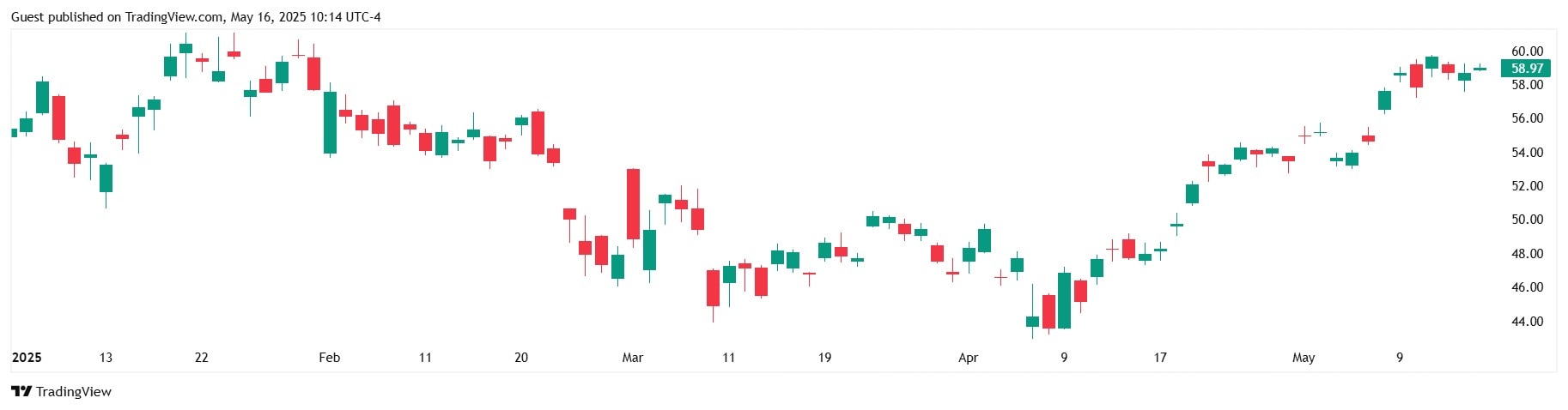
Курс акций IBIT на бирже Nasdaq. Источник: TradingView.

Ранее инвестиция суверенного фонда в IBIT вызвала интерес у экспертов компании Standard Chartered. Они спрогнозировали рост спроса на производные биткоин-продукты среди государственных компаний.
Пов'язані матеріали

Ethereum 2026 Q1 Review: On-Chain Activity Hits Record Highs, Tokenized Assets Lead the Industry

Ethereum Q1 2026 Review: Record On-Chain Activity, Tokenized Assets Lead the Industry. Despite a price correction impacting USD-denominated metrics, Ethereum's on-chain usage hit all-time highs in Q1 2026. Monthly active addresses surged 85.9% year-over-year to 13.2 million, while L1 transactions and throughput also set new records. This growth occurred alongside a significant 47.9% quarterly drop in L1 transaction fees, demonstrating the impact of network scaling via upgrades like the Blob Parameter Fork. The ecosystem maintained its dominance in decentralized finance (DeFi), holding 71% of the total value locked among top chains and 79.2% of active borrowing. Ethereum solidified its position as the primary platform for tokenized real-world assets (RWAs), with a total market cap of $203.4B. It holds leading shares in stablecoins (61.8%), tokenized funds (73%), and tokenized commodities (84%) across major chains. Key developments included the ERC-8004 standard for AI agents and heightened institutional engagement at forums. Major financial institutions like BlackRock, JPMorgan, and a European banking consortium announced new tokenized products on Ethereum throughout the period. The report draws parallels to the early internet, suggesting Ethereum is sacrificing short-term fee revenue for long-term network expansion and adoption. Its strategy focuses on becoming a neutral, open settlement layer for global finance, with scaling roadmaps aiming for tens of thousands of TPS by 2029.

marsbit40 хв тому

Ethereum 2026 Q1 Review: On-Chain Activity Hits Record Highs, Tokenized Assets Lead the Industry

marsbit40 хв тому

Matrixdock Featured Again in SBMA’s 《Crucible》: Discussing How Tokenisation Enhances Efficiency in the Precious Metals Market

Matrixdock's research article, titled "Why Tokenisation Matters for the Bullion Industry and How Carrying Costs Fit In," has been featured again in the SBMA's industry publication *Crucible*. Authored by Matrixdock lead Eva Meng, the piece examines how tokenisation enhances the efficiency and utility of the precious metals market. The article argues that tokenisation builds upon the accessibility improvements brought by gold ETFs, not by redefining gold's value but by enabling it to function within digital finance. It extends gold's role beyond a portfolio holding, potentially facilitating instant settlement, digital collateral, and operation in 24/7 markets. A key focus is transparently handling the unavoidable carrying costs (storage, insurance) of physical assets like gold and silver. Matrixdock introduces the Fungible Reserve Standard (FRS) framework, based on an "Economic Purity Principle," which aims to reflect these real-world economic costs clearly within the token mechanism, rather than bundling them opaquely. The platform's practical applications are highlighted, including its gold token XAUm and its silver token XAGm, the first built on the FRS framework. As the tokenised gold market surpassed $6 billion in February 2026, the industry's focus is shifting from initial proofs of reserves to broader concerns of market efficiency and capital utilization. Tokenisation is positioning gold and other precious metals to become active components within the evolving digital financial system.

marsbit1 год тому

Matrixdock Featured Again in SBMA’s 《Crucible》: Discussing How Tokenisation Enhances Efficiency in the Precious Metals Market

marsbit1 год тому

Торгівля

Спот
Ф'ючерси
活动图片