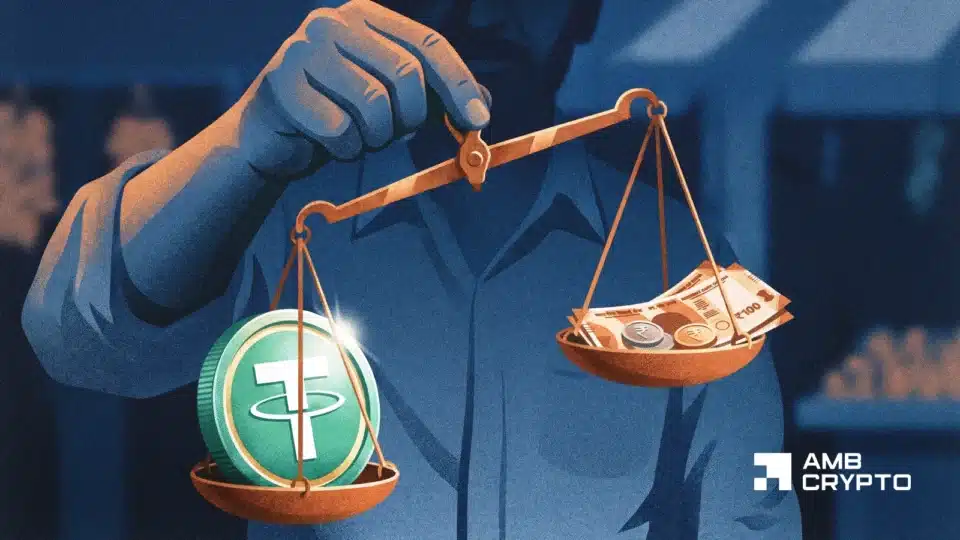
前 SEC 执法专家一篇论文引 20 万浏览,加密离破圈又近了一步?

深潮Опубліковано о 2025-05-13Востаннє оновлено о 2025-05-13

加密技术不再是小众玩家的玩具。

撰文:深潮 TechFlow

昨晚,Coinbase 的股票将进入美股标普500指数的新闻引发热议,纯加密公司在传统资本市场和投资者眼中有了更高的地位。

但除了单个公司之外,整个加密行业和技术其实还需要更多的认同。

也在昨晚,一篇名为《加密与资本市场演变》的论文帖发出,短时间内已经引发了20万的浏览量和近1000的点赞,迅速成为英文 CT 的讨论热点。
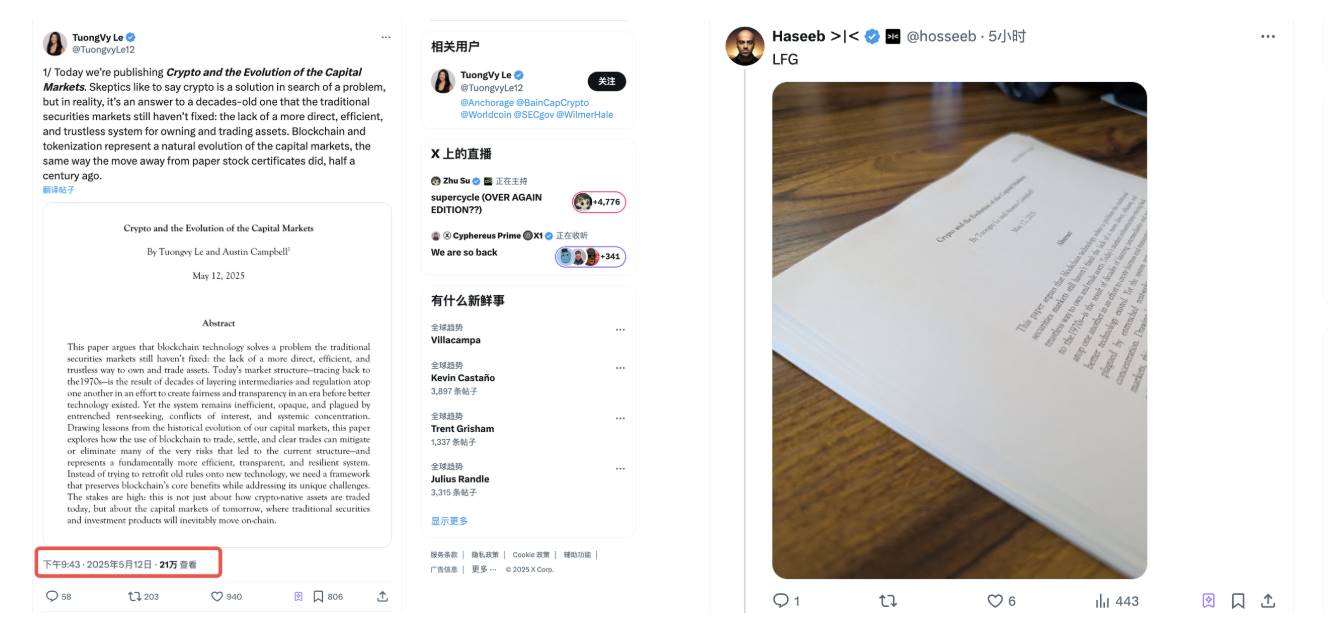
这篇论文不仅得到了加密社区的广泛支持,也引起了传统金融从业者的关注。Dragonfly 的创始人 Haseeb 表示已经论文打印出来研读,并配文 LFG(Let's fxxx go)。

在严肃学术内容之外,这篇论文带来更多的则是美国监管层逐渐认同加密技术的“情绪价值”

论文作者是 TuongVy Le 本身粉丝数还没过万,之所以发帖引发这么高的关注,原因之一在于她曾是 SEC (美国证券交易委员会)执法部门的高级顾问和资深律师,负责处理涉及证券市场的执法案件,包括 SEC 最早期的加密货币相关调查。

这篇论文本身探讨的内容,大意是区块链技术和代币化可以解决传统证券市场的低效问题,虽然加密技术并不十全十美,但仍值得去使用。

原贴指出,“区块链和代币化代表了资本市场的自然演变,就像半个世纪前纸质股票凭证被自然淘汰一样”。

同时,前SEC 执法专家认为加密技术在证券市场很有用,现任SEC专员 Hester Peirce 表示也在考虑类似的问题,并建议使用分布式账本技术发行、交易和结算证券。
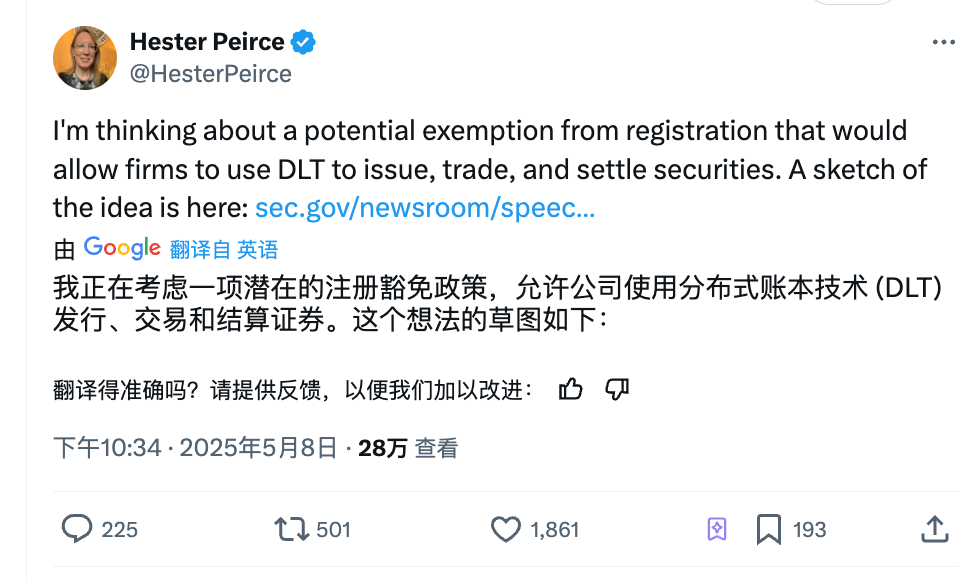
有社区评论戏言,SEC 都开始站台了,加密的春天还远吗?

我们也读了读这篇论文,在市场各种涨跌的噪音中,为你提供另一种宏观层面的信息参考。

懂行人写加密

首先,我们可以再来细看一下这个论文作者 TuongVy Le 的背景。

TuongVy Le 不仅在 SEC 干了快六年,还晋升为立法和政府间事务办公室的首席法律顾问,直接跟美国国会、财政部这些“大佬”过招,参与制定数字资产的监管政策。

2021年的 GameStop 事件,散户大战华尔街,暴露了传统市场的不少漏洞,TuongVy Le 当时就在 SEC 内部,协助应对这场危机,为市场结构改革出谋划策。

离开 SEC 后,她投身加密行业,首先在 Bain Capital Crypto 担任合伙人,专注于推动区块链技术在传统金融中的应用,也短暂的在 Worldcoin 团队担任法律顾问与合规官;如今担任 Anchorage Digital 的总法律顾问,帮这家首获 OCC 联邦银行牌照的加密公司站稳脚跟。
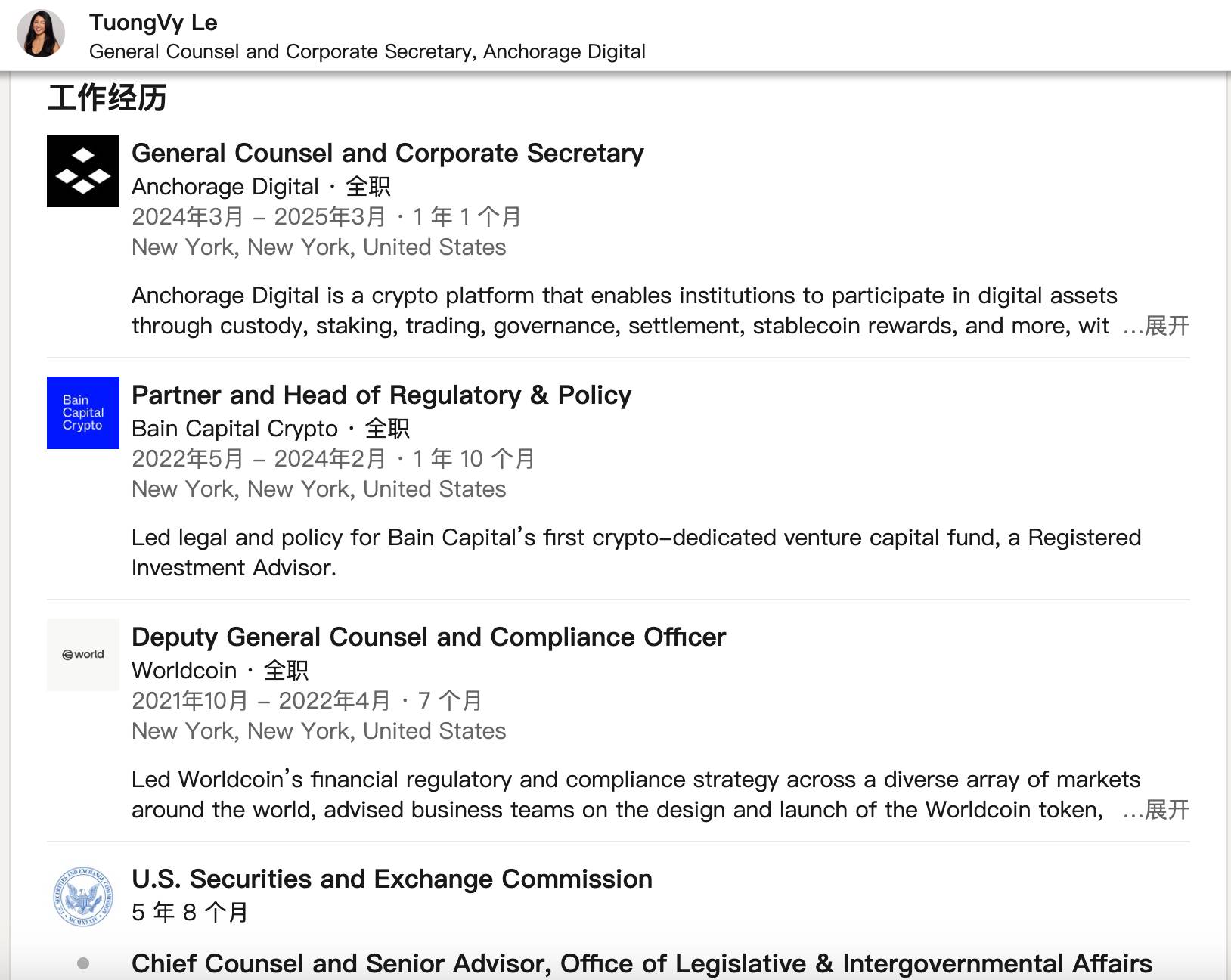
多年金融监管经验,横跨监管层、传统金融和加密行业,TuongVy Le 可能比大多数加密从业者的经历更加综合,既懂监管的“潜规则”,又明白加密的“新玩法”。

懂行的人写论文呼吁加密技术应该用在传统资本市场里,这既有利于目前身处加密资管公司的利益,同时也能够通过自己的影响力,为更多现任 SEC 同事们提供对加密技术和行业的正向看法。

过度复杂化的资本市场

TuongVy 的这篇论文实际上并没有太多的技术阐述和公式,一个比较有意思的点,从下图这幅叫做《能够自己擦嘴的纸巾》(The Self-Operating Napkin )漫画开始。

这幅画描绘了一种极其复杂且荒诞的机械装置,旨在完成一个非常简单的任务——用餐巾擦嘴。画中充满了各种奇特的零件和动作,比如杠杆、滚珠、弹簧甚至动物,共同构成一个看似精密却又滑稽的系统。
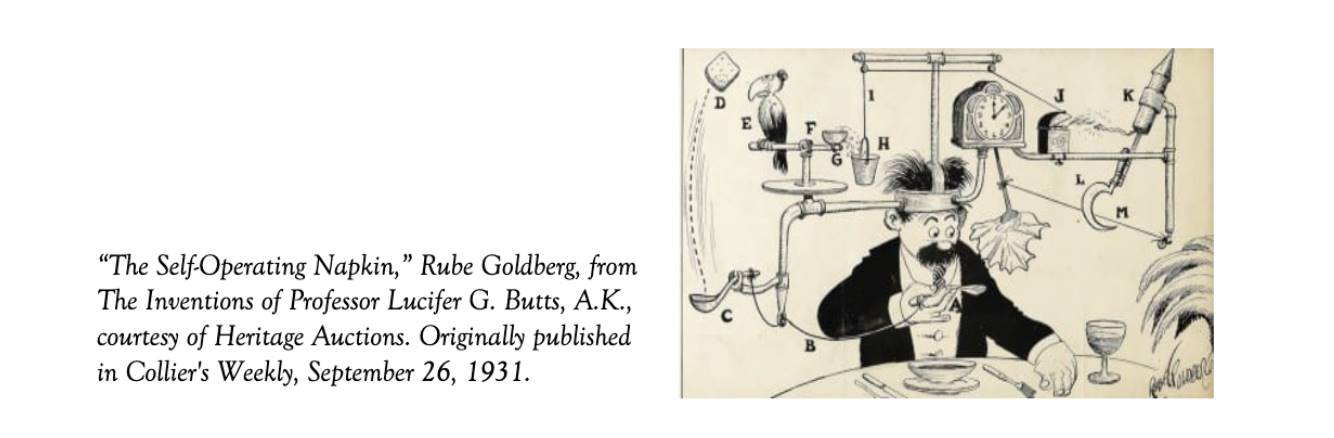
这幅画的讽刺意味非常明显,核心现象是过度复杂化。通过设计一个包含数十个步骤的机械系统来完成“擦嘴”这一简单动作,人类有时会将简单问题搞复杂。

而这也非常像今天的证券交易系统,在交易和结算过程中存在多种角色和不必要的环节,看似在各司其职进行协作,实则饱受诟病。

传统证券交易涉及多个中介环节。每一笔交易不仅仅是买卖双方的简单互动,还需要经过经纪商、清算机构、转让代理等多个中介。这些中介在交易过程中增加了层层的操作摩擦和费用。

其次,作者指出,当前的市场结构是为了应对20世纪60年代的“文书危机”而设计的。当时,股票交易主要依赖纸质凭证,这种手动处理方式在交易量迅速增长的情况下变得难以维持。

由于后台办公室无法及时处理大量的纸质凭证,许多经纪公司面临交割失败,甚至倒闭。

为了应对这场危机,市场开始采用更复杂的清算和结算系统,引入了更多的中介和法规。这种高度中介化的系统虽然解决了当时的危机,但也带来了更多的复杂性和低效。
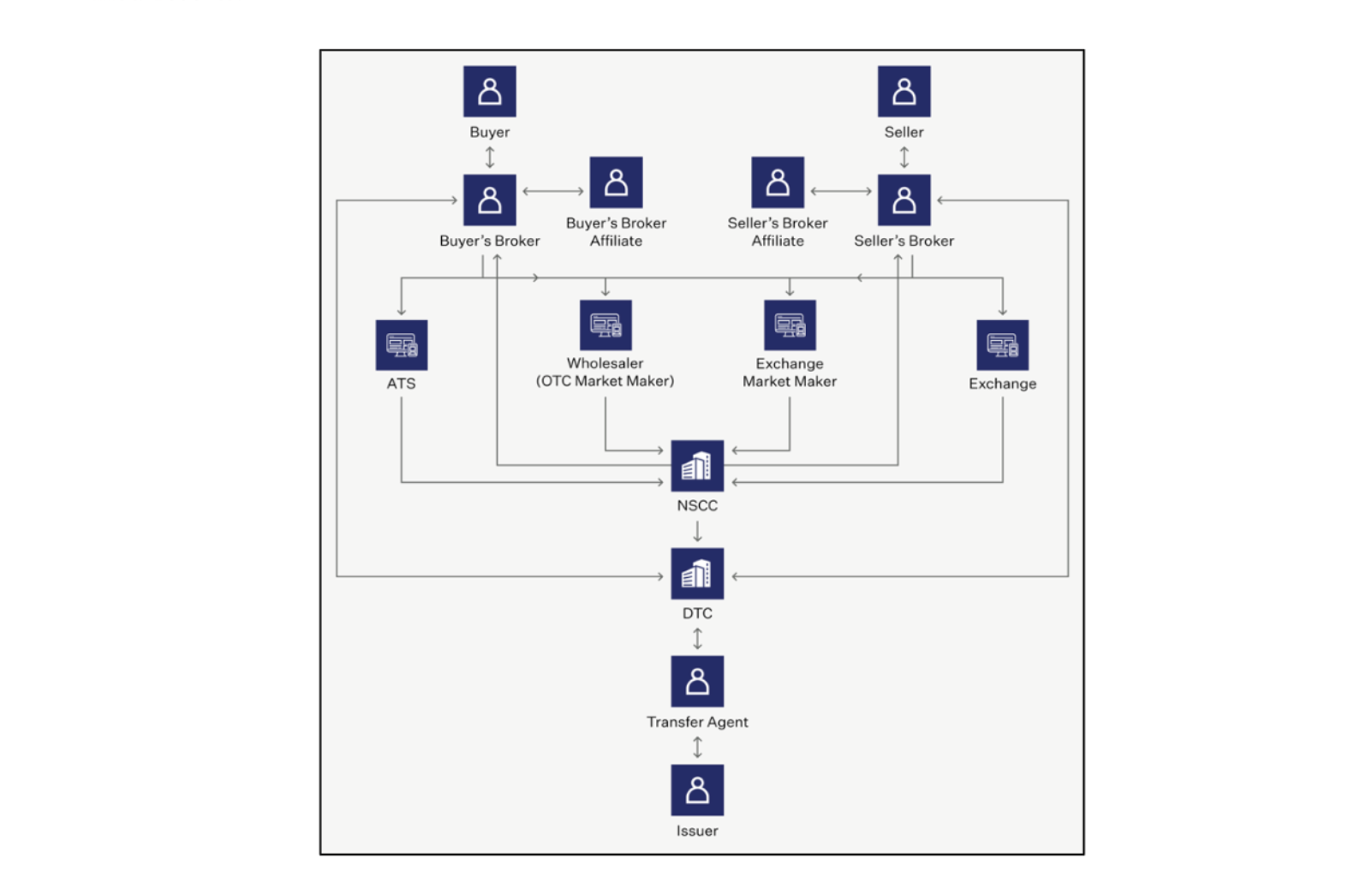
比如个人投资者要去交易,必须存在一个经纪商(Broker)角色来帮你去证交所交易,这其实也会增加委托代理风险,因为经纪商可能会为了自身利益而进行过度交易或推荐不适合的投资。

此外,国家证券交易所和替代交易系统需要遵循复杂的规则以防止交易价格劣于其他交易中心的报价,但这些规则在实际操作中难以完全实现。

清算和转让代理的存在又多了一层中介。清算机构作为中央对手方,确保交易的结算和交割。然而,这种系统导致了结算延迟和风险,需要额外的中介来保证交易的最终性。

各个环节都有中介,充满了冗余和低效,但这实际是源于技术不足的年代所做出的政策选择。

作者论文里的一个观点发人深省,即纸质股票凭证当年可以被淘汰,那么现行的股票交易系统,同样也可以被替代。

CEX,比证交所好?

虽然加密技术也有自身的问题,比如私钥丢失或智能合约代码设计不完善等,但是论文作者提出了一个非常大胆的想法:

P2P 交易和使用 CEX,有些地方比传统证券市场交易好。

比如,CEX允许用户直接访问交易平台,无需通过注册经纪商。这减少了代理成本,并使用户能够更直接地控制订单的执行;

在CEX上,交易在执行时即刻结算,减少了传统市场中T+1结算带来的对手风险。这也消除了对清算代理、托管人或转让代理的需求;同时 CEX支持24/7交易,使得用户可以随时对市场变化做出反应,减少了非交易时间的流动性缺口和价格低效。

此外,用户可以随时将加密资产提取到自我托管的钱包中,拥有对资产的直接所有权。这与传统市场中间接的证券所有权形成对比。

这些特点使CEX在效率、灵活性和用户控制方面优于传统证券市场。但作者也指出,CEX 有自己的问题,如集中托管的监守自盗和被攻击、内幕交易以及规则的缺失等。
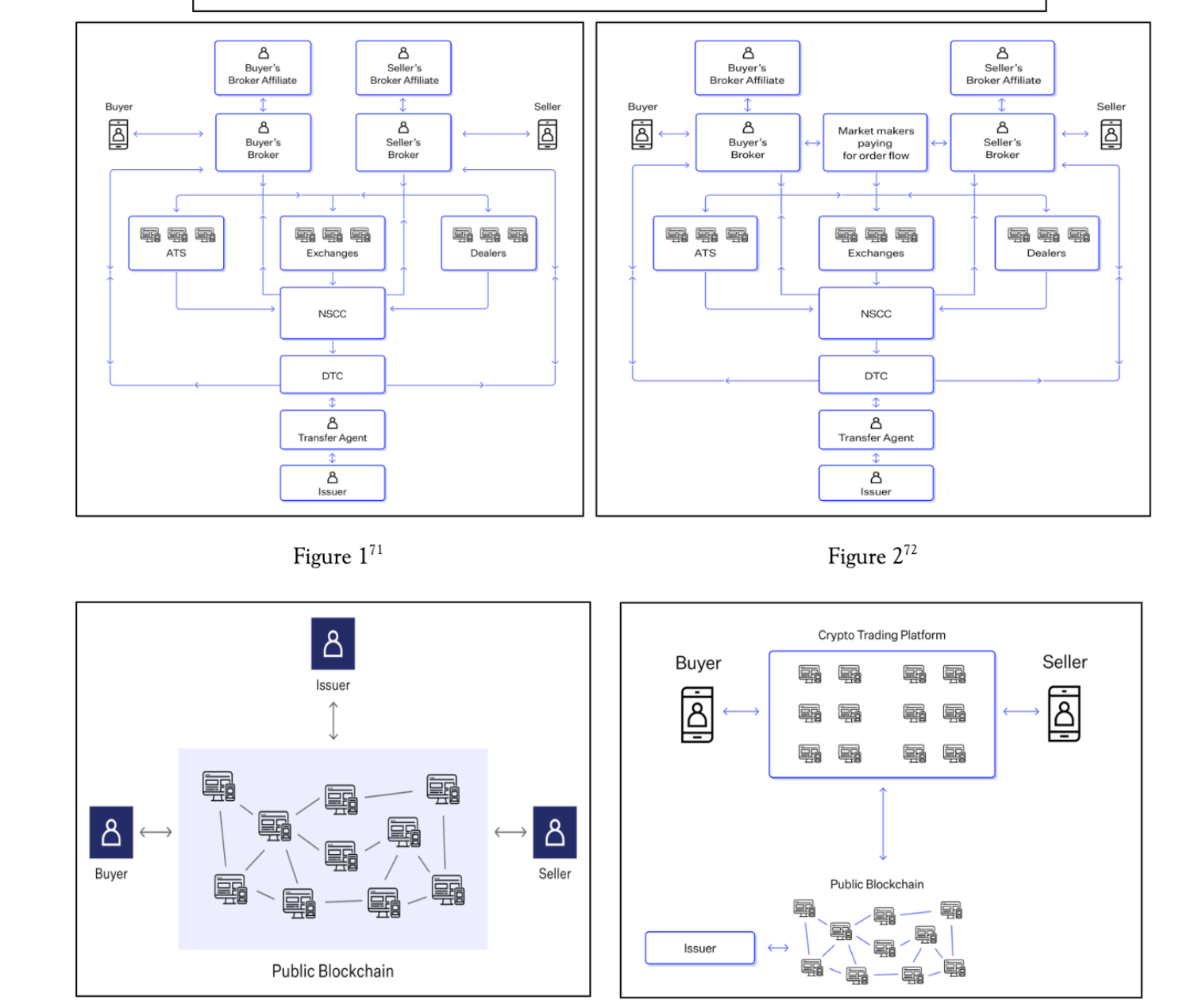
作者的论文图也非常的简单,说人话就是利用技术去取代过多的中介环节。不过这确实有点“活久见”的味道,一个前 SEC 的执法专家非但没有对加密技术表现出高压和排斥的态度,反而在取其精华指导证券市场的建设。

虽然论文并没有涉及到对加密资产的态度,但这种论文的发表和传播,本身就是一个积极的信号,更容易吸引更多在位的监管者去审视和拥抱加密技术,而非完全将其视作洪水猛兽。

不过,笔者觉得文中的观点也确实带来了一种久违的确定性:

加密技术不再是小众玩家的玩具,而是真正有机会破圈,成为传统金融市场的“新引擎”。

属于行业的好日子还在后头,愿你也能在其中尝到甜头。
Пов'язані матеріали

Bitmine Increases Holdings to 5.7 Million ETH, Included in Russell 1000 Index, Tom Lee Says Only One Step Away from '5% Target'

Bitmine Increases Ethereum Holdings, Nears 5% Supply Target and Joins Russell 1000 Bitmine Immersion Technologies (BMNR) acquired an additional 27,084 ETH last week, bringing its total holdings to 5,700,040 ETH, which represents 4.7% of Ethereum's total supply. This puts the company at 94% of its goal to own 5% of ETH's circulating supply. Despite a challenging week where ETH price fell 8% and BMNR's stock dropped 13%, Bitmine continues its accumulation strategy, with Chairman Tom Lee attributing the market weakness to quarter-end "window dressing" by investors. In a significant development, Bitmine was added to the Russell 1000 large-cap index on June 26. Lee expects this inclusion to attract hundreds of institutional investors, as passive funds and ETFs rebalance to match the index. The company's total assets, including crypto, cash, and securities, stand at $9.8 billion. Of its ETH holdings, 4,879,157 are currently staked, generating an estimated annualized revenue of $211 million. Lee projects this could rise to $246 million once all ETH is staked through its MAVAN network. Bitmine remains the world's largest corporate Ethereum treasury and the second-largest overall corporate crypto treasury, behind Strategy's substantial Bitcoin holdings. Lee reaffirmed the company's commitment to steady buying throughout 2026, expressing belief that the crypto market is still in the early stages of a spring cycle. At the time of writing, ETH was trading around $1,565, while BMNR stock was near $13.56, down over 90% from its 52-week high.

marsbit21 хв тому

Bitmine Increases Holdings to 5.7 Million ETH, Included in Russell 1000 Index, Tom Lee Says Only One Step Away from '5% Target'

marsbit21 хв тому

AGI Countdown: OpenAI's Chief Research Officer Makes Major Statement — The Window for Humanity is 'Very Small'

The countdown to AGI has begun, according to OpenAI's Chief Scientist Mark Chen, who states the window for human-centric progress is "very small." Chen argues that AI is reaching a point where models can perform "self-sustaining research," autonomously driving innovation in fields from mathematics to programming. He points to the proliferation of AI's "superhuman" insights—akin to AlphaGo's legendary "Move 37"—across disciplines as evidence of this shift. Chen firmly dismisses claims that scaling laws are plateauing or that pre-training is dead, asserting the field remains on an exponential curve. He cites OpenAI's successful bet on reasoning models like o1 as proof that fundamental breakthroughs are still possible. The future of research, he suggests, lies with "Vibe Researchers"—humans who provide high-level direction and "taste" while AI handles execution and orchestration of complex, long-horizon tasks. However, significant hurdles remain. Chen highlights a "benchmarking crisis," where models can overfit to existing tests without gaining true generalization. He also notes the "jagged frontier" of AI capabilities, where systems excel at advanced reasoning but struggle with contextual, continual learning from everyday experiences. Despite these challenges, he expresses confidence that these gaps will be closed. In a personal reflection, Chen shares that post-AGI, his wish is to open a noodle shop—a metaphor emphasizing that when AI masters knowledge and innovation, uniquely human experiences, warmth, and storytelling will become the ultimate form of value.

marsbit37 хв тому

AGI Countdown: OpenAI's Chief Research Officer Makes Major Statement — The Window for Humanity is 'Very Small'

marsbit37 хв тому

China's No.1, Closing in on OpenAI, Mysterious "Sweeping Monk" Rises to Top Seven Globally

A mysterious Chinese AI project named "MopMonk" (meaning "Sweeping Monk") has achieved a top-ranking result on the globally recognized CyberGym cybersecurity benchmark. With a 73.1% success rate, it ranks seventh worldwide and first among Chinese entries, performing closely behind OpenAI. The significance lies in the benchmark itself. CyberGym, created by UC Berkeley, is considered a premier "Olympics" for AI security. It tests models on over 1500 real-world software vulnerabilities, requiring them to not just identify but actually generate working exploits (PoCs) in a complex, offline environment. This moves beyond simple knowledge to testing an AI's practical "execution" capabilities. MopMonk's approach is notable. It uses the open-source MiniMax M3 model from Shanghai as its powerful reasoning "brain," leveraging its strong coding skills and long context window. However, the key to its performance is a custom-built, multi-agent security framework—its "Harness." This system uses structured "vulnerability memory" to efficiently guide the search for exploits, allowing multiple agents to explore in parallel while sharing lessons learned from failures. This engineering layer effectively translates the model's intelligence into actionable, iterative testing steps. The project remains highly secretive, with no official website or team information, embodying the "dark horse" spirit of its literary namesake. Its success highlights a potential industry shift: beyond simply scaling model size, the engineering of specialized agent systems (the Harness) is becoming a critical differentiator for real-world AI application performance, especially in complex domains like cybersecurity.

marsbit1 год тому

China's No.1, Closing in on OpenAI, Mysterious "Sweeping Monk" Rises to Top Seven Globally

marsbit1 год тому

Will History Repeat Itself? Fidelity Lists Five Catalysts to End the Crypto Winter

Fidelity's new report suggests that the current crypto winter for Bitcoin may be nearing its end, identifying five potential catalysts that could drive a market turnaround based on historical patterns. First, Bitcoin's approximately four-year cycle, driven by its halving mechanism, historically marks peaks and troughs. The last bottom was in November 2022, potentially pointing to the next around November 2026, though cycle length can vary. Second, clearer regulation has often preceded past bull markets. The focus is now on the CLARITY Act, which aims to clarify US digital asset oversight between the SEC and CFTC. Its passage could unlock domestic activity currently held back by legal uncertainty. Third, Federal Reserve monetary policy plays a role. A shift to lower interest rates tends to correlate with rising crypto prices by reducing borrowing costs and boosting risk appetite, though markets may price this in well ahead of any official change. Fourth, the emergence of breakthrough applications can fuel investor interest. Current trends like real-world asset tokenization, AI-related crypto infrastructure, and stablecoins are being watched, but history shows the biggest catalysts are often unexpected. Fifth, a new wave of institutional adoption could be a trigger. While ongoing adoption in 2026 hasn't sparked a new bull run, a major unexpected move—like a significant purchase by a tech giant or adoption as a hedge in a global crisis—could create a powerful new narrative. Fidelity concludes that while the market is in a downturn, historical turning points have often resulted from a combination of such factors, and the next phase for Bitcoin may depend on which of these catalysts materializes first.

Foresight News1 год тому

Will History Repeat Itself? Fidelity Lists Five Catalysts to End the Crypto Winter

Foresight News1 год тому

Торгівля

Спот
活动图片