RedotPay выходит в Южную Корею с платежными картами на основе криптовалют

cryptonews.ruОпубліковано о 2025-05-12Востаннє оновлено о 2025-05-12

Сообщается, что базирующаяся в Гонконге финтех-компания RedotPay запустила свои платежные карты на основе криптовалют в Южной Корее, позиционируя себя как новаторского игрока на рынке, на котором доминируют традиционные кредитные компании и сервисы мобильных платежей.

Криптовалютные дебетовые карты компании — как физические, так и виртуальные — теперь принимаются во всех корейских торговых точках, которые поддерживают Visa, согласно отчету The Korea Economic Daily от 9 мая.

Это еще один шаг RedotPay в мждународной экспансии после ее более раннего партнерства с Visa и спонсором BIN StraitsX в феврале 2025 года с целью расширения возможностей трансграничных криптовалютных платежей.

RedotPay, основанная в 2023 году, быстро масштабировалась с момента мягкого запуска своей программы криптовалютных карт в конце 2024 года. Сейчас она обслуживает более четырех миллионов пользователей по всему миру.

В Южной Корее пользователи могут получить виртуальную карту за 10 долларов или физическую карту за 100 долларов с минимальными требованиями к проверке, включая имя, адрес и удостоверение личности.

Сообщения в социальных сетях указывают на то, что карта в настоящее время доступна корейским пользователям.

«Вы можете использовать ее сразу со своего смартфона без физической карты, просто подтвердив свою личность при выпуске», — написал один пользователь на X.
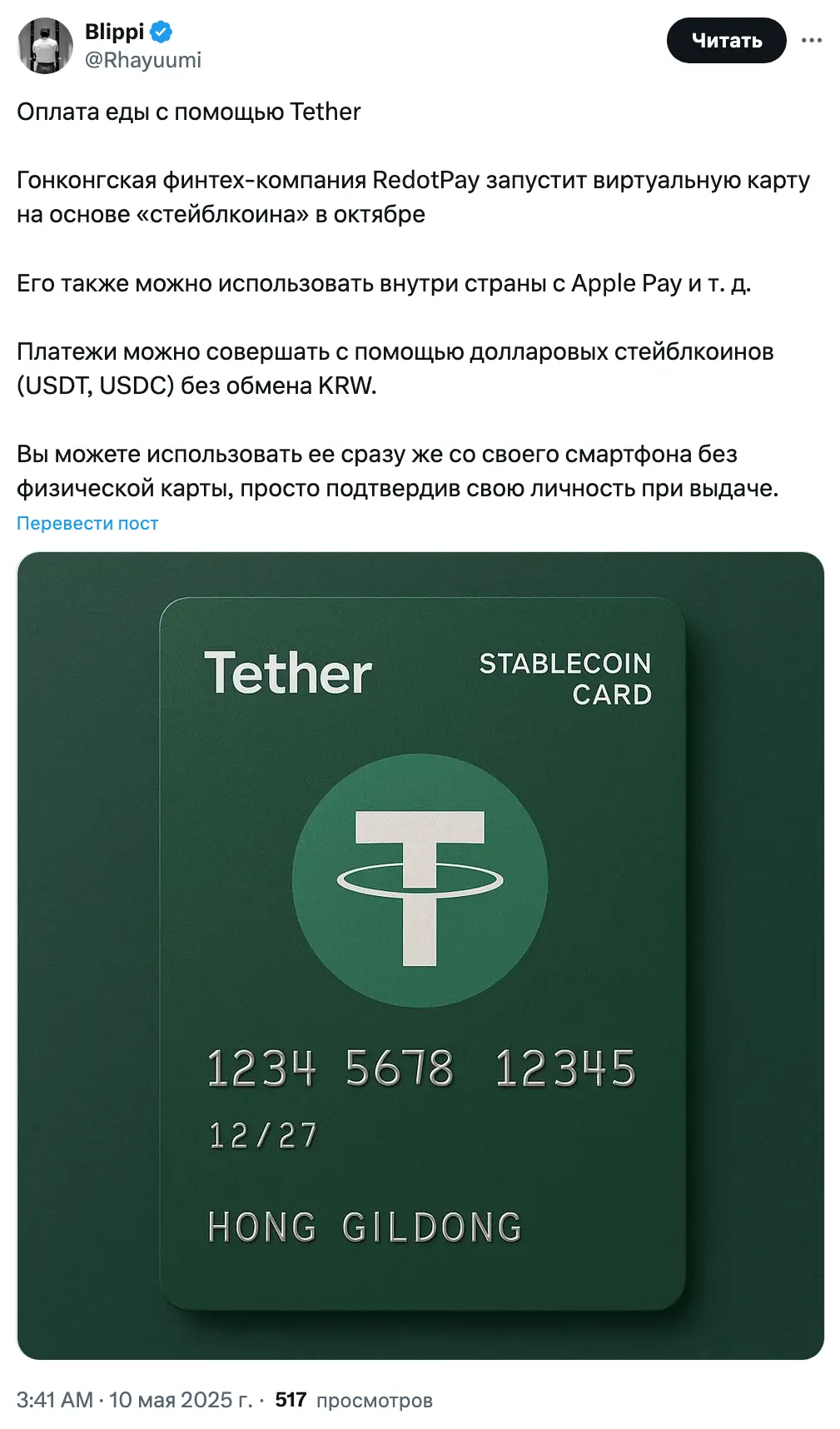

Источник: Blippi.

Карты RedotPay поддерживают основные криптовалюты

Карты RedotPay поддерживают основные криптовалюты, такие как Bitcoin (BTC) и Ethereum (ETH), а также стейблкоины, такие как USD Coin (USDC) и Tether (USDT). Пользователи могут пополнять свои карты криптоактивами из нескольких блокчейнов, включая Solana, Polygon, BSC, Tron и Arbitrum.

Одной из выдающихся особенностей RedotPay является система оплаты и возврата стейблкоинов в режиме реального времени. При совершении покупки стейблкоины мгновенно списываются с кошелька пользователя.

Если транзакция отменена, возврат в USDC или USDT обрабатывается в течение нескольких минут.

RedotPay также совместим с Apple Pay в Сеуле, что дает ему преимущество на рынке, где Apple Pay в настоящее время ограничен клиентами Hyundai Card. Совместимость может оказаться решающей, поскольку RedotPay бросает вызов устоявшейся платежной инфраструктуре Кореи.

Внедрение криптовалют ускоряется в Южной Корее, где, как сообщается, более 16 миллионов человек владеют криптовалютой. Это также сделало криптовалюту ключевой темой в президентской гонке в Южной Корее 2025 года.

6 мая лидер Демократической партии Южной Кореи Ли Чжэ Мён стал последним кандидатом в президенты, пообещавшим одобрение спотовых криптовалютных биржевых фондов (ETF) и других мер, благоприятных для криптовалют, в случае его избрания.

Сообщается, что правящая партия Южной Кореи, Партия народной власти, также дала обещания относительно криптовалютной политики в конце апреля, в том числе разрешение спотовых криптовалютных ETF, отмену противоречивого правила Кореи «одна биржа — один банк» и создание нормативной базы для стейблкоинов.

Пов'язані матеріали

CPU Makes a Comeback to the Table, A $170 Billion "Power Seizure" Drama Begins

A new era is dawning for the server CPU (Central Processing Unit), driven by the shift from AI model training to large-scale reasoning and the rise of Agentic AI. This article explores how the CPU is reclaiming a central role in the AI data center. For years, the focus has been on the GPU (Graphics Processing Unit) for AI training. However, as AI moves to the inference and Agent phase—where tasks involve complex, multi-step reasoning, tool calls, and data management—the workload balance is flipping. Studies show CPUs now handle over 70% of the workload in Agentic AI, up from 10-30% in training. This is because Agent tasks generate massive intermediate data (KV Cache) that exceeds GPU memory, forcing it to be offloaded to the CPU's larger, more scalable memory pools. This increased importance is translating into market changes. Major players are taking note: NVIDIA launched its first standalone CPU line, Vera, based on ARM architecture and optimized for Agent performance. AMD doubled its server CPU market forecast to over $1200 billion by 2030. Analyst reports project the total server CPU market could reach $1700 billion by 2030, with AI-driven demand being a primary driver. Furthermore, the classic ratio of CPUs to GPUs in AI servers is rapidly changing, converging from 1:8 toward 1:1 for Agent deployments. This surge in demand has led to a rare industry-wide price increase of 10-15% for server CPUs from Intel and AMD, breaking a decade-long trend of "more performance for the same price." Demand is bifurcating into high-core-count CPUs for in-rack GPU support and moderate-core CPUs for standalone Agent task orchestration. In China, this global trend presents an opportunity for domestic CPU manufacturers like Hygon (海光信息) and Huawei Kunpeng, who are bolstered by both growing AI infrastructure needs and national policies promoting technological self-reliance ("xin chuang"). The maturity of their software ecosystems is also accelerating, evidenced by faster adaptation to new AI models. In conclusion, the narrative is shifting from a GPU-centric view to one where CPU-GPU synergy is critical. The CPU is no longer a peripheral component but a performance-defining bottleneck and a key growth driver in the AI hardware stack, opening a massive new market estimated in the hundreds of billions of dollars.

marsbit10 год тому

CPU Makes a Comeback to the Table, A $170 Billion "Power Seizure" Drama Begins

marsbit10 год тому

TechFlow Intelligence: AMD AI Director Publicly Criticizes Claude Code for "Becoming Dumber and Lazier", Trump Claims Full Ceasefire in Hormuz But Strait Still Has 80 Unexploded Mines

TechFlow Intelligence Report: This daily digest covers key developments in AI, crypto, hardware, and geopolitics. In AI, SK Telecom faces US export control scrutiny over its partnership with Anthropic, while a Gemini user reports being misled in a scam scenario, sparking safety debates. China's Z.AI launches the GLM-5.2 model, rivaling Claude Opus without NVIDIA chips. In crypto, Bithumb lists ReProtocol, and Upbit delists KernelDAO. On the hardware front, MIT researchers build a custom OS to study chips, ASML denies US claims its advanced lithography machines are in China, and Amazon considers selling its in-house AI chips. Apple's future A21 Pro chip may use TSMC's latest N2P process. Major tech issues include 10,000 GitHub repositories distributing malware and Apple patching a critical eavesdropping flaw in Beats earbuds. US stocks rise, led by semiconductors, with Intel surging 10.6%, while SpaceX falls 3.5%. Geopolitically, despite a US-Iran deal, the Strait of Hormuz remains risky with ~80 uncleared mines, stalling 80M barrels of oil on standby tankers. Iran postpones Switzerland talks, and Trump calls the agreement an "unconditional surrender." The report highlights a contrast: temporary geopolitical calm versus the ongoing, fundamental restructuring of tech supply chains and chip independence.

marsbit10 год тому

TechFlow Intelligence: AMD AI Director Publicly Criticizes Claude Code for "Becoming Dumber and Lazier", Trump Claims Full Ceasefire in Hormuz But Strait Still Has 80 Unexploded Mines

marsbit10 год тому

Торгівля

Спот
Ф'ючерси
活动图片