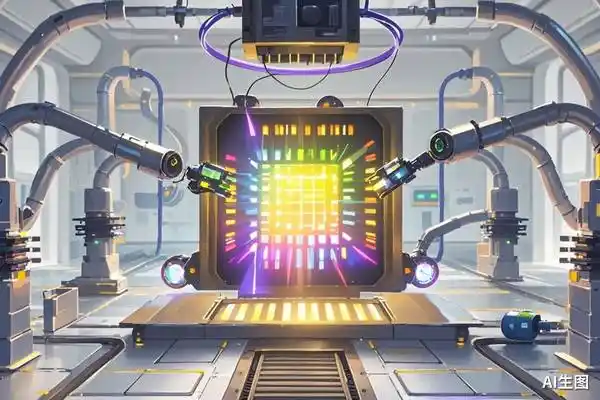
Stacks стал лидером среди L2 по соцактивности

cryptonews.ruОпубліковано о 2021-08-08Востаннє оновлено о 2025-05-08

Stacks (STX) стал самым обсуждаемым решением 2-го уровня (Layer 2) на крипторынке, опередив всех конкурентов по социальной активности. По данным LunarCrush, STX занял 1-е место по росту числа упоминаний среди всех подобных проектов, включая такие платформы, как Arbitrum (ARB) и Mantle (MNT). Причем лидерство сохраняется уже несколько дней подряд, что свидетельствует о стабильном росте интереса к данной экосистеме.

Общее число социальных взаимодействий с контентом про STX превысило 400 тыс. Для сравнения, лидирующие блокчейны 1-го уровня, такие как SUI и S, в среднем получают от 2 млн до 3 млн. Однако в контексте Layer 2 это очень высокий результат. Анализ показал, что более 99% всей социальной активности вокруг Stacks приходится на платформу Twitter или X, которая остается главным источником обсуждений в криптосообществе.

Интересно, что несмотря на доминирование данной площадки, пользователи YouTube демонстрируют самый высокий уровень позитивного отношения к STX. Именно на этой платформе зафиксирована наибольшая доля бычьих настроений в обсуждениях Stacks. Общий уровень позитивных сообщений о STX составляет 86%, и за весь 2025 год он опускался ниже 80% лишь 2 раза.

Внутри экосистемы Stacks тоже наблюдается всплеск внимания к дочерним токенам. Наибольшее число упоминаний получают: sBTC, LEO, Welsh, Nothing Token и Flat Earth. Кроме того, по данным индекса AltRank, в который входят показатели социальной активности и рыночного поведения, высокие позиции также занимают ROO, Velar, Alex Lab, ABTC и Diko.

Существенный рост зафиксирован и по числу KOL’ов (лидеров мнений), публикующих контент о Stacks. На сегодняшний день более 800 создателей упоминают STX, и это число продолжает расти. Учитывая эти метрики, аналитики называют Stacks одним из главных претендентов на усиление позиций в сегменте Layer 2 в ближайшее время.

Ошибка в тексте? Выделите её мышкой и нажмите Ctrl + Enter

Трендові криптовалюти

Пов'язані матеріали

The "Impossible Triad" Is Fundamentally a Pseudo-Problem

The article argues that blockchain's fundamental limitation is not the scalability trilemma (decentralization, scalability, security), which has been largely solved, but the lack of **privacy** and, until recently, clear **legitimacy**. Blockchain is described as a slow, expensive, globally shared computer whose core value is censorship resistance and verifiability. While ideal for native digital assets like money (e.g., stablecoins), its default transparency acts as a **tax**, exposing all transactions and enabling MEV extraction, which deters serious institutional capital. Simultaneously, its permissionless nature created regulatory ambiguity. The piece contends that **privacy** is the missing critical feature. It rejects the false choice between total transparency and complete anonymity. Modern cryptography (like zero-knowledge proofs) enables **compliant privacy**: users can prove facts (solvency, KYC status, compliance) without revealing the underlying sensitive data (specific holdings, identities). This preserves auditability for regulators and eliminates the leak of financial information. With recent regulatory progress (e.g., the GENIUS Act) addressing legitimacy, adding default, provably compliant privacy becomes a pure upgrade. It transforms blockchain from a costly, public ledger into a confidential settlement layer, finally bridging the gap to mainstream institutional and individual adoption of on-chain finance.

链捕手12 год тому

The "Impossible Triad" Is Fundamentally a Pseudo-Problem

链捕手12 год тому

Optical Chips: Collective Capacity Expansion

The global optical chip industry is experiencing a massive wave of expansion driven by surging AI data center demand. Major players across the US, Japan, Europe, and China are aggressively investing to ramp up production capacity. In the US, Coherent is expanding its 6-inch Indium Phosphide (InP) semiconductor fab in Texas, supported by CHIPS Act funding and a $2 billion strategic investment from NVIDIA. Lumentum is building a new factory for InP optical devices, and Nokia is scaling its advanced photonic chip packaging and testing capabilities. NVIDIA's investments aim to secure future supply of critical lasers and optical interconnect products for AI infrastructure. Japan's JX Advanced Metals, a leading InP substrate supplier, plans a multi-billion yen investment to increase its capacity 7-10 times, strengthening its grip on the crucial upstream materials market. In Europe, IQE and Tower Semiconductor settled a patent dispute and signed a multi-year InP epitaxial wafer supply agreement, highlighting that next-generation silicon photonics platforms will integrate high-performance InP components. STMicroelectronics and Sivers Semiconductors are also expanding silicon photonics production and partnerships. China is rapidly building out its domestic supply chain. Dongshan Precision's subsidiary, Source Photonics, announced a $12 billion project to expand optical chip and module production. Companies like Sanan Optoelectronics and Yunnan Germanium are scaling up InP chip manufacturing and substrate production, moving towards vertical integration from materials to modules. While debate continues around the exact future architecture—whether CPO (Co-Packaged Optics), NPO, or pluggables will dominate—analysts like Morgan Stanley argue the underlying driver is unchangeable: the explosive growth in bandwidth demand. This will inevitably increase the volume of optical engines, lasers, and related content per GPU, regardless of the final technical path. The competition for "more light" in the AI era has intensified into a global, full-chain capacity race.

marsbit14 год тому

Optical Chips: Collective Capacity Expansion

marsbit14 год тому

Торгівля

Спот
Ф'ючерси

Популярні статті

Як купити LAYER

Ласкаво просимо до HTX.com! Ми зробили покупку Solayer (LAYER) простою та зручною. Дотримуйтесь нашої покрокової інструкції, щоб розпочати свою криптовалютну подорож.Крок 1: Створіть обліковий запис на HTXВикористовуйте свою електронну пошту або номер телефону, щоб зареєструвати обліковий запис на HTX безплатно. Пройдіть безпроблемну реєстрацію й отримайте доступ до всіх функцій.ЗареєструватисьКрок 2: Перейдіть до розділу Купити крипту і виберіть спосіб оплатиКредитна/дебетова картка: використовуйте вашу картку Visa або Mastercard, щоб миттєво купити Solayer (LAYER).Баланс: використовуйте кошти з балансу вашого рахунку HTX для безперешкодної торгівлі.Треті особи: ми додали популярні способи оплати, такі як Google Pay та Apple Pay, щоб підвищити зручність.P2P: Торгуйте безпосередньо з іншими користувачами на HTX.Позабіржова торгівля (OTC): ми пропонуємо індивідуальні послуги та конкурентні обмінні курси для трейдерів.Крок 3: Зберігайте свої Solayer (LAYER)Після придбання Solayer (LAYER) збережіть його у своєму обліковому записі на HTX. Крім того, ви можете відправити його в інше місце за допомогою блокчейн-переказу або використовувати його для торгівлі іншими криптовалютами.Крок 4: Торгівля Solayer (LAYER)Легко торгуйте Solayer (LAYER) на спотовому ринку HTX. Просто увійдіть до свого облікового запису, виберіть торгову пару, укладайте угоди та спостерігайте за ними в режимі реального часу. Ми пропонуємо зручний досвід як для початківців, так і для досвідчених трейдерів.

320 переглядів усьогоОпубліковано 2025.02.11Оновлено 2026.06.02

Як купити LAYER

Обговорення

Ласкаво просимо до спільноти HTX. Тут ви можете бути в курсі останніх подій розвитку платформи та отримати доступ до професійної ринкової інформації. Нижче представлені думки користувачів щодо ціни LAYER (LAYER).

活动图片