Kakarot, поддерживаемый Бутериным и StarkWare, представляет альтернативный стек Ethereum ZK

cryptonews.ruОпубліковано о 2024-02-28Востаннє оновлено о 2025-04-29

Kakarot, стартап, поддерживаемый cоучредителем эфириума Виталиком Бутериным и компанией StarkWare, занимающийся масштабированием блокчейна, завершили рабочую реализацию виртуальной машины Ethereum, готовую к началу проверки блоков Ethereum Layer 1 в режиме реального времени с использованием системы проверки STARK к концу 2025 года.

«Мы завершили создание нового способа доказательства блоков Ethereum — независимого, zk-native и готового к работе в режиме реального времени», — сказал соучредитель и технический директор Kakarot Клемент Уолтер. «Каждые 12 секунд Ethereum создает блок. К концу этого года мы планируем опубликовать доказательство STARK в течение 8 секунд — быстрее, чем сама цепочка. Именно такая скорость и устойчивость нужны Ethereum».

Kakarot — это zkEVM (виртуальная машина Ethereum с нулевым разглашением), созданная в Каире, открытый исходный код ZK-native языка StarkWare для генерации доказательств STARK. Он использует инфраструктуру проверки StarkWare на основе STARK для создания и отправки криптографических доказательств в Ethereum Layer 1. Kakarot стремится сделать смарт-контракты Ethereum более эффективными, одновременно доказывая, что все транзакции действительны.

Дорожная карта Ethereum до 2028 года основана на доказательствах ZK, и Какарот утверждает, что создал «первую достоверную альтернативу» для генерации доказательств с нулевым разглашением блоков Ethereum по сравнению с доминирующим стеком.

Большинство ZK-EVM сегодня полагаются на одну и ту же реализацию EVM (rust-evm), один и тот же набор инструкций (RISC-V) и один и тот же провер (Plonky3), пояснила команда в заявлении, предоставленном эксклюзивно The Block. Kakarot стремится устранить эту «стратегическую уязвимость» с помощью Cairo, чтобы снизить зависимость от одной системы.

«Противоречивый стек Kakarot — без Plonky3, без revm, без RISC-V — это благо для разнообразия и экспериментов ZK-EVM», — сказал исследователь Ethereum Foundation Джастин Дрейк. «Подобно разнообразию клиентов Consensus Layer и Execution Layer, разнообразие ZK-EVM — это мощный метод достижения устойчивости к снаркофикации, даже если отдельные реализации ZK-EVM считаются глючными».

«В гонке за доказательство ZK в реальном времени на Ethereum Kakarot проложит путь к лидерству, поскольку у него есть суперсила родного языка ZK», — предсказал соучредитель и генеральный директор StarkWare Эли Бен-Сассон. «Другой захватывающий аспект здесь — это крайне важное разнообразие клиентов, которое появится на Ethereum. Все говорят о готовности ZK, но без разнообразия клиентов это хрупкое обещание. Kakarot поставляет первый альтернативный стек ZK на Ethereum — другой путь».

Дебаты по поводу RISC-V

Заявление Какаротта последовало за недавним предложением Виталика Бутерина повысить масштабируемость Ethereum, заменив байт-код виртуальной машины Ethereum (EVM) на архитектуру RISC-V с открытым исходным кодом. Бутерин сказал, что «радикальная» и «амбициозная» идея может быть «единственным жизнеспособным путем» для значительного масштабирования уровня исполнения Ethereum и может сократить затраты на исполнение в цепочке в некоторых случаях до 100 раз. «Старые контракты EVM продолжат работать и будут полностью двусторонне совместимы с контрактами RISC-V нового стиля», — отметил Бутерин.

В ответ на это Уолтер заявил во вторник, что, хотя набор инструкций, совместимый с ZK, имеет смысл для уровня исполнения, нет необходимости торопиться с принятием RISC-V. «Наше сегодняшнее объявление демонстрирует, что мы не должны ограничиваться повторным использованием существующего стека и можем построить высокопроизводительную систему, адаптированную к потребностям производительности Ethereum».

Базирующаяся в Париже команда из 10 человек, компания Kakarot получила финансирование в размере 6 миллионов долларов от криптоаборигенов, включая Бутерина и StarkWare, превратившись из общественного проекта по написанию операционных кодов Ethereum в Каире в разработчика инфраструктуры блокчейна следующего поколения.

Фонд Ethereum Foundation представил новую структуру управления и правления в сообщении на форуме, опубликованном в понедельник, в преддверии запланированного на 7 мая обновления основной сети протокола Pectra, призванного улучшить пользовательский опыт, повысить масштабируемость накоплений и повысить верхний предел ставок валидаторов.

Трендові криптовалюти

Пов'язані матеріали

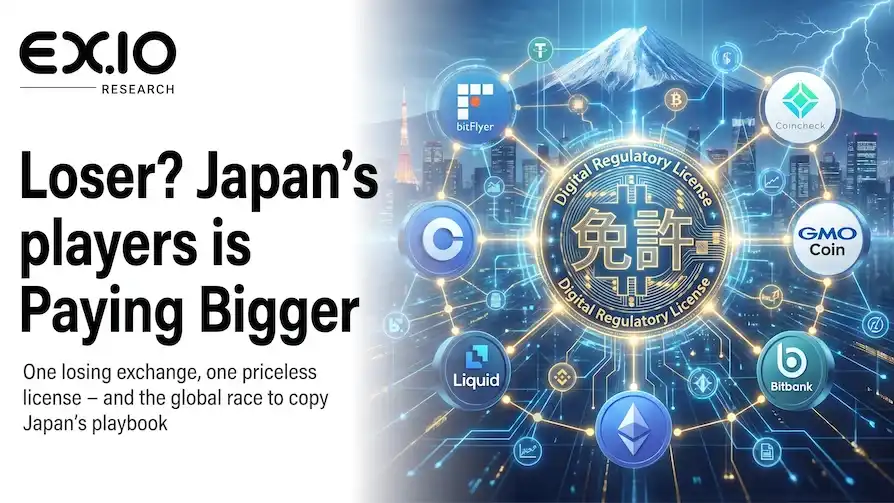
Lost 10 Billion, Yet Valued at 46.7 Billion? The True Value Revelation of Japan's Crypto Exchange 'Doomsday License'

**Summary: The Priceless "Doomsday License" – Why Japan's SBI Paid $289M for a Losing Exchange** In mid-2026, Japanese financial giant SBI Holdings acquired cryptocurrency exchange Bitbank for ¥46.7 billion (~$289 million). This valuation is puzzling on paper: Bitbank, while a long-established, licensed exchange, reported a ¥970 million loss in 2025 on shrinking revenues. The key lies not in profitability, but in a regulatory "franchise scale." SBI's purchase was for Bitbank's scarce, irreplaceable assets: its Japanese FSA license, 960,000 user accounts, and a fully compliant yen on-ramp. This acquisition came just two weeks after Japan passed a landmark amendment reclassifying crypto assets as "financial instruments" under stricter laws, dramatically raising penalties for unlicensed operations. Analysts predict up to half of Japan's ~30 licensed exchanges may exit, transforming existing licenses into non-renewable strategic resources. The deal's ~8x revenue multiple mirrors a global trend of "compliance arbitrage," where acquiring regulated entities is faster and cheaper than navigating complex, years-long licensing processes. The Japanese narrative is part of a worldwide pattern. In 2026 alone, the crypto sector saw $11.8 billion in M&A, with giants like Mastercard and Bullish acquiring regulated digital asset firms. As jurisdictions like the US, Singapore, and Hong Kong solidify frameworks, regulatory compliance shifts from a cost center to the most durable moat. The core lesson is that in maturing markets, the true value shifts from trading volume to "licensed scale." For early, compliant platforms, stringent regulation becomes a defensive asset, not a constraint. SBI's strategy of consolidating licensed Japanese exchanges illustrates this. The window to acquire such "tickets to the future financial world" at a reasonable cost is rapidly closing as global capital recognizes that in the regulated era, the license itself is the ultimate prize.

marsbit5 хв тому

Lost 10 Billion, Yet Valued at 46.7 Billion? The True Value Revelation of Japan's Crypto Exchange 'Doomsday License'

marsbit5 хв тому

Interpreting the Latest Report from the Ethereum Foundation: Why Are Governments and Giants Focusing on Ethereum?

Decoding the Ethereum Foundation's Latest Report: Why Governments and Giants Are Eyeing Ethereum? Authored by Lanhu Notes, this piece unpacks a key report from the Ethereum Foundation's global policy team. The report, released on July 2, makes a case for why governments and institutions should view Ethereum as the optimal platform for deployment. It highlights Ethereum's unique position as the closest existing platform to a "digital public infrastructure" – a neutral, open, and uncontrolled protocol for handling value, contracts, and coordination, akin to TCP/IP for the internet. The core arguments are: 1. **Maximal Neutrality & No Single Control Point**: Ethereum has no central owner, backdoor, or kill switch. It's maintained by thousands of independent nodes and hundreds of thousands of validators globally, making it resistant to unilateral control by any single entity—a critical feature for sovereign and institutional users. 2. **Proven Resilience & Unmatched Security**: Since its 2015 launch, Ethereum has maintained a perfect uptime record. Its security is backed by approximately $76 billion in staked ETH (as of March 2026), making any attack economically irrational and prohibitively expensive (estimated over $50 billion). 3. **Large-Scale Real-World Adoption**: The network hosts over $159 billion in stablecoins. Major financial institutions like BlackRock and JPMorgan are already using it for real-world asset (RWA) tokenization. Governments, including Bhutan and India, are deploying it for applications like national digital identity and tamper-proof land registries. 4. **Comparative Advantages**: Ethereum offers greater transparency and lower costs than traditional intermediaries. It is more open and neutral than permissioned/private chains. Compared to other public blockchains, it boasts superior maturity, the largest developer ecosystem, the biggest economy, and the highest proven security. In summary, the report positions Ethereum, backed by data, real-world use cases, and clear comparisons, as the emerging neutral public layer for global value settlement and coordination.

marsbit6 хв тому

Interpreting the Latest Report from the Ethereum Foundation: Why Are Governments and Giants Focusing on Ethereum?

marsbit6 хв тому

Aave V4 to Move Wall Street Securities Financing On-Chain: Composability Layer Transforms from Risk Point to Backbone

Aave V4 aims to bring Wall Street securities financing on-chain, targeting the massive traditional markets for repo, securities lending, and margin financing. It proposes three core products: securities-backed loans, atomic repo settlements, and securities lending. This shifts the narrative from "RWA as collateral" to building foundational "on-chain securities finance infrastructure." The key innovation lies in its third-layer approach: composability. V4 doesn't alter underlying asset credit but systematically connects all on-chain assets to leverage and liquidation mechanisms, making composability the system's backbone instead of just a risk point. Aave's dominant market share and its relatively prudent engineering for its Horizon institutional RWA lending market support this ambition. However, a critical design choice introduces a new risk dimension. The "centralized liquidity Hub + multiple Spoke" architecture and Horizon's shared liquidity pools prioritize capital efficiency by allowing new assets instant access to deep liquidity. The trade-off is the loss of risk isolation: a problem with one collateral type in a stress period can draw from the same stablecoin pool backing all others, spreading risk across the entire market. This risk is not theoretical, as demonstrated by a 2026 incident where compromised collateral from a bridge attack created bad debt on Aave. As the system scales—with Horizon targeting over $1B—it remains untested in a genuine credit or liquidity crisis. The first significant bad debt or forced liquidation in RWA markets will likely be triggered by a price/net asset value dislocation of a tokenized asset during stress, not by an underlying default. The implications are clear: institutions providing collateral must account for potential NAV-price gaps; liquidity providers must understand they are exposed to all collateral in a shared pool; and protocols must explicitly choose between risk isolation and capital efficiency. The market still focuses primarily on credit risk, while tokenization continues to concentrate new risks in the liquidity and composability layers.

marsbit10 хв тому

Aave V4 to Move Wall Street Securities Financing On-Chain: Composability Layer Transforms from Risk Point to Backbone

marsbit10 хв тому

Ethereum Forms Three Major Power Centers, Commercial Lifeline Held in the Hands of Major ETH Holders

Ethereon has established a new tripartite power structure to separate its core protocol development from commercialization efforts. The Ethereum Foundation, having lost several executives, now focuses solely on maintaining protocol principles like neutrality and censorship resistance. To handle business outreach and technical advancement, two new independent entities have been formed: Ethereum Institutional, which is dedicated to promoting Ethereum's tokenization and stablecoin use to major banks and asset managers, and Ethlabs, a research group focused on improving on-chain settlement and strengthening ETH's monetary narrative. Both organizations are funded by major ETH holders Bitmine and Sharplink, who collectively control over 5.4% of ETH's circulating supply. This structure aims to resolve the conflict between the Foundation's neutral stance and the need for aggressive commercialization. The success of this model is tied directly to ETH's price performance. Bullish prospects rely on Ethereum's dominant position in stablecoins, DeFi, and tokenized assets, with potential growth fueled by institutional adoption facilitated by the new entities. Bearish risks highlight ETH's price volatility and the dependency of the new organizations on their funders' financial health, which is itself linked to ETH's value. The future trajectory of this institutional framework will be largely determined by which of these market trends prevails.

Foresight News11 хв тому

Ethereum Forms Three Major Power Centers, Commercial Lifeline Held in the Hands of Major ETH Holders

Foresight News11 хв тому

Торгівля

Спот

Популярні статті

Як купити ZK

Ласкаво просимо до HTX.com! Ми зробили покупку ZKsync (ZK) простою та зручною. Дотримуйтесь нашої покрокової інструкції, щоб розпочати свою криптовалютну подорож.Крок 1: Створіть обліковий запис на HTXВикористовуйте свою електронну пошту або номер телефону, щоб зареєструвати обліковий запис на HTX безплатно. Пройдіть безпроблемну реєстрацію й отримайте доступ до всіх функцій.ЗареєструватисьКрок 2: Перейдіть до розділу Купити крипту і виберіть спосіб оплатиКредитна/дебетова картка: використовуйте вашу картку Visa або Mastercard, щоб миттєво купити ZKsync (ZK).Баланс: використовуйте кошти з балансу вашого рахунку HTX для безперешкодної торгівлі.Треті особи: ми додали популярні способи оплати, такі як Google Pay та Apple Pay, щоб підвищити зручність.P2P: Торгуйте безпосередньо з іншими користувачами на HTX.Позабіржова торгівля (OTC): ми пропонуємо індивідуальні послуги та конкурентні обмінні курси для трейдерів.Крок 3: Зберігайте свої ZKsync (ZK)Після придбання ZKsync (ZK) збережіть його у своєму обліковому записі на HTX. Крім того, ви можете відправити його в інше місце за допомогою блокчейн-переказу або використовувати його для торгівлі іншими криптовалютами.Крок 4: Торгівля ZKsync (ZK)Легко торгуйте ZKsync (ZK) на спотовому ринку HTX. Просто увійдіть до свого облікового запису, виберіть торгову пару, укладайте угоди та спостерігайте за ними в режимі реального часу. Ми пропонуємо зручний досвід як для початківців, так і для досвідчених трейдерів.

217 переглядів усьогоОпубліковано 2024.12.13Оновлено 2026.06.02

Як купити ZK

Обговорення

Ласкаво просимо до спільноти HTX. Тут ви можете бути в курсі останніх подій розвитку платформи та отримати доступ до професійної ринкової інформації. Нижче представлені думки користувачів щодо ціни ZK (ZK).

活动图片