一文读懂加密浪潮下的旅游重塑者:Coinsidings生态价值解构

Odaily星球日报Опубліковано о 2025-04-29Востаннє оновлено о 2025-04-29

Анотація

让旅行不再只是消费行为,而是用户可参与、可投资、可共享的价值网络。

在全球旅游业正加速恢复与转型的当下,一个名为 Coinsidings 的Web3生态正探索成为“加密+旅游”赛道。它不仅是一个链接用户与全球旅游资源的平台,更是将 RWA(现实资产上链)、AI 行程定制、去中心化数据权益、智能保险、稳定币支付等多种前沿技术场景落地于“真实旅行”中的生态系统。

Coinsidings 生态由数个核心模块构成,包括稳定币支付系统、旅游地产 RWA 交易平台、内容创作激励系统、链上保险机制、AI 旅行助手、以及智能合约驱动的收益分账引擎。每一模块既可独立运转,又能互为支撑,共同服务于一个目的:让旅行不再只是消费行为,而是用户可参与、可投资、可共享的价值网络。

全球旅游业复苏下的“结构性机会”

据联合国世界旅游组织(UNWTO)数据显示, 2024 年全球国际游客数量已恢复至疫情前的 95% ,而亚太市场增速尤为显著。与此同时,新世代旅行者对于“体验深度”“数据安全”“消费透明”“绿色可持续”等维度的要求也显著提升,传统 OTA 平台难以满足这一代旅行者的多样化需求。

一文读懂加密浪潮下的旅游重塑者:Coinsidings生态价值解构

这正为Web3技术介入提供了最佳契机。加密行业的“开放、透明、去中心化”特性,与旅游行业的“高信任门槛、高价值密度、跨地域协作”需求天然契合。Coinsidings 作为首批将Web3应用与实体旅游场景深度融合的项目,抓住了这一结构性机会窗口。

就像是在传统旅游体系之外,另起一张生态“地图”。Coinsidings 不是简单换了个 App 让你订酒店订机票,而是把整套旅游的链条——从住宿、支付、保险、地产到数据利用和环保激励——全部搬上了区块链,并且加上了Web3的核心逻辑:透明、去中介、用户共建、利益共享。

Coinsidings 正在重构旅游体验

Coinsidings 能够在加密旅游赛道脱颖而出的核心源于技术支撑,作为一个专注于加密旅游领域的 Web3 项目。Coinsidings 通过区块链、AI、RWA(真实资产上链)等技术的完美融合,为旅游行业带来了新的玩法和增长机会。从底层架构到用户参与模式,Coinsidings 不仅是一个“去中心化旅游平台”,更像是一套可扩展、可持续的加密旅游生态系统。

目前全球旅游业中,跨境支付和结算是很多平台难以避免的核心痛点,Coinsidings 通过接入稳定币 CHFT,用户可以轻松完成全球支付,不用担心换汇、手续费、到账慢等问题。同时,平台还用智能合约来自动处理订单、赔付、分账等流程,大大提升了效率,也降低了平台运营和用户使用的成本。

一文读懂加密浪潮下的旅游重塑者:Coinsidings生态价值解构

另一个关键突破,是将旅游地产等真实资产通过 RWA 方式进行代币化。以前,一套民宿可能需要上百万才能参与投资,如今通过 Coinsidings,用户只需要“买一平米”就能拥有共享收益权,资产也可以随时在链上市场流转、退出。这种“人人可参与”的模式,降低了门槛,也提升了资产的流动性和变现能力。

此外,AI 技术的引入也为平台增加了可玩性。用户在平台上输入旅行偏好,AI 就能生成个性化行程,并自动连接机票、酒店、保险等预订流程,真正做到“旅行定制化”。更重要的是,这一切都由智能合约保障自动执行,避免了传统旅游中常见的服务不一致、责任不清等问题。

Coinsidings 的增长引擎与生态飞轮

从整个行业趋势来看,旅游行业与区块链技术的融合正逐步走向更深层次的发展。无论是全球碳市场的互通、AI 驱动的实时价格调整,还是基于链上数据构建的用户信用体系,这些前沿技术都在推动旅游服务全面数字化。而 Coinsidings 正站在这一变革的交汇点上,凭借其多元生态布局,成为“加密旅游”最具代表性的项目之一。

Coinsidings 的增长动力,来源于用户、商家和平台三方之间形成的良性飞轮机制。对用户来说,平台不仅提供旅行消费服务,更创造了“可投资、可参与、可变现”的全新旅行体验。不论是参与旅游地产 RWA,还是通过内容贡献获取收益,用户在旅行中实现了价值回流。

对服务商来说,Coinsidings 提供了完整的链上基础设施。他们可以直接面对全球用户,依托链上画像和激励机制,实现更精准的营销与客户留存;同时借助平台的稳定币结算系统,也极大简化了跨境运营成本。

而对平台本身而言,随着用户行为与交易数据不断累积,高价值的链上数据资源和真实资产(RWA)不断沉淀,为后续的产品创新和生态扩展奠定了坚实基础。同时,社区治理机制也逐渐成熟,形成了可持续发展的治理驱动力。

据非官方数据估算,Coinsidings 目前的活跃钱包用户已突破 20 万个,平台上已完成的 RWA 资产上链总价值超过 1 亿美元,AI 路线规划系统已覆盖全球 150 多个城市。这些数字不仅反映出平台快速扩张的能力,也验证了市场对“加密+旅游”模式的认可。

Coinsidings 正在打造参与者驱动的“共创平台”

Coinsidings 的生态远不止于为游客提供服务,它正在构建一个用户、内容创作者、商户、开发者共同参与的开放型加密旅游生态体系。这种多边参与模式,不仅拓宽了平台的价值边界,也让每一个角色都成为生态增长的推动者。

对普通用户而言,旅行不再只是单纯的消费行为,而是一种可以“边玩边赚”的新体验。游客可以通过发布游记、攻略、点评等内容获得链上激励;还可以参与旅游地产等 RWA 资产的投资,或者将自己的出行数据授权给平台用于优化服务,获取相应收益。这种新型参与模式,让旅行本身也变得“可变现”。

对于商户来说,Coinsidings 提供了一套低门槛、标准化的“链改”解决方案。不论是民宿、导游还是本地旅行社,都可以快速接入平台的链上结算系统,支持稳定币收款、自动分账、链上保单等功能。同时,平台提供 NFT 通行证和合约保险等服务,帮助商户以最低成本实现Web3转型,扩大业务边界。

一文读懂加密浪潮下的旅游重塑者:Coinsidings生态价值解构

在开发者与生态合作伙伴层面,Coinsidings 也体现出高度开放性。平台对外开放了部分协议接口,允许第三方接入自定义模块。未来无论是 AI 定制行程助手、碳中和积分系统、链上票务服务,还是更具沉浸感的旅游元宇宙项目,都可以与 Coinsidings 生态无缝衔接。这种“可插拔式”结构,为持续扩张留足了空间。

通过这套完整的生态设计,Coinsidings 不仅打通了旅游、技术与投资的边界,更在推动一个全新的加密旅游社会结构的形成。

技术扎实、生态活跃,是 Coinsidings 撬动行业未来的“双轮驱动”

在旅游行业加速拥抱 Web3 的背景下,Coinsidings 提供了一种“用得爽、赚得到、玩得深”的全新体验方式。从支付结算到资产投资,从智能合约到内容激励,这个平台正在搭建一套完整的加密旅游生态网络,也展现出成为该赛道领军项目的巨大潜力。

它并不是“旅游上链”的简单版本,而是在重构旅游业的参与机制、信任逻辑与收益分配方式。技术上,它将 AI、RWA、智能合约、稳定币支付打通;生态上,它通过激励机制让用户成为价值创造者。在未来Web3与真实世界日益融合的趋势下,Coinsidings 具备成为加密旅游第一生态的潜力。

随着旅游复苏加快、Web3基础设施普及,以及政策对 RWA 与稳定币的逐步明确,像 Coinsidings 这样具备“真实场景+技术落地+用户驱动”特征的项目,将有望打破中心化平台的垄断,重新分配旅游价值链上的利益与权力。

说到底,Coinsidings 不是旅游业的“Web3补丁”,而是围绕“旅行即资产”“用户即价值”的底层逻辑,重新定义旅游行业运行方式的系统型构建者。它既是一个平台,更是一种新型旅游价值网络的开端。

Coinsidings 不仅是在改造旅游,更是在重塑人们“走出去、连接世界”的方式。

来,当用户在东京泡温泉、在摩洛哥露营、在瑞士山间滑雪的同时,也能在链上查看自己的收益,参与生态治理,这种边旅行边创造价值的模式,将不再只是加密圈的幻想,而是全球旅游者共同的现实。

Пов'язані матеріали

How Collector Crypt Uses 'Recirculating Buybacks' to Create an Illusion of Growth

Title: How Collector Crypt Creates a Growth Illusion with "Buyback Loops" Key Findings: Collector Crypt's (CC) net take rate has halved from 11.2% in Q3 2025 to 5.6% in Q2 2026, while GMV grew 4.7x. This growth is driven by higher-tier card packs ($250, $1,000, $2,500) which have lower platform dollar retention rates. The newly launched $2,500 Mythic tier captured 36.7% of June GMV within 13 days. Growth is fueled by a small cohort of high-spending, high-frequency wallets rather than broad user base expansion. The economic model faces pressure from three key areas: 1) **Shifting GMV Mix**: Pushing users towards larger, lower-retention card packs increases GMV but reduces overall profitability. 2) **Physical Redemptions**: Card redemptions for physical items remove reusable inventory from the system, creating costly replenishment needs. In May, redemptions consumed 41.6% of pre-redemption net income. Only 75 wallets drove redemptions in June. 3) **B2B/API Strategy**: Partner revenue remains negligible (cumulatively $1.83M) and dependent on CC for inventory, vaulting, and buyback services, failing to create a scalable, asset-light recurring revenue stream. The core product is a repetitive pack-buyback loop with limited secondary market activity and token value accrual. Sensitive modeling shows CC's economics turn negative when any two of the following pressures coincide: replenishment costs near market price, redemption rates exceeding 9%, or high-tier buyback rates around 93%. While CC operates in a large and growing collectibles market, its current growth levers—bigger packs, high buyback rates, and capital recycling by a few wallets—create a volume illusion without demonstrating sustainable collector engagement, deep secondary markets, or a viable path to improved margins. Future proof points include broadening collector participation, deepening secondary trading, and developing true asset-light B2B revenue channels.

Foresight News15 хв тому

How Collector Crypt Uses 'Recirculating Buybacks' to Create an Illusion of Growth

Foresight News15 хв тому

Grayscale's Latest Research: What is Solana's Next Growth Engine?

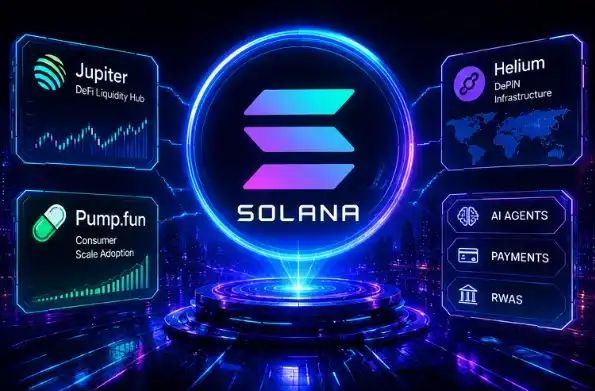
Grayscale's latest report, "Solana: Crypto's Financial Bazaar," signals a shift in how the market views Solana, moving beyond its high-performance and meme-centric reputation. The report frames Solana as an evolving application platform for large-scale economic activity, akin to a bustling digital marketplace. The analysis highlights that public chain competition has moved past raw throughput (TPS) to focus on genuine economic activity—daily users, transaction volume, and real revenue. Solana's metrics, such as over 1,000 dApps, 100M+ daily transactions, and ~4.3M daily active users, showcase this shift toward application-layer prosperity. The report identifies three key growth drivers: 1. **Jupiter**: Evolving from a DEX aggregator to a core liquidity hub and comprehensive financial platform for Solana's DeFi. 2. **Pump.fun**: Demonstrates Solana's capacity for consumer-scale applications, attracting millions of users and generating significant, sustainable revenue, validating network stability under high load. 3. **Helium & DePIN**: Represents expansion into real-world infrastructure, connecting blockchain to physical resources like wireless networks and positioning services, opening new long-term use cases. Solana Foundation's recent focus aligns with this broader vision, emphasizing AI Agents (for machine-to-machine transactions), payments, stablecoins, and Real-World Assets (RWA) to build a sustainable growth model beyond cyclical trends. While challenges remain—such as value capture for SOL and maintaining ecosystem sustainability beyond hot trends—institutional interest is growing due to Solana's maturing application business models, expanding payment/stablecoin ecosystem, and persistent developer activity. The competition is no longer about speed alone, but about which network can foster the most vibrant and valuable digital economy.

marsbit36 хв тому

Grayscale's Latest Research: What is Solana's Next Growth Engine?

marsbit36 хв тому

They Waited 7 Years for This Money

The article discusses the significant drop in share price of Circle, known as the "first stablecoin stock," triggered by the announcement of a new alliance including Visa, Stripe, Mastercard, Coinbase, BlackRock, Google, IBM, and Ripple. This alliance plans to launch Open USD, a USD stablecoin, later this year. Key to the market reaction is Open USD's plan to distribute reserve-generated profits to its adopters, directly challenging Circle's core revenue model from USDC's reserve interest. The piece draws a parallel to Facebook's 2019 Libra (later Diem) project, which involved many of the same companies. Libra failed due to regulatory pressure, its association with Facebook's controversial reputation, and overly ambitious global currency narratives. However, the underlying desire of these major financial and tech firms to create a new digital payment infrastructure persisted. Over seven years, the landscape changed: clearer US stablecoin regulations (GENIUS Act), mature blockchain infrastructure, and companies gaining practical experience with crypto payments. Open USD presents a more modest, compliance-focused narrative—a settlement tool and enterprise payment rail rather than a revolutionary global currency. While the new alliance poses a serious threat to Circle's profitability and exclusivity, it faces challenges typical of large consortia: slow decision-making and complex profit-sharing. USDC's established liquidity, trust, and integrations provide Circle with significant defenses. The market's reaction is seen partly as an emotional overreaction but also a necessary reevaluation of Circle's business model from a unique "stablecoin era ticket" to a "strong issuer" in a competitive commodity market. Ultimately, the core ambition from the Libra era remains: to digitize the movement of dollar value on the internet and capture the adjacent commercial opportunities. The lesson learned is to pursue this goal not as a high-profile, platform-led revolution, but as a quiet, utility-focused infrastructure play.

marsbit36 хв тому

They Waited 7 Years for This Money

marsbit36 хв тому

Торгівля

Спот
活动图片